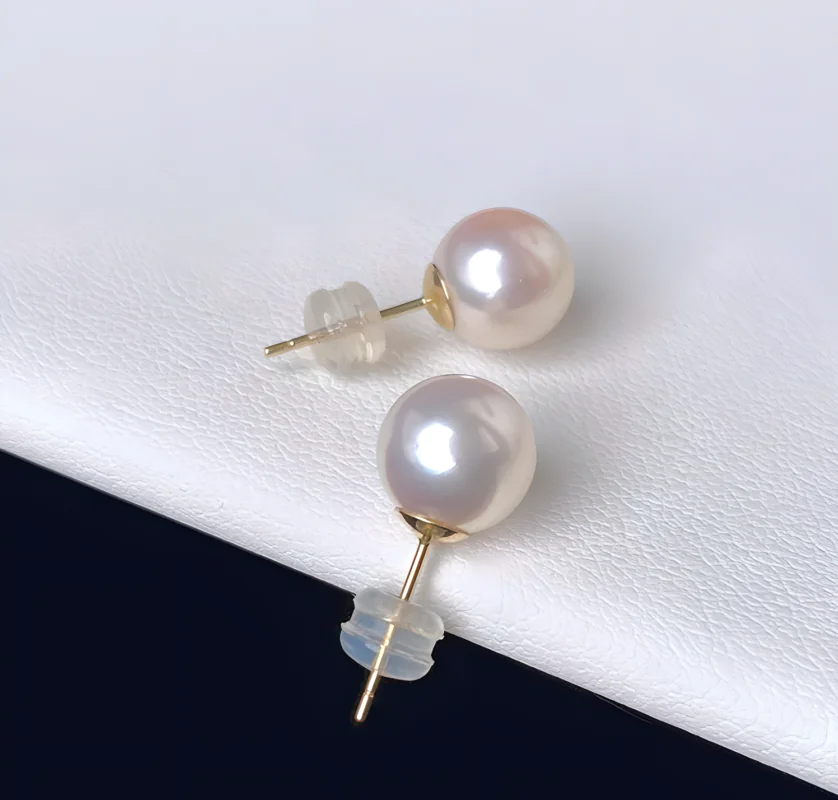
Seller Pearl Grade vs Laboratory Grading Certificate: What Is the Difference?
A seller’s pearl grade and a laboratory grading certificate are not two versions of the same thing. A seller grade such as AA, AAA, “gem quality,” or another house grade is usually a commercial quality label defined by the seller or supplier. A laboratory report is a document issued by a gemological laboratory describing what it tested, identified, or classified on the submitted pearl or jewelry item; when the laboratory is independent, it can provide third-party evidence beyond the seller’s own description. The most important difference is therefore not simply “subjective versus objective.” It is what each system is designed to tell you, who set the standard, and exactly what the document covers.
The Quick Answer
- Seller grade: a shorthand for quality within that seller’s own inventory or grading system.
- Laboratory report: a record of findings produced under a laboratory’s own testing and classification procedures.
- An AAA label is not automatically a laboratory grade. Retail letter grades are not governed by one universally adopted pearl grading scale.
- A certificate does not automatically mean “high quality.” Some reports identify whether pearls are natural or cultured, their environment, or detectable treatments without assigning a comprehensive quality classification.
- Always read the scope of the report. “Certified pearl” is too vague unless you know which laboratory issued the document and what service was performed.
This distinction matters because buyers often compare an “AAA” product listing with a laboratory document as though one should confirm the other. In many cases, they are answering different questions.
What Is a Seller’s Pearl Grade?
A seller’s pearl grade is a commercial sorting system used to group pearls by quality. Depending on the business, the scale might use A–AAA, A–AAAA, descriptive terms, numbered tiers, or proprietary names. The grade may summarize several characteristics at once, such as luster, surface condition, shape, matching, color, and sometimes nacre quality.
The important limitation is that the letters do not carry a guaranteed universal meaning from one seller to another. One company’s AAA may be stricter than another company’s AAA. A seller may also buy from a supplier that already applied a grade and then retain that terminology. Either way, the label only becomes useful when the grading criteria behind it are clear.
That does not make seller grading useless. A well-defined in-house grading system can be very practical. If a seller consistently applies the same standards, it can help customers understand the relative difference between several products in that seller’s range. For repeat wholesale sourcing, a stable internal grade can also function as a purchasing specification.
The mistake is treating the grade as a universal passport. “AAA” should not be read as “this pearl would receive the same AAA grade everywhere.” For a deeper look at the factors behind pearl quality, see our guide to evaluating pearl value and our overview of pearl classification.
What Is a Laboratory Pearl Certificate or Report?
In retail conversations, people often use “certificate” as a catch-all term for any gemological document. The official document may actually be called an identification report, classification report, grading report, testing report, or another laboratory-specific name. That wording matters because different services may answer different questions.
For example, GIA currently offers several pearl report services rather than one generic “pearl certificate.” Its Pearl Reports & Services include a Pearl Identification Report, a Pearl Identification & Classification Report, and a Cultured Pearl Classification Report. Their scopes are not identical.
An identification-focused report may address questions such as whether the submitted pearl is natural or cultured, whether it formed in a freshwater or saltwater environment, and whether certain treatments are detectable. A classification-focused report may describe quality-related characteristics such as luster, surface, nacre, and matching. Some services combine identification and classification; others do not.
This is why the phrase “lab certified” is incomplete. Before relying on it, ask:
- Which laboratory issued the report?
- What is the exact report type?
- Does it include identification, quality classification, treatment testing, or only some of these?
- Does the report correspond to the exact pearl, strand, pair, or jewelry item being sold?
- Can the report number be verified through the issuing laboratory when a verification service is available?
Seller Grade vs Laboratory Report: Side-by-Side
| Question | Seller’s Pearl Grade | Laboratory Report |
|---|---|---|
| Who assigns it? | Seller, supplier, farm, wholesaler, or brand using its own commercial system | A gemological laboratory using its stated procedures and terminology; independence depends on the issuer |
| Main purpose | Sort inventory and communicate relative commercial quality | Document specific identification, testing, or classification findings |
| Typical language | AA, AAA, AAAA, gem quality, premium, or proprietary tiers | Lab-specific descriptive or classification terminology |
| Comparable across sellers? | Only with caution; definitions can differ | More consistent when comparing the same laboratory, report type, and classification method |
| Confirms natural vs cultured? | Not by the grade alone | Only if identification is included in that report service |
| Describes quality? | Usually, but according to the seller’s own criteria | Only if quality classification is part of the report |
| Tests for treatments? | Depends on seller disclosure and supporting evidence | Depends on the laboratory and exact report service |
| Applies to what? | May be used for a SKU, lot, strand, pair, or broader inventory tier | The specific submitted item or items covered by the report |
| Determines retail price? | Often influences the seller’s pricing | No; a laboratory classification is not automatically a retail valuation |
Why an AAA Grade and a Lab Report May Not “Match”
Suppose a seller describes an Akoya strand as AAA. The laboratory report may not contain the letters “AAA” anywhere. Instead, it may describe individual quality factors using the laboratory’s own terminology. That is not necessarily a contradiction.
GIA, for example, classifies pearls through the GIA 7 Pearl Value Factors: size, shape, color, luster, surface, nacre, and matching. It does not need to convert those observations into a seller’s A–AAA scale. The seller and laboratory can therefore describe the same strand using two different languages.
There is also no reason to assume that every seller weights the factors in exactly the same way. One seller may set a very strict requirement for roundness, another may prioritize luster, and another may use separate standards for different pearl types. A laboratory classification is designed around its own defined methodology rather than a retailer’s inventory structure.
The wider industry reflects this complexity. In its 2025 Pearl Special Report, the CIBJO Pearl Commission noted that CIBJO did not have its own classification system for natural or cultured pearls and did not endorse one industry system over another. The useful lesson for buyers is simple: compare the underlying characteristics and definitions, not just the label at the top of the page.
A Laboratory Report Is Independent Evidence, Not a “Quality Trophy”
One of the most common misunderstandings is that the presence of a certificate proves a pearl is premium quality. It does not.
A legitimate laboratory can issue a report on a pearl that is ordinary, visibly blemished, or commercially modest. The report’s job is to document what the laboratory found within the scope of the requested service, not to guarantee that the item belongs to the top end of the market.
This is especially important with identification reports. A report can be extremely valuable because it helps establish whether a pearl is natural or cultured, its environment, or detectable treatments, yet still provide limited information about overall appearance quality. If your question is “How beautiful or well matched is this strand?”, an identification-only report may not answer it.
The reverse is also true. A seller may have excellent pearls without obtaining an individual laboratory report for every item. The absence of a report is not proof of poor quality; it simply means you have less independent documentation and must rely more heavily on the seller’s transparency, photographs, specifications, reputation, and return conditions.
Laboratory Classification Is More Controlled, but Pearl Quality Is Still Nuanced
It is tempting to describe seller grading as “subjective” and laboratory grading as “completely objective,” but that oversimplifies pearl evaluation. Laboratories can use controlled lighting, defined terminology, trained graders, reference standards, imaging, and analytical instruments. These procedures improve consistency and allow some characteristics to be tested in ways a normal retail inspection cannot.
At the same time, appearance factors such as luster, surface, shape, and matching still involve expert observation and classification. A laboratory report provides a more standardized framework within that laboratory’s methodology; it does not turn every pearl into a single universal number or automatically determine which pearl you personally find more beautiful.
That distinction is useful because pearl value is multi-factorial. Two pearls can share similar laboratory descriptions in several areas but differ in size, color preference, design, rarity, matching, or market demand. The report should improve your understanding of the item, not replace judgment entirely.
What Should You Check When Buying a “Certified” Pearl?
Instead of asking only “Does it have a certificate?”, use the following sequence.
- Identify the laboratory. A document from a recognized independent gemological laboratory carries a different evidentiary weight from an unknown card printed by the seller or factory.
- Read the report title. Determine whether it is an identification report, classification report, combined report, or another service.
- Check the scope. Look for the actual item description, number of pearls, measurements, photograph, report number, and other details that connect the document to the item you are buying.
- See what was actually tested. Do not assume treatment testing, origin, nacre assessment, or quality classification is included unless the report says so.
- Verify the report if possible. Use the issuing laboratory’s report-check system when one is available.
- Then evaluate quality. Compare luster, surface, shape, color, nacre, and matching rather than relying on the presence of paperwork alone.
- Finally, interpret the seller grade. Ask the seller what its AAA, AA, premium, or other label specifically means and how the tier differs from the next grade down.
If the main concern is whether the pearls are genuine, cultured, natural, treated, or imitation, start with the questions covered in our pearl identification guide. If the main concern is appearance and quality, focus more heavily on the value factors and the grading criteria.
For Wholesale Buyers, Convert the Grade Into a Specification
The difference becomes even more important in wholesale sourcing. A seller grade can be operationally useful because a buyer may need to reorder hundreds or thousands of pearls without obtaining an individual laboratory report for every piece. But the safest approach is to convert the grade into a repeatable specification.
Instead of ordering only “AAA freshwater pearls,” define the pearl type, size range, shape tolerance, expected luster, acceptable surface characteristics, color range, matching requirement, drilling or processing requirements, and treatment disclosure. A physical approved sample or agreed visual reference can also be useful when appearance is difficult to express in words.
A laboratory report on a reference sample can strengthen confidence in that sample, but it does not automatically certify every future shipment. The report applies to the item or items it covers. For repeat orders, consistency still depends on supplier quality control and agreed acceptance standards.
So Which One Should You Trust More?
They should not be treated as competitors. They are different layers of information.
Use the seller grade to understand the seller’s own quality hierarchy. It is most useful when the seller publishes clear grading criteria and applies them consistently.
Use a reputable independent laboratory report for third-party evidence within the report’s stated scope. It becomes especially valuable when identity, treatment, pearl type, or independently documented classification materially affects the purchase decision.
For an expensive purchase, the strongest combination is usually not “AAA + certificate” as a marketing phrase. It is a transparent seller grade, clear photographs and specifications, a reputable laboratory report when appropriate, and a buyer who knows exactly what each piece of evidence does—and does not—prove.
FAQ
Is AAA a laboratory pearl grade?
Not in any universal sense. AAA is commonly used as a commercial seller or supplier grade, but its definition can vary. Laboratories may use their own classification terminology rather than A–AAA retail grades.
Does a pearl certificate prove the pearl is high quality?
No. A certificate or report proves only what the issuing laboratory examined and documented. An identification report may confirm important identity or treatment information without providing a full quality classification.
Can a pearl have both a seller grade and a laboratory report?
Yes. A seller might call a strand AAA while a laboratory report describes the same strand using its own quality factors. The two descriptions can coexist because they come from different systems.
Why does the exact report type matter?
Because identification, treatment testing, and quality classification are different tasks. A report that performs one of them should not automatically be assumed to perform all of them.
Is a laboratory report always better than seller grading?
It is usually stronger as independent evidence for the characteristics it actually tests or classifies. But seller grading remains useful for comparing products within one seller’s inventory or maintaining repeat wholesale specifications. The best buying decision uses both in the correct context.
The Bottom Line
A seller’s pearl grade tells you where the seller places a pearl within its own commercial quality system. A laboratory report tells you what an independent laboratory found about the specific submitted item under a defined service. Neither should be interpreted beyond its scope.
When you see “AAA certified pearls,” separate the phrase into two questions: What does this seller mean by AAA? and what exactly did the laboratory certify or report? Once those questions are answered, pearl grading becomes much easier to compare—and much harder to misunderstand.