Pearls do not have to look traditionally feminine. The same pearl can feel classic, romantic, minimal, sharp, relaxed, or androgynous depending on its shape, size, setting, metal, length, and the clothes around it.
If you want a gender-neutral pearl look, the easiest approach is to reduce the design cues that make pearl jewelry feel delicate or highly formal. Irregular pearls, simple settings, visible metal, clean silhouettes, darker colors, and restrained styling usually make pearls feel more neutral without hiding what makes them beautiful.
The most versatile starting points are baroque or near-round pearl necklaces, single-pearl pendants, pearl-and-chain designs, minimalist studs, and simple bracelets. A perfectly round white strand can also work—the goal is not to avoid classic pearls, but to change the overall visual language around them.
What Makes Pearl Jewelry Look Feminine, Masculine, or Gender-Neutral?
There is no single pearl shape, color, or jewelry type that belongs to one gender. What people read as “feminine” or “masculine” usually comes from a combination of familiar design signals.
A small, perfectly matched white pearl strand with a delicate clasp and matching pearl studs often reads as traditional and polished because that combination has been used in classic women’s jewelry for decades. Put similar pearls beside a substantial chain, use an exposed toggle clasp, change the spacing, or wear them with an oversized shirt, and the impression can change completely.
| Design element | More traditional / delicate direction | More gender-neutral direction |
|---|---|---|
| Pearl shape | Very uniform round pearls | Near-round, oval, baroque, mixed organic shapes |
| Construction | Fine chain, hidden clasp, delicate setting | Visible chain, cord, toggle clasp, mixed materials |
| Styling | Matching pearl set | One pearl element mixed with plain metal jewelry |
| Overall silhouette | Small, neat, highly symmetrical | Clean, graphic, organic, asymmetric, or slightly heavier |
The point is not that one column is better than the other. It is simply a useful way to understand why two pieces made from the same gemstone can communicate very different styles.
1. Baroque Pearls Are One of the Easiest Gender-Neutral Choices
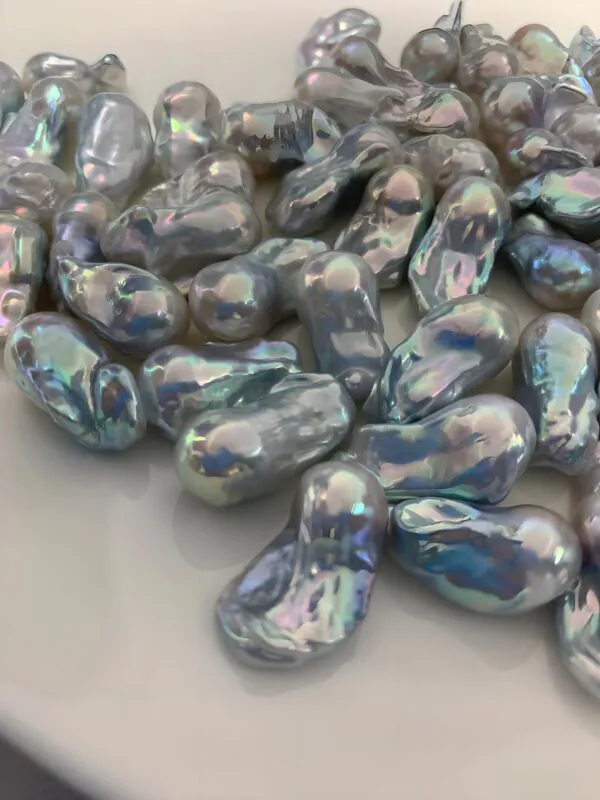
Baroque pearls are naturally irregular rather than perfectly spherical. That irregularity makes them feel less formal and less tied to the visual language of the classic matched pearl strand.
They also introduce more texture. A necklace of slightly uneven freshwater pearls can sit comfortably beside denim, knitwear, tailoring, or a plain T-shirt because the strand looks more organic than ceremonial.
If you are unsure which shapes feel right, the Pearl Shape Guide explains the visual differences between round, near-round, oval, drop, button, and baroque forms. For a deeper look at intentionally irregular pearls, see the guide to baroque pearls.
Baroque does not automatically mean rough, casual, or low quality. Shape is only one characteristic of a pearl. A baroque pearl can still have excellent luster, attractive color, and a clean-looking surface.
2. A Single Pearl Pendant Can Feel More Neutral Than a Full Strand
If a complete pearl necklace feels too classic, start with one pearl instead of many.
A single pearl on a plain chain or cord keeps the pearl as a focal point while letting the construction of the necklace define the overall style. A round pearl on a thicker silver chain can feel very different from the same pearl on a fine decorative chain. An irregular pearl on black cord can feel more sculptural and utilitarian.
This is also a useful option for someone who likes pearl luster but does not want the repetition of a full strand. Keep the pendant setting simple and let the pearl, chain, and proportions do most of the work.
3. Pearl-and-Chain Designs Create an Easy Visual Balance
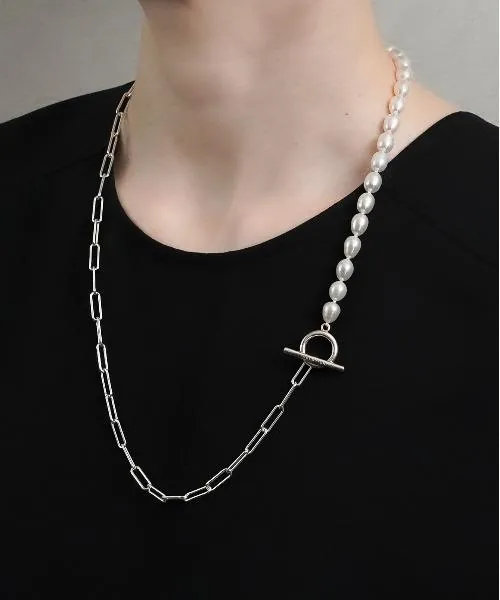
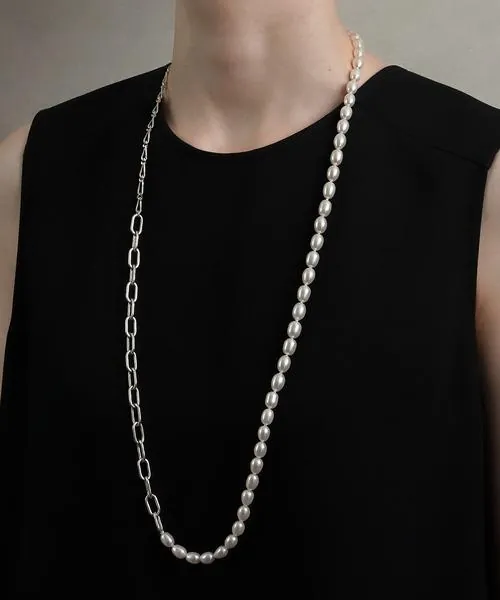
Mixing pearls with metal is one of the most reliable ways to move a pearl piece toward a gender-neutral look.
The contrast works because the materials communicate different things. Pearls are soft, reflective, and organic; chain links are structured, linear, and mechanical. Put them together and neither material dominates.
Useful formats include:
- half pearl, half chain necklaces;
- a pearl strand layered with a separate chain;
- one baroque pearl attached to a substantial chain;
- pearls spaced between metal links;
- a visible toggle clasp used as part of the design.
You do not need a chunky chain for this effect. Even a simple medium-weight chain can provide enough structure to make a pearl necklace feel more contemporary.
4. Darker Pearls Can Make the Look Feel Less Traditional
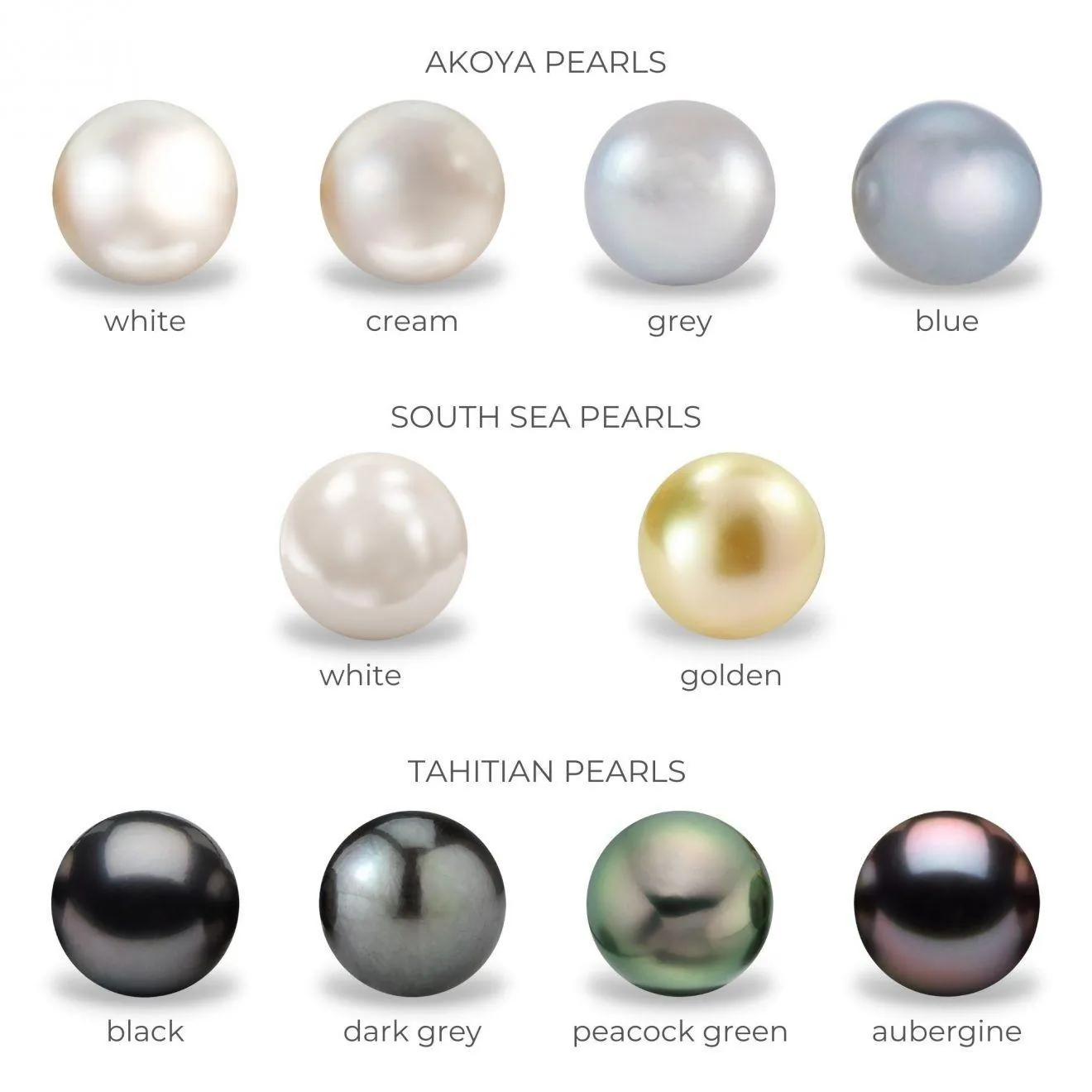
White pearls are not inherently feminine, but they carry strong associations with classic pearl jewelry. If you want a less traditional starting point, gray, green, silver, charcoal, or other dark-toned pearls can change the mood immediately.
Tahitian cultured pearls are especially useful for this style because their natural body colors and overtones can include dark gray, green, blue-green, and other complex hues. Their appearance often works well with black, navy, charcoal, olive, denim, and metallic accessories.
If that direction appeals to you, see who Tahitian pearls suit and how to style them, or browse Tahitian pearl jewelry for finished pieces.
Color should still be chosen for the overall outfit rather than by gender. A bright white pearl can look extremely neutral in a minimal black outfit, while a dark pearl can look ornate if it is surrounded by elaborate settings.
5. Choose Pearl Size by Visual Weight, Not by Gender
Pearl size changes how much visual weight a piece carries. It is more useful to think in terms of subtle, balanced, or statement-making than “men’s size” and “women’s size.”
| Approximate size | Typical visual effect | Good starting point for |
|---|---|---|
| 4–6 mm | Fine, understated, light | Minimal strands, subtle studs, layering |
| 6–8 mm | Balanced and clearly visible | Versatile everyday necklaces and bracelets |
| 8–10 mm | Stronger presence | Statement strands, pendants, bold earrings |
| 10 mm+ | Sculptural and attention-grabbing | Single pearls or deliberately bold designs |
These ranges are styling shortcuts, not rules. Neck size, body scale, necklace length, clothing, and pearl shape all affect the result. A 9 mm irregular pearl can look more relaxed than a smaller, highly matched round strand.
For a more detailed look at proportions, see the Pearl Size Guide.
6. Perfectly Round Pearls Can Still Look Gender-Neutral
You do not need baroque pearls to create a neutral look.
A round strand can work especially well when you change one or more of the surrounding cues. Try a shorter strand over a crew-neck T-shirt, add a plain chain at a different length, choose a visible metal clasp, wear the strand under an open shirt, or pair it with structured tailoring.
The mistake is assuming that pearl shape alone decides the style. Roundness makes a strand look more orderly and classic, but the final impression comes from the entire composition.
7. Use Metal, Cord, and Clasps to Control the Mood
The non-pearl parts of the jewelry often matter as much as the pearls themselves.
If you want a clean gender-neutral look, consider simple geometric hardware rather than decorative motifs. Silver-tone metals often create a cooler, more graphic impression, while yellow gold introduces warmth. Neither is automatically more masculine or feminine; the thickness and shape of the metal usually have a stronger effect than its color.
Black cord, leather-like cord, box chains, cable chains, paperclip chains, and exposed toggle clasps can all move pearl jewelry away from a traditional fine-jewelry look. For earrings, a plain stud, small hoop with one pearl, or asymmetric single-ear design usually feels less coordinated than a complete matching set.
8. Avoid Matching Everything
A matching pearl necklace, bracelet, studs, and ring can create a very polished, formal effect. If that is exactly what you want, there is nothing wrong with it. But if your goal is gender-neutral styling, full coordination is often the easiest thing to reduce.
Instead, let one pearl piece lead and keep the rest of the jewelry simpler. A pearl necklace can sit beside a plain signet ring. A pearl bracelet can be worn next to a watch. A single pearl stud can be paired with a small metal hoop in the other ear.
The result feels collected rather than matched—and that usually makes pearls easier to integrate into everyday wardrobes.
9. Clothing Changes the Meaning of Pearls
The same necklace can look completely different depending on what is underneath it.
- Plain crew-neck T-shirt: gives the pearl a clean background and makes a strand feel modern rather than formal.
- Oversized button-down: adds structure and makes even white pearls feel relaxed.
- Black knit or turtleneck: creates strong contrast and works especially well with white, gray, or metallic-toned pearls.
- Denim or workwear: introduces rougher texture that offsets the smooth surface of pearls.
- Tailoring: makes pearls look intentional and directional when the jewelry is kept simple.
If you are trying to reduce a romantic or traditionally feminine effect, avoid stacking several delicate details at once. A pearl necklace, lace collar, floral earrings, and fine layered chains may all be attractive individually, but together they push the outfit in a more decorative direction.
Three Easy Gender-Neutral Pearl Outfit Formulas
Formula 1: Minimal Everyday
Plain T-shirt + 6–8 mm pearl strand + simple metal ring.
Keep the necklace short enough to sit clearly above the shirt neckline. Choose near-round or slightly irregular pearls if you want less of a classic strand effect.
Formula 2: Pearl + Chain
Black or white top + pearl necklace + separate silver or gold chain.
Use slightly different lengths so the necklaces do not sit directly on top of each other. The metal adds structure while the pearl adds texture.
Formula 3: One-Pearl Statement
Open-collar shirt or blazer + single baroque pearl pendant.
This is one of the easiest ways to wear a large pearl without making the whole outfit feel formal. The single pearl becomes more like a sculptural object than a conventional pearl strand.
What Should You Avoid If You Do Not Want an Overly Feminine Look?
You do not need to avoid any specific pearl type. Instead, watch for several traditionally delicate design cues appearing at the same time.
If you want a more neutral result, you may want to reduce:
- very fine chains combined with very small pearls and decorative charms;
- floral, bow, heart, or lace-like metalwork;
- perfectly matched necklace-and-earring sets;
- multiple strands of small uniform pearls when you want a casual look;
- highly ornate clasps or gemstone halos around the pearl;
- too many delicate accessories competing in the same outfit.
Again, none of these features is “wrong.” They simply push the visual language toward a more decorative and traditionally feminine direction. If you like one of them, keep it and simplify something else.
A Practical Buying Checklist for Gender-Neutral Pearl Jewelry
When comparing pieces, ask these questions in order:
- Do I want a full strand or just one pearl? A single pendant is the lowest-commitment option; a strand has more visual presence.
- Do I prefer orderly or organic shapes? Round and near-round feel cleaner; baroque feels more individual and sculptural.
- How much visual weight do I want? Smaller pearls blend into an outfit; larger pearls become the focal point.
- Should metal be visible? More visible chain or hardware usually makes the design feel less traditional.
- Do I want classic white or a darker tone? White is versatile; gray and dark Tahitian colors can create a moodier look.
- Will I wear this alone or layer it? Layering changes the ideal length and thickness.
Once you know those answers, the category becomes much easier to shop. You can compare finished pieces in the MJ Pearls jewelry collection rather than starting from gender labels.
Quality Still Matters Even When Style Is the Main Goal
Style and pearl quality are different questions. An irregular pearl may suit a gender-neutral design better than a perfectly round one, but that does not mean you should ignore luster, surface condition, nacre quality, color, or overall craftsmanship.
The Gemological Institute of America evaluates pearls using seven broad value factors: size, shape, color, luster, surface, nacre, and matching. For multi-pearl jewelry, matching can also be intentionally varied as part of the design rather than pursued as perfect uniformity.
In other words, choose the shape and construction for your style, then judge quality within that design. A well-chosen baroque necklace should look intentionally irregular, not simply poorly assembled.
So, What Pearl Jewelry Is Best for a Gender-Neutral Style?
There is no single “unisex pearl.” The most convincing gender-neutral pearl jewelry usually comes from balancing the softness and luster of pearls with cleaner, stronger, or less coordinated design elements.
If you want the safest starting point, choose one of these:
- a short near-round or baroque pearl strand;
- a single pearl on a plain chain or cord;
- a pearl-and-chain hybrid necklace;
- a gray or dark Tahitian pearl piece;
- a simple pearl stud or asymmetric earring;
- a pearl bracelet worn beside a watch or plain metal bracelet.
The key is to style pearls as part of your wardrobe rather than as a gendered category. Once you think in terms of proportion, texture, shape, metal, and contrast, pearls become much easier to wear in a way that feels personal rather than prescribed.
Frequently Asked Questions
Are pearl necklaces unisex?
Yes. A pearl necklace can be worn by anyone. Its overall impression depends more on pearl size, shape, necklace length, hardware, and styling than on the pearl itself.
What type of pearl necklace looks most gender-neutral?
Baroque or near-round strands, pearl-and-chain combinations, and single-pearl pendants are easy starting points because they move away from the highly matched classic strand. A simple round strand can also look gender-neutral when styled with clean clothing or metal jewelry.
What pearl size is best for a gender-neutral necklace?
There is no required size. Around 6–8 mm is a useful middle ground for many everyday strands because the pearls are visible without dominating the outfit. Smaller pearls feel more understated, while larger pearls create a stronger statement.
Do white pearls look too feminine?
No. White pearls look more traditional only when several classic styling cues appear together. Pairing white pearls with a plain T-shirt, structured shirt, dark knit, or simple chain can make them feel clean and neutral.
Are Tahitian pearls good for a gender-neutral style?
Yes. Their naturally dark and complex colors make them especially useful for people who want a less traditional pearl look. They work well in pendants, bracelets, studs, and minimal necklaces.
Is silver better than gold for gender-neutral pearl jewelry?
Not necessarily. Silver often creates a cooler, more graphic look, while gold adds warmth. The thickness, shape, and visibility of the metal usually influence the style more than the metal color alone.
References
- Gemological Institute of America (GIA), Pearl Quality Factors.
- Gemological Institute of America (GIA), Pearl Buyer’s Guide.
- Gemological Institute of America (GIA), Different Pearl Types Explained: Akoya, South Sea, Tahitian & Freshwater Pearls.