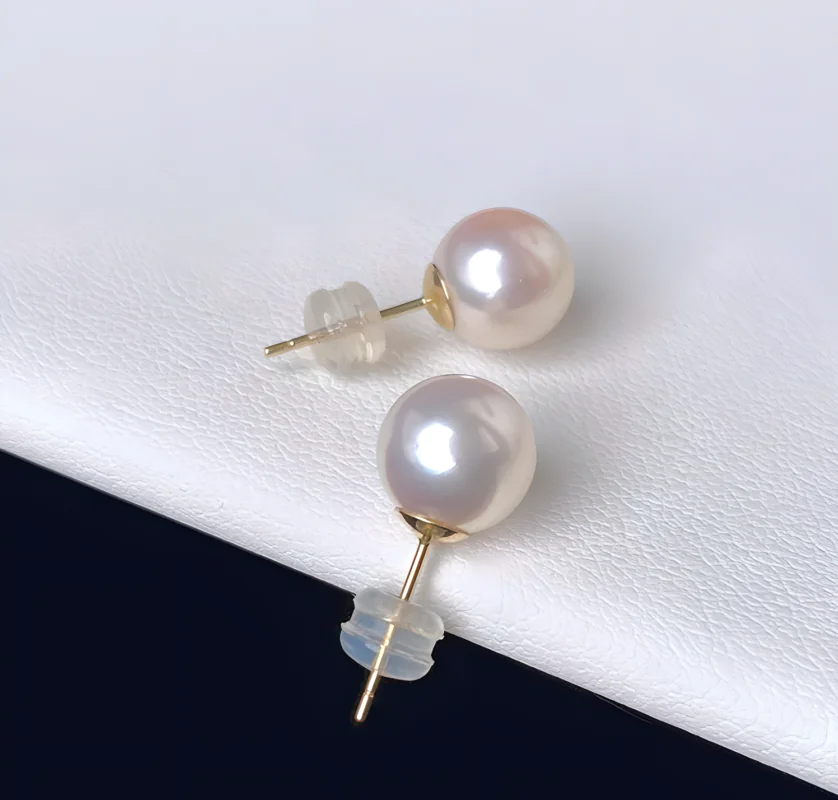
Why Can’t AI Images Alone Be Used to Make a Final Pearl Identification?
AI can be useful for examining pearl photographs, but an ordinary visible-light image does not contain all the information needed for a final pearl identification. A photo may show color, shape, luster, surface texture, drill-hole details, and obvious signs of imitation or treatment. It cannot directly reveal many internal growth structures, chemical signatures, fluorescence responses, or spectral features that gemological laboratories use to distinguish natural, cultured, treated, and imitation pearls. The safest way to use AI is therefore as a screening and guidance tool, not as a substitute for physical examination or laboratory testing when the conclusion matters.
What Can AI Actually Learn From a Pearl Photograph?
An AI vision system works from the information present in the image it receives. With clear macro photographs from several angles, it may be able to recognize patterns that are also useful to a human observer, such as:
- overall shape and approximate symmetry;
- bodycolor and visible overtone;
- surface pits, wrinkles, abrasions, peeling, or coating-like features;
- the general sharpness or softness of reflected light;
- drill-hole edges and visible layers around a drilled area;
- uniformity or variation within a strand;
- features that make an imitation, dye, coating, or unusual treatment worth investigating.
That can be genuinely helpful. An AI system may tell you that a surface looks unusually glassy, that color appears concentrated around a drill hole, or that a strand is so visually uniform that closer inspection is warranted. Those observations can help decide what to examine next.
But recognizing a visible clue is not the same as proving the pearl's identity. Our broader pearl identification guide makes the same distinction: visual inspection can narrow possibilities, while some questions require evidence that photographs cannot provide.
The Main Limitation: A Photograph Shows the Surface, While Pearl Identity Often Depends on Hidden Structure
One of the most important pearl-identification questions is whether a pearl is natural or cultured. In many cases, the outside appearance alone does not answer that question. Natural pearls and cultured pearls can overlap strongly in color, shape, luster, and surface appearance.
This is why professional pearl laboratories rely heavily on X-ray imaging. GIA states that it uses digital X-radiography together with visual observation and other advanced testing to determine whether pearls are natural or cultured, and describes microradiography as the most reliable non-destructive way to observe internal pearl structure. Its current laboratory workflow also uses X-ray radiography to distinguish natural, bead-cultured, and non-bead-cultured structures. GIA's explanation of natural-versus-cultured pearl testing is a useful reference for this point.
A normal smartphone or product photograph records reflected visible light from the outside of the pearl. It does not show the complete internal growth pattern beneath the nacre. No amount of confident AI wording can reconstruct diagnostic internal evidence that was never captured in the original image.
Different Identification Questions Require Different Types of Evidence
“Is this pearl real?” is actually several possible questions. A photograph may be useful for some of them and weak for others.
| Question | What a Photo or AI May Suggest | What May Be Needed for a Stronger Conclusion |
|---|---|---|
| Is it an obvious imitation? | Surface uniformity, peeling, drill-hole clues, artificial-looking coating | Magnification, material testing, X-ray or other gemological examination when uncertain |
| Natural or cultured? | Usually little that is conclusive from the exterior alone | X-radiography and, in difficult cases, more detailed internal imaging |
| Freshwater or saltwater origin? | Color, size, shape, and market type may narrow possibilities | Chemical and fluorescence evidence such as XRF, interpreted with other observations |
| Natural color or treated color? | Suspicious color concentration or an unusual appearance may raise a question | Spectroscopy, fluorescence testing, microscopy, and other treatment-specific evidence |
| Is there a coating? | Peeling, chipping, film-like gloss, or accumulation around defects may be visible | Microscopy and, where necessary, analytical testing of the surface material |
| What is the exact quality grade? | Luster, surface and matching can be compared approximately | Controlled lighting, actual measurements, direct inspection, and a defined grading system |
This is the key reason an AI image result should be expressed as a probability, clue, or next-step recommendation rather than a laboratory-style certificate.
Color Treatment Is a Good Example of Why Appearance Alone Can Mislead
Pearl treatments illustrate the problem especially well. Dyeing, irradiation, bleaching, optical brightening, coating, and other processes can alter appearance in different ways. Some treated pearls show obvious clues; others do not.
GIA research on yellow or “golden” cultured pearls notes that improved dye treatments can leave little visible surface evidence, making techniques such as UV-Vis reflectance and Raman photoluminescence important for identification. GIA's broader pearl research program likewise notes that modern treatments may require advanced instruments for detection. In other words, a pearl can look convincing in a high-resolution photograph and still require testing beyond visible appearance.
This is also why it is risky to train yourself—or an AI system—to associate one color with one conclusion. A gray pearl is not automatically irradiated. A vivid golden pearl is not automatically dyed. A glossy surface is not automatically coated. Visual patterns can create suspicion, but overlapping appearances mean the final interpretation must be evidence-based. For more background, see our guide to pearl color enhancement treatments and our explanation of pearl coating techniques.
Image Quality Can Change the Clues Before AI Even Sees Them
Even when the pearl itself is unchanged, the image presented to an AI model can vary dramatically. Lighting direction affects reflections and perceived luster. Exposure can hide pale blemishes or make dark areas look stronger. White balance changes bodycolor and overtone. Phone sharpening can exaggerate surface texture. Compression can erase small drill-hole details. Background color can also influence how the eye perceives a pearl's warmth or coolness.
These are not minor issues when identification depends on subtle visual clues. Two photographs of the same pearl can make it appear different enough for both humans and AI systems to form different first impressions.
For that reason, multiple unedited images under controlled, neutral lighting are much more useful than one attractive product photo. A macro image of the drill hole, a side view, a view under diffused white light, and a photograph of the whole strand can improve screening—but they still do not add internal or spectroscopic data that the camera never recorded.
AI Confidence Is Not the Same as Gemological Certainty
Some AI tools return a percentage such as “92% cultured pearl” or “95% natural pearl.” That number may describe confidence within the model's own classification process, but it should not be interpreted automatically as a 92% or 95% gemological certainty.
The model's answer depends on its training data, the categories it was designed to recognize, the quality of the uploaded image, and how similar the specimen is to examples the model has seen before. If the training set underrepresents unusual cultured structures, sophisticated imitations, uncommon treatments, older jewelry, or certain pearl varieties, a confident prediction can still be wrong.
There is another important problem: AI may be forced to choose among the labels it was given. If the correct explanation is “insufficient evidence,” “unusual treated material,” or “requires X-ray examination,” a poorly designed tool may still select the closest familiar category. A responsible identification workflow must allow uncertainty to remain uncertainty.
What About AI Analyzing X-Ray or Laboratory Images?
This is a different situation from asking an AI model to identify a pearl from an ordinary photograph. AI can potentially assist professionals in analyzing X-radiographs, micro-CT images, spectra, fluorescence data, or other instrument-generated measurements. In that case, the system is working with information that actually contains internal, chemical, or optical evidence.
That does not mean the AI itself becomes the evidence. The evidence comes from the validated measurement process: how the specimen was tested, how the instrument was calibrated, what data were captured, and how the result was interpreted. An AI model may help classify or highlight patterns within that data, but a final laboratory conclusion still depends on the quality of the test and the identification protocol.
This distinction is important: AI is not inherently incompatible with serious gemology; ordinary photographs are simply an incomplete evidence source for many pearl-identification questions.
AI-Generated or Heavily Edited Images Are Even Less Suitable for Identification
If an image has been generated by AI rather than photographed from the actual pearl, it cannot serve as evidence about that specimen at all. The generated image may look realistic, but its surface marks, drill-hole structure, color transitions, and reflections are synthetic details produced by the image model.
Heavy retouching creates a milder version of the same problem. Removing blemishes, changing color, smoothing the surface, increasing contrast, or sharpening reflections can erase precisely the features that an examiner would want to study. For identification purposes, original, minimally processed photographs are more useful than polished marketing images.
A Better Workflow: Use AI to Decide What to Check Next
AI becomes much more useful when the goal is changed from “give me the final answer” to “help me inspect this pearl intelligently.” A practical workflow looks like this:
- Start with multiple original photos. Include the whole piece, close-ups, drill holes if present, and several angles under neutral lighting.
- Ask AI for observations, not just a label. Request the visible features that support or weaken each possible interpretation.
- Separate what is visible from what is inferred. “There appears to be peeling near the drill hole” is different from “this is an imitation pearl.”
- Ask what evidence is missing. A good analysis should explain whether X-ray, spectroscopy, microscopy, fluorescence, chemical testing, or direct measurement would resolve the uncertainty.
- Escalate according to value and consequence. A low-cost fashion strand may only need practical screening. A pearl sold as natural, rare, untreated, or unusually valuable deserves stronger documentation.
This approach preserves the speed of AI without pretending that image recognition can replace evidence the image does not contain.
When Should You Stop Relying on Photos?
Move beyond photo-based identification when the answer changes the financial, historical, or descriptive significance of the pearl. Examples include:
- a pearl being sold specifically as natural rather than cultured;
- an unusual color being priced as natural and untreated;
- a valuable antique or inherited piece where provenance matters;
- a suspected imitation that would materially change the value of the jewelry;
- a disputed treatment disclosure;
- a high-value purchase where documentation is part of the transaction.
GIA's current pearl laboratory services can report identity, environment, mollusk information when determinable, and detectable treatments, with classification services adding quality factors where applicable. The important lesson is not that every pearl needs a laboratory report. It is that the level of evidence should rise with the importance of the claim.
What Should You Trust From an AI Pearl Assessment?
The most useful AI answer is usually one that clearly separates three levels:
- Visible observation: what can actually be seen in the image.
- Possible interpretation: what those features may suggest.
- Unresolved identification question: what cannot be confirmed without additional evidence.
For example, “the drill-hole edge appears chipped and the surface looks unusually uniform, which may justify checking for an imitation coating” is a responsible image-based conclusion. “This is definitely a fake pearl” is much stronger and may not be justified by the photograph alone.
The same discipline applies to natural versus cultured origin and to color treatments. If you want a broader framework for learning how different tests fit together, continue with the Pearl Identification Course.
The Bottom Line
AI can make pearl-photo analysis faster and more organized, and it can be excellent at pointing out visual clues that deserve attention. What it cannot do is extract diagnostic evidence that the photograph never captured. Internal growth structure, elemental composition, fluorescence behavior, and spectral response may be decisive for questions such as natural versus cultured origin or natural versus treated color.
Use AI images to screen, compare, question, and plan the next test. Use direct examination and appropriate gemological testing when you need a final identification that carries real financial or descriptive weight.
FAQ
Can AI tell whether pearls are real from a photo?
AI can sometimes recognize visual features that are consistent with genuine or imitation pearls, especially when clear macro images show the surface and drill holes. However, visually convincing imitations and unusual genuine pearls can overlap in appearance, so a photo should be treated as screening evidence rather than a universal authenticity test.
Can AI tell a natural pearl from a cultured pearl?
Not reliably from ordinary exterior photographs alone. Natural and cultured pearls may look similar from the outside, while their internal growth structures can differ. Professional laboratories commonly use X-radiography to examine those structures.
Can AI detect dyed or irradiated pearls from pictures?
It may flag suspicious colors or visible concentrations of color, but some treatments leave little diagnostic surface evidence. Spectroscopy, fluorescence testing, microscopy, or other analytical methods may be needed to confirm treatment.
Does a high AI confidence score mean the pearl is correctly identified?
No. A confidence score describes the model's prediction within its own system. It does not guarantee that the image contains enough gemological evidence for a final identification.
What photos are most useful for AI pearl screening?
Use original, unfiltered images under neutral diffused light, including several angles, close-ups of surface features, and clear drill-hole photographs when available. These improve visual screening but do not replace tests that examine internal structure or material properties.