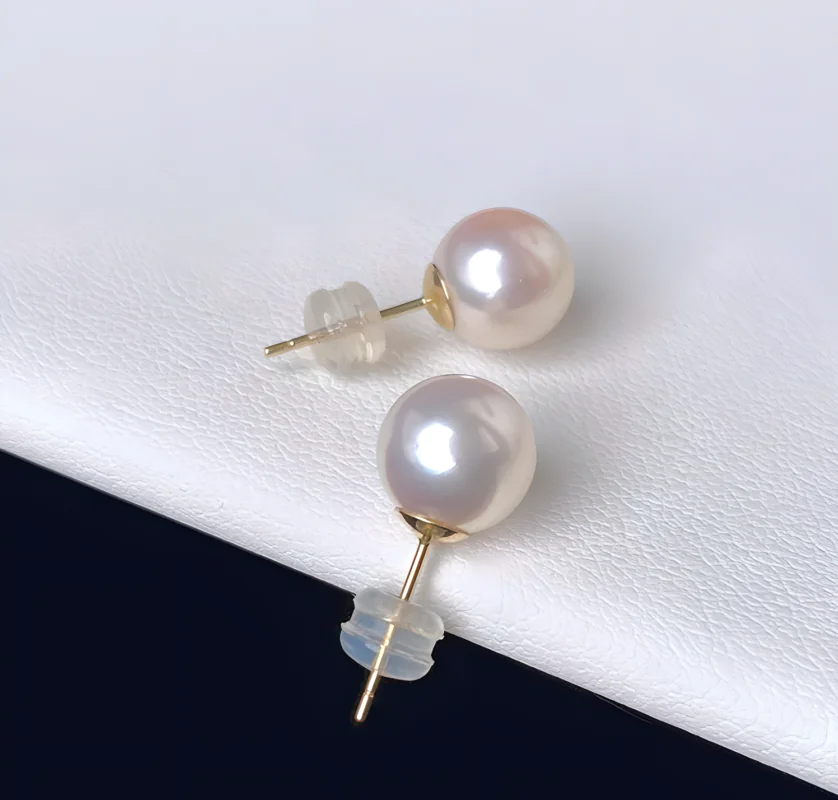
What to Do If Pearls Turn Yellow: Common Causes and Solutions
If white pearls have started to look yellow, creamier, or duller than you remember, do not immediately try to bleach or “whiten” them. Pearl yellowing can come from several different causes: removable surface residue, long-term aging and dehydration, heat or chemical damage, or changes to a previous color treatment. Gentle cleaning may improve surface discoloration, but it cannot always reverse a color change that has occurred within the nacre itself.
The safest approach is to identify what kind of change you are seeing, start with the mildest cleaning method, and stop if the surface appears chalky, cracked, peeling, or unusually fragile. Pearls are relatively soft organic gems, so aggressive restoration can cause more damage than the original yellowing.
Quick Answer: What Should You Do with Yellowed Pearls?
- Check whether the pearls are actually dirty or have changed color. Surface residue may be removable; deeper nacre discoloration may not be.
- Start with a very soft, slightly damp cloth. Gently wipe each pearl without scrubbing.
- If necessary, use a small amount of mild soap with warm water. Remove soap residue with another damp cloth.
- Let strung pearls dry completely while lying flat. Do not wear a damp strand.
- Do not use bleach, vinegar, peroxide, baking soda, toothpaste, jewelry dips, steam, or ultrasonic cleaners.
- Get professional help if the yellowing is deep, even, accompanied by surface damage, or involves valuable antique or sentimental pearls.
The key distinction is simple: cleaning can remove material sitting on the pearl, but it cannot reliably turn altered nacre back into its original color.
First, Make Sure the Pearls Have Actually Turned Yellow
Not every yellow or cream-colored pearl is damaged. Pearls naturally occur in a wide range of bodycolors and overtones. White pearls may have cream, ivory, silver, rose, or warm undertones, while some South Sea pearls are naturally yellow or golden. Freshwater pearls can also occur naturally in warm peach and related colors.
That is very different from a strand that was visibly white when purchased and has gradually become more yellow over time.
If you are unsure, compare the jewelry with older photographs taken under neutral lighting. Also inspect the pearls individually rather than judging the strand from a distance. Sometimes yellowed or dirty silk thread between the pearls makes the entire necklace appear warmer even when the pearl surfaces themselves have changed very little.
| What You See | Possible Explanation | Best First Step |
|---|---|---|
| Dull or slightly yellow film on the surface | Skin oils, cosmetics, perspiration, or other residue may be contributing | Gentle damp-cloth cleaning |
| Even cream or yellow tone across older pearls | Aging, prolonged dry storage, heat exposure, or deeper nacre change may be involved | Clean gently once, then assess rather than repeatedly whitening |
| Yellowing plus chalkiness, cracks, flaking, or roughness | The nacre may be deteriorated or damaged | Stop DIY cleaning and consult a pearl-experienced jeweler |
| The knots or string look yellow but the pearls still look bright | Dirty or aged thread may be affecting the appearance of the strand | Consider professional restringing |
| A previously dyed or coated pearl has changed color | The treatment itself may have altered over time | Have the pearl assessed before attempting restoration |
These visual clues are useful for deciding what to do next, but they are not diagnostic tests. Different causes can produce similar appearances.
Why Do Pearls Turn Yellow?
1. Surface Buildup Can Make Pearls Look Yellow or Dull
Pearls regularly come into contact with skin oils, perspiration, makeup, sunscreen, lotion, hairspray, and perfume. Even when these substances do not visibly stain the pearl immediately, residue can accumulate and reduce the sharpness and brightness of its luster.
This is the most encouraging situation because the nacre itself may still be in good condition. A gentle cleaning can sometimes reveal that the pearl was not truly yellowed—it was simply covered by a thin surface film.
Do not assume, however, that all yellow pearls merely need stronger cleaning. If a mild wipe does not improve the appearance, escalating to harsher chemicals is usually the wrong response.
2. Aging and Dehydration Can Change Pearl Appearance
Pearls contain nacre made from microscopic layers of calcium carbonate combined with organic material. Their structure makes them more sensitive to environmental conditions than many harder gemstones. The Gemological Institute of America notes that aging and dehydration can make pearls more fragile and that excessively dry or hot environments should be avoided.
Over a long period, poorly stored pearls can become duller, more brittle, cracked, or discolored. A gradual shift from cool white toward cream or yellow can therefore be more than surface dirt.
This does not mean that every old cream-colored pearl is deteriorating. Color change must be judged together with luster, surface condition, storage history, and the pearl's original color.
For a deeper explanation of why pearls react differently from harder gemstones, see our guide to the physical and chemical properties of pearls.
3. Heat and Intense Light Can Damage Nacre
Pearls should not be stored near radiators, heating vents, hot windows, car dashboards, or other high-temperature locations. Excessive heat can contribute to dehydration and may lead to discoloration, splitting, or cracking.
This is also why placing yellowed pearls in strong sunlight in an attempt to “bleach them naturally” is a poor restoration strategy. Even if the color appears temporarily different under brighter light, prolonged heat and intense light can put additional stress on already aged nacre.
4. Perfume, Cosmetics, Perspiration, and Household Chemicals Can Damage Pearls
Pearls are vulnerable to many chemicals and particularly to acids. Common everyday products such as hairspray, perfume, cosmetics, and cleaning agents can affect the pearl surface, while perspiration should also be wiped away after wear.
Chemical exposure does not always produce an obvious yellow stain. It may first appear as reduced luster, roughness, uneven texture, or an increasingly dull surface. Once the nacre itself has been etched or damaged, cleaning cannot simply rebuild the missing material.
5. Treated Pearl Colors Can Change Over Time
Some pearls are dyed, coated, bleached, irradiated, or otherwise processed to modify their appearance. A treated pearl is not automatically an imitation pearl, but treatments introduce another variable when evaluating color change.
For example, dyed or coated colors can sometimes alter as the jewelry ages or is exposed to heat, chemicals, abrasion, or repeated wear. If you do not know whether your pearls were treated, avoid trying to diagnose the cause of discoloration solely from appearance.
You can learn more about this distinction in our guide to pearl color enhancement treatments.
Can Yellowed Pearls Be Made White Again?
Sometimes—but only when the yellow appearance is caused mainly by removable material on the surface.
If oils, cosmetics, or ordinary grime are making a white pearl look warmer and duller, gentle cleaning may noticeably improve its appearance. The pearl may regain more of its original luster and look whiter simply because the surface is clean again.
If the nacre itself has changed because of aging, prolonged dehydration, excessive heat, chemical damage, or deterioration, there is no dependable household method that can restore the pearl to its original white color.
This is an important limitation because many online “pearl whitening” remedies confuse cleaning with restoration. Making an old pearl chemically lighter is not necessarily the same as restoring healthy nacre. A treatment strong enough to alter the pearl's color may also alter or weaken its surface.
For valuable pearls, the goal should therefore be preserving the best remaining surface condition, not forcing the pearl to match a photograph from decades ago.
How to Clean Yellowed Pearls Safely at Home
For pearls that appear structurally sound, the safest home-care method is deliberately simple.
Step 1: Inspect the Pearls Before Adding Water
Check for loose pearls, cracked nacre, peeling or chalky surfaces, damaged drill holes, frayed thread, loose knots, and unstable metal fittings.
If you are dealing with an antique necklace, very valuable pearls, or a visibly deteriorated surface, professional inspection is preferable to experimenting with cleaning methods.
Step 2: Start with a Soft Damp Cloth
Moisten a very soft, clean, lint-free cloth with plain water. It should be damp rather than dripping wet.
Gently wipe each pearl individually. Do not scrub, polish aggressively, or apply pressure around damaged areas. In many cases, this simple step is enough to remove fingerprints and light surface residue.
Step 3: Use Mild Soapy Water Only If Needed
For more thorough occasional cleaning, warm water with a small amount of mild soap can be used on sound pearls. Apply it gently with a soft cloth rather than treating the pearls like ordinary washable beads.
Pay particular attention to strung jewelry. Repeated or prolonged soaking is unnecessary, and antique thread may already be weakened. Pearl earrings, rings, and pendants may also contain adhesives or other materials that should not be repeatedly immersed.
Step 4: Remove Any Soap Residue
Use a second clean cloth lightly moistened with plain water to wipe away remaining soap. Leaving cleaning product on the surface defeats the purpose of gentle cleaning.
Step 5: Let the Jewelry Dry Completely
Lay a pearl necklace or bracelet flat on a clean, soft towel and allow it to air-dry completely. Do not hang a wet strand, use a hair dryer, place it on a radiator, or dry it in direct hot sunlight.
If the thread remains damp, wait before wearing or storing the piece.
For normal maintenance after the immediate yellowing issue has been addressed, our complete pearl care guide covers storage, cleaning, wear, and long-term maintenance in more detail.
What Should You Never Use to Whiten Pearls?
A pearl's surface should not be treated like stained ceramic, metal, or a hard gemstone. Avoid household whitening experiments, especially on valuable or sentimental jewelry.
- Bleach: aggressive bleaching can damage or weaken nacre.
- Hydrogen peroxide: do not treat household peroxide as a safe DIY pearl-whitening solution.
- Vinegar or lemon juice: pearls are vulnerable to acids.
- Baking soda or toothpaste: abrasive particles can scratch and dull the surface.
- Acetone or nail-polish remover: inappropriate for routine pearl cleaning and potentially damaging to treatments, adhesives, and jewelry components.
- Commercial jewelry dips: products designed for metals or harder gemstones may be unsuitable for pearls.
- Ultrasonic cleaners: GIA specifically advises against ultrasonic cleaning for pearls.
- Steam cleaners: pearls should not be steam-cleaned.
- Abrasive polishing: removing surface material to chase a whiter appearance can permanently reduce nacre quality.
Professional pearl processing can involve controlled bleaching or other treatments, but that does not make household bleaching a safe maintenance technique. Production treatment and consumer cleaning are two different processes.
When Should Yellowed Pearls Be Professionally Cleaned?
Professional evaluation becomes more useful as the value, age, fragility, or uncertainty of the pearls increases.
Consider taking the jewelry to a jeweler or pearl specialist if:
- the pearls are antique, inherited, or highly sentimental;
- yellowing remains after a gentle surface cleaning;
- the color change is deep and uniform across the strand;
- the nacre looks chalky, cracked, flaky, rough, or unusually dull;
- you do not know whether the pearls were dyed or coated;
- the silk thread is stained, stretched, frayed, or loose;
- the piece contains delicate settings, adhesives, or other gemstones;
- you are considering any whitening or polishing treatment stronger than ordinary cleaning.
A professional may be able to clean the surface, replace dirty or deteriorated thread, inspect settings, and help determine whether the unattractive color is primarily dirt or an actual change in the pearl. What they cannot guarantee is that aged nacre can always be returned to its original color.
Sometimes the Pearls Are Fine and the String Is the Problem
This is easy to overlook with older necklaces. Silk or other stringing material can gradually become darker, yellowed, stretched, or dirty. Because knots sit directly between the pearls, discolored thread can visually warm the entire strand.
Look at the pearls individually against a white or neutral background. If they remain relatively bright but the knots appear yellow-brown, restringing may produce a much larger visual improvement than repeatedly cleaning the pearls.
Restringing is also a maintenance issue rather than only a cosmetic one. Old thread can stretch and weaken, increasing the risk of breakage.
How to Prevent Pearls from Yellowing or Dulling
Put Pearls On After Cosmetics
Apply perfume, hairspray, makeup, sunscreen, and lotion before putting on pearl jewelry. Allow the products to settle or dry rather than spraying perfume directly onto the pearls.
Wipe Pearls After Wearing Them
A quick wipe with a very soft clean cloth helps remove perspiration, skin residue, and cosmetics before they remain on the nacre for long periods.
Regular wear is perfectly reasonable, but skin oils and perspiration should not be treated as a special “moisturizing treatment” for pearls. Wear them, enjoy them, and clean the surface gently afterward.
Avoid Hot, Extremely Dry Storage
Store pearls in a soft pouch or lined jewelry compartment away from radiators, direct heat, and very dry environments. Keep them separate from harder jewelry that can scratch the nacre.
Avoid treating an airtight plastic bag as ideal long-term pearl storage. A soft jewelry pouch or appropriately lined box is generally a better choice.
Remove Pearls Before Swimming or Household Cleaning
Chlorinated pools, household cleaning products, soaps, and other chemicals introduce unnecessary exposure. Water can also affect silk thread, adhesives, and metal components even when the pearl itself survives brief contact.
Inspect Strands Periodically
Check knots, thread, clasp connections, and drill holes. If the necklace begins to show gaps between pearls or noticeably weakened string, consider restringing it before it breaks.
Do Not Confuse Yellowing with Naturally Golden Pearls
A white pearl that changes color with age is not the same thing as a pearl whose natural bodycolor was cream, yellow, or gold from the beginning.
Golden South Sea pearls, for example, can naturally display rich yellow-to-golden colors. Freshwater pearls also occur in warm natural color ranges. In addition, some pearls on the market have intentionally treated colors.
If you buy a vintage strand already showing a cream or yellow tone and do not know its original appearance, visual inspection alone may not tell you whether you are seeing natural color, treatment, aging, or a combination of factors. Avoid trying to “whiten” an attractive natural or intentionally treated color simply because it is not bright white.
What to Remember
When pearls turn yellow, the most important question is not “What chemical will make them white?” but “Is the yellow color sitting on the surface, or has the pearl itself changed?”
Surface residue may respond well to a soft damp cloth and occasional mild soapy-water cleaning. Deeper discoloration associated with aging, dehydration, heat, chemicals, or nacre deterioration may be partly or completely irreversible. In those cases, aggressive DIY whitening is more likely to create additional damage than to restore the pearl.
Use the gentlest method first, keep pearls away from harsh chemicals and excessive heat, store them appropriately, wipe them after wear, and involve a pearl-experienced professional when the jewelry is valuable or the nacre itself appears damaged.
FAQ
Can real pearls turn yellow?
Yes. Genuine natural or cultured pearls can change appearance over time. A yellow cast may come from surface residue, aging, dehydration, heat or chemical exposure, or changes to a treatment. Yellowing does not by itself mean that a pearl is fake.
Can yellowed pearls become white again?
It depends on the cause. If surface oils or grime are creating the yellow appearance, gentle cleaning may improve the color substantially. If the nacre itself has changed through aging or damage, cleaning may not restore the original white color.
Can I use hydrogen peroxide to whiten pearls?
Household peroxide should not be treated as a routine pearl-cleaning method. Pearls have a delicate nacre surface, and attempts to chemically whiten them can alter or damage that surface. Use gentle cleaning or professional assessment instead.
Can I clean pearls with vinegar or baking soda?
No. Vinegar is acidic, while baking soda can be abrasive. Both are inappropriate choices for delicate pearl nacre. A soft cloth and, when necessary, mild soapy water are much safer.
Can pearl necklaces be soaked in water?
Occasional cleaning with warm soapy water can be safe for sound pearls, but prolonged soaking is unnecessary, especially for strung or antique jewelry. The thread should be allowed to dry completely before the necklace is worn or stored.
Should old yellowed pearls be professionally cleaned?
Professional cleaning is sensible when the pearls are valuable, antique, sentimental, deeply discolored, or showing cracks, chalkiness, flaking, damaged thread, or other signs of deterioration. A specialist can assess whether the problem is removable residue or a deeper change to the pearl.