For most workplaces, the best pearls are simple, secure, and easy to repeat: small-to-medium pearl studs, a single-pearl pendant, or a restrained strand are the safest starting points. But there is no single “office pearl.” A conservative law office, a design studio, a remote sales role, and a hands-on technical workplace all create different practical and visual requirements.
A useful way to choose is to ask four questions before thinking about pearl type: How formal is the workplace? How visible do you want the jewelry to be? How much will it move or contact surfaces? And can you comfortably wear it for a full workday?
If you want one default answer, start with 6–8 mm round or near-round pearl studs. They are visible enough to look intentional, compact enough for most professional settings, and easier to wear repeatedly than jewelry that swings, catches, or sits directly on a desk.
Quick Guide: Best Pearls by Workplace
| Workplace | Easy Starting Choice | Why It Works |
|---|---|---|
| Conservative or highly formal | 5–7 mm white pearl studs or a small single-pearl pendant | Low movement, restrained scale, and easy coordination with tailoring |
| Typical professional / client-facing | 6–8 mm studs, 7–10 mm pendant, or a restrained 6–8 mm strand | Polished without becoming the main visual focus |
| Business casual / hybrid office | 6–9 mm studs, short drops, pendant, or modern baroque piece | Allows more personality while remaining easy to repeat |
| Creative or fashion-oriented | Baroque pearls, Tahitian colors, asymmetry, mixed metals, or larger single pearls | The jewelry can become part of the design language of the outfit |
| Video-call heavy | 7–9 mm studs or compact drops near the face | Enough visual presence to register on camera without excessive movement |
| Hands-on, technical, clinical, food-service, or machinery-related | Secure low-profile jewelry if permitted—or no jewelry | Employer safety, hygiene, and uniform rules matter more than styling advice |
The common theme is not “smaller is always more professional.” The real goal is controlled visual presence with low distraction and good practicality.
Choose for the Workplace Before You Choose the Pearl Type
Many buyers begin with a species question: “Should I wear Akoya or freshwater pearls to work?” That is usually the second decision, not the first.
A plain freshwater pearl stud may look more formal than an elaborate Akoya drop. A single Tahitian pearl on a fine chain may be quieter than a full white pearl strand. A large South Sea pearl can look minimal when used alone, while several small pearls combined with crystals, chains, and decorative metalwork can look much busier.
For workplace jewelry, evaluate the finished piece in this order:
- Workplace dress code: how conservative or expressive is the environment?
- Jewelry format: stud, drop, pendant, strand, bracelet, or ring?
- Visual scale: subtle, balanced, noticeable, or statement?
- Movement and contact: will it swing, catch, tap, or rub against work surfaces?
- Pearl type and color: choose the pearl that creates the look you want.
- Quality: compare luster, surface, shape, matching, nacre, and construction.
This order prevents a common mistake: paying for a prestigious pearl type before deciding whether the actual jewelry suits the way you work.
For Conservative Offices: Keep the Silhouette Quiet
In conservative environments, the easiest pearls are those that look deliberate without becoming a conversation piece. Small or medium round white pearls naturally fit this role because their shape is orderly and their movement is limited.
Good starting choices include:
- 5–7 mm pearl studs;
- a small single-pearl pendant on a fine chain;
- a short, well-matched strand in a restrained size;
- simple pearl-and-metal designs with little extra decoration.
If the outfit already includes strong tailoring, a patterned blouse, a scarf, a visible watch, or other accessories, one pearl piece may be enough. A full matching pearl set is not wrong, but it creates a much more traditional and formal impression.
For readers choosing earrings specifically, the pearl earrings collection is the most direct place to compare low-profile formats.
For Client-Facing Work: Prioritize Polish and Repeatability
Client-facing jewelry often needs to do two things at once: look considered at close conversation distance and remain neutral enough to work with many outfits.
This is where 6–8 mm studs, a 7–10 mm pendant, or a restrained strand are especially useful. They create more presence than tiny accent pearls without forcing the jewelry to become the focal point.
For this kind of work, luster may matter more than simply moving up in size. The Gemological Institute of America lists luster as one of the seven major pearl value factors and describes high-luster pearls as having brighter, sharper reflections. A smaller pearl with lively reflections can therefore look more polished than a larger pearl with a duller surface.
Matching also matters in pairs and strands because the eye notices differences when pearls frame the face symmetrically or repeat around the neckline. Perfect uniformity is not required for every design, but deliberate matching helps classic workplace pieces feel coherent.
For Business-Casual Workplaces: Add Personality Through Shape
Business casual gives you more freedom to move beyond the classic round white pearl without turning the jewelry into a statement.
Useful options include near-round pearls, short drops, button pearls, compact baroque pearls, pearl huggies, and pendants with more visible metal. These designs still read as polished, but the shape changes the mood.
A button pearl can sit close to the ear. A small drop adds movement. A baroque pearl introduces texture and individuality. A near-round pearl can soften the precision of a formal outfit without looking deliberately unconventional.
If shape is doing most of the styling work, size does not need to be large. You can compare the visual effect of round, drop, button, oval, and baroque forms in the pearl shape guide.
For Creative Workplaces: “Professional” Can Include Distinctive Pearls
In creative, design, media, fashion, or other visually expressive workplaces, the safest conservative-office formula may look unnecessarily cautious. Here, pearls can become part of the outfit's point of view.
Consider:
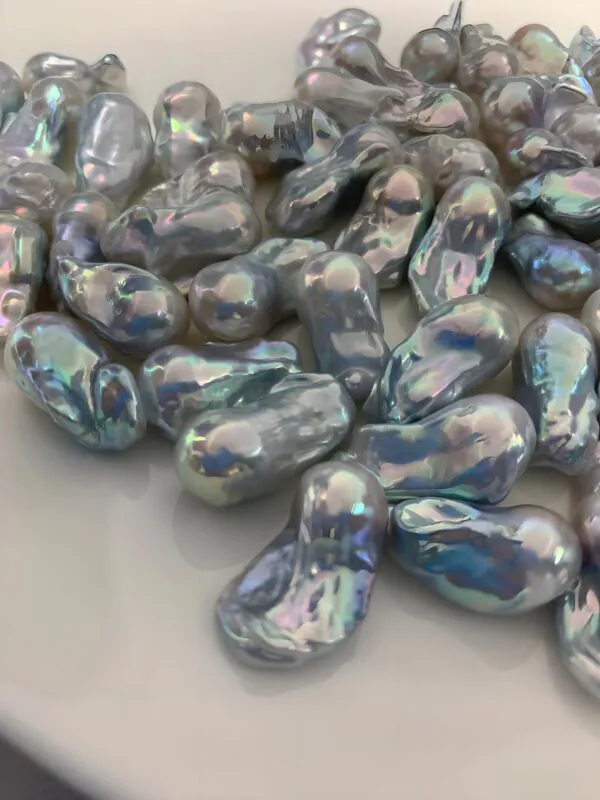
- irregular baroque freshwater pearls;
- gray, green, or peacock-toned Tahitian pearls;
- asymmetrical pearl earrings;
- mixed pearl sizes;
- pearl-and-chain combinations;
- one larger focal pearl rather than many small pearls.
The useful limit is not a fixed millimeter number. It is whether the design looks intentional with the clothing and whether it interferes with your work. A sculptural pearl earring can still look highly professional when the rest of the outfit is clean and the workplace allows expressive accessories.
For Video Calls: Put the Pearl Where the Camera Can See It
Remote and hybrid work changes the geometry of jewelry. A bracelet may barely appear on camera. A necklace can disappear below the frame. Earrings sit close to the face and remain visible even in a head-and-shoulders crop.
That makes 7–9 mm studs or compact pearl drops useful for people who spend much of the day on video calls. They are large enough to register without requiring a dramatic design.
If you wear headphones or a headset, however, comfort becomes more important than camera visibility. Check whether the ear cup or headset arm presses against the pearl, setting, or earring back. In that case, a pendant may be the better workday choice even if it is less visible on screen.
For Hands-On Work: Safety and Contact Come First
Some workplaces limit jewelry because of machinery, hygiene, uniforms, protective equipment, or other operational requirements. In those settings, employer rules come before general styling advice.
If jewelry is permitted, low-profile studs or a compact pendant are usually easier to manage than long drops, loose bracelets, or rings with exposed pearls. Pearl rings and bracelets receive more repeated contact because hands and wrists touch desks, tools, doors, equipment, and other surfaces throughout the day.
This matters because pearls are relatively soft. GIA lists pearl at about 2.5 on the Mohs hardness scale and advises protecting pearl surfaces from scratching and abrasion. For daily workwear, reducing unnecessary contact is often more useful than trying to find a “tougher-looking” pearl.
Studs, Pendants, Strands, Bracelets, or Rings?
Pearl studs: the most universal workplace format
Studs stay close to the body, create little movement, work with most necklines, and are easy to repeat across a workweek. If you want one pearl piece with the broadest workplace range, this is usually it.
Single-pearl pendants: the easiest necklace option
A pendant works particularly well with open collars, V-necks, knitwear, and simple dresses. It gives you the effect of a pearl near the neckline without the visual weight of a full strand. You can compare finished options in the pearl pendants collection.
Pearl strands: more polished and more visible
A strand creates a stronger pearl identity because many pearls are visible at once. It is especially effective in formal or client-facing settings, but the same strand can also work with a plain knit or T-shirt in a relaxed office.
Bracelets and rings: attractive, but more exposed
These pieces live where work happens. They contact desks, keyboards, bags, handles, and other hard surfaces. If you wear pearls daily and want low maintenance, earrings and pendants usually require less awareness.
What Pearl Size Is Best for Work?
There is no official workplace size rule, but these ranges are practical starting points for controlling visual presence:
| Size | Workplace Effect |
|---|---|
| 5–6 mm | Very subtle; useful for conservative settings or a delicate look |
| 6–8 mm | Balanced and versatile; the easiest general starting range for studs and restrained strands |
| 8–9 mm | More visible; still easy to wear when the setting is simple |
| 10 mm+ | Intentional visual presence; better treated as a design choice than a neutral default |
Size is not quality. A smaller pearl can have stronger luster, cleaner surface, better matching, or a better-made setting than a larger one. For visual comparisons across earrings, necklaces, and pendants, see the pearl size guide.
Which Pearl Type Works Best at Work?
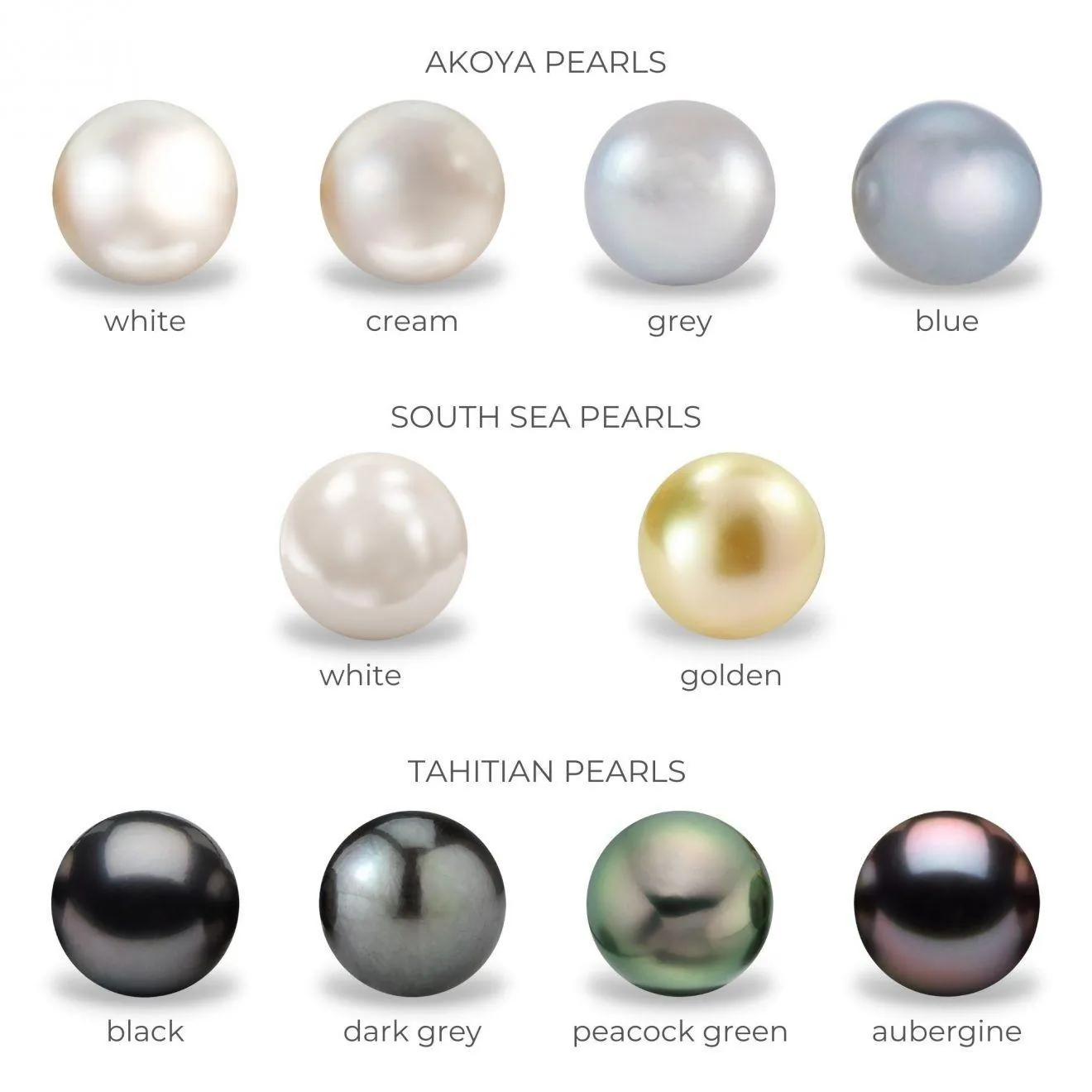
Freshwater and Akoya pearls are the easiest general-purpose workplace choices, but not because other pearl types are inappropriate. They simply offer many designs in familiar, wearable scales.
Akoya pearls
Choose Akoya when you want the classic round white pearl look with crisp luster and a highly polished visual effect. They are a natural fit for studs, formal strands, and traditional professional styling.
Freshwater pearls
Choose freshwater pearls when you want more flexibility in shape, size, color, and design. They can be classic and round, or more relaxed and baroque, which makes them especially useful across business-casual and creative wardrobes.
Tahitian pearls
Choose Tahitian pearls when darker gray, greenish, silver, or peacock colors work better with your wardrobe. A single Tahitian pearl can look restrained and modern even though the color is more distinctive than classic white.
South Sea pearls
Choose South Sea pearls when you intentionally want larger scale and stronger visual presence. Their size can make even a simple stud or pendant feel more luxurious, so they are often better as a deliberate focal point than as an invisible workplace accessory.
GIA notes that pearl varieties differ naturally in size, color, and other characteristics, so comparing “8 mm Akoya” and “8 mm South Sea” as if they occupy the same place within their categories can be misleading.
Do Not Overpay for “Office Appropriate” — Buy Quality You Can Actually See
A professional-looking pearl does not need to be the most expensive pearl available. Focus on the characteristics that remain visible when the jewelry is worn.
For studs, prioritize:
- luster that looks bright rather than chalky;
- a pair that matches reasonably in size, color, shape, and luster;
- a secure post and backing;
- a setting that sits comfortably on the ear.
For a strand, also pay attention to overall matching, clasp security, string condition, and how the length works with your common necklines.
For a pendant, the pearl can be less perfectly round if the design benefits from shape. In that case, strong luster and an attractive silhouette may matter more than roundness.
GIA evaluates pearls through seven value factors: size, shape, color, luster, surface, nacre, and matching. The important workplace lesson is that “professional” is a styling judgment, while “quality” is a separate evaluation. Do not confuse the two.
How to Make Pearls Work with Your Existing Work Wardrobe
You do not need a separate pearl collection for every dress code. A small number of versatile pieces can cover most work situations.
- Navy, black, gray, white: classic white pearls are easy; silver-gray Tahitians add a darker option.
- Warm beige, camel, cream, brown: cream-toned or warm white pearls integrate naturally; golden pearls can become a stronger focal point.
- Patterned shirts or busy tailoring: use simple studs or one pendant rather than another complex element.
- Minimal monochrome outfits: you have more room for baroque shape, larger size, or darker color.
- High necklines: earrings often work better than forcing a necklace into limited visual space.
- Open collars and V-necks: a single pendant can follow the neckline cleanly.
If you are building a small work-jewelry rotation from scratch, browse the pearl jewelry collection by format first, then narrow by pearl type.
Workday Pearl Care: Small Habits Matter
Daily workplace wear exposes jewelry to more repeated contact than occasional event wear. GIA advises keeping pearls away from harsh chemicals such as perfume, hairspray, cosmetics, and cleaning agents, and recommends wiping pearls with a soft cloth after wearing.
For work, that translates into a simple routine:
- Apply fragrance, cosmetics, and hair products before putting on pearls.
- Do not throw pearl jewelry loose into a bag beside keys, metal accessories, or other hard objects.
- If you remove earrings or a pendant during the day, use a small soft pouch or separate compartment.
- Wipe the pearls gently after wearing, especially after a long day.
For a complete maintenance routine, see the pearl care and maintenance guide.
A 30-Second Workplace Pearl Decision
If you want to choose quickly, use this sequence:
- Very conservative workplace? Start with 5–7 mm white studs.
- Normal professional or client-facing office? Start with 6–8 mm studs or a simple pendant.
- Business casual? Add short drops, near-round, button, or small baroque pearls.
- Creative environment? Use shape, Tahitian color, asymmetry, or a larger focal pearl.
- Video calls dominate your day? Favor earrings that remain visible near the face.
- Hands-on work or restrictive rules? Choose secure low-profile jewelry only if permitted.
Then adjust size up or down based on how noticeable you want the pearls to be. That is a more reliable method than treating one pearl species or one millimeter range as universally “professional.”
Frequently Asked Questions
What pearl earrings are best for the office?
Simple pearl studs are the most universal choice. Around 6–8 mm is a practical starting range for many workplaces because the pearls are clearly visible without automatically becoming a statement. More conservative settings may favor 5–7 mm, while 8–9 mm works well when you want more presence.
Are freshwater or Akoya pearls better for work?
Neither is automatically better. Akoya pearls naturally suit a classic round white professional look, while freshwater pearls offer more variety in shape, size, color, and design. Choose the finished jewelry based on your workplace and personal style.
Can Tahitian pearls look professional?
Yes. A simple Tahitian stud or single-pearl pendant can look very clean with black, gray, navy, white, or other neutral workwear. The darker color makes the pearl more distinctive, but it does not make it unprofessional.
Is a pearl necklace too formal for everyday work?
Not necessarily. A single-pearl pendant is easy to wear casually, while a full strand creates a more polished impression. The same strand can feel formal with a matching set or relaxed with a plain knit, shirt, or T-shirt.
Are large pearls inappropriate for work?
No fixed size becomes inappropriate at a particular millimeter. Larger pearls simply create more visual presence. In conservative settings, keep the design simple; in creative or flexible workplaces, a larger pearl can work as an intentional focal point.
Can I wear pearls to work every day?
Yes, with reasonable care. Earrings and pendants are generally easier for frequent wear because they face less contact than rings and bracelets. Keep pearls away from unnecessary abrasion and harsh chemicals, and wipe them gently after wearing.
Final Takeaway
The best workplace pearl is not defined by one species, one size, or one dress-code rule. It is the piece that matches the formality of your environment, stays comfortable through the workday, creates the amount of visual presence you want, and can be worn often without constant adjustment.
For the broadest range of workplaces, start with 6–8 mm pearl studs or a simple single-pearl pendant. Move smaller for discretion, larger for presence, more irregular for personality, or darker in color when that works better with your wardrobe.
Work jewelry succeeds through repetition. The best choice is usually the pearl you can put on in the morning, forget about while you work, and still feel properly dressed when an unexpected meeting appears on your calendar.