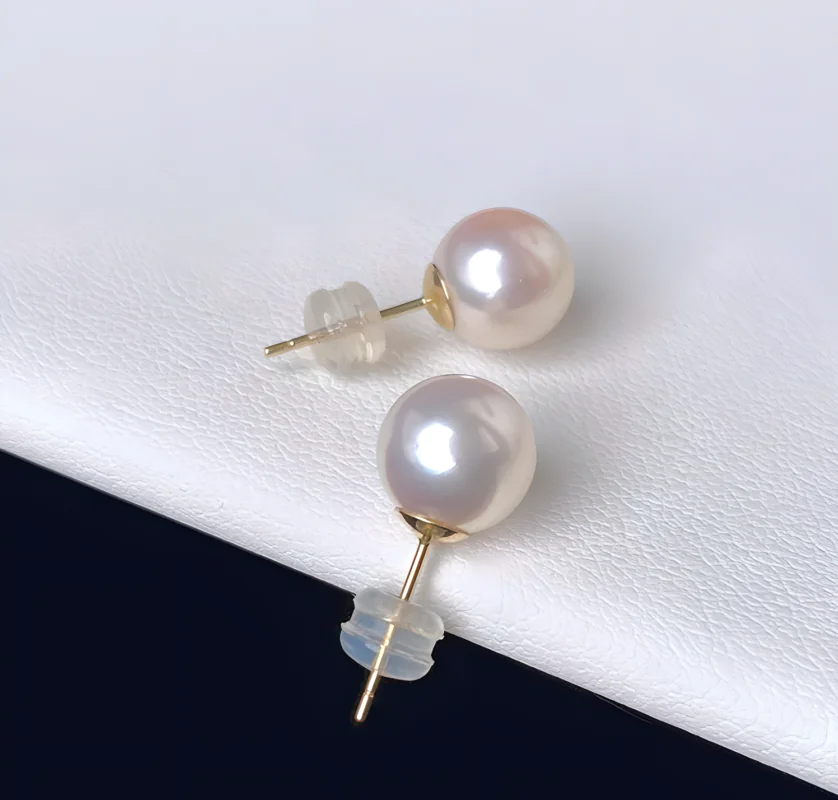
No. A pearl’s origin can influence the conditions in which it forms, but origin does not directly determine the quality of an individual pearl.
A famous producing region may tell you something about the pearl’s mollusk species, cultivation environment, typical size or color range, industry tradition, rarity, and market reputation. It cannot tell you, by itself, whether a particular pearl has strong luster, a clean surface, good nacre, an attractive shape, or careful matching.
The simplest distinction is this: origin describes context; quality describes the result. If you want a broader explanation of how geography, mollusk species, and pearl type relate to one another, see our guide to why pearl origin matters.
Origin and Quality Answer Different Questions
Buyers often combine “where is this pearl from?” and “how good is this pearl?” into one question. They are related, but they are not interchangeable.
| Question | What It Mainly Tells You |
|---|---|
| Where was the pearl cultured? | Geographic provenance, growing environment, and production context |
| What type of pearl is it? | Mollusk, cultivation method, typical size range, color possibilities, and appearance |
| How good is this pearl? | The actual quality of the individual pearl or matched group |
This distinction matters because two pearls from the same country, farm, or harvest can still look very different. One may have sharp reflections and a relatively clean surface, while another may look duller or show more visible blemishes. Their shared origin does not erase those differences.
How Can Origin Influence Pearl Quality Indirectly?
Origin is not a grade, but it can influence the environment in which quality develops. That influence usually works through several intermediate factors.
1. Origin is connected to mollusk species and pearl type
Different pearl-producing mollusks thrive in different environments. That is why major pearl types are associated with different producing regions and have different biological possibilities.
For example, South Sea pearl oysters can produce much larger pearls than Akoya pearl oysters. Tahitian cultured pearls have characteristic dark bodycolors and overtones that are not typical of white Akoya pearls. These differences help define the pearl type, but they do not tell you whether an individual pearl is excellent or poor within that type.
2. Local growing conditions affect the mollusk
Pearls grow inside living mollusks, so water quality, temperature, food availability, disease, weather, and other environmental conditions can influence growth. A healthy farming environment can create better conditions for pearl formation, while stressful conditions can reduce yield or affect the harvest profile.
That still does not create a guarantee. Even under favorable conditions, cultured pearls from the same production area will not all develop identical luster, surfaces, shapes, or nacre.
3. Farming and selection practices can differ by region
Some producing regions have long-established cultivation, sorting, processing, and matching traditions. Those systems can influence how consistently pearls are produced and how strictly finished lots are selected.
This is one reason certain origins develop strong reputations. But a reputation describes the strength of an industry or supply chain; it is not a substitute for inspecting the actual pearl in front of you.
What Actually Determines the Quality of an Individual Pearl?
For the individual pearl, observable quality factors matter more than the country name. The Gemological Institute of America uses seven pearl value factors: size, shape, color, luster, surface, nacre, and matching for jewelry containing multiple pearls.
Our pearl grading guide explains these characteristics in more detail. In practical buying, the following points deserve particular attention:
- Luster: Are reflections bright and sharp, or weak and hazy?
- Surface: How visible, numerous, and severe are blemishes or irregularities?
- Nacre: Does the pearl show healthy nacre development, or signs associated with weak or poor layering?
- Shape: Is the shape appropriate and attractive for the intended use? For round-pearl categories, roundness can carry a significant premium.
- Color: Is the bodycolor and overtone attractive, even, and appropriate to the pearl type?
- Size: Larger sizes can be rarer within a pearl type, but size alone is not proof of better quality.
- Matching: For pairs and strands, do the pearls work together consistently in size, shape, color, luster, surface, and overall appearance?
A country label cannot answer any of these questions by itself.
A Famous Origin Can Still Produce Ordinary Pearls
This is the most important correction to the idea that origin determines quality.
Japan is famous for Akoya cultured pearls, but not every Japanese Akoya pearl has top luster, a clean surface, thick-looking nacre, or near-perfect roundness. French Polynesia is closely associated with Tahitian cultured pearls, but Tahitian pearls from the same general origin can differ greatly in luster, surface, shape, color, and matching. The same principle applies to South Sea and freshwater pearls.
Prestigious origin and high quality often appear together because strong producing regions may have expertise, established farming systems, strict selection, and access to desirable material. But the relationship is statistical and commercial, not automatic.
A weak pearl does not become fine quality because it carries a respected place name.
Can Pearls from Different Origins Be Equally High Quality?
Yes. Pearls from different producing regions can both be excellent examples of their type.
The key is to compare like with like. If two Akoya pearls come from different producing countries, you can compare their luster, surface, nacre, shape, color, size, and matching directly. The pearl with the stronger overall combination may be the better-quality pearl regardless of which country name sounds more prestigious.
Comparing different pearl types requires more care. A South Sea pearl is usually judged within a very different size and appearance range from an Akoya pearl. A larger South Sea pearl is not automatically “higher quality” than a smaller Akoya pearl, just as the Akoya’s sharper-looking luster does not automatically make it superior to a softer-looking South Sea pearl.
Quality should be judged in the context of the pearl type, not by forcing every pearl into one visual ideal.
Then Why Can Origin Affect Price?
Because price reflects more than quality alone.
Origin can influence price through rarity, production volume, supply stability, traceability, industry reputation, consumer preference, and the prestige attached to a producing region. A buyer may also value a documented origin for cultural, collecting, or sourcing reasons.
That means two pearls with similar visible quality can sometimes sell at different prices because their provenance and market positioning are different.
This is not necessarily irrational. Provenance can be part of what a buyer is paying for. The mistake is assuming that a higher origin-related price automatically proves better pearl quality.
For a broader look at how quality, rarity, size, pearl type, and market factors interact, see our guide to evaluating pearl value.
How Should You Use Origin When Buying Pearls?
A useful buying sequence is:
- Identify the pearl type first. Know whether you are comparing Akoya, Tahitian, South Sea, freshwater, or another category.
- Understand what the stated origin means. Is it a verified cultivation origin, a broad regional description, or simply part of the seller’s marketing language?
- Judge the actual pearl. Check luster, surface, nacre, shape, color, size, and matching.
- Compare within the same type and general size range. This makes quality differences easier to see.
- Consider the origin premium separately. Decide whether provenance, rarity, reputation, or traceability is personally worth paying more for.
This order prevents a famous name from doing the work that your eyes—and the pearl’s actual characteristics—should be doing.
Origin Is Useful Context, Not a Quality Certificate
Origin matters. It can help explain the mollusk, pearl type, environment, production tradition, rarity, and market position behind a pearl. It can also make a pearl more interesting or more desirable to a particular buyer.
But if the question is simply, “Is this a high-quality pearl?” origin should not be your final answer.
Look at the pearl itself. Evaluate its luster, surface, nacre, shape, color, size, and matching. Use origin to understand why the pearl may be different, not to assume how good it must be.
If you are comparing pearls for a purchase, our pearl buying guide provides a broader framework for balancing pearl type, quality, size, style, and budget.
FAQ
Does pearl origin determine pearl quality?
No. Origin can influence pearl type, growing conditions, rarity, and market reputation, but the quality of an individual pearl still depends on its actual characteristics, including luster, surface, nacre, shape, color, size, and matching.
Are Japanese Akoya pearls automatically better than Akoya pearls from other countries?
No. Japan has a long and influential Akoya pearl industry, and many exceptional Akoya pearls are produced there. However, Japanese origin is not a quality grade. Individual Japanese Akoya pearls still vary in luster, surface quality, nacre, shape, color, and matching.
Does a famous pearl origin justify a higher price?
Sometimes, but the premium may reflect provenance, rarity, supply, reputation, or buyer demand rather than a direct improvement in visible quality. It is useful to separate the quality premium from the origin premium.
Can you identify a pearl’s exact geographic origin just by looking at it?
Usually not with confidence. Appearance can suggest a pearl type or possible production context, but visual characteristics often overlap. If exact provenance matters, reliable supply-chain documentation is more useful than appearance alone.
Should pearls of different types be judged in exactly the same way?
The same broad quality factors can be used, but expectations differ by pearl type. Typical size, color, luster character, shape distribution, and production method vary, so a fair comparison should consider what is normal and desirable within that type.