The Relationship Between Australian White Pearls and White South Sea Pearls
Australian white pearls are not a separate pearl type from White South Sea pearls. In normal trade usage, an Australian white pearl is a White South Sea cultured pearl with an added geographic claim: it was cultured in Australia. “White South Sea pearl” describes the broader pearl type and color direction, while “Australian” narrows the origin. So one pearl can correctly be both an Australian white pearl and a White South Sea pearl.
Quick answer: Australian white pearls are a geographic subset of White South Sea pearls
The simplest way to understand the relationship is to separate pearl type from cultivation origin.
- White South Sea pearl tells you the pearl belongs to the South Sea cultured-pearl category and falls within the white-to-silver color family.
- Australian white pearl usually means a white or silver South Sea cultured pearl that was cultured in Australian waters.
- Australian South Sea pearl identifies Australian cultivation but does not, by itself, require one exact shade of white.
That means the terms overlap, but they are not interchangeable. All correctly described Australian white South Sea pearls belong within the White South Sea category, but not every White South Sea pearl is Australian.
| Term | What it mainly tells you | What it does not prove |
|---|---|---|
| White South Sea pearl | Pearl type and white/silver color direction | That it was cultured in Australia |
| Australian white pearl | White/silver South Sea pearl plus Australian cultivation origin | A particular quality grade |
| Australian South Sea pearl | South Sea pearl cultured in Australia | An exact bodycolor, overtone, shape, or grade |
What makes a pearl a White South Sea pearl?
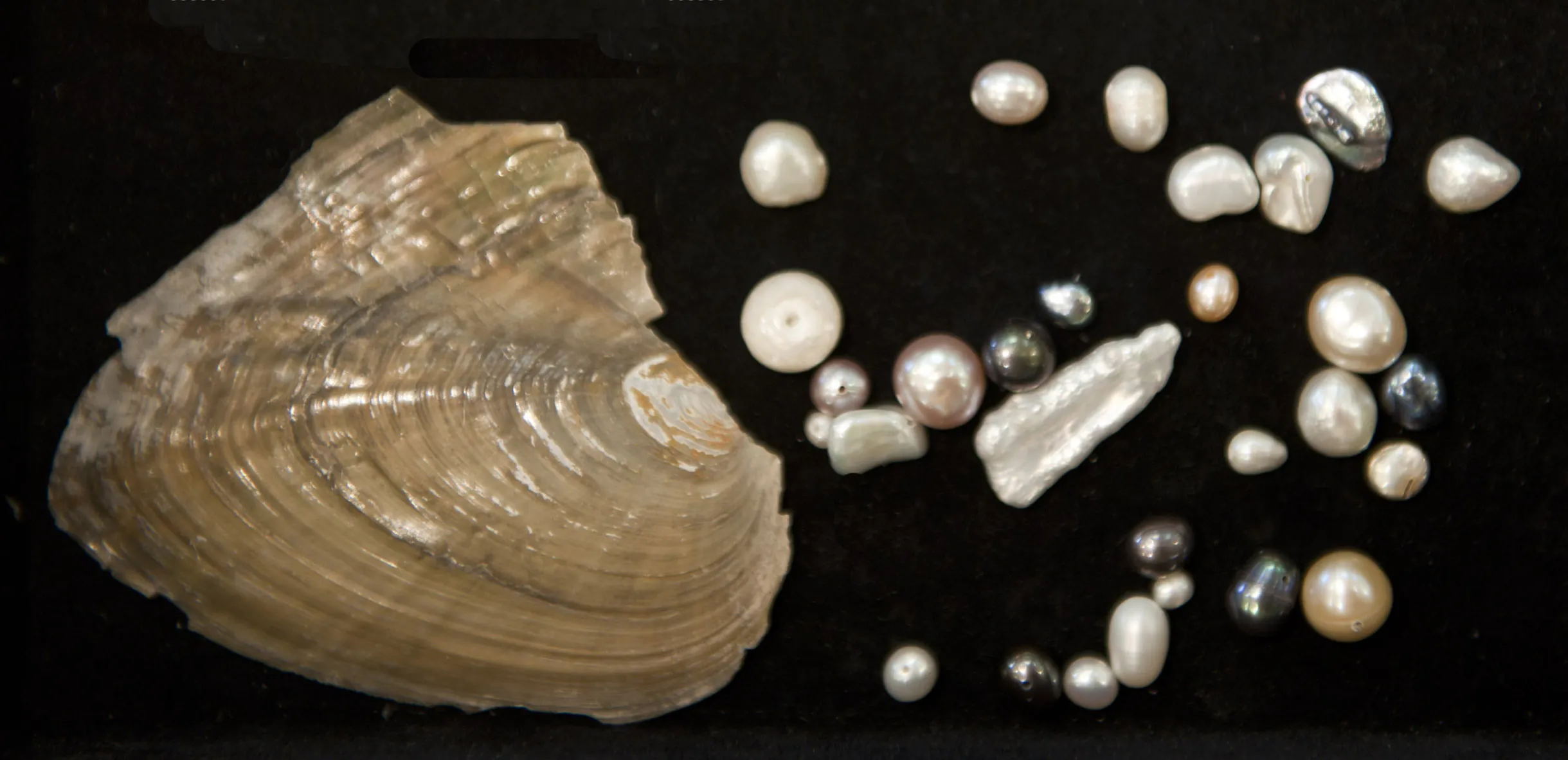
South Sea cultured pearls are produced by Pinctada maxima, one of the largest pearl oysters used commercially. The species occurs in silver-lipped and gold-lipped forms. The silver-lipped form is associated mainly with white-to-silver cultured pearls, while the gold-lipped form is associated mainly with yellow-to-golden cultured pearls.
GIA describes South Sea cultured pearls as bead-nucleated saltwater pearls grown in Pinctada maxima and notes that major production occurs in Australia, Indonesia, and the Philippines, with production also associated with Myanmar and other parts of the broader P. maxima range. The category is known for relatively large sizes, substantial nacre, and a softer, satiny style of luster compared with the sharper mirror-like appearance often associated with fine Akoya pearls.
If you want the broader biological and market background first, our South Sea pearl guide explains the category as a whole.
Why is Australia so closely associated with white South Sea pearls?
Australia has an unusually strong connection with the silver-lipped Pinctada maxima industry. GIA research describes Australia as the largest producer of white P. maxima cultured pearls, while the Western Australian Department of Primary Industries and Regional Development states that its pearling industry uses silver-lipped Pinctada maxima to produce silver-white South Sea pearls.
Western Australia is especially important. Commercial pearling is concentrated along the northwestern coast, including the Kimberley and areas near Broome. Both wild-collected and hatchery-bred pearl oysters can enter the culture system, and the oysters are seeded and then cared for on farms while the pearl develops.
This production history is why consumers and jewelers often hear phrases such as “Australian South Sea pearl,” “Australian white pearl,” or “Australian silver-white South Sea pearl.” These are useful provenance descriptions when the origin is documented, but they should not be mistaken for a completely different biological pearl category.
Are all White South Sea pearls from Australia?
No. This is the most important distinction in the article.
Pinctada maxima is cultured across a much broader Indo-Pacific region than Australia alone. GIA has documented South Sea production in Australia, Indonesia, the Philippines, and Myanmar, and gemological literature includes white, silver, and creamy-white P. maxima pearls from more than one of those origins. Therefore, a seller can accurately describe a pearl as a White South Sea cultured pearl without claiming that it is Australian.
In practical terms:
- A white South Sea pearl cultured in Australia may be described as an Australian White South Sea pearl.
- A white South Sea pearl cultured in Indonesia remains a White South Sea pearl, but it should not be upgraded to “Australian” merely because it was later traded through Australia.
- A White South Sea pearl with unknown farm origin should stay described by the pearl type unless reliable provenance supports a more specific country claim.
Our overview of global pearl-producing regions helps place these labels within the wider geography of pearl culture.
Does “Australian white” mean the pearl must look pure white?
Not necessarily. Pearl color is more complicated than a single color word.
White South Sea pearls can show bodycolors ranging from bright white toward silver or cream, and they may display subtle overtones such as rosé, blue, or green. Australian production is strongly associated with white and silver directions, but individual pearls and lots still vary.
This matters because the word “white” in a commercial category is not a promise that every pearl will match a sheet of white paper. A fine Australian pearl may look distinctly silver-white, creamy white, or white with a delicate overtone. Those differences can be desirable rather than defects.
For the same reason, color alone should not be treated as proof of Australian origin. White and silver P. maxima pearls can occur outside Australia, so a buyer should not infer a country simply from appearance.
Can you identify an Australian White South Sea pearl just by looking at it?
Not reliably enough to make a strong geographic claim.
An experienced pearl buyer may notice tendencies in color, luster character, size distribution, or sorting style across different supplies. Those observations can be useful when comparing lots, but they are not the same as documentary proof that a pearl was cultured in Australia. Production regions overlap in appearance, and individual pearls can fall outside the “typical” look associated with a country.
The safer principle is: use appearance to evaluate the pearl; use traceability to support the origin claim.
If geographic origin materially affects the price or product story, ask for supplier documentation that preserves the cultivation origin through the supply chain. If the question is pearl identity rather than country provenance, professional gemological testing is more appropriate than visual guessing. Our pearl identification guide explains why appearance alone has limits.
Are Australian white pearls automatically higher quality?
No. Australian origin can carry prestige, supply-chain value, and market recognition, but origin is not a substitute for grading the actual pearl.
GIA evaluates pearl quality using seven value factors: size, shape, color, luster, surface, nacre, and matching. These factors describe the pearl that is actually in front of you. A poorly lustrous, heavily blemished Australian-origin pearl does not become high grade simply because it is Australian, while a beautiful White South Sea pearl from another documented origin does not become low grade simply because it is not Australian.
For a loose pearl, pair, or strand, compare the real quality factors first:
- Luster: Is the surface lively and luminous rather than dull or chalky?
- Surface: How visible and distracting are the blemishes?
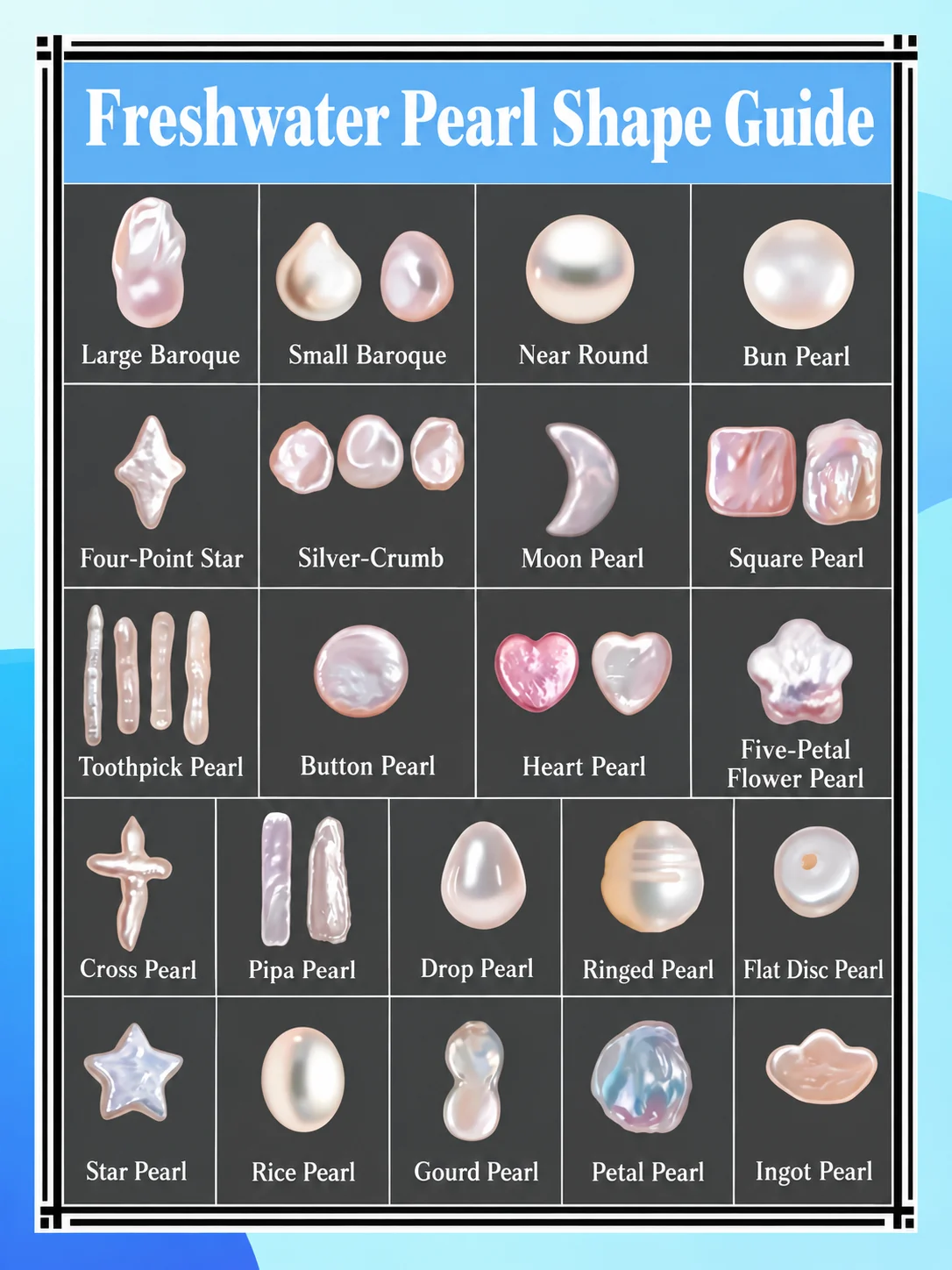
- Shape: Is the pearl round, near-round, drop, button, circled, or baroque—and is that shape desirable for the intended design?
- Color: Is the bodycolor attractive, even, and appropriate for the buyer’s preference?
- Size: How large is the pearl relative to comparable South Sea pearls?
- Nacre: Does the pearl show healthy nacre quality and the characteristic depth expected of a good South Sea pearl?
- Matching: For pairs and strands, how consistent are the pearls across the other value factors?
See our guide to evaluating pearl value for a fuller explanation of these factors.
Why can Australian origin still affect price?
Saying that origin is not a quality grade does not mean origin is commercially irrelevant.
Documented Australian provenance can matter because of production history, consumer recognition, farm reputation, traceability, operating conditions, supply limitations, and demand for particular Australian white or silver appearances. Some buyers are specifically willing to pay more for well-documented Australian material.
But that premium should be understood as a provenance and market factor layered on top of pearl quality, not as proof that every Australian pearl is superior to every non-Australian White South Sea pearl.
A better comparison is therefore:
actual pearl quality + documented origin + matching requirement + size + market demand, rather than simply “Australia versus non-Australia.”
A practical labeling framework for buyers, retailers, and wholesalers
For trade communication, the clearest approach is to keep three fields separate: pearl type, color description, and cultivation origin. This avoids asking one label to do too much.
| What you know | Clear description | Why it works |
|---|---|---|
| White/silver P. maxima pearl; Australian farm origin documented | Australian White South Sea cultured pearl | States both pearl category and country of cultivation |
| White/silver South Sea pearl; non-Australian origin documented | White South Sea cultured pearl, cultured in [country] | Keeps the pearl type accurate without implying Australia |
| South Sea type is known; cultivation country is not verified | White South Sea cultured pearl; cultivation origin not verified | Avoids inventing provenance |
| Pearl was traded, sorted, drilled, or mounted in Australia but farm origin differs | State the actual cultivation origin separately from processing or jewelry manufacture | Prevents “handled in Australia” from becoming “cultured in Australia” |
This distinction is especially useful for invoices, wholesale quotations, certificates supplied by sellers, product pages, and high-value jewelry descriptions. If “Australian” changes the price, the evidence supporting that word should be stronger than a visual impression or the location of the final dealer.
What should you ask when a seller says “Australian white pearl”?
You do not need a long interrogation. A few precise questions usually clarify the product:
- Is this a South Sea cultured pearl from Pinctada maxima?
- Does “Australian” refer to the country where the pearl was cultured?
- Is the origin documented by the farm, supplier, or lot paperwork?
- How is the pearl graded for luster, surface, shape, color, size, nacre, and matching?
- For a strand or pair, are all pearls from the same stated origin, or is the lot mixed?
These questions separate provenance from quality and make price comparisons much more meaningful.
The relationship in one sentence
“White South Sea pearl” is the broader pearl category; “Australian white pearl” is a narrower origin-qualified description within that category. Australia is one of the most important sources of white and silver Pinctada maxima cultured pearls, but White South Sea pearls are not geographically exclusive to Australia, and Australian origin by itself is not a quality grade.
FAQ
Are Australian white pearls the same as White South Sea pearls?
They can refer to the same pearl, but the terms are not identical. An Australian white pearl is normally a White South Sea cultured pearl with Australian cultivation origin. “White South Sea pearl” is broader and does not require Australian origin.
Are all White South Sea pearls Australian?
No. South Sea cultured pearls from Pinctada maxima are produced in several Indo-Pacific regions. Australia is especially important for white and silver production, but White South Sea pearls can also come from other producing countries.
What oyster produces Australian white South Sea pearls?
They are associated with the silver-lipped form of Pinctada maxima, the large saltwater pearl oyster used to produce South Sea cultured pearls.
Can the color prove that a White South Sea pearl is Australian?
No. Australian pearls are strongly associated with white and silver colors, but similar color directions can occur in Pinctada maxima pearls from other origins. Color can describe appearance, but it should not be used alone as proof of country of cultivation.
Are Australian white pearls always more valuable?
No. Documented Australian provenance may carry a market premium, but value still depends heavily on the actual pearl’s size, shape, color, luster, surface, nacre, and matching. Origin and quality should be evaluated separately.
Reference framework
This article follows the South Sea pearl terminology and production framework described by the Gemological Institute of America, including its research on Pinctada maxima and its overview of major cultured pearl types. The Australian production context is supported by the Western Australia Department of Primary Industries and Regional Development’s pearl oyster fishery information. Pearl-quality comparisons follow the GIA pearl quality factors.