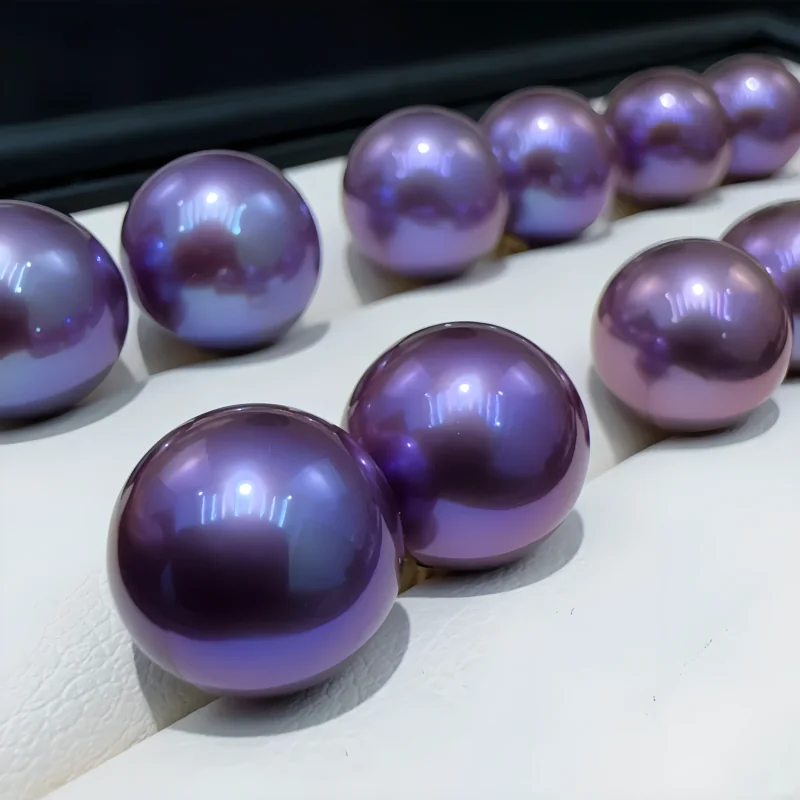
If your pearl budget is limited, do not try to maximize every quality factor at once. Protect the qualities that affect the pearl across its whole visible surface—especially healthy nacre and strong luster—then decide which secondary qualities actually matter for the jewelry you are buying. In many cases, you can save money by accepting a smaller size, slight off-roundness, a minor hidden surface mark, or a simpler jewelry format without making the pearl look cheap.
A practical low-budget order is: avoid structural problems first, protect luster second, then spend on the factor your specific piece needs most—surface, matching, shape, or size. Perfect roundness, very large diameter, rare colors, premium pearl types, and extremely tight matching can all add cost, but they are not equally important in every design.
This approach follows the same basic quality framework used by GIA, which evaluates pearls through size, shape, color, luster, surface quality, nacre quality, and matching. If you are new to those terms, start with our Pearl Grading Guide before comparing listings.
Quick Answer: What Should You Protect, and What Can You Compromise On?
| Quality factor | Low-budget priority | Practical compromise |
|---|---|---|
| Nacre / condition | Protect | Avoid pearls that look chalky, peeling, cracked, or structurally questionable just to gain size or roundness |
| Luster | Usually protect strongly | Choose a smaller or less perfectly round pearl before accepting obviously dull reflections |
| Surface | Protect the visible face | Accept a few small marks if they are discreet or can be hidden by drilling or mounting |
| Shape | Depends on design | Near-round, button, oval, drop, or baroque can offer better value when perfect roundness is unnecessary |
| Size | Flexible | Dropping one size step can free budget for visibly better luster or surface quality |
| Matching | High for pairs and strands; low for single pearls | Do not pay for strand-level matching if you are buying one pendant pearl |
| Color / overtone | Preference-driven | Choose a pleasing common color rather than paying heavily for a scarce or fashionable one |
| Pearl type | Choose for the look you need | Do not pay for a category name if a less expensive pearl type gives you the appearance you actually want |
The order is not a universal grading formula. It is a budget-allocation framework. A classic Akoya strand, a pair of studs, a baroque pendant, and an everyday freshwater necklace should not all spend their budget in the same way.
First Principle: Separate Non-Negotiables from Premiums
Budget shopping becomes easier when you stop treating every pearl characteristic as equally necessary.
Some characteristics are closer to non-negotiables: the pearl should be genuine as represented, have an acceptable overall condition, and look attractive enough in luster for its type. Other characteristics are often premiums: larger size, stricter roundness, very clean surfaces, rare colors, extremely tight matching, and more expensive pearl categories.
The mistake is to sacrifice the first group in order to obtain the second. A large, perfectly round pearl that looks dull is not automatically a better purchase than a slightly smaller near-round pearl with lively reflections. Likewise, a pearl with a premium type name is not automatically a better-looking piece than a less expensive cultured pearl with stronger visible quality.
If you want a broader explanation of why these combinations can change price so dramatically, see how pearl value is evaluated.
1. Protect Luster Before Chasing Extra Size
For most budget buyers, luster is the first visible quality worth protecting. GIA describes luster as potentially the most important of the seven pearl value factors. High-luster pearls show bright, relatively sharp reflections; lower-luster pearls look softer, hazier, or dull.
Luster deserves special weight because it affects the entire pearl. A small surface mark may only be visible from one angle. A slight difference in roundness may disappear at normal wearing distance. But weak luster can make the whole pearl look flat.
When comparing two similarly priced options, the more efficient budget choice is often:
- a 7–8 mm pearl with strong luster rather than an 8–9 mm pearl with noticeably weaker luster;
- a high-luster near-round pearl rather than a duller pearl bought only for stricter roundness;
- a well-lustrous freshwater pearl rather than an entry-level saltwater pearl chosen mainly for the category name.
This does not mean every pearl should have the same mirror-like appearance. Different pearl types can show different luster character. The goal is to compare luster appropriately within the type you are considering. Our Pearl Luster Guide explains what bright, sharp, hazy, and satin-like reflections look like in practice.
2. Do Not Save Money by Accepting Poor Nacre or Serious Damage
Nacre quality and overall physical condition are different from harmless cosmetic imperfection. GIA notes that thin or poor nacre can be associated with a dull, chalky appearance and can affect durability as well as luster.
For a low-budget buyer, that creates an important boundary: minor beauty compromises are reasonable; structural compromises are usually not.
Be cautious when a pearl shows obvious peeling, cracking, severe abrasion, a visibly exposed nucleus, or a chalky appearance that suggests poor nacre condition. Saving money on these defects is very different from accepting a small pit near a drill hole.
A good budget pearl does not need to be flawless. It should simply be sound enough that the discount comes from characteristics you can live with rather than from a problem that undermines the pearl itself.
3. Surface Quality Is Where Smart Compromise Often Begins
Most pearls are not perfectly clean. Small pits, pinpoints, ridges, wrinkles, or other growth features are common because pearls form inside living mollusks.
GIA specifically notes that surface characteristics matter less when they are few, minor, or positioned where a drill hole or mounting can hide them. That makes surface quality one of the most useful areas for intelligent compromise.
Instead of asking, “Does this pearl have any blemish?” ask:
- How many marks are there?
- How deep or severe are they?
- Are they on the main visible face?
- Will the setting, drill hole, or hair naturally conceal them?
- Do they affect durability, or are they mainly cosmetic?
A lightly blemished high-luster pearl can be a very strong budget purchase when the marks are difficult to notice in normal wear. By contrast, paying extra for a perfectly clean surface may be poor value if the difference is only visible under close inspection.
4. Perfect Roundness Is Often Optional
Round pearls usually carry a premium because true spherical shape is difficult to produce. GIA notes that, when other factors are equal, round cultured pearls are generally the most valuable shape.
That makes shape one of the easiest premiums to question when money is tight. If you like a classic look, near-round pearls can preserve much of the visual effect of round pearls without making strict geometry the entire purchase. Button pearls can work especially well for studs, while oval, drop, and baroque pearls may be the better design choice for pendants and dangling earrings.
The key is to choose a shape intentionally. Do not buy an irregular pearl because it is cheaper if you actually dislike irregularity. But if you enjoy the look, there is no reason to pay a premium for roundness you do not need.
For a shape-by-shape comparison, see our Pearl Shape Guide.
5. Size Should Be Chosen for Visual Scale, Not Status
Larger pearls are generally more valuable when the other quality factors are equal. But that does not make larger automatically better for a limited budget.
Size is one of the cleanest variables to reduce because a small change in diameter can free money for better luster, cleaner visible surfaces, better matching, or stronger jewelry construction.
Ask yourself whether the extra millimeter materially changes the way the jewelry looks on you. If not, the smaller pearl may be the more efficient purchase.
This is especially useful for earrings and pendants, where one well-selected pearl can look polished without needing the largest possible diameter. If you are unsure what different millimeter sizes actually look like when worn, use our Pearl Size Guide before paying for extra scale.
6. Matching Matters Only When There Is Something to Match
Matching is essential to some pearl jewelry and almost irrelevant to other pieces. GIA includes matching as a value factor when two or more pearls are used together.
For a classic necklace, bracelet, or stud pair, matching can strongly affect the finished appearance. Pearls that differ noticeably in size, color, luster, surface, or shape can make the piece look inconsistent unless the design is intentionally mixed.
But a single-pearl pendant has no matching problem. A solitaire ring does not need strand-level uniformity. A deliberately multicolor or baroque design may even use controlled variation as part of its character.
This gives low-budget buyers one powerful strategy: buy fewer pearls before buying lower-quality pearls. If a fine strand exceeds your budget, a better pair of earrings or a better single pendant may give you more visible quality for the same money.
7. Color Can Be Personal Before It Is Expensive
Pearl color includes bodycolor and, in some pearls, overtone or orient. Certain colors may become more expensive because of scarcity or market demand, but a more expensive color is not automatically more flattering or more useful to you.
If your budget is limited, prioritize a color you genuinely enjoy and will wear often. A clean white, cream, pinkish, peach, lavender, silver-gray, or other common attractive color may be a better purchase than stretching for a rarer shade simply because it sounds more exclusive.
Also keep treatment disclosure separate from color preference. If an unusual color is part of the price, you should understand whether it is natural to that pearl type or the result of treatment. The goal is not to reject treated pearls automatically; it is to know what you are paying for.
Should Low-Budget Buyers Start with Freshwater Pearls?
Often, yes—but not automatically. Freshwater cultured pearls usually give buyers broad flexibility in size, shape, color, and price, which makes them a practical starting point when the goal is to maximize visible quality within a limited budget.
That is especially true if your priorities are strong luster, attractive surface quality, a larger visual size, or a modern non-round shape. In those cases, spending the same amount on freshwater rather than insisting on a saltwater category can give you more room to optimize the characteristics you actually see.
However, pearl type should still follow the look you want. If your priority is the classic refined appearance associated with fine Akoya pearls—especially roundness, crisp luster, and tight matching—a smaller or simpler Akoya piece may satisfy you more than a larger freshwater alternative.
The budget rule is therefore not “always buy freshwater.” It is do not let the pearl type consume your budget unless the type itself is part of the look you want.
How Your Priority Order Changes by Jewelry Type
| Jewelry | Protect first | Where to compromise |
|---|---|---|
| Stud earrings | Luster, pair matching, attractive front-facing surface | Slightly smaller size; button or near-round profile if the front looks good |
| Single pendant | Luster, attractive visible face, color or shape you like | Matching is irrelevant; minor marks on the back can matter little |
| Classic necklace | Consistent luster, overall matching, acceptable nacre and surface | Slightly smaller pearls; near-round instead of strictly round |
| Baroque necklace | Luster, intentional color harmony, pleasing overall rhythm | Strict shape uniformity and perfect roundness |
| Ring | Visible face, luster, secure setting, condition | Back-side surface characteristics that the setting conceals |
| Bracelet | Matching, construction, practical size, surface condition | Extreme size or perfectly round shape if the overall piece still looks coherent |
This is why there is no single universal ranking after luster and condition. The jewelry format determines which quality factor becomes expensive for a good reason.
Spend Less by Simplifying the Jewelry Before Downgrading the Pearl
Finished jewelry has costs that do not come from the pearl: gold or silver, chains, clasps, diamonds or other stones, labor, setting, design complexity, branding, packaging, and retail service.
If your goal is to own a beautiful pearl rather than a complicated piece of jewelry, simplifying those extras can protect more of your budget for the pearl itself.
For example, a simple pendant with one strong pearl may give you better visible quality than a multi-pearl design at the same price. A pair of well-selected studs may outperform a low-quality full strand if the strand spreads your budget across dozens of pearls and a clasp.
When you are ready to compare finished pieces, browse the MJ Pearls jewelry collection with the quality priorities above in mind rather than comparing only size or seller grade.
Do Not Overpay for a Grade Label
Terms such as A, AA, AAA, AAAA, “premium,” or “gem quality” can be useful inside one seller’s own system, but they are not a universal language that guarantees identical quality between different sellers.
For a budget buyer, the safest approach is to translate the grade back into visible characteristics:
- How strong is the luster?
- How clean is the visible surface?
- How round or symmetrical is the pearl?
- What is the actual size range?
- How well matched are pairs or strands?
- What is disclosed about pearl type, color, and treatment?
A lower seller grade with a compromise you do not mind can be better value than a higher label whose premium is concentrated in a characteristic you barely notice.
A Five-Step Low-Budget Buying Method
- Set the maximum budget first. Decide what you can spend before choosing a pearl type or chasing a size.
- Choose the jewelry format. Studs, pendants, strands, and bracelets require different levels of matching and different amounts of material.
- Reject weak-condition options. Avoid serious structural damage or poor nacre just to obtain a bigger or rounder pearl.
- Choose the strongest luster you can get within the remaining options. Then decide your second priority: surface, matching, shape, size, color, or pearl type.
- Compare what you are giving up. A good budget purchase has a deliberate compromise you understand—not a vague “cheap” grade.
If you prefer to shop by actual spending level, our existing guide Pearls by Budget: What Really Changes at $50, $150, $300 & $1000 looks at how those trade-offs change as the available budget increases. This article answers the different question: which quality factor should receive the next dollar?
How to Compare Budget Pearls Online
Budget buying becomes harder online because lighting, retouching, camera exposure, and angle can hide the exact compromises you need to judge. Use a consistent checklist:
- Compare similar pearl types and sizes. Do not compare price alone across very different pearl categories.
- Look at reflections, not just brightness. A strongly lit photo can make every pearl look bright; sharper reflections reveal more about luster.
- Request or inspect multiple angles. Surface marks and off-round shapes can disappear in one carefully chosen view.
- Read the measurement range. A strand listed as 7–8 mm is different from a precisely matched 8 mm pair.
- Check whether the photos show the exact item. Representative photography is less useful when surface, shape, or matching is central to your decision.
- Read the seller’s grading definitions. Do not assume AAA means the same thing everywhere.
- Check return conditions before buying. Pearls are highly visual; being able to evaluate them in person reduces the risk of a budget compromise you dislike.
For a broader first-time shopping process covering type, size, quality, and common mistakes, see the Pearl Buying Guide.
Frequently Asked Questions
What is the most important pearl quality factor on a low budget?
For most buyers, luster is the most useful visible factor to protect after confirming acceptable nacre and condition. GIA notes that luster might be the most important of its seven pearl value factors. After that, the priority depends on the jewelry: matching matters more for pairs and strands, while surface placement or shape may matter more for a single pendant.
Should I choose a smaller pearl with better luster?
Often, yes. If the size difference is modest but the luster difference is obvious, the smaller high-luster pearl can look more attractive in normal wear. Choose the size you actually want, but do not pay for extra diameter by accepting a pearl that looks dull.
Are blemished pearls worth buying?
They can be. A few minor surface characteristics are normal and may have limited visual impact, especially if they are near a drill hole, on the back, or hidden by a setting. Avoid severe marks that affect durability or dominate the visible face.
Are near-round pearls a good budget choice?
Yes, particularly when you like the classic round look but do not need perfect spherical geometry. A high-luster near-round pearl can be a better visual purchase than a duller round pearl at the same price.
Are freshwater pearls the best pearls for a small budget?
They are often the most flexible starting point because freshwater cultured pearls are available across a wide range of sizes, shapes, colors, and prices. But they are not automatically the correct choice. If you specifically want the classic Akoya look, a smaller or simpler Akoya piece may suit you better.
Should I buy earrings or a necklace if my budget is very limited?
If visible pearl quality is your main goal, earrings or a single pendant can be easier to optimize because you are paying for one or two pearls rather than a full matched strand. A necklace can still be a good purchase, but more of the budget goes into the number of pearls, matching, stringing, and clasp.
Does a higher pearl grade always mean better value?
No. Seller grading systems differ, and a higher grade may be charging you for characteristics that do not matter much to you. Compare the actual luster, surface, shape, size, color, nacre, and matching rather than relying on the grade label alone.
Final Takeaway
Buying pearls on a low budget is mostly an exercise in choosing the right compromise. Do not try to buy the biggest, roundest, cleanest, rarest pearl type all at once. That usually forces quality downward somewhere else.
Protect sound condition and luster first. Then spend according to the jewelry: matching for pairs and strands, an attractive visible surface for studs and pendants, intentional shape for design-driven pieces, and only as much size as improves the look you actually want.
The best budget pearl is not the pearl with the lowest price or the longest grade label. It is the pearl whose compromises are hard for you to notice—and whose strongest qualities are the ones you will notice every time you wear it.