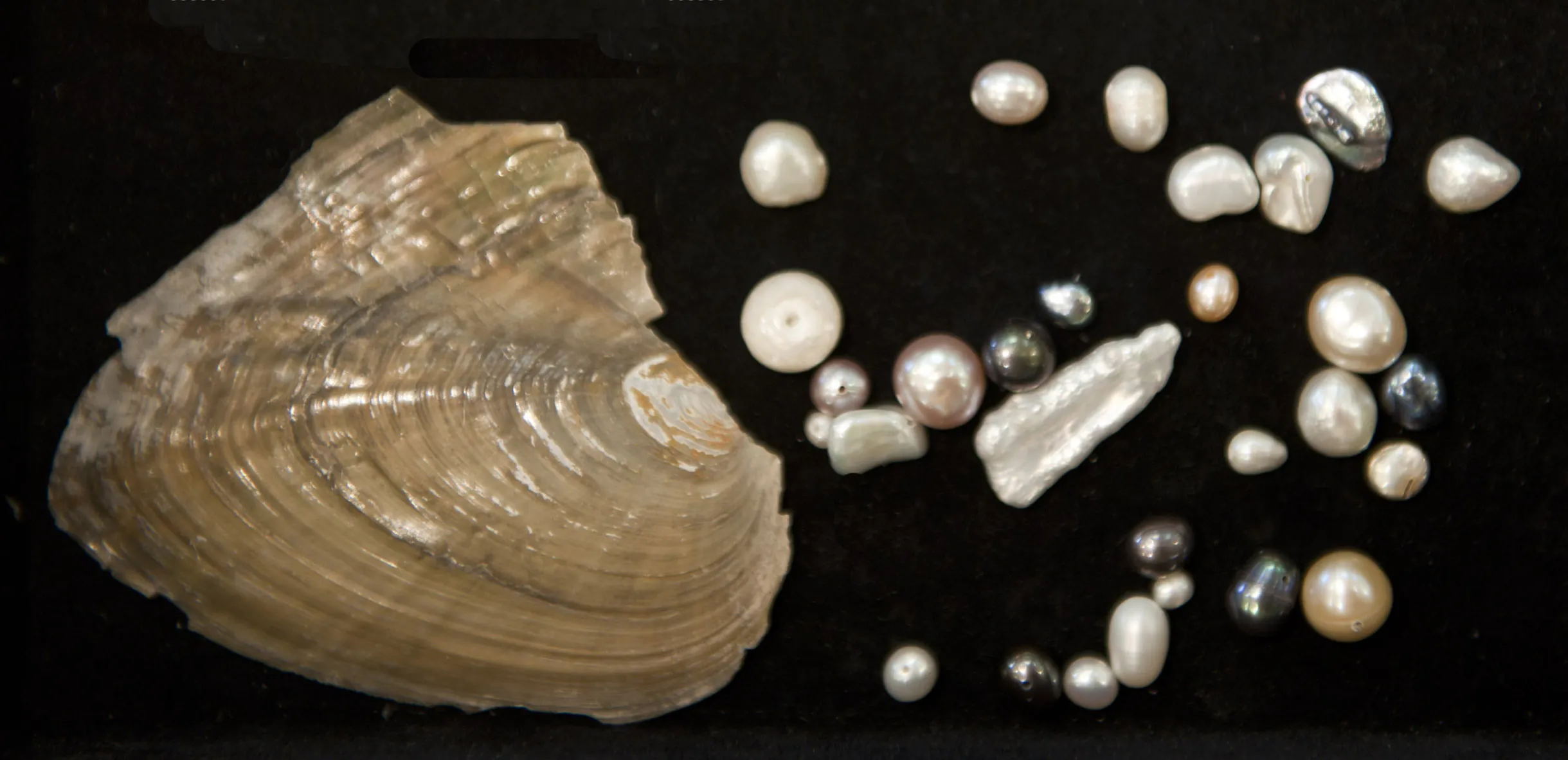
Pearl growth periods vary because pearls are produced by living mollusks, not by a process that runs at one fixed speed. The time between nucleation and harvest depends on the mollusk species, the culturing method, water temperature and season, the condition of the animal, the size and quality the farm is trying to produce, and the point at which the farmer decides that further growth is no longer worth the added risk.
This is why one cultured pearl may be harvested after roughly a year while another may remain in the water for several years. The difference is not simply that one farm is more patient. The biological system and the production goal can be completely different.
In this article, “growth period” refers mainly to the grow-out period after nucleation or tissue implantation. The years needed to raise the host oyster or mussel to a suitable operating size are a separate part of the farming cycle.
If you are trying to understand what cultivation time actually means for quality, it helps to separate this question from pearl “maturity.” Our guide to pearl cultivation time and maturity explains that relationship in more detail. Here, the focus is narrower: why does the clock itself vary so much?
The simplest explanation: pearl growth is a rate, not just a number of months
When people hear that a pearl was cultured for 12, 18, or 36 months, it is easy to imagine that nacre accumulates at a steady rate throughout that period. In reality, the process is much more variable.
A pearl grows as the pearl sac deposits layers of material around a nucleus or within a developing pearl body. But the amount deposited during a given month can change with species, temperature, season, environment, and the condition of the mollusk. Two pearls can therefore spend the same number of months in the water and still develop differently.
A useful way to think about it is:
Growth period = the time needed to reach a farm's target under a particular biological and environmental growth rate.
Change either the growth rate or the target, and the required cultivation period changes too.
1. Different mollusk species build pearls differently
The first major variable is the host animal. Akoya pearls, Tahitian pearls, South Sea pearls, and freshwater pearls are not simply different colors of the same product. They are produced by different mollusks with different body sizes, metabolisms, lifespans, and nacre-deposition characteristics.
For example, GIA notes that Akoya bead-cultured pearls commonly have a growth period around 10 to 14 months in traditional production, while Tahitian pearls are often cultured for about 18 to 24 months and South Sea pearls may remain in cultivation for two to four years. These are useful reference points, not universal rules.
The biology behind each pearl type helps explain the difference. The relatively small Akoya oyster produces comparatively small pearls and is often cultured in cooler temperate waters. The much larger Pinctada maxima oyster used for South Sea pearls can accommodate much larger nuclei and produce large pearls with substantial nacre, so its production cycle is designed around a different endpoint.
For more species-specific background, see our guides to Akoya pearls, Tahitian pearls, and South Sea pearls.
2. The culturing method changes how much of the pearl must actually grow
Another major reason growth periods vary is that not all cultured pearls start from the same internal structure.
Many saltwater cultured pearls are bead-nucleated. A round shell bead already provides much of the pearl's starting diameter, and the oyster deposits nacre around that bead. In this system, the farmer is not waiting for the entire diameter of the pearl to be built from nacre alone.
Traditional tissue-nucleated freshwater pearls are different. A small piece of mantle tissue stimulates pearl formation without a large spherical bead at the center, so much more of the finished pearl body is formed through biological deposition. Modern freshwater production also includes bead-nucleated methods, which means even within “freshwater pearls,” cultivation schedules can differ substantially.
This is why final millimeter size cannot be used as a stopwatch. A 10 mm bead-nucleated pearl and a 10 mm tissue-nucleated pearl may have very different internal structures and growth histories.
Our guide to freshwater non-nucleated pearls explains the tissue-nucleated structure in more detail.
3. Water temperature changes the speed and character of nacre deposition
Temperature is one of the clearest reasons a calendar month does not represent a fixed amount of pearl growth.
Pearl-producing mollusks are living animals whose metabolism responds to water temperature. Research and pearl-farming guidance consistently show that nacre deposition changes with temperature and season. In warmer conditions within a suitable biological range, deposition can be faster. In cooler conditions, growth may slow substantially.
But “faster” does not automatically mean “better.” A study on black-lipped pearl oysters used for Tahitian pearls found that higher temperatures increased pearl deposition rates, while cooler conditions near the end of cultivation were associated with thinner nacre tablets, better luster, and fewer defects in the tested pearls. GIA likewise notes that cooler water slows nacre deposition in Akoya culture and can contribute to the fine nacre structure associated with their sharp luster.
That creates an important tradeoff: farmers are not simply trying to maximize deposition speed. They may also care about how the nacre is structured and how the pearl looks at harvest.
4. Environmental conditions and mollusk health can speed up, slow down, or interrupt development
Temperature is only one part of the farm environment. Salinity, water flow, oxygenation, turbidity, pollution, fouling organisms, disease pressure, and general site conditions can all affect the condition of the mollusk.
FAO pearl-farming guidance emphasizes that unsuitable environmental conditions can reduce oyster growth or even cause mortality. Water movement and site productivity also affect feeding and waste removal. A healthy oyster in a stable site may maintain normal pearl formation, while a stressed oyster may grow more slowly or fail to produce a commercially useful pearl at all.
This is one reason farms in different locations can use different timelines even when they are working with broadly similar pearl types. The phrase “18 months of cultivation” describes elapsed time, but it does not tell you how favorable those 18 months were biologically.
5. Farms are aiming at different pearl sizes and quality profiles
A cultivation period is also a production decision. Farms do not all aim for the same pearl.
One producer may be trying to make a relatively small, highly round Akoya pearl with sharp luster. Another may be targeting a large South Sea pearl with a substantial nacre layer. A freshwater producer may be growing many tissue-nucleated pearls, or may be using a bead-nucleated method to produce a smaller number of very large pearls.
These targets change how long continued cultivation remains useful. More time may allow additional nacre deposition and greater size, but it can also create new surface irregularities or changes in shape. GIA has specifically noted that longer Akoya growth can affect roundness, illustrating why “leave it in longer” is not always a free upgrade.
So the relevant question is not “What is the maximum possible growing time?” It is “How long does this production system need to reach the quality profile it is trying to produce?”
6. The best harvest date depends on season, risk, and economics
Even if a pearl could continue growing, a farmer may decide not to keep it in the water.
Every additional month adds exposure to biological and environmental risk. Mollusks can become diseased, die, reject a nucleus, suffer from extreme temperatures, or be affected by storms and changes in water conditions. Longer cultivation also means more labor, cleaning, monitoring, farm space, and capital tied up before harvest.
At the same time, harvesting too early can leave a bead-cultured pearl with insufficient nacre development. The farmer is therefore balancing two costs: the cost of stopping too soon and the cost of waiting too long.
Season can influence that decision as well. In some Akoya systems, winter harvest is preferred because cooler water slows deposition before harvest and is associated with a finer, more lustrous surface. In other environments and pearl types, the ideal seasonal window can differ.
The growth period is therefore partly biological and partly managerial. The pearl does not come with a universal “finished” date.
Typical cultivation periods show the pattern—but they are not fixed standards
The following ranges are best treated as examples of common or documented production cycles, not promises that every pearl of that type follows the same schedule.
| Pearl type | Common or documented grow-out example | Why the timeline differs |
|---|---|---|
| Akoya | Often around 10–14 months in traditional bead-cultured production | Smaller host oyster, smaller target size, temperate-water production, and strong seasonal effects on nacre deposition |
| Tahitian | Often about 18–24 months | Larger black-lipped oyster, larger bead-cultured pearls, and a longer period used to build substantial nacre |
| South Sea | Often about 2–4 years | Very large Pinctada maxima oyster, large target pearl sizes, and production designed around thick nacre and large pearls |
| Freshwater | Highly method-dependent; many traditional systems use multi-year cultivation | Tissue- and bead-nucleated methods coexist, pearl structures differ, and producers target a very wide range of sizes and shapes |
A specialized freshwater example shows just how flexible the timeline can be. GIA documented bead-nucleated Kasumiga cultured pearls grown for roughly 3.5 to 4 years to produce large pearls up to about 15 mm. Modern Chinese freshwater bead-cultured production can use quite different schedules. “Freshwater” alone therefore does not tell you how long a pearl was grown.
Why two pearls grown for the same time can still be very different
Imagine two pearls that were both cultured for 18 months. It may sound as though they received the same amount of growth, but that conclusion would be unreliable.
One may have been produced in a warm-water species with relatively fast deposition. The other may have passed through a long cold season when deposition slowed. One may have started around a large bead nucleus; the other may have had to build most of its body from nacre. One mollusk may have remained healthy throughout cultivation while another experienced stress.
Even if both pearls are harvested on the same day, they can differ in nacre thickness, size, luster, surface, and shape.
This is the central reason cultivation time should not be used as a stand-alone quality grade.
Does a longer growth period mean a better pearl?
Not necessarily.
A longer period generally gives a mollusk more opportunity to deposit additional pearl material, but the result still depends on the rate and quality of that deposition. More time can contribute to thicker nacre or a larger pearl, yet it can also increase the chance of surface changes, shape deviation, mortality, or other production losses.
For buyers, the visible and structural result matters more than the calendar by itself. Luster, surface quality, shape, size, color, nacre quality, and matching should be considered together. Our pearl grading guide explains how these quality factors fit together.
What pearl growth period can—and cannot—tell you
A reported cultivation period can provide useful context. It may help explain why a pearl type tends to have more or less nacre, why some sizes are difficult to produce, or why a certain farming method carries more cost and risk.
But cultivation time alone cannot tell you:
- how thick the nacre is without knowing the pearl's structure and growth rate;
- how lustrous the pearl will be;
- whether the pearl will be round or clean-surfaced;
- how healthy the mollusk was during cultivation; or
- whether the pearl is high quality overall.
The better interpretation is: time tells you how long the biological process was allowed to continue, not how successful that process was.
FAQ
Why are some pearls harvested after about a year while others take several years?
Different pearl types use different mollusk species, culturing methods, nucleus sizes, environments, and target pearl sizes. Their nacre deposition rates also differ, so they do not need the same amount of calendar time to reach a useful harvest point.
Does warm water make pearls grow faster?
Within a suitable range, warmer water can increase nacre deposition in some pearl-producing mollusks. However, excessively warm conditions can stress the animal, and faster deposition does not automatically mean better luster or surface quality. Temperature effects are species- and context-dependent.
Does a longer cultivation period always create thicker nacre?
More time generally creates more opportunity for nacre deposition, but deposition rates are not constant. Temperature, season, mollusk health, species, and farming conditions all affect how much material is actually deposited.
Can you tell how long a pearl was cultured just by looking at it?
Not reliably. Size, luster, and surface may provide clues about how a pearl developed, but the same appearance can result from different nucleus sizes, species, growth rates, and cultivation methods. A visual inspection alone cannot reconstruct an exact cultivation timeline.
The key takeaway
Pearl growth periods vary because a pearl farm is managing a living biological process, not running a fixed manufacturing cycle. Species sets the basic growth potential. Culturing method determines the starting structure. Temperature and environment change the rate of deposition. The farm's target determines how much development is needed. Season, risk, and cost determine when it makes sense to stop.
That is why there is no universal answer such as “a real pearl needs two years.” The more accurate question is: what pearl type is being grown, under what conditions, by what method, and toward what target?
References and further reading
- GIA, “Exceptional Nacre Thickness of Hybrid Akoya Bead Cultured Pearls” — Akoya growth period, temperature, nacre thickness, and the tradeoff between culturing time, quality, and cost.
- GIA, “Different Pearl Types Explained: Akoya, South Sea, Tahitian & Freshwater Pearls” — pearl types, culturing methods, typical Tahitian and South Sea production periods, and freshwater structure.
- FAO, “Pearl Oyster Farming and Pearl Culture” — effects of temperature, salinity, water movement, turbidity, site productivity, and other environmental conditions.
- PLOS ONE, “Influence of water temperature and food on the last stages of cultured pearl mineralization from the black-lip pearl oyster” — experimental evidence on temperature, deposition rate, nacre structure, luster, and surface defects.
- GIA, “Cultured Pearls from Lake Kasumigaura” — a documented freshwater bead-cultured system using a multi-year cultivation period.