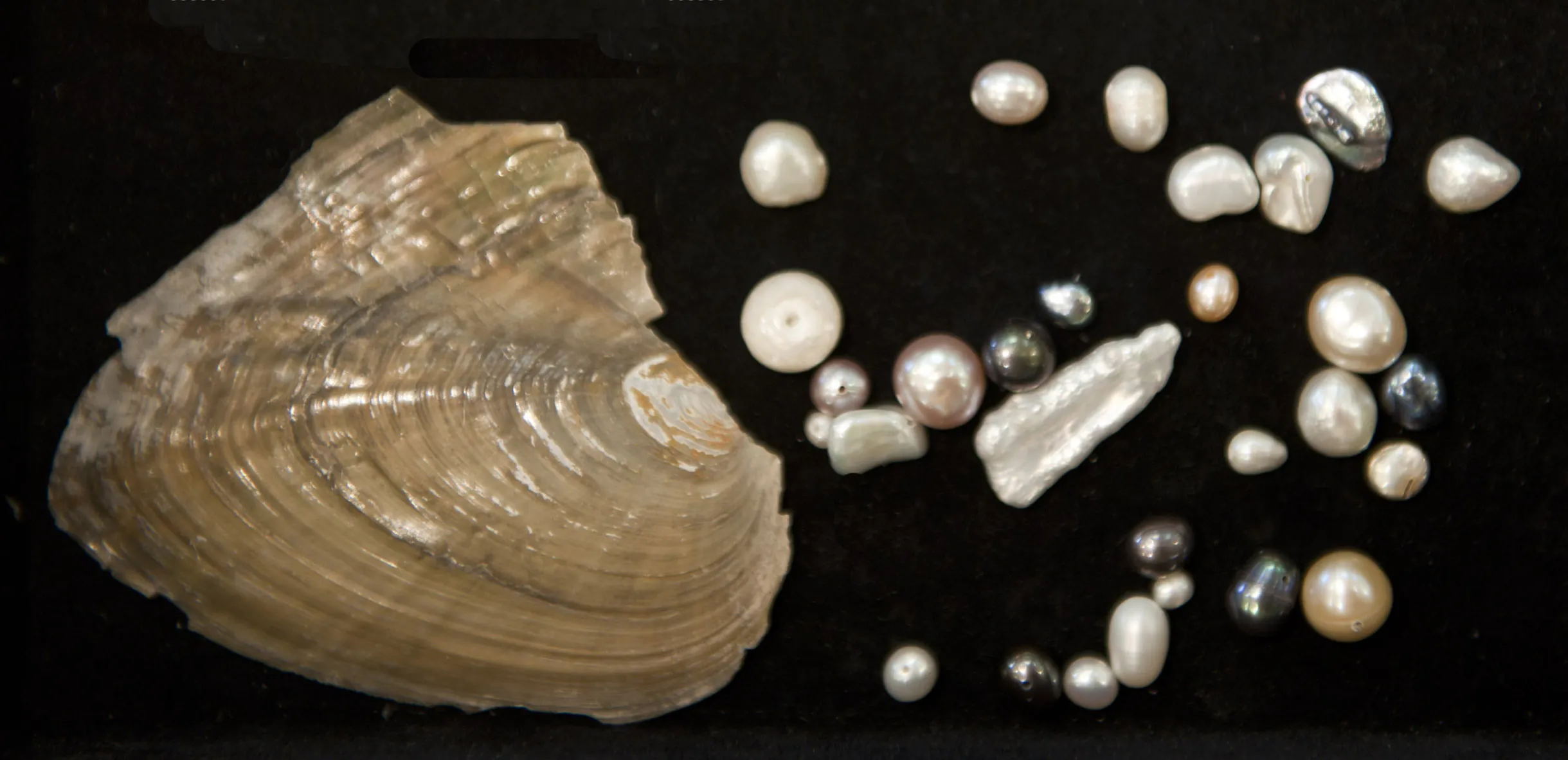
White South Sea pearls are produced most prominently in Australia, especially along the northern and northwestern coast of Western Australia. Other recognized producing origins include Indonesia, Myanmar, and the Philippines. However, those countries do not contribute to the white-pearl market in exactly the same way: Australia is most strongly associated with silver-white South Sea pearls, while Indonesia produces both white/cream and golden material, and the Philippines is much more strongly associated with golden South Sea pearls.
The useful distinction is between three different ideas: where Pinctada maxima naturally occurs, where it is commercially cultured, and which producing regions are especially important for white or silver South Sea pearls. Those three maps overlap, but they are not identical.
Quick Answer: Australia Is the Main Reference Point for White South Sea Pearls
If someone asks for the shortest possible answer, it is Australia. Gemological research from GIA describes Australia as the largest producer of white Pinctada maxima cultured pearls, and Western Australia's pearling industry is specifically built around the silver-lipped form of Pinctada maxima, which produces the silver-white pearls for which the region is famous.
That does not mean every White South Sea pearl is Australian. Commercial Pinctada maxima culture also takes place in Indonesia, Myanmar, and the Philippines, and white, silver, or creamy-white South Sea pearls can come from more than one of these origins.
| Producing region | Role in White South Sea production | Typical trade association |
|---|---|---|
| Australia | Leading and most strongly documented source of white/silver P. maxima pearls | Silver-white South Sea pearls, especially premium Australian material |
| Indonesia | Important South Sea producer with both white/cream and golden production | Broad color range across P. maxima production |
| Myanmar | Recognized P. maxima producing origin; historically associated with silvery-white as well as golden material | Smaller international profile but established South Sea origin |
| Philippines | Commercial P. maxima producer; white/cream pearls can occur | Much more strongly associated with golden South Sea pearls |
What Exactly Is a White South Sea Pearl?
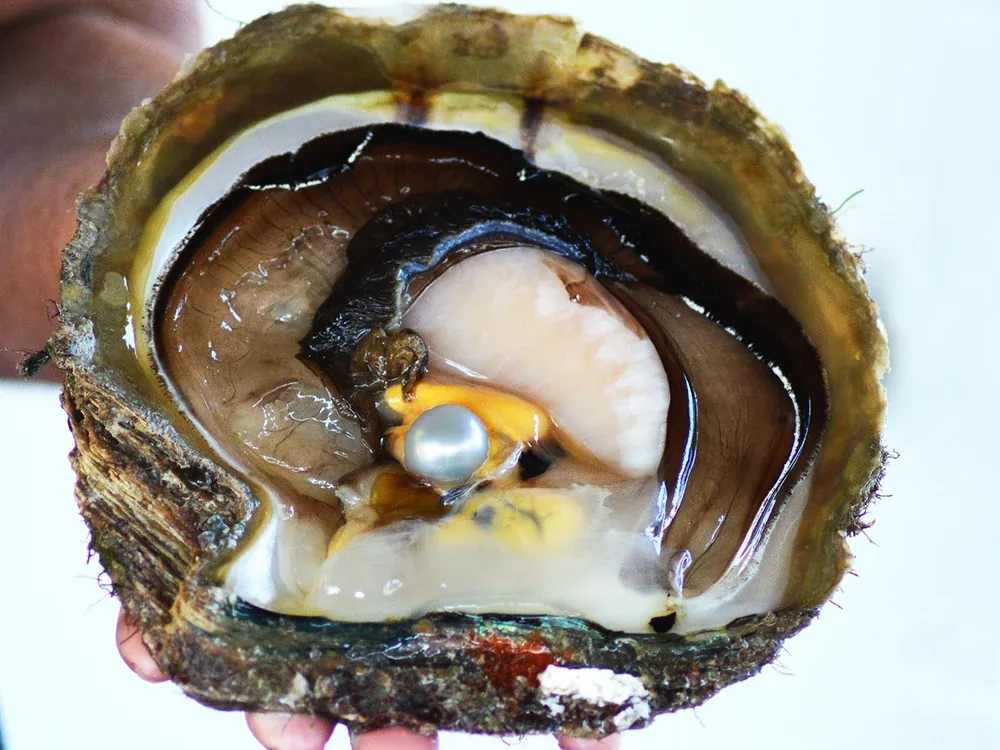
White South Sea pearls belong to the South Sea cultured-pearl family produced by Pinctada maxima, one of the largest pearl oysters used commercially. The species is commonly discussed in silver-lipped and gold-lipped forms. The silver-lipped form is most closely associated with white-to-silver pearls, while the gold-lipped form is most closely associated with yellow-to-golden pearls.
This is why the words South Sea, white, and Australian should not be treated as interchangeable. “South Sea” identifies the broad cultured-pearl family. “White” describes the color direction. “Australian” is a geographic provenance claim.
For a fuller explanation of the pearl family itself, see our guide to South Sea pearls and Pinctada maxima. If you are specifically comparing the category with Australian provenance, our article on Australian white pearls vs. White South Sea pearls goes deeper into that terminology.
Why Is Australia So Closely Associated with White South Sea Pearls?
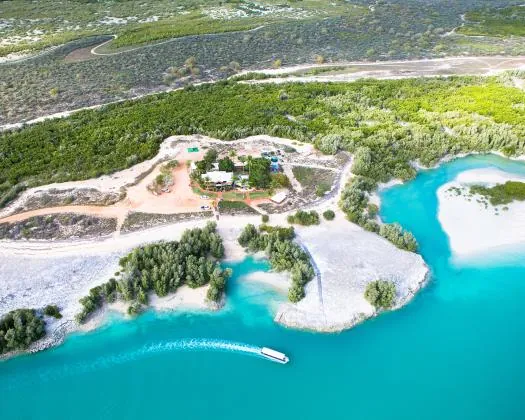
Australia has the strongest modern connection with the silver-lipped Pinctada maxima industry. In Western Australia, commercial pearling is concentrated along the tropical north and northwest coast, including waters associated with the Pilbara, Kimberley, and Broome region.
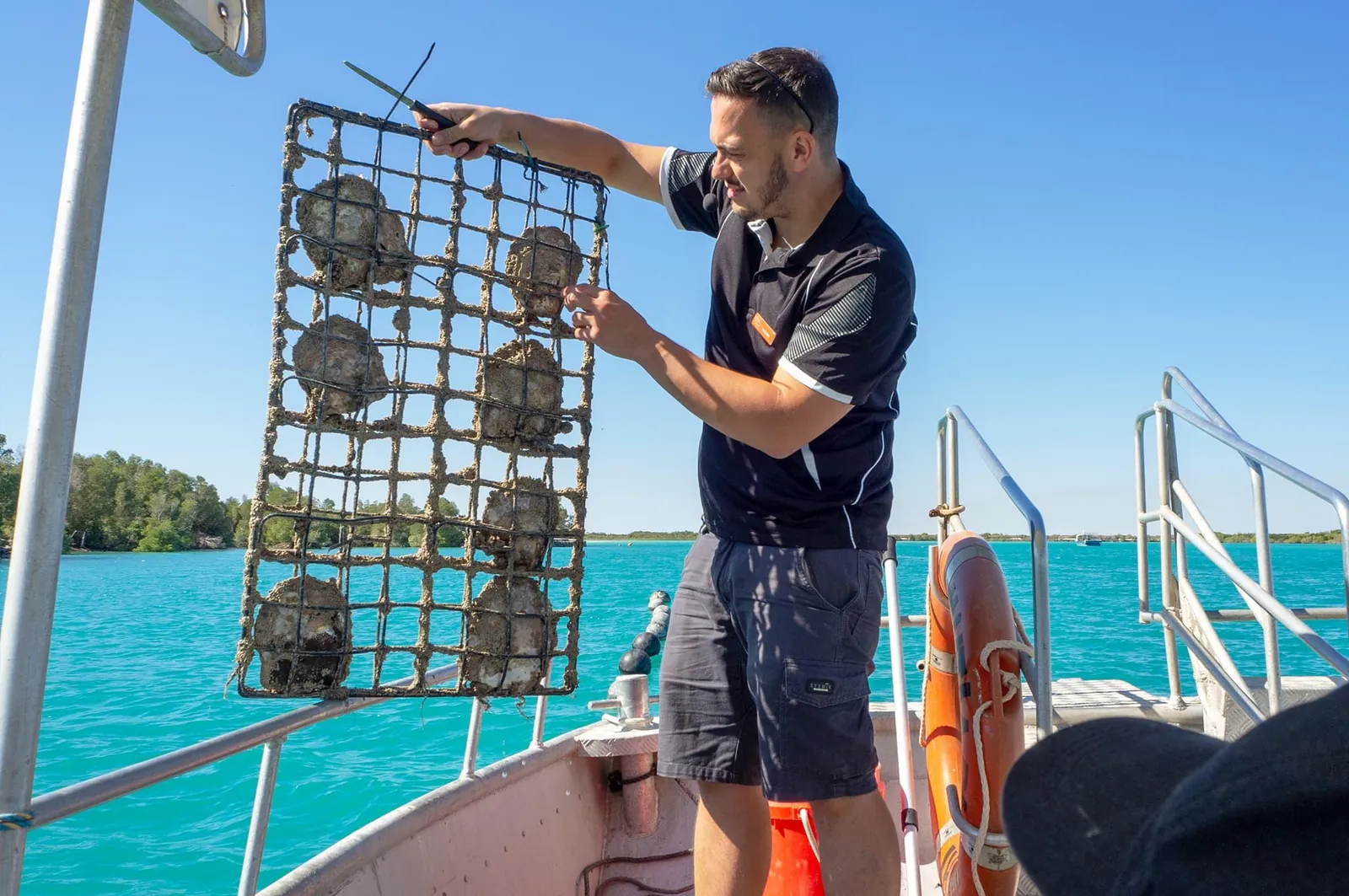
The Western Australian industry is unusual because it combines managed wild-stock collection with hatchery production. Divers collect suitable wild P. maxima under a quota-managed fishery, while hatchery-bred oysters are also used to supplement production. The oysters are seeded and then transferred to marine farm sites, where the pearls continue developing.
This long-established production system has made Australian South Sea pearls particularly visible in the luxury market. It has also made “Australian White South Sea pearl” a meaningful provenance description when the country of cultivation is documented.
But the word “Australian” is not a quality grade. A pearl can have documented Australian provenance and still vary in luster, surface quality, shape, color, nacre, and matching. Origin provides context; it does not replace inspection of the pearl itself.
Where in Australia Are White South Sea Pearls Produced?
The best-known production zone is the northwestern coast of Western Australia. Broome is the most famous name commercially, but the pearling industry extends beyond a single town. Official fisheries information places wild Pinctada maxima resources and pearling activity across the Pilbara and Kimberley, with major fishing grounds near Broome and long-established beds farther along the northwest coast.
That distinction matters for SEO and for buyers. “Australian South Sea pearl” should not be reduced to “Broome pearl” in every case. Broome is a major historical and commercial center, but Australian pearl culture involves a broader network of fisheries, hatcheries, boats, technicians, farm leases, and remote marine sites.
Does Indonesia Produce White South Sea Pearls?
Yes. Indonesia is one of the world's important Pinctada maxima producing countries, and industry literature has long associated it with both white/cream and golden South Sea pearls.
Indonesia is especially important because it sits within the natural tropical range of Pinctada maxima and supports a geographically dispersed marine pearl industry. However, “Indonesian South Sea pearl” does not automatically mean one fixed color. Depending on oyster stock, farm, environment, and other production variables, Indonesian material can include pale cream, white, champagne, yellow, and deeper golden directions.
For that reason, it is better to describe Indonesian production as an important part of the broader South Sea supply rather than forcing the country into a simple “white” or “golden” box.
Readers who want the bigger geographic picture can also see our guide to the world's major pearl-producing regions.
What About Myanmar?
Myanmar is another established Pinctada maxima origin. It receives less consumer attention than Australia or the Philippines, but gemological and trade literature has repeatedly included Myanmar among the recognized South Sea producing regions.
Older GIA industry research described silvery-white South Sea cultured pearls as especially associated with Australia and Myanmar, while creamy-white material was also associated with Indonesia and the Philippines. Modern production patterns and commercial visibility can change over time, so it is safer to treat this as a color tendency within documented production history rather than a rigid country rule.
The important point is that a legitimate White South Sea pearl does not become “Australian” simply because Australia is the most famous white-producing origin. Myanmar is part of the established P. maxima geography as well.
Does the Philippines Produce White South Sea Pearls?
Yes, White or creamy South Sea pearls can come from the Philippines, but the Philippines is much more strongly identified in the modern pearl trade with Golden South Sea pearls.
This is a useful example of why country names should not be treated as absolute color labels. Pinctada maxima is cultured in the Philippines, and the country's gold-lipped oyster production has become especially famous. That makes deep and rich golden material a stronger commercial association, not proof that every Philippine South Sea pearl must be golden.
If you want to compare the two best-known golden-producing countries, see our article on Philippine vs. Indonesian Golden South Sea pearls.
The Oyster's Natural Range Is Wider Than the Main Pearl-Producing Map
One of the most common mistakes in origin discussions is to confuse the natural distribution of Pinctada maxima with the commercial production map.
GIA research describes the species as having a broad Indo-Pacific distribution, extending from the Bay of Bengal toward the Solomon Islands and from waters near Hainan south toward Australia. That biological range is much wider than the handful of countries most consumers recognize as major South Sea pearl producers.
An oyster species being present in a region does not automatically mean that region has a large modern cultured-pearl industry. Commercial production also requires suitable farm sites, hatchery or wild-stock access, trained seeding technicians, infrastructure, regulatory systems, long grow-out cycles, financing, and reliable routes to the pearl market.
So the correct question is not simply, “Where can Pinctada maxima live?” It is, “Where is Pinctada maxima commercially cultured at meaningful scale, and which of those origins are especially important for white pearls?”
Can You Tell a White South Sea Pearl's Country of Origin by Looking at It?
Usually, no. Color and appearance can suggest tendencies, but they are not reliable proof of exact geographic origin.
Australian material is strongly associated with white and silver-white colors. Indonesian and Philippine production can include creamier or warmer directions. Myanmar has also been associated with silvery-white material. Yet those tendencies overlap. Individual pearls can vary because of oyster genetics, donor mantle tissue, environment, cultivation conditions, growth period, and post-harvest handling.
That means a cool silver-white pearl is not automatically Australian, and a creamy white pearl is not automatically Indonesian or Philippine.
For commercial descriptions, the cleanest approach is to keep pearl type, color, and cultivation origin as separate fields. If exact origin affects the selling price, ask for reliable supplier, farm, or lot documentation rather than relying on visual inference alone.
Does Origin Determine White South Sea Pearl Quality?
No. Origin can influence the production environment, oyster population, farming system, rarity, traceability, and market perception, but it does not automatically determine the visible quality of an individual pearl.
GIA evaluates pearls through seven value factors: size, shape, color, luster, surface quality, nacre quality, and matching when multiple pearls are used together. A fine pearl needs to perform well in the relevant factors regardless of whether it came from Australia, Indonesia, Myanmar, or the Philippines.
For a deeper explanation, see why pearl origin matters and our pearl value evaluation guide. If scale is your main concern, our pearl size guide also explains why the same millimeter measurement means different things across pearl types.
A Practical Way to Read a White South Sea Pearl Label
A good product description should tell you more than one thing at once. “White South Sea pearl” identifies the pearl family and color direction, but it does not prove the country of cultivation. “Australian White South Sea pearl” adds a geographic claim. “Silver-white Australian South Sea cultured pearl from Pinctada maxima” is more specific still.
When provenance matters, especially in wholesale or higher-value retail transactions, check whether the stated country refers to where the pearl was actually cultured rather than where it was later sorted, drilled, mounted, exported, or sold.
This matters because pearls move through international trading centers after harvest. A pearl can be farmed in one country, sorted in another, drilled elsewhere, and mounted into jewelry in a fourth location. The location of the dealer is not automatically the biological or cultivation origin of the pearl.
So, Where Are White South Sea Pearls Mainly Produced?
Australia is the main answer, especially Western Australia. It has the strongest documented connection with silver-lipped Pinctada maxima and is described by GIA as the largest producer of white P. maxima cultured pearls.
But White South Sea pearls are not exclusive to Australia. Indonesia is another important South Sea producer and supplies white/cream as well as golden material. Myanmar is a recognized P. maxima origin with a history of silvery-white production. The Philippines also produces South Sea pearls, although its modern reputation is much more closely tied to golden material.
The most accurate summary is therefore: White South Sea pearls are mainly associated with Australia, but the commercial category belongs to a broader Indo-Pacific Pinctada maxima industry.
FAQ
Which country produces the most White South Sea pearls?
Australia is the strongest answer. GIA describes Australia as the largest producer of white Pinctada maxima cultured pearls, and Western Australia is especially associated with silver-white South Sea production.
Are all White South Sea pearls from Australia?
No. White, silver, and creamy-white South Sea pearls can also come from other Pinctada maxima producing countries, including Indonesia, Myanmar, and the Philippines.
Does Indonesia produce White South Sea pearls?
Yes. Indonesia is an important South Sea pearl-producing country and can produce white or cream material as well as golden pearls.
Are Philippine South Sea pearls always golden?
No. The Philippines is especially famous for Golden South Sea pearls, but commercial Pinctada maxima production is not limited to one exact color. White or creamy material can also occur.
Reference Framework
This article was fact-checked against research and industry information from the Gemological Institute of America (GIA), the Western Australia Department of Primary Industries and Regional Development (DPIRD), peer-reviewed pearl-production literature, and current CIBJO pearl-industry reporting. Key references include GIA's research on the internal structures and production geography of Pinctada maxima cultured pearls; GIA's work on the transformation of the cultured-pearl industry; the Western Australian pearl oyster fishery overview; the academic chapter Production of Pearls; and GIA's pearl quality-factor framework.