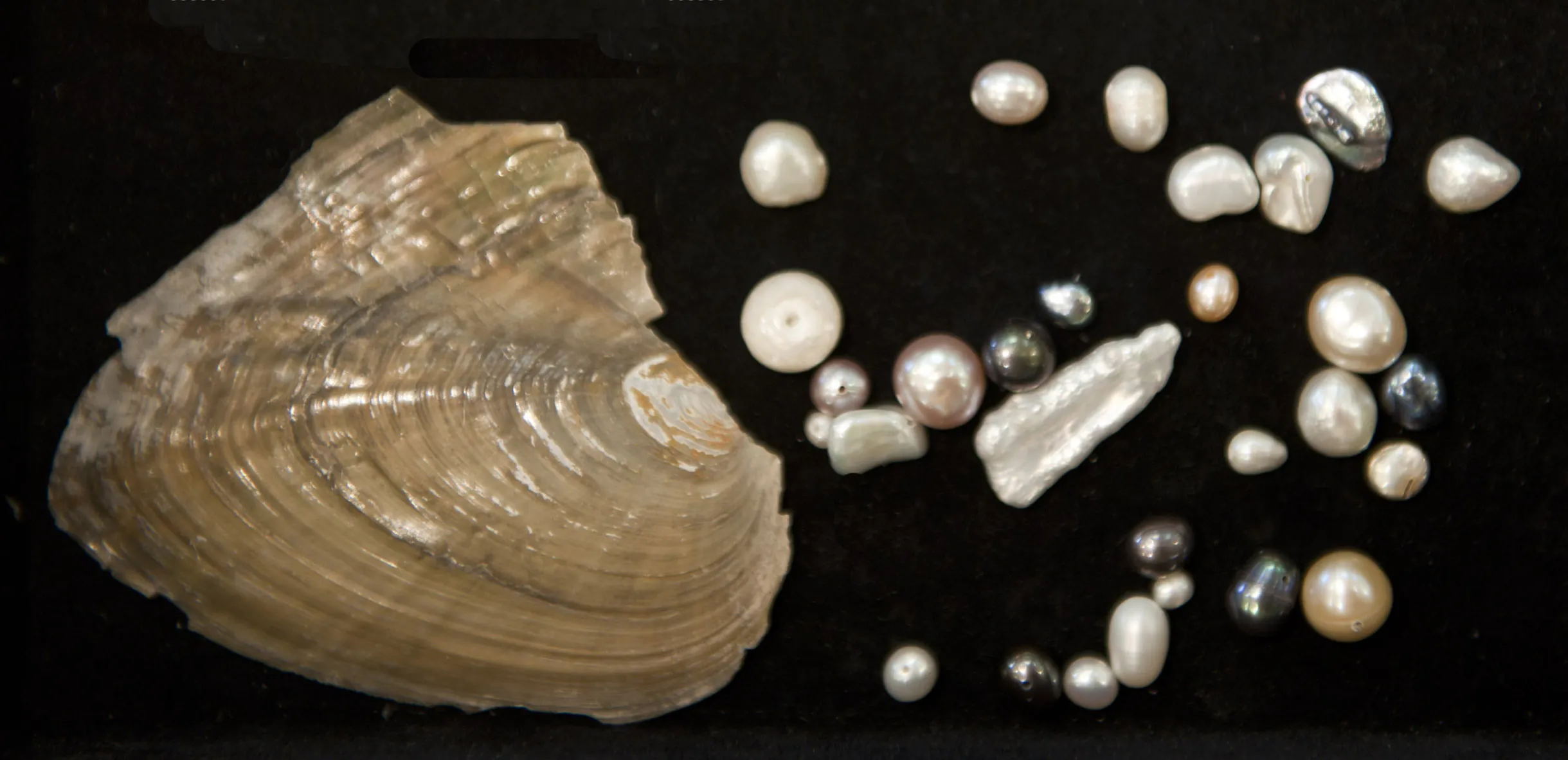
Most cultured pearls spend roughly 10 months to several years growing inside a living mollusk after nucleation or tissue implantation. Akoya pearls are often cultured for about 10–14 months, Tahitian pearls commonly for around 18–24 months, and South Sea pearls often for about 2–3 years. Freshwater pearls have the widest range: some modern bead-nucleated freshwater pearls may be grown for around 1–2 years, while other freshwater systems use several-year cultivation periods.
Those numbers are useful, but they are not a universal countdown. Pearl type, mollusk species, nucleation method, water temperature, target size, farm strategy, and harvest season all affect the schedule. Just as importantly, the quoted “cultivation time” usually refers to the period after the pearl-growing operation—not the entire farming cycle from juvenile mollusk to harvested pearl.
Quick Answer: Typical Pearl Cultivation Times
| Pearl type | Common or documented growth period after nucleation | What to remember |
|---|---|---|
| Akoya | About 10–14 months is common; some farms extend cultivation to around 18 months or longer | Relatively short growth cycle, but farmers still balance nacre thickness, luster, roundness, season, and risk |
| Tahitian | About 18–24 months | Larger black-lipped oysters support larger bead-nucleated pearls and longer nacre development |
| South Sea | Often about 2–3 years; some references describe cycles extending toward 4 years | Large Pinctada maxima oysters and long growth periods help produce large pearls with substantial nacre |
| Freshwater | Roughly 1 year to several years, depending strongly on method and target size | Modern bead-nucleated, traditional tissue-nucleated, and specialized freshwater systems should not be treated as one schedule |
The fastest way to use this table is to treat the numbers as typical production ranges, not quality guarantees. Two pearls cultured for the same number of months can still differ greatly in luster, surface, shape, nacre development, and value.
What Does “Pearl Cultivation Time” Actually Count?
When someone says that a pearl “takes two years to grow,” they are usually talking about the period between nucleation and harvest.
That is only one part of the farming timeline. Before nucleation, the oyster or mussel must first grow large and healthy enough to undergo the operation. After nucleation, it needs time to recover, form a pearl sac, and deposit nacre or other pearl-forming material. Farmers then continue caring for the mollusks until they decide the pearls are ready to harvest.
So there are really three clocks:
- Growing the host mollusk. Young oysters or mussels need time to reach a suitable size and condition.
- Growing the pearl. This is the period most cultivation-time figures refer to.
- Choosing the harvest point. Farmers may consider season, water temperature, mollusk health, nacre development, expected quality, and production risk before opening the shell.
This distinction is important because a “12-month Akoya pearl” did not necessarily require only 12 months of farming. The host oyster already had a life and a farming history before the nucleus was inserted.
For a deeper explanation of how growers judge readiness rather than simply counting months, see our guide to pearl cultivation time and maturity.
How Long Do Akoya Pearls Take to Grow?
Akoya pearls are commonly cultured for around 10–14 months after nucleation. GIA has documented this range for modern Akoya bead-cultured pearls, while individual farms may use shorter or longer production schedules. An Australian Akoya farming study, for example, described an approximately 18-month period used to obtain thicker nacre than shorter conventional cycles.
That does not mean 18 months automatically produces a better Akoya pearl than 12 months. Akoya production involves a trade-off. More time can allow additional nacre deposition, but the pearl also remains exposed to biological and environmental risks for longer. GIA has noted that longer growth can also affect roundness.
Season matters as well. Akoya nacre deposition changes with water temperature. Cooler conditions can slow deposition and help produce a finer outer nacre structure associated with sharp luster. This is one reason a cultivation period cannot be interpreted only as “more months equals more pearl.” When those months occur can matter too.
How Long Do Tahitian Pearls Take to Grow?
Tahitian cultured pearls are commonly grown for about 18–24 months after grafting. They are produced in the black-lipped oyster, Pinctada margaritifera, a larger saltwater mollusk than the Akoya oyster.
The longer schedule allows the oyster to build nacre around a relatively large bead nucleus. During that time, farmers must keep the oysters healthy, clean growth from the shells and farming equipment, monitor the lagoon environment, and accept that not every graft will survive or produce a saleable pearl.
This is one reason the finished pearl represents more than the visible object. The farm has carried the biological risk for many months before it knows the final size, shape, surface, color, and luster of the harvest.
How Long Do South Sea Pearls Take to Grow?
South Sea pearls generally require one of the longest commercial saltwater cultivation periods. A useful working range is about 2–3 years after nucleation, although GIA also describes South Sea growth periods that can extend from roughly 2 to 4 years depending on the production context.
The host, Pinctada maxima, is the largest of the major pearl oysters. Its size allows farmers to use larger nuclei and produce pearls that are substantially larger than typical Akoya pearls. The long culture period also gives the oyster time to deposit the thick nacre associated with South Sea pearls.
Paspaley, one of the best-known Australian South Sea pearl producers, states that a Pinctada maxima oyster can take two to three years to cultivate a single pearl. That figure is useful as a real production example, but it should not be turned into a universal rule for every South Sea farm in every country.
South Sea production also illustrates why “large pearl” and “long cultivation” are related but not identical ideas. The bead nucleus already contributes substantially to the final diameter. The oyster species, bead size, nacre growth, and time all work together.
How Long Do Freshwater Pearls Take to Grow?
Freshwater pearls have the least useful single-number answer. Their cultivation time depends heavily on whether they are tissue-nucleated or bead-nucleated, the mussel strain, the number of pearls being cultured, the target size, and the production system.
Modern Chinese bead-nucleated freshwater pearls can sometimes be grown in roughly 1–2 years. At the other end of the spectrum, documented Japanese Kasumiga bead-cultured freshwater pearls may remain in the mussel for about 3.5–4 years to reach large sizes. Traditional Chinese tissue-nucleated freshwater production has also included multi-year cycles, especially when growers aim for larger pearls.
That is why statements such as “freshwater pearls take two years” or “freshwater pearls take six years” can both be misleading when presented without context. They may describe different generations of production, different nucleation methods, different sizes, or completely different farming goals.
For the structural difference behind this variation, our guide to freshwater non-nucleated pearls explains how tissue-nucleated freshwater pearls differ from bead-nucleated saltwater production.
Why Do Pearl Growth Periods Vary So Much?
The pearl is produced by a living animal, not by a machine applying nacre at a fixed rate. Several variables change the timeline.
1. Different mollusk species grow differently
An Akoya oyster and a Pinctada maxima oyster differ greatly in size, lifespan, metabolism, and the size of nucleus they can safely accept. Freshwater mussels use still different farming methods. Comparing their cultivation times without considering the host species is like comparing the growth schedule of different crops and expecting one harvest date.
2. Water temperature affects nacre deposition
Nacre does not build at the same rate throughout the year. Temperature, food availability, water quality, and the health of the mollusk can change deposition. Faster growth is not automatically better, because nacre structure and the appearance of the outer layers matter as much as raw growth speed.
3. Nucleation method changes what must grow
In a bead-nucleated saltwater pearl, the shell bead already creates much of the starting diameter, and the oyster adds nacre around it. In many traditional tissue-nucleated freshwater pearls, there is no large spherical bead occupying the center, so much more of the final pearl body is produced biologically.
4. Target size changes the production decision
A farm trying to produce smaller Akoya pearls and a farm trying to produce very large South Sea or freshwater pearls are not working toward the same endpoint. Larger pearl production may require a larger host, a larger nucleus, a longer cycle, or some combination of those factors.
5. Farmers are balancing quality against risk
Every extra month in the water creates an opportunity for more nacre, but it also creates more time for mortality, disease, bead rejection, storms, environmental stress, surface irregularities, and loss of roundness. The ideal harvest time is therefore a production decision, not simply the maximum possible number of months.
Does a Longer Cultivation Period Always Mean a Better Pearl?
No. Longer cultivation can allow more nacre to accumulate, but pearl quality is not measured with a calendar.
A pearl may spend a long time in the mollusk and still have weak luster, a heavily marked surface, an undesirable shape, or poor matching with other pearls. Another pearl may be harvested on a shorter schedule yet show strong luster and an attractive surface because its nacre formed well under favorable conditions.
GIA evaluates pearls using multiple value factors, including size, shape, color, luster, surface, nacre quality, and matching. Cultivation time influences some of those characteristics, but it is not itself a complete quality grade.
This is the practical distinction to remember:
Time creates the opportunity for a pearl to develop. It does not guarantee how well the pearl develops.
If you are comparing finished pearls rather than farming methods, our pearl grading guide is more useful than asking for a cultivation-period number alone.
If a Pearl Has a Bead Inside, Why Does It Still Need So Much Time?
This is a common point of confusion with cultured saltwater pearls. The implanted bead provides a starting form, but the visible pearl surface is still created by the mollusk.
After grafting, donor mantle cells form a pearl sac around the bead. That sac then deposits nacre layer by layer. The final appearance depends on how those layers develop: their continuity, structure, surface condition, color interaction, and optical effect all matter.
A bead can help control size and roundness, but it cannot instantly produce the luster and surface of a finished pearl. The farming period exists because the biological coating is the part that turns the nucleus into a cultured pearl.
How Long Does the Entire Pearl-Farming Process Take?
The full process is longer than the headline cultivation number.
A simplified farm timeline looks like this:
- Raise or collect young oysters or mussels.
- Grow them until they are suitable for nucleation or tissue implantation.
- Perform the pearl-culturing operation.
- Allow recovery and return the mollusks to farm waters.
- Maintain them for months or years while the pearl develops.
- Harvest the pearls at the chosen season or production stage.
- Sort and grade the harvest by size, shape, color, luster, surface, nacre, and matching.
- Match individual pearls into pairs, strands, or jewelry designs.
The last step is easy to overlook. Producing one pearl and assembling a well-matched strand are different tasks. A strand may require sorting through a very large harvest to find pearls with compatible size, shape, color, luster, and surface characteristics.
So when you see a cultured pearl necklace, the relevant “time” is not only the months the pearls spent growing. There is also the time spent raising mollusks, managing the farm, harvesting, grading, and matching.
What Should a Buyer Learn from Cultivation Time?
Cultivation time is useful as production context. It helps explain why different pearl types have different size ranges, nacre structures, farming risks, and costs. It can also help explain why a very short production cycle may deserve closer scrutiny in a pearl type where adequate nacre development normally requires more time.
But cultivation time should not become a shortcut for judging a finished pearl.
If you are buying pearls, look at the pearl itself:
- How strong and sharp is the luster?
- How clean or heavily marked is the surface?
- Is the shape attractive and appropriate for the design?
- Does the nacre appear healthy and well formed?
- If it is a pair or strand, how well are the pearls matched?
Those visible and structural qualities tell you more about the finished product than a seller simply saying, “These were cultured for two years.”
Final Takeaway
There is no single answer to how long it takes to culture a pearl. Akoya pearls often spend around 10–14 months growing after nucleation. Tahitian pearls commonly need around 18–24 months. South Sea pearls often require roughly 2–3 years, sometimes longer. Freshwater pearls can range from about a year to several years depending on the culturing method and target.
The more important lesson is that the number describes a biological production window, not a quality score. Different mollusks grow at different rates, different farms use different methods, and farmers must balance nacre development against shape, surface, season, survival, and risk.
Pearls need time, but time alone does not make a fine pearl. What matters is what the mollusk was able to build during that time.
Frequently Asked Questions
Can a cultured pearl grow in less than a year?
Yes. Some Akoya production has used cultivation periods under one year. However, common modern Akoya references often describe roughly 10–14 months, and some farms deliberately use longer periods. A short schedule by itself does not tell you whether the final pearl is good or poor.
Which pearls usually take the longest to culture?
South Sea pearls commonly have one of the longest commercial saltwater growth periods, often around 2–3 years. Some freshwater systems can also use multi-year cycles, particularly for larger or specialized pearls, so the answer depends on the method being compared.
Do larger pearls always take longer to grow?
No. Time can contribute to growth, but pearl size also depends on mollusk species, nucleus size, nucleation method, and growth rate. A South Sea pearl can start with a much larger bead nucleus than an Akoya pearl, so diameter alone cannot reveal cultivation time.
Does a longer cultivation period mean thicker nacre?
Often it gives the mollusk more opportunity to deposit nacre, especially in bead-nucleated pearls, but the relationship is not perfectly linear. Temperature, mollusk health, seasonal growth, and farming conditions all affect deposition.
Why is there no standard cultivation time for freshwater pearls?
Freshwater pearl culture includes different mussel strains and both tissue-nucleated and bead-nucleated methods. Farmers may also target very different sizes and shapes. Those differences make one universal freshwater timeline misleading.
References
- GIA — Different Pearl Types Explained: Akoya, South Sea, Tahitian & Freshwater Pearls
- GIA — Exceptional Nacre Thickness of Hybrid Akoya Bead-Cultured Pearls
- GIA — Cultured Pearls from Lake Kasumigaura: Production and Gemological Characteristics
- GIA — Pearl Quality Factors
- Paspaley — Australian South Sea Pearl FAQs