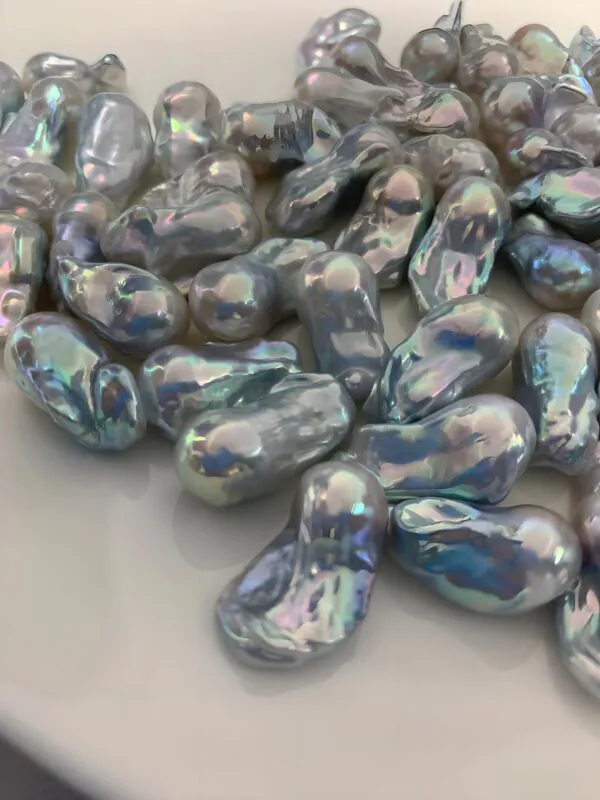
Yes—small seed pearls can be very suitable for everyday wear, especially in earrings, necklaces, and other designs that do not take repeated knocks. Their petite scale makes them light, subtle, and easy to style with casual clothes. But small pearls are still pearls: their surface can scratch or abrade, and perfume, hairspray, household chemicals, heat, and rough contact can damage them over time.
The key distinction is between wearing pearl jewelry often and wearing it continuously through every activity. A well-made tiny-pearl necklace can be an excellent daily piece. Wearing the same necklace in the shower, gym, pool, bed, and while cleaning is a different matter.
Why Small Pearls Work So Well for Everyday Jewelry
Large pearls naturally attract attention. Tiny pearls create a different effect: they add texture and luster without dominating an outfit. That makes them easy to combine with T-shirts, knitwear, shirts, office clothing, simple dresses, and layered chains.
Small pearls also tend to feel physically light. In a strand or bracelet, dozens of tiny pearls can create a fine, textile-like line rather than the visual weight of a traditional larger-pearl necklace. In earrings, a small pearl sits close to the ear and is less likely to feel cumbersome during a long day.
If you are deciding what millimeter range fits the look you want, our pearl size guide explains how pearl diameter changes visual presence.
However, none of this means a small pearl becomes mechanically harder just because it is small. The pearl surface still needs the same basic care as larger pearls.
One Terminology Note: What Does “Seed Pearl” Mean?
The term seed pearl is used rather loosely in modern jewelry listings, so it is worth checking exactly what a seller means.
Under the U.S. Federal Trade Commission's Jewelry Guides, a seed pearl is a small natural pearl measuring approximately 2 mm or less, while cultured or imitation versions should be appropriately qualified. In ordinary retail language, however, sellers may use “seed pearls,” “tiny pearls,” or “micro pearls” more broadly for very small cultured freshwater pearls and similar materials.
That distinction does not change the everyday-wear advice below, but it matters when you are comparing products. A Victorian natural seed-pearl brooch, a modern strand of 2–3 mm cultured freshwater pearls, and an imitation micro-pearl necklace may look similar in scale while differing greatly in construction, value, and care needs.
Does Their Small Size Make Seed Pearls More Durable?
Not in the sense of scratch resistance. GIA lists pearl at about 2.5 on the Mohs hardness scale, which means pearl surfaces are relatively easy to scratch or abrade compared with many common jewelry materials. The same caution applies whether the pearl is tiny or large.
What small size can change is how the jewelry behaves on the body. A tiny pearl stud may sit close to the earlobe instead of projecting outward. A fine strand can slip beneath a collar rather than knocking against hard surfaces. In those designs, the pearl may experience fewer impacts simply because the piece is compact.
But construction becomes more important as components get smaller. Fine thread, tiny drill holes, small jump rings, miniature prongs, glue joints, and delicate chains all create their own possible wear points. For everyday jewelry, judge the whole piece, not just the pearls.
Which Small-Pearl Jewelry Types Are Best for Everyday Wear?
| Jewelry type | Everyday suitability | Main reason |
|---|---|---|
| Small pearl stud earrings | Very good | Usually sit close to the ear and have limited contact with desks, clothing, and hard surfaces |
| Tiny pearl necklace or fine strand | Very good | Lightweight and generally protected from direct impact during normal wear |
| Small pearl pendant | Good | Easy to wear daily if the pearl, bail, and chain are securely assembled |
| Small pearl bracelet | Moderate | The wrist frequently contacts desks, bags, sleeves, water, and other objects |
| Small pearl ring | More caution needed | Hands receive frequent impacts, washing, friction, and chemical exposure |
| Antique seed-pearl jewelry | Depends on condition | Age of the thread, adhesive, setting, metalwork, and pearls may matter as much as the pearl material itself |
Small Pearl Earrings: Usually the Easiest Daily Choice
Small studs are one of the most practical ways to wear pearls frequently. They are visually understated, work with both casual and professional clothing, and are less exposed to repeated impact than rings or bracelets. If you want a low-maintenance entry point into daily pearl wear, pearl earrings are usually easier to live with than hand jewelry.
Check the post, backing, and attachment point as carefully as the pearl itself. A beautifully matched pair is not useful if the post bends easily or the pearl-to-post connection is poorly made.
Tiny Pearl Necklaces: Excellent for Frequent Wear
A fine seed-pearl or tiny cultured-pearl strand works particularly well as an everyday necklace because the scale is casual and easy to layer. The main structural issue is usually the stringing or chain system rather than the pearl size.
If the pearls are fully strung, inspect the thread periodically for fuzzing, stretching, discoloration, or looseness near the clasp. If the design uses pearls spaced along a fine chain or wire, inspect the connecting loops and drilled areas for movement. You can browse pearl necklaces to compare how different constructions change the look and practicality of an everyday piece.
Bracelets Need More Attention Than Necklaces
The wrist is an active area. Bracelets touch desks, countertops, bags, coat cuffs, keyboards, and door frames, often without the wearer noticing. This does not make a small pearl bracelet unsuitable for daily use, but it means surface wear and component wear can accumulate faster than on earrings or a necklace.
If you wear one frequently, take it off for cleaning, exercise, showering, swimming, gardening, cooking that involves heavy handling, or any task where the bracelet will repeatedly rub against hard objects.
Rings Are the Most Demanding Everyday Format
A tiny pearl ring may look delicate and practical, but the hand is usually the harshest environment for pearl jewelry. Handwashing, sanitizer, soap, countertop contact, gripping objects, and accidental knocks all happen repeatedly throughout the day.
For that reason, “everyday ring” should usually mean frequently worn with conscious removal during rough or wet activities, not “never take it off.” A protected setting can help, but it cannot change the softness of the pearl surface.
What Does “Everyday Wear” Actually Mean for Pearls?
A useful way to think about pearl durability is to separate normal wear from continuous exposure.
Generally reasonable: commuting, office work, eating out, shopping, social events, ordinary indoor activity, and casual outings where the jewelry is not being repeatedly hit or soaked.
Better to remove the pearls: showering, swimming, sleeping, gym workouts, household cleaning, gardening, cooking that exposes jewelry to grease or repeated washing, hair coloring, and activities involving tools or rough surfaces.
GIA notes that pearls are vulnerable to scratching and can be damaged by acids and chemicals including perfume, cosmetics, hairspray, and perspiration. Their care guidance recommends wiping pearls with a soft clean cloth after wear and keeping them away from rough objects and harsh chemicals.
For a complete maintenance routine, see our pearl care and maintenance guide.
Are Tiny Pearls Better for a Younger or More Casual Look?
Often, yes—but this is a styling effect rather than a quality rule. Smaller pearls usually create less visual formality than a classic strand of larger, highly matched round pearls. Their scale works well with minimalist jewelry, fine chains, layered necklaces, small hoops, and mixed-metal combinations.
A 2–4 mm cultured freshwater pearl strand, for example, can read more like a delicate textured necklace than a traditional formal pearl strand. Irregular tiny pearls can make the look even more relaxed. The result depends on color, shape, spacing, metal, clasp style, and how the piece is combined with other jewelry.
If the goal is easy repeat wear rather than a formal statement, freshwater pearl jewelry offers many small-scale and less traditional design possibilities.
How to Choose Small Pearls for Frequent Wear
When buying a piece you expect to wear several times a week, use a slightly different checklist than you would for jewelry worn only on special occasions.
- Choose the jewelry format first. Earrings and necklaces generally face less mechanical stress than bracelets and rings.
- Inspect the attachment method. Look at posts, knots, wire, drill holes, bails, jump rings, and glue joints—not only the pearls.
- Check for secure construction. A loose pearl or stretched thread is a practical problem even if the pearls themselves have good luster.
- Prefer a design that does not snag easily. Extremely long loops, exposed wirework, or loose fringe may be beautiful but require more awareness during daily movement.
- Consider how you actually live. Someone who works at a desk may find a pearl necklace effortless but a bracelet annoying. Someone who wears gloves or handles tools may prefer earrings.
- Make sure you know what the pearls are. Especially with “seed pearl” listings, verify whether the piece uses natural pearls, cultured pearls, or imitation pearls.
What About Antique Seed-Pearl Jewelry?
Antique pieces deserve their own category. The pearls may be tiny, but the bigger question is often the condition of the jewelry around them.
Old seed-pearl jewelry may use fine wire, silk, drilled mounts, cement, closed-back settings, or delicate metalwork that has already aged for many decades. GIA notes that pearl toughness is usually good but that aging and dehydration can make some pearls more fragile. In an antique piece, the security of the mounting and any previous repairs may be equally important.
If the piece has historical or substantial monetary value, frequent wear should follow a professional inspection. A jeweler familiar with antique construction can check loose pearls, weakened thread, worn prongs, brittle adhesive, bent metal, or previous repair points before the item becomes part of a regular rotation.
A Simple Rule: Wear Small Pearls Often, but Not Carelessly
The best everyday pearl jewelry is not necessarily the toughest-looking piece. It is the piece whose design matches the amount of contact it will receive.
For low-risk daily wear, start with small pearl studs, a short necklace, or a securely made pendant. Bracelets and rings can still be worn frequently, but they demand more removal during wet, chemical, or high-contact activities.
Small pearls are therefore not “too delicate for everyday wear.” A better conclusion is that they are well suited to frequent wear when the design is appropriate and the wearer treats pearls as a relatively soft organic gem material rather than as 24/7 jewelry.
FAQ
Can I wear small seed pearls every day?
Yes. Small pearl earrings and necklaces can be excellent everyday pieces. Remove them for showering, swimming, exercise, cleaning, sleep, and other activities that expose them to repeated moisture, chemicals, friction, or impact.
Can I shower with seed-pearl jewelry?
It is better not to. Repeated exposure to soap, shampoo, hot water, moisture, and product residue is unnecessary wear on the pearls and can also affect thread, adhesive, metal components, or other parts of the jewelry.
Are small pearls stronger than large pearls?
Not simply because they are smaller. Small pearls may project less from a setting and therefore avoid some impacts, but the pearl surface remains relatively soft. Durability depends heavily on the design and construction of the whole piece.
Are seed-pearl bracelets good for daily wear?
They can be, but bracelets receive more contact than necklaces and earrings. If you wear one often, remove it for washing, cleaning, exercise, and tasks where it will rub against hard surfaces.
Are antique seed pearls suitable for everyday wear?
Sometimes, but condition matters. Antique thread, wire, adhesive, settings, and metalwork may be more fragile than a modern construction. Valuable antique seed-pearl jewelry should be inspected before being placed into frequent rotation.