When Are Pearl Pendants Appropriate? How to Choose Pearl Size and Chain Style
Pearl pendants are appropriate for far more than weddings or formal events. A simple single-pearl pendant can work with a T-shirt, office shirt, knit top, dinner dress, or evening gown. What changes the feel of the jewelry is not the pearl alone, but its size, setting, chain length, chain style, and how much visual attention you want it to receive.
A useful rule is simple: smaller pearls on fine, uncomplicated chains tend to look quieter and easier for everyday wear; medium pearls are the most flexible; larger pearls or more elaborate settings create stronger presence and can feel more occasion-focused. These are styling guidelines rather than etiquette rules. The best pendant is the one whose scale makes sense with the wearer and the clothes it will actually be worn with.
Quick Guide: Which Pearl Pendant Works for Which Occasion?
| Situation | Useful Pearl Size Direction | Chain Direction | Overall Effect |
|---|---|---|---|
| Everyday casual wear | About 5–8 mm | Fine cable or other simple chain, usually around 16–18 in | Subtle and easy to layer |
| Office or professional wear | About 6–9 mm | Simple 16–18 in chain with a clean setting | Polished without becoming distracting |
| Dinners and smart-casual events | About 7–10 mm | 18–20 in chain; slightly more visible metal is fine | Noticeable but still versatile |
| Wedding guest or semi-formal wear | About 8–11 mm | Length chosen around the neckline; refined gold or white-metal chain | Elegant focal point |
| Formal evening or statement styling | About 10 mm and above, if the design supports it | Chain with enough visual and structural balance for the pendant | Stronger presence and more drama |
Do not treat these numbers as strict boundaries. A bright 8 mm pearl in a diamond-accented setting may look more formal than a simple 11 mm baroque pearl on a minimal chain. The total design matters more than diameter alone.
When Are Pearl Pendants Appropriate?
For everyday wear
A pearl pendant is one of the easiest ways to wear pearls casually because it uses a single focal pearl instead of creating the stronger visual line of a full pearl strand. A small or medium pearl with a plain bail and fine chain can sit comfortably with a crew-neck T-shirt, open shirt, simple dress, cardigan, or knitwear.
For daily use, the most important question is usually not “Is a pearl too formal?” but “Does this design feel too decorative for the rest of my outfit?” A clean setting and restrained chain make even a high-quality pearl feel relaxed.
For work and professional settings
Pearl pendants work well in offices because they can add polish without taking over the outfit. A medium-size pearl positioned near the collarbone is easy to combine with blazers, button-down shirts, knit tops, and simple dresses. If your work wardrobe is minimal, a plain white or cream pearl on a fine chain usually integrates more easily than a heavily ornamented pendant.
In more conservative environments, keep the design simple. In creative or fashion-oriented workplaces, a baroque pearl, colored pearl, or more visible chain can give the same basic pendant format a more individual look.
For dinners, dates, and smart-casual occasions
This is where medium pearl sizes become especially useful. They are visible enough to register as jewelry, but they do not require a formal outfit. A slightly longer chain can also create a more relaxed line over a blouse or dress, while a shorter chain keeps the pearl closer to the face and reads as more polished.
For weddings and formal events
Pearl pendants are entirely at home with formal clothing, but a larger pearl is not mandatory. Formality can come from a beautiful pearl, a refined metal setting, a well-proportioned chain, or small diamond accents. If the dress already has embroidery, crystals, or a dramatic neckline, a simpler pendant may actually create better balance than a larger, more elaborate design.
For black-tie or evening wear, larger South Sea or Tahitian pearls can create strong presence, while a luminous Akoya pearl in a fine setting can give a cleaner, more classic effect. The goal is not to make the pendant as large as possible; it is to make it look intentional against the outfit.
How to Choose Pearl Size: Decide How Visible You Want the Pearl to Be
Pearl size is usually measured in millimeters, but the number is only a starting point. A pendant also includes a bail, cap, halo, bezel, or decorative setting, so two pendants using the same pearl diameter can look very different when worn.
5–7 mm: delicate and understated
This range works well when you want the pearl to behave almost like a small point of light. It is suitable for minimalist jewelry, younger or very understated styling, and layering with other fine necklaces. On a long chain or against a busy patterned top, however, a pearl this small may visually disappear.
7–9 mm: the versatile middle
For many buyers, this is the easiest range for a first pearl pendant. It has enough presence to look intentional on its own while still working with casual clothing, office wear, and dresses. If you want one pendant to cover the widest number of situations, this is a sensible place to start rather than choosing the smallest or largest option.
9–11 mm: clearly visible without automatically becoming a statement piece
At this scale, the pearl becomes a stronger focal point. It works especially well with open necklines, simple solid-color clothing, evening outfits, and designs where the pearl is meant to be noticed. A very fine chain can still work, but the setting and chain should not look visually too light for the pendant.
11 mm and above: statement scale
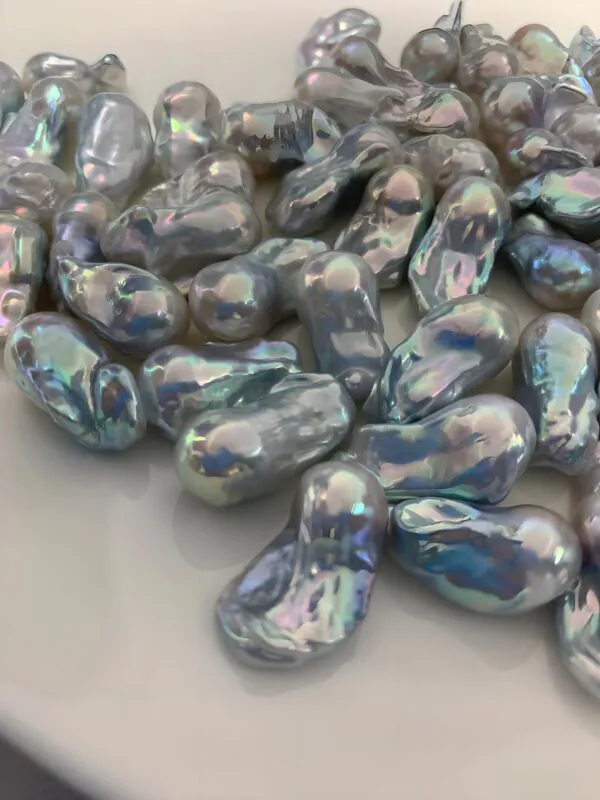
Larger pearls can look luxurious and dramatic, particularly with South Sea, Tahitian, Edison, or other larger cultured pearl types. But “large” does not automatically mean “formal.” A large irregular baroque pearl on a clean chain may look artistic and contemporary, while a smaller round pearl with an ornate diamond setting may look more traditional and dressy.
Also remember that size is only one part of judging a pearl. Luster, surface, shape, color, nacre, and—where multiple pearls are used—matching also affect appearance and value. If you are comparing two pendants, our guide to evaluating pearl value is a better next step than choosing by millimeters alone.
How to Choose Chain Length for a Pearl Pendant
Chain length controls where the pearl sits on the body, and that position can matter as much as the pearl size. A difference of only a few inches can move the pendant from the base of the neck to the upper chest and completely change how it interacts with a neckline.
| Chain Length | Typical Placement | Works Well With |
|---|---|---|
| 14–16 in | Close to the base of the neck | Open collars, scoop necks, strapless looks, layering |
| 17–19 in | Around or just below the collarbone on many wearers | Most everyday tops, dresses, office wear, first-time purchases |
| 20–24 in | Upper chest | High necklines, sweaters, larger pendants, a more relaxed vertical line |
These placements are approximate. Neck circumference, height, body proportions, the pendant drop, and the clothing underneath all change where the pearl actually lands. If fit matters, measure a necklace you already like rather than relying only on the name “choker,” “princess,” or “matinee.”
16 inches or 18 inches: which is safer?
If you want the pearl close to the collarbone and often wear open necklines, 16 inches can look crisp and modern. If you want more breathing room or are buying without trying the necklace on, 18 inches is generally more forgiving. An adjustable chain that covers a small range is even more useful for gifts because the wearer can move the pearl around different necklines.
When a longer chain makes more sense
A 20–24 inch chain can help a pearl remain visible over a high-neck top, knit, or dress. It can also give a larger pendant more visual space. The trade-off is movement: the lower a pendant sits, the more it may swing as the wearer moves, so the chain and setting should still feel secure and proportional.
Which Chain Style Works Best With a Pearl Pendant?
There is no single “correct” chain for pearls. The best chain is one that supports the pendant and does not compete with the effect you want from the pearl.
Cable chain: the easiest all-purpose choice
A simple cable chain has small linked loops and a visually neutral texture. It works with classic round pearls, small baroque pearls, minimal bails, and most everyday settings. If you are unsure which chain style to choose, this is usually the lowest-risk starting point.
Box chain: cleaner and slightly more geometric
Box chains have a more structured look than a fine cable chain. They can give a pearl pendant a modern, polished frame, especially when the setting itself has clean geometric lines. Because the chain is visually more defined, choose a thickness that does not overpower a very small pearl.
Snake chain: smooth and contemporary
A snake chain creates a continuous-looking metal line rather than an obvious pattern of individual links. It can make a simple pearl pendant feel sleek and modern. This style works best when you want the chain itself to contribute to the design rather than disappear completely.
Rope, wheat, curb, and other more visible chains
Chains with stronger texture can work beautifully with larger pearls, baroque forms, substantial settings, or more fashion-forward designs. The important point is visual balance: if both the pearl setting and chain are highly decorative, the jewelry can become busy. If the pearl is meant to remain the focal point, keep at least one of those elements quiet.
Chain Thickness Matters More as the Pendant Gets Heavier
A pearl's diameter is not the same as the pendant's total weight. A decorative gold setting, diamond halo, large bail, or multiple metal components can add considerable visual and physical weight. For that reason, a very fine chain that looks appropriate with a loose 8 mm pearl may not be the best partner for an 8 mm pearl mounted in a substantial setting.
When choosing a chain separately from the pendant, check three things: whether the chain can pass through the bail, whether the clasp can pass through if the pendant is removable, and whether the chain thickness looks balanced with the total pendant—not only with the pearl.
Does Pearl Type Change the Best Pendant Size?
Yes, because different cultured pearl types commonly appear in different size ranges and have different visual personalities. An Akoya pearl is often chosen for a clean, classic look and can make a relatively modest diameter appear very refined because the design usually emphasizes roundness and luster. Larger South Sea pearls naturally lend themselves to more prominent pendants, while Tahitian pearls can create a stronger visual effect through dark bodycolor as well as size.
Freshwater pearls cover a particularly wide range of shapes and design directions, from tiny round pearls to large baroque and bead-nucleated styles. This is why it is more useful to decide the visual role of the pendant first, then choose the pearl type and size that can deliver it.
Match the Chain to the Pearl, but Also to Your Wardrobe
Metal color can change how a pearl reads. Yellow gold tends to make cream, golden, peach, and warm overtones feel warmer; white gold, platinum, or silver can create a cooler, cleaner frame; rose gold can soften the contrast around white or pink-toned pearls. These are aesthetic effects, not fixed rules.
Your existing jewelry is often the better guide. If you already wear mostly yellow-gold earrings, watch hardware, rings, and chains, a pearl pendant on yellow gold will probably integrate more easily into your wardrobe than a theoretically “perfect” metal that matches nothing else you own.
A Four-Step Way to Choose a Pearl Pendant
- Start with the situation you will use most. If 80% of the wear will be work and weekends, choose for those days rather than for one future formal event.
- Choose the pearl's visual role. Decide whether you want it to be subtle, clearly visible, or the main focal point. Then select size accordingly.
- Place it at the right height. Use your common necklines to decide whether 16–18 inches or 20–24 inches makes more sense. Measure a necklace you already like if possible.
- Check the complete pendant-chain balance. Consider setting size, bail opening, chain thickness, chain texture, and total pendant weight—not just the pearl diameter.
This order prevents a common buying mistake: falling in love with a pearl size first, then trying to force the finished pendant into a wardrobe or chain length that does not suit it.
Common Mistakes When Choosing a Pearl Pendant
- Choosing by age rather than style. There is no rule that younger wearers need tiny pearls or older wearers need large pearls. Personal style and proportion matter more.
- Assuming bigger means better. A larger pearl can have more presence, but size does not replace luster, surface quality, shape, or overall design quality.
- Ignoring the setting. A halo, cap, motif, or wide bail can make the pendant look much larger than the pearl measurement suggests.
- Choosing chain length without thinking about necklines. A pendant that disappears under a shirt collar or lands directly on a neckline edge will be worn less often.
- Making both chain and pendant compete for attention. A highly textured chain can be beautiful, but it needs a pendant design that can visually handle it.
- Buying a replacement chain without checking the bail. The chain, end ring, and clasp need to fit through the pendant hardware if the pendant is removable.
FAQ
Can I wear a pearl pendant every day?
Yes. A simple pearl pendant can be an everyday piece, but pearls benefit from sensible care because their surface is more delicate than many metals and gemstones. Avoid unnecessary exposure to perfume, hairspray, household chemicals, and abrasive storage, and review our pearl care guide if you plan to wear yours frequently.
What is the best pearl size for a first pendant?
If you want one pendant that can move between casual, office, and dressier outfits, roughly 7–9 mm is a practical starting range. Choose smaller if you prefer barely-there jewelry and larger if you want the pearl to read as a clear focal point.
Is a 16-inch or 18-inch chain better for a pearl pendant?
Neither is universally better. A 16-inch chain keeps the pendant higher and often suits open necklines, while 18 inches usually gives more room around the collarbone and is easier to combine with a wider range of tops. An adjustable chain reduces the need to choose only one position.
Can a large pearl pendant still look casual?
Yes. A large baroque or round pearl in a simple setting can look modern and relaxed, especially with plain clothing. Formality comes from the complete design and styling, not from pearl diameter alone.
Are pearl pendants suitable for formal events?
Yes. Pearl pendants can work with cocktail, wedding, and formal evening clothing. Choose the pearl size, setting detail, metal, and chain length to complement the neckline and the amount of decoration already present in the outfit.
The Simplest Rule to Remember
Choose a pearl pendant by presence first, millimeters second. A delicate everyday pendant, a versatile work-to-dinner piece, and a formal statement pendant can all use pearls successfully; they simply need different proportions. Start with how visible you want the pearl to be, place it at the right height for your wardrobe, then choose a chain that supports rather than competes with the design.
If you are comparing finished options, browse Margaret Jewelry's pearl pendant collection and compare the pearl size together with the setting and chain—not as separate decisions.