Can Pearls Be Layered? How to Layer Them with Gold Chains and Other Necklaces
Yes. Pearls can be layered with gold chains, pendants, other pearl strands, and many other necklaces. The key is not simply wearing necklaces of different lengths. A good pearl stack also separates the pieces by visual weight, texture, and focal point, so the necklaces look intentionally connected rather than crowded together.
For an easy starting point, wear one pearl piece as the anchor, place the next necklace at a visibly different length, and let only one or two pieces compete for attention. A classic pearl strand with a fine gold chain is one of the simplest combinations, but the same principles work with baroque pearls, pearl chokers, pearl pendants, silver chains, gemstone necklaces, and multiple pearl strands.
The Quick Rule: Separate Your Layers in Three Ways
Most unsuccessful necklace stacks have one problem: too many pieces occupy the same visual space. You can avoid that by creating separation in three dimensions.
| What to Separate | What It Means | Simple Example |
|---|---|---|
| Length | Each necklace should have enough vertical space to remain visible. | 16-inch pearls + 18-inch chain + 20-22-inch pendant |
| Visual weight | A substantial pearl strand usually benefits from lighter supporting pieces. | 8 mm pearls + fine gold chain |
| Texture | Contrasting surfaces make individual layers easier to distinguish. | Smooth pearls + simple cable or box chain |
You do not need to satisfy these rules perfectly. They are a troubleshooting framework. If a stack looks too busy, ask whether two necklaces are too close in length, too similar in visual weight, or both fighting to become the focal piece.
Start with One Anchor Necklace
Before adding a second or third necklace, decide which piece you want people to notice first. That piece becomes the anchor.
A pearl strand can be the anchor because its repeating round or organic shapes create a strong horizontal line around the neck. A large pearl pendant can also be the anchor because the eye naturally travels toward the pendant. Alternatively, you can make a bold gold chain the anchor and use small pearls as a softer supporting texture.
This is more reliable than putting several favorite necklaces on at once and trying to make them work afterward.
- Classic pearl strand as anchor: keep the surrounding chains simpler.
- Pearl pendant as anchor: place the other necklaces above it rather than directly beside the pendant.
- Chunky chain as anchor: use smaller pearls or a delicate pearl station necklace for contrast.
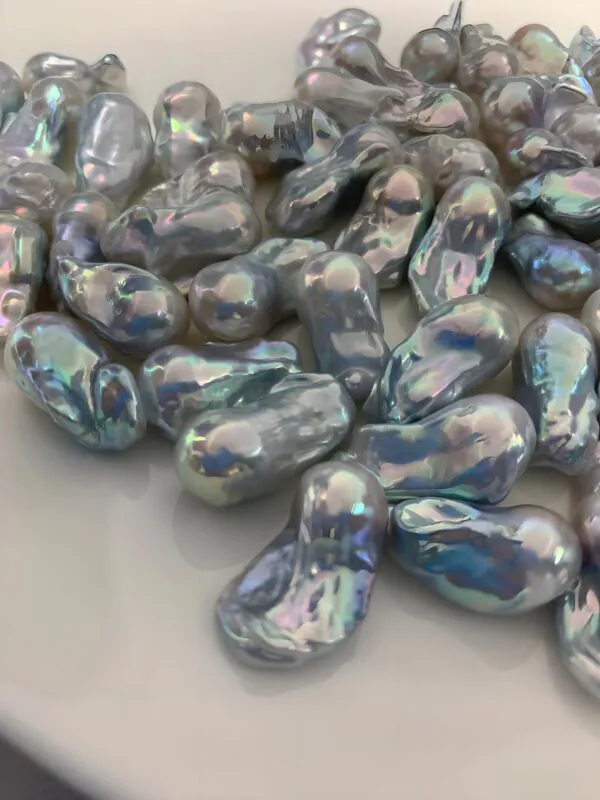
- Baroque pearl strand as anchor: let the irregular pearl shapes provide most of the texture and keep the metal layers cleaner.
How to Layer Pearls with Gold Chains
Pearls and yellow gold work particularly well as a visual contrast because pearls provide a soft, reflective surface while metal chains introduce sharper lines and more defined structure. You can make the combination minimal, classic, or deliberately bold depending on the scale of the pieces.
1. Classic Pearl Strand + Longer Fine Gold Chain
This is the easiest combination to build. Start with a pearl necklace near the collarbone and place a fine gold chain below it.
For example, a pearl strand around 16-18 inches can be paired with a chain around 18-20 inches, provided the actual positions on your body remain clearly separated. If the chain has a pendant, letting the pendant fall below the pearl strand creates an additional vertical focal point.
This works especially well when you want a traditional pearl strand to feel less formal without changing the pearls themselves.
2. Pearl Choker + Mid-Length Gold Chain + Pendant
A three-layer stack becomes easier when every layer has a different job:
- A short pearl choker frames the neck.
- A simple gold chain creates a transition layer.
- A longer pendant provides the focal point.
A practical starting range might be approximately 14-16 inches for the shortest layer, 18 inches for the middle layer, and 20-22 inches for the longest piece. These are not fixed rules: neck circumference, pendant size, clothing, and necklace construction all change where a necklace actually sits.
3. Short Gold Chain + Pearl Pendant
You do not need a full pearl strand to create a pearl-and-gold layered look. A single pearl pendant often gives you more flexibility.
Place a short, simple chain near the collarbone and let the pearl pendant fall lower. Because the pearl occupies only one focal point rather than forming a complete strand, this combination can accommodate slightly more metal texture without feeling overloaded.
It is also a useful approach for someone who likes pearls but finds a full strand too traditional for everyday clothing.
4. Baroque Pearls + Minimal Gold Chain
Baroque pearls already provide irregular outlines, size variation, and strong texture. Adding an equally complex chain can make the two necklaces compete.
A cleaner approach is to pair a baroque strand with a relatively simple chain and create the contrast through material rather than through two complicated designs. The more dramatic the pearls are, the less work the supporting necklace usually needs to do.
Match the Chain Weight to the Pearl Size
Length alone does not determine whether two necklaces belong together. Scale matters just as much.
A very thin chain can visually disappear next to large pearls, while a heavy curb chain may dominate a strand of tiny pearls. Neither combination is automatically wrong, but the contrast should look deliberate.
| Pearl Style | Good Starting Point for the Other Layer | Overall Effect |
|---|---|---|
| Small pearls, about 3-5 mm | Fine to medium chain | Delicate, easy to build into a 2-3 necklace stack |
| Medium pearls, about 6-8 mm | Fine or moderately substantial chain | Balanced classic-meets-modern look |
| Larger pearls, about 9-11 mm | One simpler supporting chain | More statement-focused |
| Very large or highly irregular pearls | Minimal chain or pendant with generous spacing | Lets the pearls remain the dominant feature |
The same principle works in reverse. If you want to wear a bold chain, small pearls can provide contrast without creating two equally heavy horizontal bands around the neck.
How Much Space Should You Leave Between Layered Necklaces?
There is no single correct spacing measurement, because two 18-inch necklaces can sit differently depending on neck circumference, chain construction, pearl diameter, clasp, and pendant weight.
As a practical starting point, aim for roughly 1-2 inches (about 2.5-5 cm) of visible difference between neighboring necklace lengths. Then look at where the necklaces actually land rather than relying only on their listed measurements.
More space is useful when:
- the pearls are large;
- one necklace has a large pendant;
- both necklaces are visually substantial;
- you are wearing three layers instead of two;
- you want each piece to remain clearly identifiable.
Less space can work when the pieces are very delicate or when you deliberately want a tight, clustered look. The test is simple: from normal viewing distance, can you still understand the necklaces as separate layers?
Should the Pearls Be the Shortest or Longest Layer?
Either can work, but the result changes.
Pearls as the Shortest Layer
This is usually the easiest arrangement for a traditional strand. The pearls frame the neck, while chains and pendants extend downward. It creates a clear progression and makes it easier to prevent a pendant from disappearing behind the pearls.
Pearls as the Middle Layer
This works when the shortest piece is very light, such as a fine chain, and the longer piece creates a distinct vertical line. Make sure the short chain does not constantly fall onto the upper edge of the pearls.
Pearls as the Longest Layer
A long pearl necklace can sit below shorter chains, especially over a blouse, knit, or higher neckline. Long pearl strands can also be doubled, although doubling changes both the visual weight and the way the strand moves, so fewer additional necklaces are usually needed.
How to Layer Pearls with Other Types of Necklaces
Other Pearl Necklaces
Pearl-on-pearl layering works best when something changes between the strands. Instead of stacking three nearly identical necklaces, vary the length, pearl diameter, shape, or color.
For example, a short strand of small round pearls can sit above a longer strand of larger baroque pearls. The shared pearl material gives the look continuity, while the change in scale and shape prevents the layers from merging visually.
Silver or White-Metal Chains
Gold is not required. White pearls can work with silver, platinum-tone, or white-gold jewelry for a cooler palette, while gray and dark pearls can create particularly strong combinations with white metals.
You can also mix yellow and white metals, but once you are mixing metals, pearl shapes, necklace lengths, and pendants at the same time, visual complexity rises quickly. One repeated element—such as the same metal appearing twice—can help tie the stack together.
Gemstone or Beaded Necklaces
When combining pearls with colored stones or beads, first decide whether the color or the pearls should dominate. A necklace containing strongly colored or large gemstones already functions as a statement piece, so a simpler pearl layer usually works better beside it.
If you want a more eclectic style, repeat one visual feature across the stack: a similar bead size, a related color, or one metal tone. The necklaces do not need to match, but they should have some reason to belong together.
Chains with Charms and Pendants
Pendants introduce a clear focal point, which is useful for layering. Keep the pendant far enough below the pearl strand that it does not sit directly on the pearls or become visually trapped between them.
If you use several pendants, vary their sizes or simplify the rest of the necklaces. Three pendants of similar size hanging at nearly the same height usually create more competition than hierarchy.
Be Careful About Metal Rubbing Against Pearls
Layering pearls with metal is primarily a styling choice, but pearl durability deserves consideration too. Pearls are relatively soft and can be scratched or abraded more easily than many gemstones and jewelry materials. For that reason, a necklace combination that causes a rough metal surface, sharp pendant edge, or textured clasp to repeatedly rub across the same pearls is not ideal for frequent wear.
This does not mean pearls and chains cannot be worn together. It means the physical arrangement matters.
- Keep neighboring necklaces at sufficiently different lengths so they are less likely to sit directly on top of one another.
- If a chain will sit close to the pearls, a smoother chain surface is generally preferable to very aggressive or sharp-edged links.
- Place heavily textured or chunky chains farther away from a valuable pearl strand when possible.
- Check whether a pendant swings into the pearls as you walk.
- After wearing, separate the necklaces rather than storing the entire stack tangled together.
For general maintenance, see our guide to caring for pearls. Pearl jewelry should also be wiped gently after wear and protected from unnecessary contact with perfume, cosmetics, and harsh chemicals.
How to Reduce Tangling When Layering Necklaces
No layering arrangement can guarantee that separate necklaces will never move or tangle. Your shoulders, clothing, walking movement, chain weight, pendant position, and clasp location all affect how the pieces behave.
However, you can reduce the problem.
- Use clearly different lengths. Necklaces that occupy exactly the same level are more likely to cross repeatedly.
- Mix chain weights. Two extremely fine chains may twist together more readily than pieces with distinct structures.
- Watch pendant weight. A pendant can help pull one necklace downward and stabilize its position, but an oversized pendant can also swing into neighboring layers.
- Check the stack after moving. A combination that looks perfect while standing still may behave differently after ten minutes of walking.
- Consider a necklace separator or multi-clasp. These accessories can help keep clasps organized and maintain relative positions, although they cannot eliminate every possible tangle.
If the necklaces repeatedly twist together despite adjustments, the answer may simply be to remove one layer. A successful stack is not determined by how many necklaces you can wear at once.
Match the Layers to Your Neckline
Your clothing creates another set of lines around the neck and chest. Treat the neckline as part of the composition rather than styling the jewelry in isolation.
| Neckline | Pearl Layering Approach |
|---|---|
| Open crew or scoop neck | Short pearl strand plus one or two gradually longer chains |
| V-neck | Short pearls with a longer pendant that echoes the vertical V shape |
| Button-down shirt | Short or medium pearls near the open collar with a simple chain below |
| Strapless or wide neckline | Allows more visible space for a two- or three-layer stack |
| Turtleneck or high knit | Longer strands and pendants can be worn over the fabric |
| Detailed or embellished neckline | Reduce the number of necklaces so the jewelry does not compete with the clothing |
Necklace length names such as choker, princess, matinee, and opera are useful references, but the actual landing point matters more than the category name. Always evaluate the combination on your own neckline.
Four Easy Pearl Layering Formulas
If you do not want to build a stack from scratch, use one of these combinations as a starting point.
Minimal Everyday
Small pearl strand + longer fine gold chain. Two layers are enough. Keep both relatively light and allow visible space between them.
Modern Classic
Classic round pearl strand + longer gold pendant necklace. The pearls provide the horizontal frame while the pendant adds a vertical focal point.
Fashion-Forward Contrast
Small pearl choker + chunkier chain at a clearly different length. Let the contrast in scale become the design idea rather than trying to make the two pieces look similar.
Organic and Relaxed
Baroque pearl necklace + simple fine chain. Let the irregular pearls provide the complexity and use the metal as a quiet supporting layer.
If you are building a collection specifically for layering, smaller pearl necklaces, pendants, and simple chains generally provide more possible combinations than several necklaces of the same size and length. You can also explore different pearl jewelry formats in our pearl necklace collection.
Common Pearl Layering Mistakes
Wearing Everything at Almost the Same Length
The pieces collapse into one dense band rather than creating layers. Adjusting even one necklace can make the composition clearer.
Using Too Many Focal Pieces
A large pearl strand, heavy chain, oversized gemstone pendant, and multiple charms may all be attractive individually, but wearing them together gives the eye nowhere to rest.
Ignoring Pearl Diameter
A 4 mm pearl strand and a 10 mm pearl strand occupy very different amounts of visual space. Treating them as equivalent simply because both are “pearl necklaces” can produce an unbalanced stack.
Letting Rough Metal Constantly Rub the Pearls
Do not evaluate the combination only in the mirror. Move around and check where the necklaces actually contact each other.
Adding a Third Necklace Before Two Layers Work
If two necklaces already compete, a third will rarely solve the problem. First make the two-piece combination feel intentional, then decide whether another layer adds anything useful.
Do Layered Pearls Have to Look Casual?
No. Layering changes the styling language of pearls, but it does not automatically make them casual.
For everyday wear, a small pearl strand with a fine chain can make pearls feel relaxed with a T-shirt, knit, or open shirt. For work, two clean layers usually look more controlled than a large multi-necklace stack. For evening wear, larger pearls or a statement pendant can become the dominant piece while the remaining layers stay restrained.
The important distinction is between complexity and formality. More necklaces do not necessarily make the result more fashionable, and fewer necklaces do not automatically make it conservative.
FAQ
Can you wear a pearl necklace with a gold chain?
Yes. A pearl strand and gold chain are easy to combine because the materials provide natural contrast. Keep them at visibly different lengths and decide which piece should be the main focal point.
Should the pearl necklace be shorter than the gold chain?
It often works well that way, especially with a classic pearl strand, because the pearls frame the neck while the gold chain or pendant extends below them. However, longer pearls can also sit beneath shorter chains. The actual spacing matters more than a fixed order.
How far apart should layered necklaces be?
A useful starting point is about 1-2 inches, or roughly 2.5-5 cm, of difference in necklace length. Adjust from there according to pearl size, pendant size, your neck circumference, and where each necklace actually sits.
Can gold chains scratch pearls?
Pearls are relatively soft, so repeated rubbing against rough or sharp jewelry surfaces can potentially scratch or abrade them. Keep rough chains and pendant edges from constantly crossing the pearl surface, especially with valuable strands.
How many necklaces should you layer with pearls?
Two necklaces are enough to create a layered look, and two or three are the easiest combinations to control. More layers can work, but only when each piece still has a distinct role, position, and visual weight.
Can you layer pearls with silver instead of gold?
Yes. Pearls can be layered with silver, white gold, platinum-tone jewelry, mixed metals, gemstones, and other pearl strands. Gold is only one styling option; proportion, spacing, and visual hierarchy matter more than the metal color itself.
Final Takeaway
Pearls can absolutely be layered, and they do not need to be worn only as a single traditional strand. The most useful rule is to build a hierarchy rather than simply adding necklaces: choose one anchor piece, separate the lengths, balance the visual weight, and introduce contrast deliberately.
Start with two pieces. A pearl strand and a gold chain at different lengths are enough to test the idea. Once that combination looks balanced and moves comfortably without excessive rubbing or tangling, add a third layer only if it contributes something new. That approach makes pearl layering easier to repeat with different outfits, pearl sizes, necklace styles, and occasions.