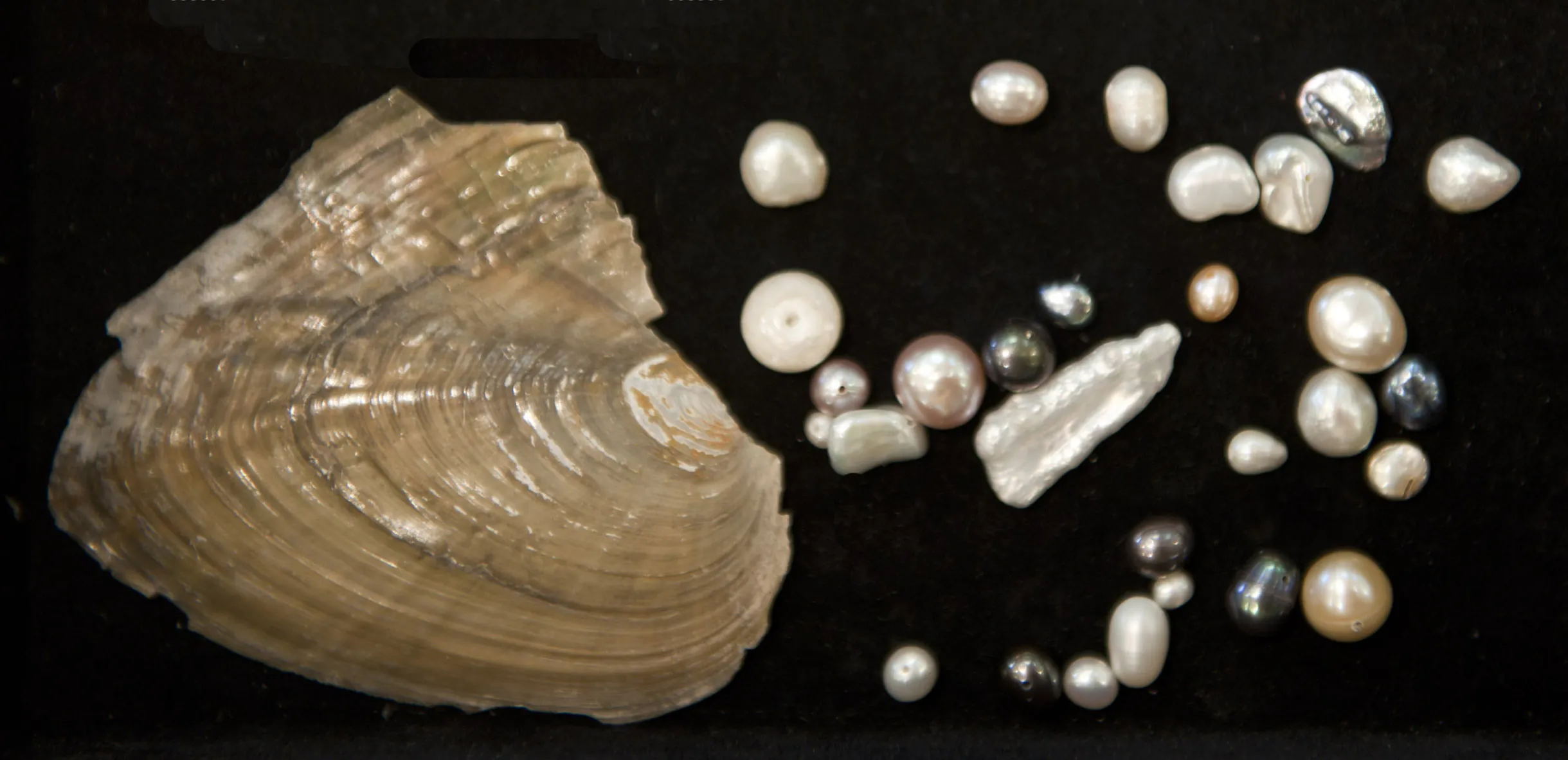
Tahitian pearls come from French Polynesia in the South Pacific, not simply from the island of Tahiti. Most pearl farming is concentrated in the remote lagoons of the Tuamotu Archipelago and the Gambier Islands, where black-lipped pearl oysters are raised and grafted to produce naturally colored cultured pearls.
That distinction matters because the name can create the wrong mental picture. “Tahitian” is a recognized pearl term tied to French Polynesian origin and the black-lipped pearl oyster, Pinctada margaritifera. It does not mean that every Tahitian pearl was physically grown beside the island of Tahiti.
Official 2023 statistics from French Polynesia's Direction des Ressources Marines reported 7,609 hectares of pearl-farming area in use. About 70% was in the Tuamotu Archipelago and 26% in the Gambier Islands. The same statistics recorded a much smaller share in the Leeward Islands and also listed Tahiti among the islands with authorized pearl-farming area.
Quick Answer: Tahitian Pearls Are French Polynesian Pearls
| Place | Role in Tahitian pearl production | What to remember |
|---|---|---|
| French Polynesia | The formal geographic origin of Tahitian cultured pearls | “Tahitian” refers to the wider French Polynesian pearl-producing region, not only one island |
| Tuamotu Archipelago | The largest pearl-farming region | Official 2023 statistics placed about 70% of pearl-farming area here |
| Gambier Islands | The second major producing region | Official 2023 statistics placed about 26% of pearl-farming area here |
| Leeward Islands | Smaller production footprint | Part of the remaining French Polynesian pearl-farming geography |
| Tahiti | Small production presence and the best-known island in French Polynesia | It gives the pearl its internationally familiar name, but most production is elsewhere |
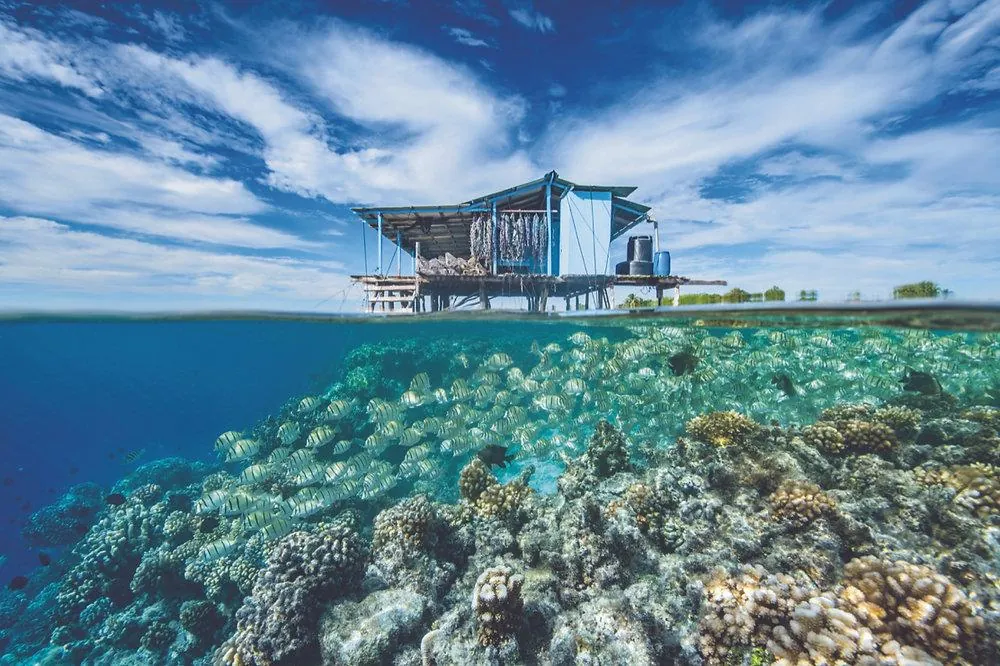
Why Are They Called “Tahitian” Pearls If Most Are Grown Elsewhere?
Tahiti is the largest and internationally best-known island in French Polynesia, so its name became the familiar label attached to the region's dark cultured pearls. But French Polynesia is much larger than Tahiti itself: it is a widely dispersed Pacific territory made up of multiple island groups and many lagoons.
This is similar to other geographic product names that become better known than the exact production site. A pearl may enter the trade as a Tahitian cultured pearl even though the farm that produced it was hundreds of kilometers away from Tahiti.
The important point is not the distance from Tahiti. It is whether the pearl belongs to the recognized French Polynesian Tahitian cultured-pearl category.
CIBJO, the World Jewellery Confederation, defines a Tahitian cultured pearl as a naturally colored cultured pearl produced by grafting and breeding Pinctada margaritifera cumingii in a natural environment in French Polynesia. In other words, the geographic definition is French Polynesia, not “Tahiti island only.”
For a broader introduction to the pearl type itself, including size, color, shape and culturing, see our complete guide to Tahitian pearls.
The Tuamotu Archipelago Is the Main Tahitian Pearl-Farming Region
The clearest answer to “where are Tahitian pearls actually grown?” is the Tuamotu Archipelago.
French Polynesia's 2023 pearl-farming statistics reported that the Tuamotus accounted for about 70% of the territory's exploited pearl-farming area. They also listed 21 pearl-farming islands in the Tuamotu group, far more than in any other archipelago.
The Tuamotus are especially suited to lagoon-based pearl farming because many of the islands are coral atolls surrounding large bodies of seawater. Pearl oysters can be suspended on farm lines within these lagoons, where farmers manage stocking, cleaning, grafting and grow-out over long periods.
Well-known pearl-farming atolls in the Tuamotu region include places such as Manihi, Ahe, Apataki, Fakarava, Raroia and Takapoto. The importance of individual atolls changes over time, however. French Polynesian authorities note that some lagoons have experienced declining activity because of poor natural oyster-spat collection or environmental problems such as eutrophication.
That is an important correction to the romantic idea that any beautiful tropical lagoon will automatically produce exceptional pearls. Pearl farming depends on a living ecosystem, and each lagoon has its own carrying capacity, water circulation, food supply and biological pressures.
The Gambier Islands Are the Other Major Production Center
The Gambier Islands, in southeastern French Polynesia, form the second major center of Tahitian pearl culture. Official 2023 figures assigned about 26% of pearl-farming area to the Gambier region.
Most references to Gambier pearl farming center on Mangareva and the large lagoon surrounding the Gambier group. Rikitea, the principal village on Mangareva, is also closely associated with the region's pearl trade.
Scientific studies of Gambier pearl-farming waters examine lagoon circulation and spat collection because the movement of water affects the conditions in which young oysters settle and farmed oysters grow. These studies are useful reminders that “origin” is not just a country name on a label: it describes a particular farming environment.
At the same time, buyers should avoid turning regional reputation into a quality shortcut. A pearl from Gambier is not automatically better than a pearl from Tuamotu, and two farms in the same archipelago can produce very different harvests.
Are Tahitian Pearls Actually Grown on the Island of Tahiti?
Some can be, but most are not. This is where many online explanations become too absolute.
You will often see the statement that Tahitian pearls “do not come from Tahiti at all.” That is a useful shortcut for explaining that the industry is concentrated elsewhere, but it is not the most precise current description.
French Polynesia's Direction des Ressources Marines lists Tahiti among the 27 islands with authorized pearl-farming area in its 2023 statistics. More recently, its July 2026 list of members adhering to the pearl-culture best-practices charter includes SCA Tahiti Iti Pearl Farm in Teahupo'o on Tahiti. At the same time, the territory-wide statistics show overwhelmingly larger activity in Tuamotu and Gambier. The accurate takeaway is therefore:
- Tahiti is not the main production center;
- the great majority of farming activity is in the Tuamotu and Gambier regions;
- but it is too strong to say that authentic Tahitian pearls can never be cultured on Tahiti itself.
This distinction is useful for buyers because it separates a memorable marketing simplification from the actual geography.
What Oyster Produces Tahitian Pearls?
Tahitian cultured pearls are produced by the black-lipped pearl oyster, Pinctada margaritifera. CIBJO's formal Tahitian cultured-pearl definition specifies the subspecies Pinctada margaritifera cumingii in French Polynesia.
The inner shell and mantle of this oyster have dark, iridescent characteristics that help produce the gray, charcoal, green, blue-green, bronze and other naturally dark appearances associated with Tahitian pearls. GIA notes that the species' mantle genetics are fundamental to these recognizable colors.
This is more accurate than saying that the lagoon itself “colors” the pearl. Water quality, temperature, food availability and farming conditions matter greatly for oyster health and pearl development, but the characteristic dark color family begins with the biology of the black-lipped oyster and the nacre-producing mantle tissue.

Does Every Pearl from a Black-Lipped Oyster Count as a Tahitian Pearl?
No. This is one of the most useful distinctions to understand.
Pinctada margaritifera is not exclusive to French Polynesia. The species occurs across a wider Indo-Pacific range, and black-lipped pearl oysters have also been used for pearl culture in places such as the Cook Islands.
But under CIBJO nomenclature, the term Tahitian cultured pearl is specifically tied to pearls produced in French Polynesia from Pinctada margaritifera cumingii. A black-lipped cultured pearl grown elsewhere may be biologically similar, but its geographic description should not simply be changed to “Tahitian.”
This is why origin and species should be treated as separate pieces of information:
- Species tells you which mollusk produced the pearl.
- Origin tells you where the culturing took place.
- Trade nomenclature determines which geographic name is appropriate.
Our guide to why pearl origin matters explains this distinction in more detail.
Why Do the Tuamotu and Gambier Lagoons Matter?
A Tahitian pearl is not created by geography alone, but geography shapes the farming system around it.
Black-lipped oysters are filter-feeding marine animals. Their survival and growth depend on conditions such as water exchange, temperature, food availability, stocking density and lagoon health. Farmers also need suitable areas for collecting juvenile oysters, holding them before grafting and maintaining them during pearl formation.
Research on French Polynesian pearl-farming atolls shows that lagoon hydrodynamics—the way ocean water moves through passes and circulates within a lagoon—can affect the biological environment used for pearl culture. French Polynesian regulators also impose ecological and management limits on pearl-farming areas, reflecting the fact that lagoon capacity is not unlimited.
So when origin matters, it matters as part of a larger system: oyster population, lagoon ecology, farm management, grafting skill and post-harvest sorting all interact. No single island name guarantees a particular result.
Does the Exact Island Tell You the Quality of a Tahitian Pearl?
No. The exact island or archipelago can be interesting provenance, but it is not a substitute for evaluating the pearl itself.
Two pearls from the same lagoon can differ greatly in luster, surface condition, shape, color and size. Conversely, excellent pearls can come from different French Polynesian farming regions.
When comparing individual Tahitian pearls, pay more attention to:
- Luster — how bright and sharp the reflections appear.
- Surface — the amount and visibility of natural growth features.
- Shape — round, near-round, drop, circled, baroque and other forms.
- Color — bodycolor, overtone, saturation and overall visual appeal.
- Size — considered together with the other quality factors.
- Matching — especially important for earrings, bracelets and strands.
For a practical quality framework, see our pearl grading guide. Origin can add context and provenance, but it should not be treated as a grade.
Can You Identify a Tahitian Pearl's Origin by Color Alone?
No. Dark color can suggest the black-lipped pearl family, but it cannot prove French Polynesian origin.
There are two separate reasons:
- black-lipped oysters occur outside French Polynesia, so a naturally dark pearl from the same broader species is not automatically Tahitian;
- other pearl types can be dyed or treated to create dark gray, black, green or peacock-like appearances.
If French Polynesian origin materially affects the value of a purchase, rely on clear seller disclosure, traceable sourcing information and—when the value justifies it—appropriate independent laboratory documentation. A photograph cannot establish exact geographic origin by itself.
What Should Buyers Remember About Tahitian Pearl Origin?
The simplest useful rule is:
Tahitian pearls are French Polynesian cultured pearls, and most of the farming takes place in the Tuamotu and Gambier regions rather than on Tahiti itself.
That one sentence avoids two common mistakes. First, it prevents the assumption that “Tahitian” means the pearl must have been grown on the island of Tahiti. Second, it prevents the opposite overcorrection that Tahiti can never have pearl farming at all.
If you are buying a pearl because its origin matters to you, ask the seller how specific the provenance claim really is. “French Polynesian Tahitian pearl” is a category-level origin. “Gambier,” “Mangareva,” “Apataki,” or another island name is a more specific provenance claim and should be treated as such.
For makers and designers sourcing loose pearls or strands, our wholesale pearl selection provides the commercial next step after you have decided which pearl type and quality characteristics you need.
Frequently Asked Questions
Are Tahitian pearls actually from Tahiti?
Some pearl-farming activity exists on Tahiti, but most Tahitian pearl production is concentrated elsewhere in French Polynesia, especially in the Tuamotu Archipelago and the Gambier Islands.
Where are most Tahitian pearls grown?
French Polynesia's 2023 statistics placed about 70% of pearl-farming area in the Tuamotu Archipelago and about 26% in the Gambier Islands, making these the two dominant production regions.
What oyster produces Tahitian pearls?
Tahitian cultured pearls are produced by the black-lipped pearl oyster, Pinctada margaritifera. CIBJO's Tahitian cultured-pearl definition specifies Pinctada margaritifera cumingii cultured in French Polynesia.
Can a black-lipped pearl from the Cook Islands be called a Tahitian pearl?
Under formal CIBJO nomenclature, no. Tahitian cultured pearls are specifically tied to production in French Polynesia. Black-lipped cultured pearls produced elsewhere should be described according to their actual origin.
Does a Gambier pearl automatically have better quality than a Tuamotu pearl?
No. Regional origin can describe provenance and growing environment, but quality still needs to be judged from luster, surface, shape, color, size, nacre and matching.
Are Tahitian pearls natural pearls?
Almost all Tahitian pearls in today's jewelry market are cultured pearls, meaning people initiate pearl formation through grafting. They are still real pearls, and their characteristic dark colors can be naturally produced by the oyster rather than created by dye.
References & Further Reading
- Direction des Ressources Marines, French Polynesia — Pearl Farming Statistics 2023
- Direction des Ressources Marines — La Perle de culture de Tahiti
- Direction des Ressources Marines — 2026 Pearl-Culture Best-Practices Charter Members
- CIBJO Pearl Book 2024 — Tahitian cultured pearl nomenclature
- GIA — Non-Bead-Cultured Pearls from Pinctada margaritifera
- Earth System Science Data — Lagoon Hydrodynamics of Pearl-Farming Atolls in French Polynesia