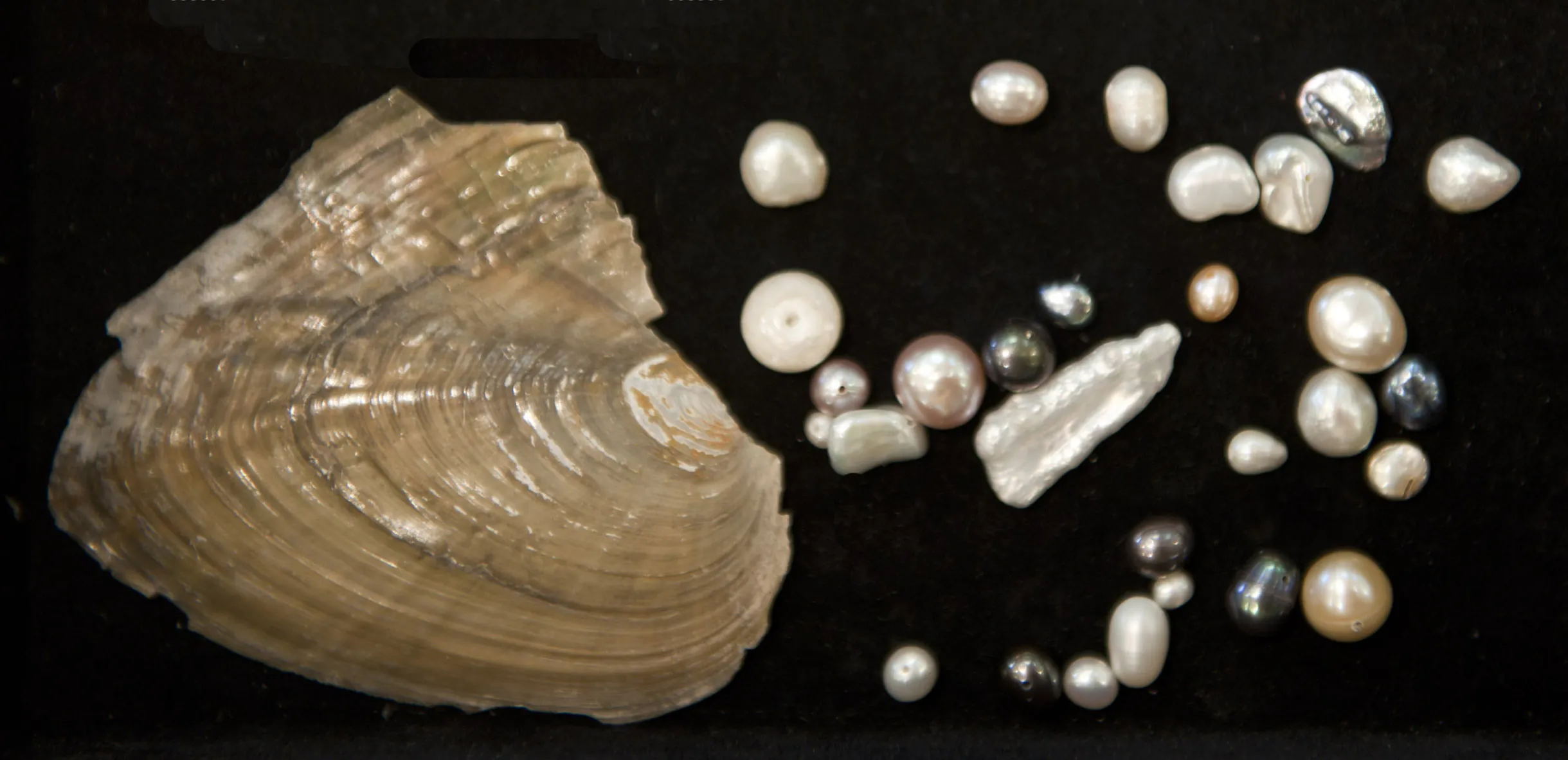
Golden South Sea pearls are produced mainly in the Philippines, Indonesia, and Myanmar, using the gold-lipped form of Pinctada maxima. In the international jewelry trade, the Philippines and Indonesia are the two origins most commonly associated with golden South Sea pearls, while gemological research also identifies Myanmar as an important producing country.
Australia belongs to the same broader South Sea pearl geography, but its industry is much more strongly associated with the silver-lipped Pinctada maxima and white-to-silver South Sea pearls. This is why a simple statement such as “South Sea pearls come from Australia” is not enough when the question is specifically about golden South Sea pearls.
The clearest way to understand the category is to separate pearl type, oyster variety, color, and country of culture. Golden South Sea pearls are not “Philippine pearls” by definition. They are cultured South Sea pearls from gold-lipped Pinctada maxima, and several countries can produce them.
Quick Answer: The Main Golden South Sea Pearl Origins
| Origin | Role in golden South Sea production | What buyers commonly associate with it |
|---|---|---|
| Philippines | One of the most important and best-known golden South Sea producing countries | Especially strong reputation for rich, saturated golden colors; Palawan is the best-known production center |
| Indonesia | Major and geographically broad producer of Pinctada maxima pearls, including golden material | Wide color range from cream and champagne through medium and deep gold |
| Myanmar | Established producer of golden Pinctada maxima cultured pearls | Less visible to consumers than the Philippines or Indonesia, but part of the core golden South Sea geography |
| Australia | Major South Sea producer overall, but not the main reference point for golden production | Primarily white and silver South Sea pearls from silver-lipped Pinctada maxima |
Why Do Golden South Sea Pearls Come from These Regions?
The starting point is the oyster. South Sea cultured pearls are produced by Pinctada maxima, one of the largest pearl oysters used commercially. The species occurs naturally across a broad Indo-Pacific range and is farmed in several tropical countries.
Within Pinctada maxima, the trade commonly distinguishes silver-lipped and gold-lipped forms. The silver-lipped form is associated most strongly with white and silver pearls, while the gold-lipped form is associated with cream, yellow, champagne and golden pearls.
GIA research on Pinctada maxima describes Australia as the largest producer of white silver-lipped material and identifies Indonesia, Myanmar and the Philippines as major producers of golden gold-lipped cultured pearls. The same research notes a broad geographic tendency: silver-lipped oysters are found mostly south of the equator, while gold-lipped populations are more common farther north.
That is a useful regional pattern, not a rigid border. Oyster populations overlap, farms use hatchery-bred stock as well as local populations, and pearl color is affected by biological selection and culturing decisions as well as geography. A map can explain where golden production is likely, but it cannot tell you the exact color of every pearl harvested in that region.
For a broader explanation of the species and pearl family, see our guide to South Sea pearls and Pinctada maxima.
The Philippines: The Origin Most Strongly Associated with Deep Golden Pearls
The Philippines has one of the strongest trade identities in the world for golden South Sea pearls. The best-known production area is Palawan and the surrounding southwestern Philippine waters, where farms culture gold-lipped Pinctada maxima specifically for naturally colored golden pearls.
The Swiss Gemmological Institute SSEF has documented golden South Sea pearl farming in Palawan and describes the Philippines, Indonesia and Myanmar as the main present-day harvest origins for golden South Sea cultured pearls. Philippine production is particularly visible at the high end of the market because some farms have spent decades selecting oyster lines, donor tissue and farming practices aimed at desirable golden colors.
This has created a strong market association between the Philippines and saturated medium-to-deep gold. That reputation is real, but it should not be turned into a false rule. Not every Philippine golden South Sea pearl is deep gold, and deep gold is not exclusive to the Philippines.
A Philippine harvest can include lighter champagne or yellow-gold material, while an Indonesian pearl can also show strong, saturated gold. Color ranges overlap too much for country of origin to be diagnosed reliably from appearance alone.
Indonesia: A Large and Geographically Diverse South Sea Pearl Origin
Indonesia is the other major origin that buyers are most likely to encounter when shopping for golden South Sea pearls. Its pearl-farming geography is spread across a vast archipelago rather than concentrated around one internationally famous center.
Historically, Lombok and the wider West Nusa Tenggara region have been particularly well known for golden Pinctada maxima production. Farming also extends through other Indonesian island regions, so “Indonesian golden South Sea pearl” describes a broad national origin rather than one narrowly defined local environment.
This wide production base helps explain why Indonesian golden pearls appear across a broad natural color spectrum. Buyers may encounter creamy yellow, champagne, light gold, medium gold and strongly saturated golden colors. It is therefore misleading to reduce Indonesian material to “lighter gold” or to assume that a deep golden pearl must have been cultured in the Philippines.
Our detailed comparison of Philippine vs. Indonesian golden South Sea pearls explains the overlap in color, quality and market reputation in more depth.
Myanmar Also Produces Genuine Golden South Sea Pearls
Myanmar receives less consumer attention than the Philippines or Indonesia, but it should not be left off a serious production map. Both GIA and SSEF identify Myanmar as an established Pinctada maxima culturing origin and as a producer of golden South Sea cultured pearls.
For a buyer, the important point is not that Myanmar material must look different. It is that golden South Sea pearl identity is not limited to two countries. A properly described Myanmar golden South Sea pearl can be just as genuinely part of the Pinctada maxima category as a pearl cultured in Palawan or Indonesia.
Its smaller international profile also illustrates a larger lesson about pearl origin: public familiarity and production legitimacy are not the same thing. Some origins are heavily branded; others are better known inside the trade than among retail consumers.
What About Australia?
Australia is one of the world's great South Sea pearl origins, but it is primarily famous for white and silver South Sea pearls. The Australian industry is built mainly around silver-lipped Pinctada maxima, especially in Western Australia's tropical northern and northwestern waters.
Golden or yellowish Pinctada maxima pearls can occur within the broader Australian range, and older gemological literature documents some golden production there. However, when a buyer asks where golden South Sea pearls are mainly produced, Australia should not be placed on the same level as the Philippines, Indonesia and Myanmar.
The easiest distinction is:
- Australia → the strongest reference point for white and silver South Sea pearls
- Philippines and Indonesia → the strongest commercial reference points for golden South Sea pearls
- Myanmar → an established but less consumer-visible golden South Sea origin
For the broader global picture, see our guide to the world's major pearl-producing regions.
Does the Country of Origin Determine How Golden the Pearl Will Be?
No. Origin influences the biological and farming environment, but it does not assign a fixed color grade to the pearl.
The final color of a golden South Sea pearl can reflect several interacting factors, including the characteristics of the gold-lipped oyster population, donor mantle tissue, selective breeding, individual oyster biology, growing conditions and farm decisions. This is why the same producing country can yield a wide range of colors in one harvest.
Trade reputation can still be useful. The Philippines is especially associated with rich golden material, while Indonesian production is often described as covering a very wide range of cream, champagne and gold. But these are population-level tendencies, not identification rules.
If two individual pearls look equally attractive, it is entirely possible that the better pearl for you comes from the origin with the less prestigious reputation. Country should provide context, not replace actual evaluation.
This principle is explored more broadly in our guide to why pearl origin matters—and why origin is not a quality grade.
Can You Identify Philippine or Indonesian Origin by Color Alone?
No. A deep, warm gold may make a seller or experienced pearl buyer think of premium Philippine production, but the color itself is not proof of country of culture.
The overlap is too large:
- a Philippine pearl can be pale champagne;
- an Indonesian pearl can be deep, saturated gold;
- a Myanmar pearl can fall within the same visible color range;
- lighting, camera white balance and background can make the same pearl appear warmer or cooler.
If country provenance materially affects the purchase, rely on traceable supplier information, farm documentation or appropriate laboratory reporting rather than visual color stereotypes.
Golden Color Does Not Mean the Pearl Is Naturally Formed
There is another terminology point worth clearing up. A golden South Sea pearl is normally a cultured pearl with naturally produced golden color. “Natural color” and “natural pearl” are not the same claim.
The pearl is cultured because a technician initiates pearl formation in the oyster. The golden bodycolor develops through the nacre produced by the gold-lipped Pinctada maxima. In other words, the color can be natural even though the pearl itself is cultured.
This distinction matters because other pearl types can be dyed or otherwise treated to imitate golden colors. A golden-looking freshwater pearl, for example, does not become a Golden South Sea pearl simply because its surface resembles gold.
When buying higher-value material, identify the pearl type first, then ask about color treatment and origin separately.
How Should a Buyer Compare Golden South Sea Pearls from Different Origins?
Once you know that several countries can produce genuine golden South Sea pearls, the buying question becomes much simpler: judge the pearl first and the country second.
- Confirm the pearl type. It should be a cultured South Sea pearl from Pinctada maxima, not merely a pearl with a golden appearance.
- Ask whether the color is natural or treated. Country of origin and treatment status are separate claims.
- Compare color under neutral lighting. Decide whether you prefer champagne, medium gold, deep gold or another tone rather than assuming darker is automatically better.
- Judge luster and surface. A prestigious origin cannot compensate for weak luster or a surface you do not like.
- Consider shape and size. Roundness and larger size can add value, but only in combination with the other quality factors.
- For pairs and strands, inspect matching. Similar bodycolor alone is not enough; luster, overtone, size and visual character should work together.
- Ask for provenance only when it matters to you. If you are paying a premium specifically for Philippine, Indonesian or Myanmar origin, the seller should be able to explain how that claim is supported.
For a more complete framework for judging pearl quality, see our pearl grading guide. Makers and designers looking for loose pearls or strands can also browse our wholesale pearl selection.
So, Where Are Golden South Sea Pearls Mainly Produced?
The most accurate short answer is the Philippines, Indonesia and Myanmar. The Philippines and Indonesia are the two origins most visible in the international golden South Sea pearl market, while Myanmar is also recognized by major gemological sources as an established producer.
These pearls are cultured from the gold-lipped form of Pinctada maxima. Palawan is the best-known Philippine center, while Indonesian production is distributed across a much wider island geography, with Lombok and West Nusa Tenggara historically important for golden material.
Australia remains a major South Sea pearl producer, but its reputation and production are much more strongly tied to white and silver pearls. And none of these country names should be treated as a substitute for judging the individual pearl's color, luster, surface, shape, size and matching.
The useful conclusion is simple: origin tells you where the pearl was cultured; it does not tell you, by itself, how good that pearl is.
Frequently Asked Questions
Which country produces the most golden South Sea pearls?
The safest practical answer is that Indonesia and the Philippines are the two dominant commercial origins, while Myanmar is also an established producer. Public production data are not consistent enough to treat one country as the permanent worldwide leader in every year or by every measure, so it is better to describe the main producing group than to make an unsupported volume ranking.
Are all golden South Sea pearls from the Philippines?
No. The Philippines is especially famous for golden South Sea pearls, but Indonesia and Myanmar also produce genuine golden Pinctada maxima cultured pearls.
Where in the Philippines are golden South Sea pearls produced?
Palawan and the surrounding southwestern Philippine waters are the best-known production area. Palawan is especially associated with high-end golden South Sea pearl farming.
Does Indonesia produce deep golden South Sea pearls?
Yes. Indonesian harvests cover a broad natural color range, and deep gold can occur. A dark or saturated golden color does not prove that a pearl came from the Philippines.
Does Myanmar produce golden South Sea pearls?
Yes. GIA and SSEF both recognize Myanmar as a producing origin for gold-lipped Pinctada maxima cultured pearls, although Myanmar has a lower consumer profile than the Philippines or Indonesia.
Are Australian South Sea pearls golden?
Australian South Sea pearls are primarily associated with white and silver colors from silver-lipped Pinctada maxima. Golden material can occur, but Australia is not the main reference origin for golden South Sea production.