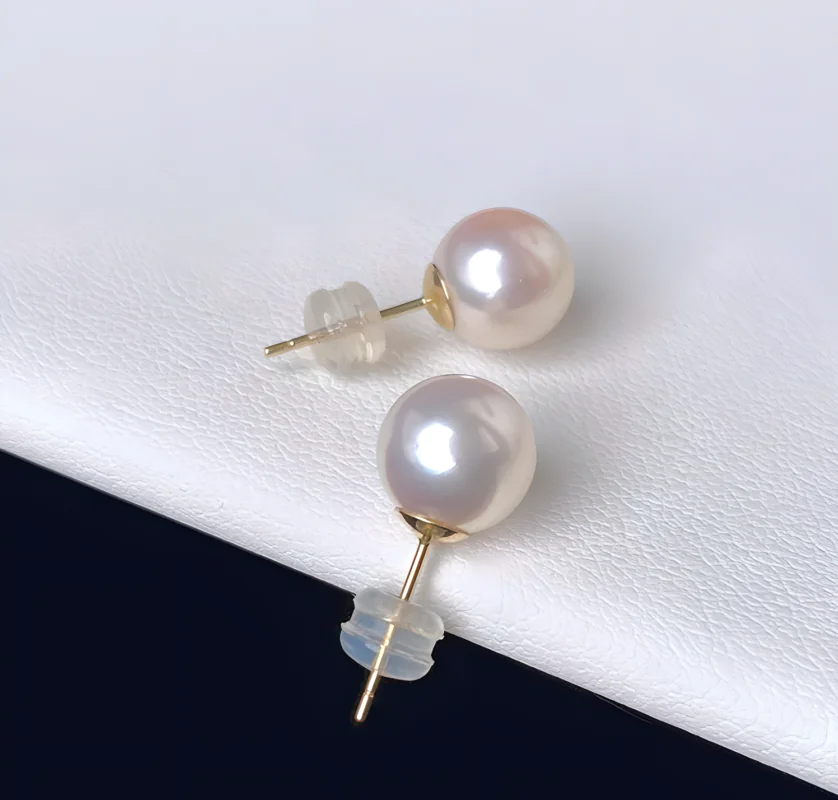
Visual inspection can often tell you when something looks suspicious, but it cannot prove every claim made about a pearl. Under good light and magnification, you may spot peeling coating, an exposed glass or plastic core, repeated molded features, or suspicious drill-hole edges that strongly suggest an imitation. You can also judge visible quality traits such as luster, surface condition, shape, and matching.
What appearance usually cannot establish with confidence is whether a genuine pearl is natural or cultured, whether its color is natural or treated, whether it formed in freshwater or saltwater in every case, or exactly where it came from. Those questions may require examination of internal structure or other laboratory testing.
The most useful way to think about pearl identification is therefore not “Which trick proves this is real?” but “Which observations are strong screening clues, and where does visual evidence stop?”
First: Cultured Pearls Are Real Pearls
Before inspecting anything, define what “real” means. A natural pearl forms in a mollusk without deliberate human initiation. A cultured pearl also forms in a mollusk, but pearl production is intentionally started or assisted by people. An imitation pearl is a manufactured product made to resemble a pearl.
So the first useful distinction is:
natural pearl + cultured pearl = genuine pearl material
imitation pearl = manufactured look-alike
This matters because many people use “real” when they actually mean “natural.” A cultured Akoya, freshwater, Tahitian, or South Sea pearl is still a real pearl. If you want the broader real-versus-imitation checklist, see our real vs. fake pearl guide.
What Visual Inspection Can and Cannot Tell You at a Glance
| Question | Can visual inspection answer it? | Practical answer |
|---|---|---|
| Is there an obvious coating over another material? | Often | Peeling, chipping, a paint-like film, or an exposed core can strongly indicate an imitation or coated product. |
| Does the pearl show convincing nacre-like luster and biological variation? | Sometimes | Useful supporting evidence, but sophisticated imitations can copy these effects. |
| Is the pearl natural or cultured? | No, not reliably | Internal growth structure normally matters; gemological laboratories use X-radiography and other testing. |
| Is the color natural or treated? | Sometimes clues are visible, but not proof | Dye concentrations, coating, or unusual color may raise suspicion, while many treatments require analytical confirmation. |
| Is it freshwater or saltwater? | Not in every case | Typical appearance can suggest a category, but overlap exists and laboratories may use elemental and other analytical methods. |
| What is its exact origin or mollusk species? | Usually no | Appearance alone is generally insufficient for a defensible origin or species claim. |
| Is it high quality? | Partly | Luster, surface, shape, color, and matching are visible, but quality is multidimensional and grade labels are not universal. |
| What is it worth? | No | Authenticity is only one factor; pearl type, size, quality, rarity, treatment, documentation, matching, and jewelry construction also matter. |
The Strongest Visual Clues Usually Come from Manufacturing Evidence
When visual inspection works well, it is usually because an imitation reveals how it was manufactured. You are not “proving nacre by beauty.” You are finding evidence that a pearlescent surface is only a coating over something else.
1. Peeling, flaking, or a visible coating edge
Look closely at worn areas, drill holes, chips, and edges. A thin pearlescent film lifting away from a different-colored core is a strong warning sign. The same is true when the surface looks painted, pooled, cracked like a coating, or mechanically detached from the material underneath.
This is much stronger evidence than simply saying a pearl “looks too shiny.” Genuine pearls can have very strong luster, while high-quality imitation coatings can also be glossy.
2. An exposed glass, plastic, resin, or other non-pearl core
If wear or damage reveals a clearly different material beneath the pearlescent exterior, the object may be an imitation pearl. This can be especially obvious around old drill holes where string movement has worn the surface.
Do not deliberately scrape or enlarge a drill hole to look for a core. Existing wear can be informative; creating new damage is unnecessary and may reduce the value of the item.
3. Repeated molded marks or identical coating behavior
Compare several pearls in the same strand. Biological pearls can be very well matched, so close similarity is not suspicious by itself. What deserves more attention is mechanical repetition: identical seams, identical depressions, repeated mold marks, or the same coating defect appearing in the same way across many beads.
A fine cultured pearl necklace can look impressively uniform because it was carefully sorted and matched. “Too perfect” is therefore not a reliable standalone test.
Why Drill Holes Are So Useful
The drill hole is one of the most revealing places on a strung pearl because it interrupts the outer surface. Under a loupe or macro lens, you may be able to see whether the surface behaves like integrated pearl material or like a separate coating over a bead.
Useful things to look for include:
- peeling or chipping of a thin surface film,
- a sharp difference between the outer pearlescent layer and the core,
- pooled coating or paint-like buildup around the hole,
- repeated manufacturing features across many beads,
- obvious wear exposing material that does not resemble pearl structure.
But a clean drill hole does not certify a pearl. Genuine cultured pearls can have chipped nacre, drilling damage, dirt, dark residue, or visible internal boundaries. Imitations can also be drilled neatly. A drill hole is best treated as an inspection window, not a certificate.
For a more technical identification path, our Pearl Identification guide explains how visual clues fit into the larger process.
Surface Texture and “Imperfections” Are Supporting Clues, Not Proof
Real pearls often show growth features: tiny pits, wrinkles, ridges, flattened areas, slight shape variation, or other natural surface characteristics. These details can support the interpretation that you are looking at a biological pearl.
They are not mandatory. Fine cultured pearls can have exceptionally clean surfaces, and imitation pearls can be manufactured with deliberate texture. A common online rule—“real pearls are imperfect, fake pearls are perfect”—is too simple to be dependable.
Surface features are more useful when they behave like genuine growth features rather than copied decoration. Ask whether the texture varies naturally from pearl to pearl, whether it is integrated into the luster, and whether the same pattern appears mechanically repeated.
Luster Can Tell You About Appearance, Not Identity by Itself
Good pearl luster has more than simple surface gloss. Reflections can appear bright and sharp, with a sense of depth created by the interaction of light with the pearl structure. Weak pearls may look dull or chalky.
That makes luster extremely important for evaluating quality. It does not make luster a standalone authenticity test. A manufactured bead can have a convincing pearlescent coating, while a real pearl may have weak luster because of poor nacre quality, wear, chemical damage, or low original quality.
In other words, beautiful luster supports a quality judgment more strongly than it supports an identity judgment. For a fuller quality framework, see our pearl grading guide.
What About the Tooth Test?
The tooth or friction test is popular because many nacreous pearls feel microscopically textured rather than glass-smooth when lightly rubbed against a tooth or another surface. It can sometimes separate a genuine nacreous pearl from a very smooth plastic or glass imitation.
But it is a screening clue, not proof. A textured or shell-based coating can confuse the result, not every imitation feels perfectly smooth, and the test tells you nothing about natural versus cultured origin, treatment history, geographic origin, or value.
For jewelry you care about, magnified visual inspection is a better starting point than repeated rubbing. There is little reason to rely on one tactile trick when you can examine drill holes, wear patterns, coating behavior, luster, and the entire strand together.
Weight and Temperature Are Even Weaker Clues
A plastic imitation may feel unusually light. A pearl or glass bead may initially feel cool. These observations can be useful when comparing obviously different materials side by side, but they are weak evidence on their own.
Glass imitations can be heavy. Resin formulations vary. Pearl type, size, internal structure, mounting, and stringing all affect how an item feels in the hand. A “cold” or “heavy” bead is therefore not automatically a real pearl.
If several stronger visual clues already suggest an imitation, weight and temperature may support that interpretation. They should not lead it.
What Visual Inspection Cannot Reliably Determine
This is where many pearl-identification articles become overconfident. Once the question moves from “Does this look manufactured?” to “Exactly what kind of genuine pearl is this?” surface inspection quickly reaches its limit.
Natural pearl vs. cultured pearl
You generally cannot settle this by appearance alone. A natural pearl and a cultured pearl can overlap greatly in color, shape, surface, and luster. The crucial evidence may be inside the pearl.
Gemological laboratories use X-radiography to examine internal growth structure. Bead-cultured pearls can reveal a central nucleus and surrounding nacre, while natural and non-bead-cultured pearls show different internal patterns that require trained interpretation.
Natural color vs. treated color
Some treated pearls show visible clues such as dye concentration around drill holes, unusual color distribution, or an obvious coating. Other treatments are much harder to separate visually. A convincing color is not proof that the color developed naturally.
Laboratories may use spectroscopic, fluorescence, X-ray, or other analytical methods to investigate treatment. If color origin materially affects the price, treat “natural color” as a claim that may need documentation rather than something a photograph can prove.
Our guide to cultured pearl treatments covers dyeing, irradiation, coating, bleaching, and other enhancement questions in more detail.
Freshwater vs. saltwater in every case
Experienced pearl handlers can often make a reasonable first judgment from combinations of size, shape, color, luster, surface, nucleus behavior, and known commercial types. That does not mean every pearl can be classified this way.
Modern cultured pearls overlap more than simple visual stereotypes suggest. Laboratory analysis can use trace-element patterns and other evidence to support freshwater-versus-saltwater conclusions when appearance is not enough.
Exact geographic origin or mollusk species
A pearl that looks like Akoya, Tahitian, South Sea, or freshwater material may fit a familiar visual profile, but a defensible geographic-origin or species claim can require more than appearance. Similar-looking pearls can come from different sources, and unusual cultured material can break familiar visual rules.
Exact nacre thickness
Very thin nacre may sometimes reveal itself through a visible nucleus, chalky appearance, or poor surface durability. That does not mean an unaided visual check provides an exact nacre measurement. If a precise thickness claim matters, stronger examination is needed.
Value or grade from appearance alone
A photograph can show some visible quality factors, but it cannot fully establish value. Pearl type, size, shape, color, luster, surface, nacre, matching, treatment, rarity, documentation, jewelry construction, and market context can all matter.
Even grade labels such as AAA or AAAA are not universal across every seller. What matters is the underlying quality description and evidence, not the number of letters attached to a listing.
A Practical Non-Destructive Inspection Routine
If you have an unknown strand, loose pearl, inherited piece, or second-hand purchase, use a sequence rather than one test.
- Read the description first. Look for clear wording such as cultured pearl, imitation pearl, freshwater cultured pearl, Akoya cultured pearl, or treated color.
- Use neutral, bright light. Avoid judging color under strongly warm lighting or from heavily edited product photos.
- Use magnification. A loupe or macro camera is useful for drill holes, coating edges, wear, and repeated surface features.
- Inspect damaged and worn areas. Existing wear may reveal whether a surface layer is integrated or merely coated over another material.
- Compare several pearls. Look for biological variation versus mechanically repeated defects or mold features.
- Judge luster and surface separately from authenticity. A pearl can be genuine but low quality, or imitation but visually attractive.
- Treat weight, temperature, and friction as supporting clues only. Do not let one household test override stronger evidence.
- Stop when the question becomes internal or chemical. Natural vs. cultured, treatment confirmation, and important origin claims may require laboratory testing.
Can You Identify Real Pearls from a Photo?
Only to a limited degree. A sharp macro photograph can reveal obvious peeling, chipped coating, exposed cores, seams, repeated manufacturing marks, or poor drill-hole finishing. It can also help you compare luster, surface, and matching.
But photography removes useful information and adds new uncertainty. Lighting changes color and reflection. Phone processing can sharpen or smooth surfaces. White balance changes overtones. Compression hides small details. A photograph also tells you nothing reliable about weight or tactile texture.
So a photo can support a preliminary opinion such as “this area looks like a coating” or “nothing obviously imitation is visible.” It usually should not support a definitive statement such as “this is a natural pearl,” “this color is untreated,” or “this is definitely Tahitian.”
When Is Laboratory Testing Worth It?
Laboratory testing becomes more reasonable when the answer changes the commercial or historical significance of the pearl. Examples include:
- a pearl being sold as natural rather than cultured,
- a valuable antique strand with uncertain identity,
- a high-value natural-color claim,
- an unusual pearl whose freshwater or saltwater origin matters,
- a rare species or geographic-origin claim,
- a dispute where treatment status or identity affects value.
GIA describes a laboratory workflow that begins with surface examination but then uses tools such as X-radiography, fluorescence testing, elemental analysis, and spectroscopy when required. That is a useful reminder of the boundary between inspection and identification.
The Bottom Line
You can often recognize obvious imitation pearls visually, but you cannot visually prove every pearl claim. The most useful visual evidence is structural: peeling coating, an exposed non-pearl core, repeated manufacturing marks, or suspicious drill-hole behavior. Luster, surface texture, shape variation, weight, temperature, and friction can support an interpretation, but none should be treated as a universal authenticity test.
The key distinction is simple: use appearance to screen; use gemological testing when the answer depends on internal structure, treatment history, origin, or a high-value claim.
FAQ
Can you tell if pearls are real just by looking at them?
Sometimes you can identify obvious imitation features such as peeling coating, an exposed glass or plastic core, or repeated molded marks. A normal-looking surface, however, does not prove that a pearl is genuine.
Does a gritty tooth test prove that a pearl is real?
No. A slightly gritty feel can support the possibility of nacre, but textured or shell-based imitations can complicate the result. It also cannot distinguish natural pearls from cultured pearls or establish treatment, origin, or value.
Do perfectly round pearls mean they are fake?
No. High-quality cultured pearls can be very round and carefully matched. Mechanical repetition, seams, identical molded features, or coating behavior are more suspicious than roundness alone.
Can you tell natural pearls from cultured pearls by eye?
Not reliably. Their external appearance can overlap. Laboratories commonly examine internal structure with X-radiography and use additional testing when needed.
Can you tell whether a pearl has been dyed just by looking?
Sometimes dye concentration, unusual color distribution, or drill-hole staining provides a clue, but not every treatment produces an obvious visual sign. Important natural-color claims may require laboratory confirmation.
Are cultured pearls considered real pearls?
Yes. Cultured pearls form in mollusks with human assistance. Imitation pearls are manufactured products made to resemble pearls.
References
- GIA — Are cultured pearls considered “real” pearls?
- GIA — How does GIA identify whether pearls are Natural or Cultured?
- GIA — How GIA Analyzes Pearls from Start to Finish
- GIA — Pearl Quality Factors
- U.S. Federal Trade Commission — In the Loupe: Advertising Diamond, Gemstones and Pearls
- CIBJO — Guide for Classifying Natural Pearls and Cultured Pearls