
What Are Baroque Pearls? Shape, Value, and Buying Notes

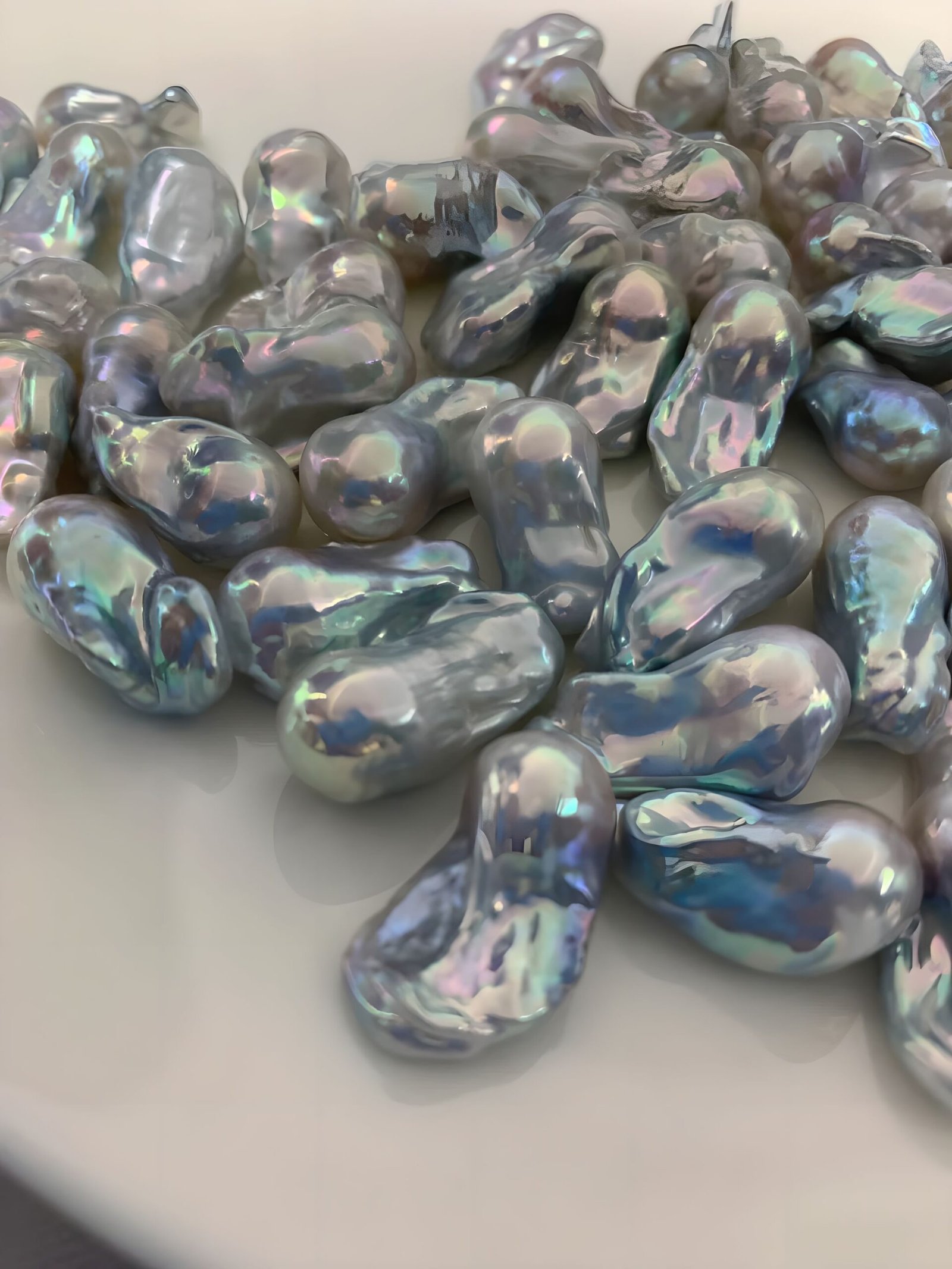
Baroque pearls are pearls with irregular shapes rather than classic round symmetry. In pearl terminology, “baroque” describes shape, not a separate pearl type. That means a baroque pearl can still be a real cultured pearl of excellent quality, and its value depends on much more than roundness alone.
If you want to compare real examples while reading, you can also browse our Baroque Pearls collection.
Contents
- What Is a Baroque Pearl?
- Why Are Baroque Pearls Irregular?
- Are Baroque Pearls Real and Valuable?
- What Are Baroque Pearls Worth?
- What Makes a Baroque Pearl Look Good?
- Baroque Pearls vs. Round Pearls
- How to Buy Baroque Pearls Well
- Who Should Choose Baroque Pearls?
- FAQ About Baroque Pearls
What Is a Baroque Pearl?
A baroque pearl is an irregularly shaped pearl. The word “baroque” refers to shape, not origin, species, or pearl type. In other words, “baroque pearl” does not mean fake pearl, dyed pearl, or low-grade pearl. It simply means the pearl is not a classic round shape.
This matters because many buyers confuse type and shape. A pearl’s type tells you what kind of pearl it is. “Baroque” only tells you how it looks in outline and form. Some baroque pearls are softly asymmetrical. Others are elongated, sculptural, or dramatically freeform.
A useful way to think about baroque pearls is this: they are not pearls that need to be judged by round standards. They are pearls that should be judged by how well their own shape works visually, stylistically, and commercially.
Why Are Baroque Pearls Irregular?
Not every pearl grows in a perfectly balanced spherical way. Irregularity is part of the normal range of pearl formation, which is why baroque pearls exist in the first place. That irregularity does not make a pearl less real. It only means the pearl developed in a less symmetrical shape.
For buyers, the practical takeaway is simple: a baroque pearl is the result of its formation path, not just a “mistake.” Some irregular shapes look awkward, but others look elegant, dramatic, or highly distinctive. That is why two baroque pearls can feel completely different in value and appeal even when both are technically non-round.
Are Baroque Pearls Real and Valuable?
Yes, baroque pearls are real pearls. “Baroque” is only a shape description. It does not mean imitation, and it does not automatically mean poor quality.
They can also be valuable, but value needs to be understood correctly. Round pearls usually carry the strongest traditional value preference when other factors are similar. But that does not mean every baroque pearl sits at the bottom of the market. A well-formed baroque pearl can still be highly desirable for its luster, scale, shape character, and jewelry presence.
A better way to say it is this: baroque pearls usually do not compete with round pearls on roundness, but they can compete on beauty, individuality, and wearability. In some jewelry categories, especially statement pendants, artistic earrings, and more organic luxury looks, a baroque pearl may actually be the better design choice.
What Are Baroque Pearls Worth?
There is no single price rule for baroque pearls. Their value can range from accessible to surprisingly high depending on overall quality and use. The most practical way to judge baroque pearl value is not by shape alone, but by the full performance of the pearl.
Shape is only one part of value
Baroque shape affects value, but it does not determine value by itself. A striking baroque pearl with strong luster and appealing surface quality may be more desirable than a less lively pearl that happens to be closer to round.
Luster often matters more than people expect
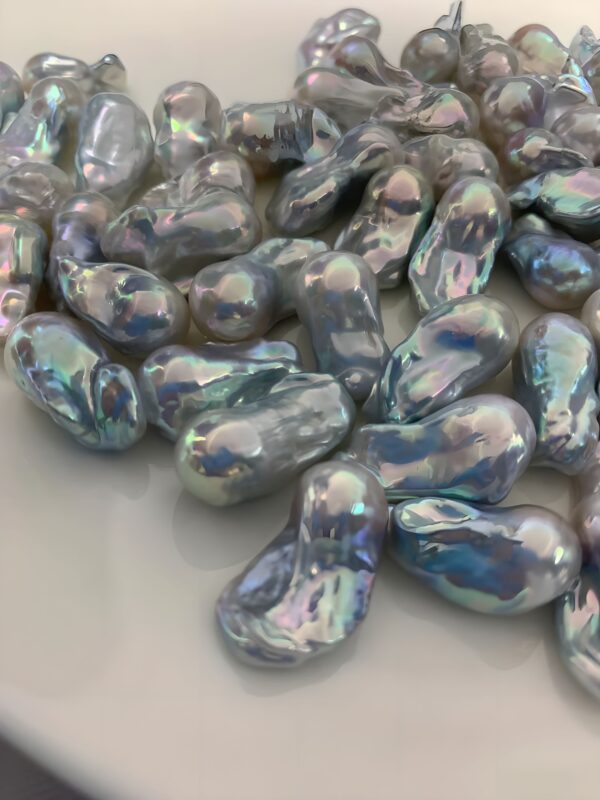
For baroque pearls, luster is often one of the first things that separates ordinary pieces from premium-looking ones. Strong luster makes a pearl look brighter, sharper, and more alive. It can also make an irregular shape feel intentional and refined rather than merely uneven.
Surface quality still matters
A baroque pearl is not judged by roundness alone, but it is still judged. Natural contour and organic shape are part of the pearl. Distracting pits, scratches, or heavy blemishes are a separate issue. Buyers should learn to distinguish shape character from negative surface condition.
Size, type, and matching can change the price dramatically
Larger pearls can command much stronger prices. Matching also becomes far more important when you move from a single loose pearl to earrings or strands. A beautiful single pearl, a balanced earring pair, and a cohesive necklace strand each require a different level of selection, which is one reason baroque pearl prices vary so widely.
What Makes a Baroque Pearl Look Good?
A baroque pearl usually looks best when its irregularity feels expressive rather than awkward. Buyers often respond most strongly to three things: bright, clean luster; a shape with clear character; and a surface that feels acceptable in context.
On a loose pearl, individuality can be a strength. On earrings or strands, that same pearl also has to work with other pearls around it. This is why good baroque selection is not about asking whether the pearl is “less irregular.” It is about asking whether the pearl looks convincing on its own terms.

Baroque Pearls vs. Round Pearls
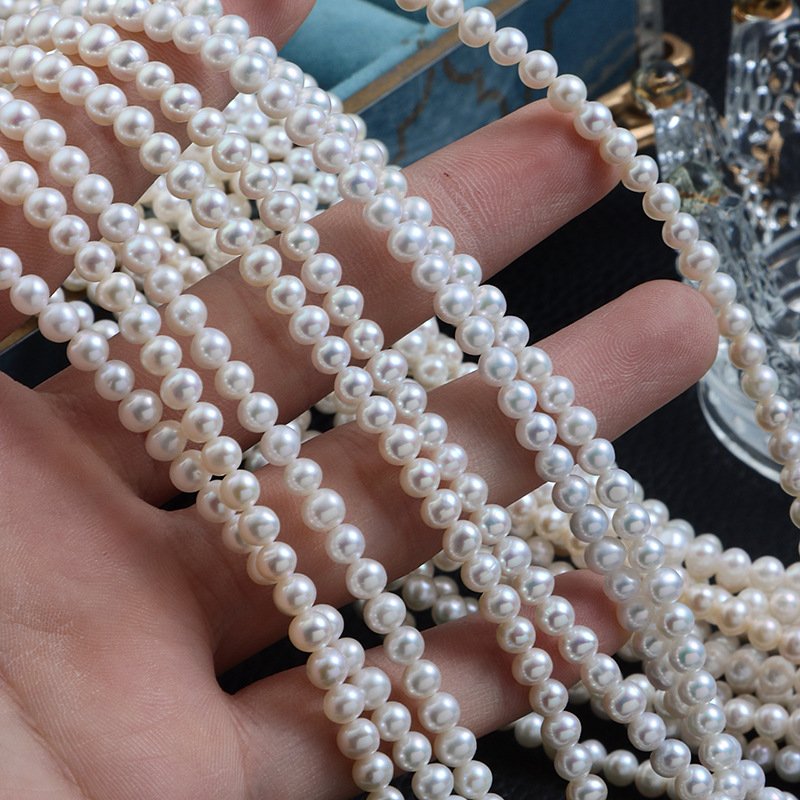
Round pearls and baroque pearls often serve different buying goals. Round pearls are usually preferred when the buyer wants classic symmetry, traditional luxury, and strict matching. Baroque pearls are often preferred when the buyer wants movement, personality, and a more organic silhouette.
This comparison should not be reduced to “round is good, baroque is bad.” A round pearl usually communicates refinement through symmetry. A baroque pearl often communicates refinement through shape character. If you want strict uniformity, round pearls may be the better fit. If you want visual interest and a more sculptural look, baroque pearls may be the more compelling choice.
You can compare both styles in our Freshwater Pearls collection and our Baroque Pearls collection.
How to Buy Baroque Pearls Well
Do not judge baroque pearls by asking how close they are to round. Judge them by asking whether the pearl works on its own terms. A good baroque pearl does not need to imitate a round pearl. It needs to look intentional, lively, and wearable.
For a single pearl or pendant
Start with visual presence. Does the pearl have strong luster? Does the shape feel attractive or memorable? Does the surface look acceptable when viewed as a whole? With a single pearl, individuality can be an advantage.
For earrings
Baroque pearl earrings do not need to be perfectly identical, but they do need to feel balanced. Compare size, luster, color, face-up impression, and how the pair sits visually together. Two nice individual pearls do not automatically make a strong pair.
For strands and necklaces
For a strand, the goal is not strict round-pearl uniformity. The goal is rhythm, cohesion, and a clear visual language across the necklace. A strong baroque strand should look curated, not random. The pearls do not need to match like machine-made beads, but they should still work together in luster, color, scale, and overall mood.
Now that you know what to look for, you can browse real examples by shape, size, or jewelry use in our Baroque Pearls collection.
Who Should Choose Baroque Pearls?
Baroque pearls are especially appealing for buyers who enjoy individuality, softer asymmetry, and a more organic jewelry look. They also make sense for designers and collectors who want shape to play an active role in the final piece, rather than simply serving as a neutral gemstone element.
They can also be a strong choice for buyers who want a distinctive look without insisting on perfect symmetry. In some cases, baroque pearls can offer a more expressive look at a friendlier entry point than classic round pearls, while exceptional examples can still command strong value.
Final Thoughts
So, what are baroque pearls? At the simplest level, they are irregularly shaped pearls. But for buyers, that definition is only the beginning. The more important truth is that baroque pearls should not be judged by roundness alone. Their appeal and their value can come from luster, surface quality, size, visual balance, and the kind of shape character that round pearls are not meant to provide.
A good baroque pearl is not simply a pearl that failed to become round. It is a pearl that succeeds on its own terms.
FAQ About Baroque Pearls
What is a baroque pearl?
A baroque pearl is an irregularly shaped pearl. “Baroque” refers to shape, not a separate pearl type.
Are baroque pearls real pearls?
Yes. Baroque pearls are real pearls. The word only describes their shape.
Are baroque pearls always less valuable than round pearls?
No. Round pearls usually hold the strongest traditional value preference when other factors are comparable, but baroque pearls can still be prized and valuable depending on luster, size, surface quality, matching, and jewelry use.
Why are baroque pearls irregular?
Not every pearl forms in a perfectly spherical shape. Irregularity is part of the normal range of pearl formation.
Are baroque pearls good for earrings?
Yes, but matching matters. A strong pair should feel balanced in size, luster, color, and overall impression.
Can baroque pearls be expensive?
Yes. Baroque pearl prices vary widely because value depends on multiple factors, not shape alone.