A pearl pendant is usually the easier choice if you want a lighter, more casual, and lower-commitment way to wear pearls. A full pearl necklace is usually better if you want pearls to become a major part of the outfit and you value the continuous look of a matched strand.
Neither is inherently “better.” They use pearls in two different ways. A pendant concentrates attention on one focal pearl and the chain or setting around it. A full necklace creates a continuous line of pearls, so size, luster, color, shape, matching, length, stringing, and clasp all work together.
The most useful way to choose is not to ask which style is more classic. Ask how visible you want the pearls to be, how often you expect to wear the piece, and where you want your budget to go.
Quick Answer: Choose a Pendant for Lightness, a Full Strand for Presence
| If your priority is... | Better choice | Why |
|---|---|---|
| Easy everyday wear | Pearl pendant | It behaves more like a familiar chain necklace and usually works with more casual outfits. |
| A clearly recognizable pearl look | Full pearl necklace | A continuous strand gives pearls much more visual weight around the neckline. |
| Putting more of the budget into one standout pearl | Pearl pendant | You can focus on the appearance of one focal pearl instead of matching an entire strand. |
| Classic dressing, ceremonies, or a signature pearl piece | Full pearl necklace | A matched strand creates the traditional continuous pearl silhouette. |
| Layering with gold or silver chains | Pearl pendant | The open chain gives you more visual space between layers. |
| Maximum pearl impact from the neckline | Full pearl necklace | Many pearls reflect light across a much larger area than one focal pearl. |
If you already know which direction fits your wardrobe, you can compare pearl pendants and pearl necklaces as two different jewelry formats rather than as two quality levels.
First, What Is the Real Difference Between a Pearl Pendant and a Full Pearl Necklace?
A pearl pendant normally uses one pearl—or a small group of pearls—as the focal point on a metal chain, cord, or other necklace structure. The eye is drawn toward the central pearl, while much of the neckline remains visually open.
A full pearl necklace, or pearl strand, uses pearls across most or all of the visible necklace. Instead of one focal point, the whole curve around the neck becomes the design.
That construction difference changes almost every buying decision:
- a pendant asks, “How beautiful is this focal pearl, and does the setting suit it?”
- a full strand asks, “How good does this entire group of pearls look together?”
This is also why a full strand should not be judged by inspecting only the best pearl near the center. The overall impression depends on consistency and harmony across the necklace.
Which Looks More Casual?
A simple pearl pendant usually reads as more casual. It can be worn much like a fine gold or silver necklace: with a T-shirt, knit, open shirt, office blouse, dress, or layered chain combination.
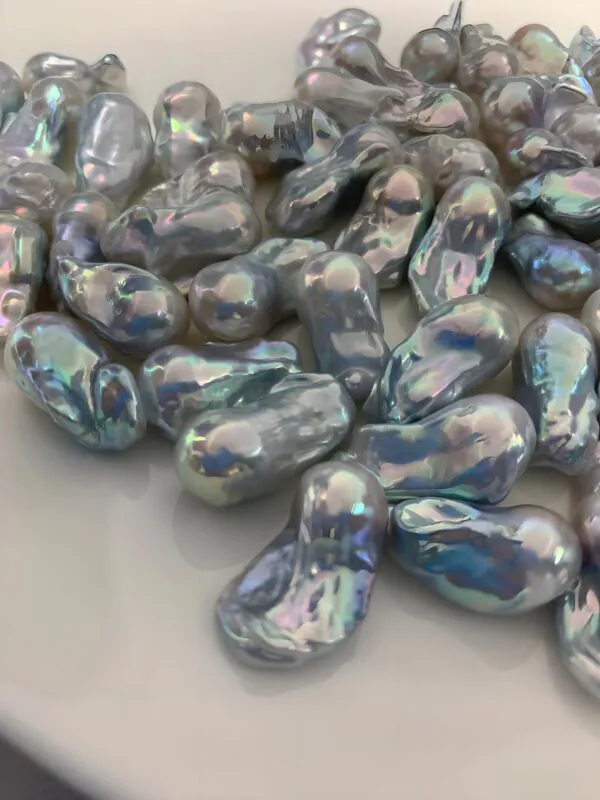
A full strand naturally puts more pearls into view, so it often looks more polished or intentional. But that does not mean every full pearl necklace is formal. Small pearls, baroque shapes, mixed materials, irregular spacing, or relaxed styling can make a strand feel contemporary and easygoing.
The important distinction is visual density. A pendant leaves open space around one pearl. A full strand creates a continuous band of color and luster. That greater density usually makes the strand feel more noticeable even when the individual pearls are small.
Choose a pendant if you want pearls to blend into your existing jewelry style
If you already wear chains, a single pearl pendant requires very little adjustment. It can act as a pearl version of jewelry you already understand.
Choose a full strand if you want the pearls themselves to define the look
If what you love is the unmistakable appearance of pearls around the neckline, a pendant may feel too subtle. In that case, buying the “easier” option can leave you still wanting the strand you originally had in mind.
Which Is Better for Everyday Wear?
For many people, a pendant wins on everyday convenience. It is lighter visually, easier to combine with casual clothing, and less likely to make you feel that the entire outfit has to match the jewelry.
But everyday wear is ultimately a habit question. Someone who already wears short necklaces every day may find a small full strand just as easy. Someone who layers multiple chains may find a pendant more natural. Someone who dislikes metal chains touching the skin may actually prefer a pearl strand.
A useful test is simple: can you immediately name five outfits you already own that you would wear with the piece? If yes, the style is probably practical for you. If you need to imagine buying different clothes first, the jewelry is more likely to stay in the box.
Why the Price Difference Is Not Just About the Number of Pearls
A full pearl necklace often costs more than a simple pendant made with the same pearl type and broadly comparable quality because it requires many more pearls. But pearl count is only part of the explanation.
GIA identifies seven pearl value factors: size, shape, color, luster, surface, nacre, and matching. Matching becomes relevant when a jewelry piece contains multiple pearls. For a full strand, the maker has to assemble pearls that work together in size, shape, color, luster, and overall appearance. The more specific the target look, the harder that matching can become.
A pendant changes the economics. Because one pearl receives most of the attention, you may be able to spend more of the budget on:
- stronger luster;
- a larger diameter;
- a more distinctive color or overtone;
- a particularly attractive drop or baroque shape;
- a precious-metal setting, chain, or accent stones.
This does not mean a pendant is always cheaper. A large South Sea or Tahitian pearl in gold with diamonds may cost more than a modest freshwater strand. The useful comparison is not “one pearl versus many pearls”; it is what quality, pearl type, metal, workmanship, and design you receive for the total price.
Quality Priorities Are Different: One Focal Pearl vs. the Whole Strand
For a pearl pendant, judge the focal pearl first
With a solitaire pendant, there is nowhere for a weak pearl to hide. Luster, color, shape, and visible surface features are concentrated in one place. A minor mark on the back may matter little, while a distracting feature on the front can be much more noticeable.
Also inspect how the pearl sits in the setting. The bail, cap, peg, or drilling should look secure and intentional, and the chain should have enough visual weight for the pearl.
For a full strand, judge the group before judging individual pearls
A strand can contain many attractive pearls and still look weak if the luster varies too much, the color shifts unintentionally, or the sizes do not create a coherent rhythm.
This is where matching becomes a genuine quality consideration rather than a decorative extra. Matching does not always mean every pearl must look identical—multicolor or graduated strands can be intentionally varied—but the differences should feel designed rather than accidental.
If you want a broader framework for evaluating pearl quality after choosing the format, use the pearl buying guide.
How Pearl Size Changes the Decision
The same millimeter size does not create the same visual effect in a pendant and a full strand.
A pendant uses one focal pearl, so you can often choose a larger diameter without making the entire necklace look heavy. A 9–11 mm focal pearl, for example, may feel noticeable but balanced because the rest of the necklace is open chain.
On a full strand, increasing every pearl by even a small amount changes the visual weight across the whole neckline. Larger pearls also increase the amount of material that must be matched, which can affect price substantially when quality stays high.
This is why “I like 10 mm pearls” is not enough information. You need to ask whether you mean one 10 mm focal pearl or a complete necklace of approximately 10 mm pearls. The two pieces will look and feel very different.
For practical size comparisons across pendants and strands, see our pearl size guide.
Which Pearl Types Work Best for Each Style?
Any major cultured pearl type can be used in either format, but some combinations are especially natural.
| Pearl type | Pendant strengths | Full-strand strengths |
|---|---|---|
| Freshwater | Wide range of shapes, colors, sizes, and approachable focal-pearl options | Broad price range; easy to explore round, near-round, baroque, and small-pearl strands |
| Akoya | Bright classic luster in a refined, compact focal pearl | One of the most recognizable choices for a classic round white strand |
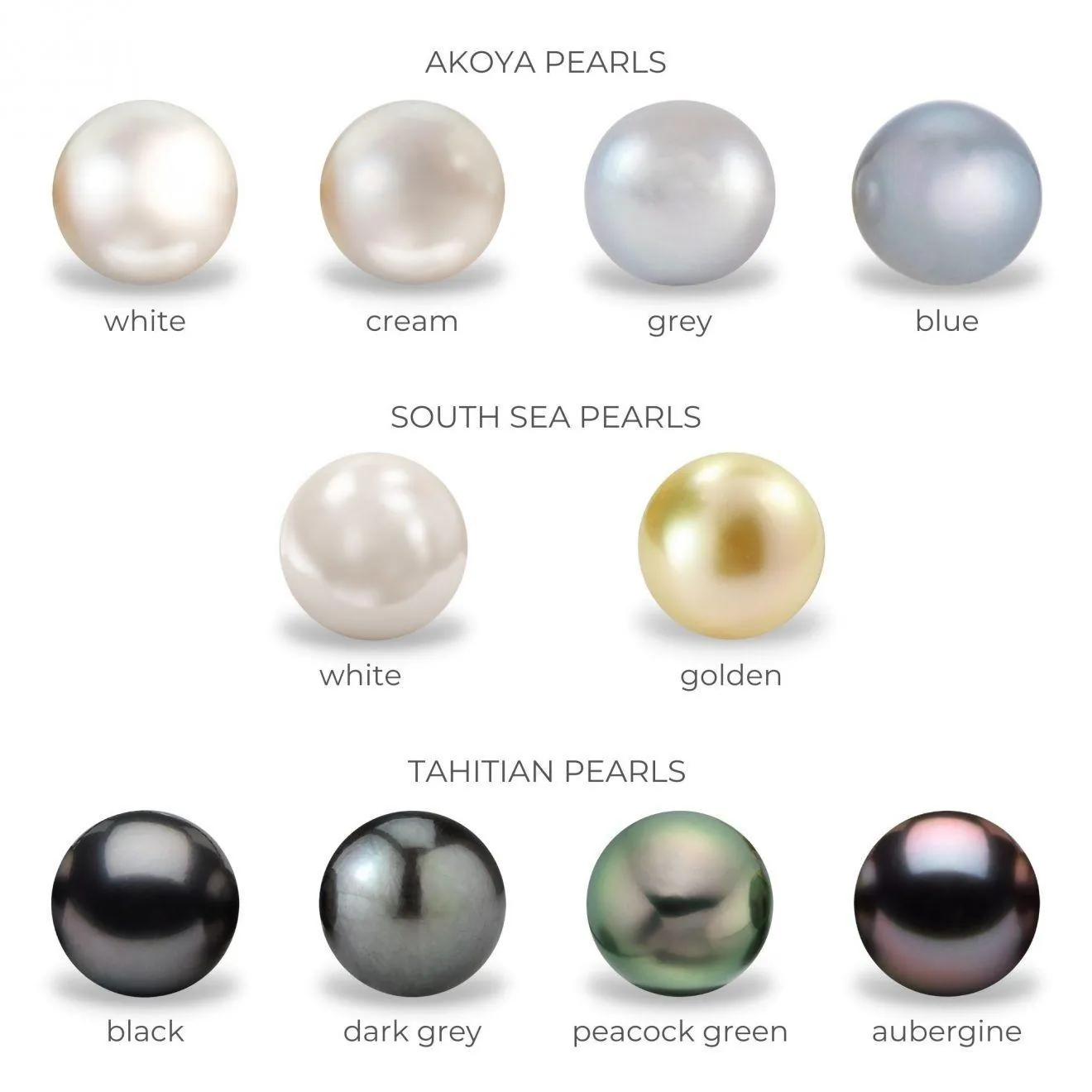
| Tahitian | A single dark pearl can show distinctive green, gray, blue, or peacock overtones without requiring a large budget for a full matched strand | A dark strand has strong visual impact and can show sophisticated color matching or intentional variation |
| South Sea | Allows one large white, silver, or golden pearl to become the center of the design | Creates a luxurious large-pearl look, but matching many high-quality large pearls can make the piece substantially more expensive |
If you are still deciding which pearl family suits you before choosing the jewelry format, separate that decision from the pendant-versus-strand question. Pearl type affects color, size range, luster character, rarity, and price; jewelry format affects how those qualities are presented.
What About Necklace Length and Neckline?
A pendant and a full strand interact with clothing differently.
With a pendant, chain length determines where the focal pearl lands. A small adjustment can move the pearl above a neckline, into an open V, or below a collar. Adjustable chains are particularly useful if you wear several neckline shapes.
With a full strand, the entire necklace curve matters. A collarbone-length strand can sit cleanly above many tops and dresses, while a length that lands directly on the edge of a crewneck may visually compete with the clothing.
If you shop online, do not rely only on terms such as “choker,” “princess,” or “matinee.” Check the actual length in centimeters or inches and compare it with a necklace you already own. Neck circumference, shoulder width, body proportions, and clothing can all change where the same stated length appears to sit.
Which Is Easier to Maintain?
Both styles need gentle pearl care, but their construction creates different maintenance points.
Pendant maintenance
- wipe the pearl after wear;
- avoid perfume, hair spray, and harsh chemicals on the pearl;
- check the setting, bail, chain, and clasp periodically;
- store the chain so it does not coil tightly around and rub against the pearl.
Full-strand maintenance
- wipe the pearls after wear;
- avoid pulling or stretching the strand;
- inspect the thread or cord for wear and spacing changes;
- check the clasp and, when appropriate, have a frequently worn strand restrung before the thread becomes unreliable.
A strand therefore has one extra structural issue: many pearls are carried by the stringing material. If you wear a pearl necklace frequently, our guide on when a pearl necklace should be restrung explains the warning signs to watch for.
Which Makes the Better Gift?
A pendant is usually the safer gift when you do not know the recipient's jewelry habits very well. It is less visually dominant, easier to combine with other jewelry, and does not require you to predict whether the wearer wants the strong identity of a full pearl strand.
A full pearl necklace can be the more meaningful gift when you already know that the recipient likes strands, wears pearls regularly, or wants a traditional milestone piece. In that case, the greater visual presence is an advantage rather than a risk.
For either format, do not rely only on age-based rules such as “small pearls for young people” or “large pearls for older people.” Existing style, preferred scale, neckline, metal color, and actual wear habits are more useful.
A Six-Question Decision Test
- Do I want one focal pearl or a continuous pearl look?
If you want one point of light, choose the pendant. If you want the neckline framed by pearls, choose the strand. - How casual does the piece need to feel?
A simple pendant is usually easier to dress down. A small or baroque strand can also be casual, but it will still have more pearl presence. - Where do I want the budget to go?
A pendant can concentrate budget on one pearl and its setting. A strand spreads the budget across many pearls, their matching, stringing, and clasp. - Do I enjoy layering necklaces?
A pendant generally leaves more room for additional chains. A full strand often works best as the main necklace, although it can also be layered deliberately. - Am I buying for everyday rotation or for a signature/milestone piece?
Everyday rotation often favors the pendant; a signature pearl look often favors the full strand. - Which one fits the clothes I already own?
Use your real wardrobe as the final test, not an imagined future style.
So, Pearl Pendant or Full Pearl Necklace?
Choose a pearl pendant if you want versatility, lower visual weight, easy layering, or the freedom to put more attention on one especially attractive pearl. It is often the easiest way to make pearls part of an everyday jewelry rotation.
Choose a full pearl necklace if you want pearls to be the main visual statement, you love the classic strand silhouette, or you value the effect created by many well-matched pearls working together.
If you are undecided, start from one practical distinction: a pendant is about the focal pearl; a full necklace is about the whole composition. Once you know which kind of visual effect you want, questions about size, pearl type, length, and budget become much easier to answer.
Frequently Asked Questions
Is a pearl pendant more versatile than a full pearl necklace?
For many wardrobes, yes. A simple pendant behaves more like a fine chain necklace and is easy to wear with casual clothing or other jewelry. A full pearl necklace can still be versatile, especially in smaller sizes or relaxed shapes, but it usually has more visual presence.
Is a pearl pendant always cheaper than a pearl strand?
No. A simple pendant often requires fewer pearls than a full strand, but pearl type, size, luster, surface quality, metal, gemstones, brand, and workmanship can reverse the comparison. A premium South Sea pendant, for example, can cost more than an entry-level freshwater strand.
Can I wear a full pearl necklace casually?
Yes. Smaller pearls, baroque shapes, mixed materials, simple clothing, and relaxed layering can make a full strand feel casual rather than ceremonial. The formality comes from the complete design and styling, not simply from the fact that the necklace uses pearls.
What pearl size is best for a pendant?
There is no universal best size. Smaller pearls create a subtle accent, while larger pearls create a stronger focal point. Because a pendant uses only one or a few pearls, you can often choose a larger diameter than you would want repeated across an entire strand.
What should I prioritize when buying a full pearl necklace?
Look at luster across the entire strand, intentional matching or gradation, suitable length, secure stringing, and clasp quality as well as the individual pearls. Do not judge a strand only by one attractive center pearl or by a seller's grade label.
Is a pendant a good first pearl necklace?
Yes. If you like necklaces but are not sure you want the visual weight, cost, or styling commitment of a full strand, a single-pearl pendant is a practical first step. It lets you learn what pearl size, color, and luster you enjoy while remaining easy to combine with an existing wardrobe.