Pearls are one of the easiest jewelry choices for a wedding, but the right piece depends less on finding one “best” pearl and more on your role, the dress code, and what the rest of your outfit is already doing. A bride can make pearls a focal point. A bridesmaid usually needs something coordinated and quiet. A mother of the bride or groom can wear a little more presence, while a guest is generally safest with a polished piece that does not read as bridal.
If you are choosing pearls specifically for the bride, our guide to choosing bridal pearl jewelry goes deeper into pearl type, size, neckline, luster, and dress style. This article focuses on a different question: what should you actually wear to the wedding, depending on who you are?
Quick Answer: Choose Pearls by Your Role First
| Wedding role | Easy pearl choice | When to go bolder | Main thing to avoid |
|---|---|---|---|
| Bride | Studs, drops, a pendant, or a short strand | When the dress is clean and minimal | Too many competing pearl focal points |
| Bridesmaid | Small studs, drops, or a delicate pendant | Only when the bride wants a stronger coordinated look | Jewelry that competes with the bride |
| Mother of the bride or groom | Medium studs, elegant drops, or a single strand | For formal evening or black-tie weddings | Overly youthful or overly bridal styling |
| Guest | Studs, small drops, a pendant, or one restrained strand | For formal dress codes, if the outfit itself is simple | A full white bridal-looking pearl set |
| Groom or male guest | Pearl cufflinks, a tie pin, lapel detail, or restrained pendant | For fashion-forward or black-tie styling | Adding several pearl accents with no clear focal point |
These are not etiquette laws. They are proportion rules. The closer you are to the center of the wedding, the more visual space your jewelry can reasonably take. The farther you are from that center, the more useful restraint becomes.
If You Are the Bride: Let One Pearl Element Lead
A bride has the widest range of choices. Classic white round pearls, soft freshwater drops, baroque pearls, Tahitian pearls, and larger South Sea pearls can all work. The more important question is which piece should lead the look.
If your dress has an open neckline and relatively little embellishment, a pearl necklace can occupy that space beautifully. If the bodice already has lace, beading, crystals, or a high neckline, pearl earrings are often cleaner because they frame the face without crowding the dress. An updo gives longer drops more room; loose hair can make studs or shorter drops easier to see and less likely to catch.
A common mistake is treating bridal jewelry as a matching checklist: pearl necklace, pearl earrings, pearl bracelet, pearl hair accessories, all at once. A complete set can look intentional on a very simple gown, but on a detailed dress it can become visually busy. In many cases, one strong pearl focal point plus one quieter supporting piece is enough.
If earrings are likely to be the main feature, browse pearl earrings by silhouette first—stud, short drop, or longer drop—before worrying about pearl type.
If You Are a Bridesmaid: Coordination Matters More Than Individual Impact
Bridesmaid jewelry works best when it supports the bridal party as a group. That does not always mean every person must wear an identical piece. What usually matters more in photographs is that the jewelry shares a similar level of formality, metal tone, scale, and visual weight.
Small pearl studs and restrained drops are especially useful because they work across different necklines and hairstyles. A delicate pearl pendant can also work when the bridesmaid dresses have open necklines and the bride wants a coordinated necklace look.
If the bride is wearing dramatic pearl drops or a prominent strand, the bridesmaids can echo the material without repeating the same scale. Think of the bridal party as a hierarchy: related, but not equal in emphasis.
If You Are the Mother of the Bride or Groom: Choose Presence Without Looking Bridal
Pearls suit mothers of the couple particularly well because they can look formal without becoming sharp or flashy. Compared with a guest, you can usually wear a little more visual weight: a more substantial pair of pearl earrings, an elegant single strand, or a pendant with a larger pearl.
The best choice depends heavily on the outfit. With a structured dress or tailored suit, round pearls give a clean, composed finish. With softer fabrics, draping, floral detail, or a more contemporary dress, drop or baroque pearls can keep the look from feeling overly traditional.
For an evening or black-tie wedding, a slightly larger pearl or longer earring can feel appropriate. For a daytime garden or civil wedding, smaller pearls and simpler metalwork usually look more natural.
If You Are a Wedding Guest: Pearls Are Appropriate—Just Keep the Look Clearly Yours
Yes, wedding guests can wear pearls. The practical etiquette is similar to the rule for the rest of the outfit: look polished, respect the dress code, and avoid styling that appears designed to imitate the bride.
For most guests, the easiest choices are pearl studs, small drops, a simple pendant, or one restrained strand. If your outfit is colorful, printed, or strongly textured, pearls can act as a quiet neutral. If your outfit is already pale, satin, lace-heavy, or very bridal in shape, adding a large white pearl set may push the whole look closer to bridal territory than you intended.
This does not mean white pearls are “reserved” for the bride. They are not. It simply means that the whole outfit creates the message. A pair of white pearl studs with a navy dress is very different from a white pearl choker, pearl hairpiece, and ivory dress worn together.
If You Are a Groom or Male Guest: Use Pearls as an Accent, Not a Theme
Pearls do not have to be limited to traditionally feminine wedding jewelry. A groom or male guest can use a pearl tie pin, cufflinks, lapel detail, signet-style ring with pearl inlay, or a restrained pendant. The most modern looks usually work because the pearl is treated as a single material accent rather than a complete formal set.
For black tie, white or silver-toned pearls integrate naturally with a monochrome palette. Dark Tahitian pearls can work particularly well with charcoal, black, navy, or deep green because they provide contrast without looking bright or ornate.
Match the Pearls to the Dress Code
Black tie or formal evening wedding
You can wear more scale and polish. Larger studs, elegant drops, a clean strand, or a single substantial pearl pendant can work well. High luster becomes especially noticeable under evening lighting, so visual brightness often matters more than simply choosing the largest pearl.
Cocktail or semi-formal wedding
This is the easiest setting for versatile pearl jewelry. Medium studs, short drops, pendants, and modern baroque pieces all work. You can mix pearls with gold or silver chains if the overall look remains coherent.
Garden, beach, or casual daytime wedding
Less formal pearls often look better than perfectly matched formal strands. Small freshwater pearls, baroque shapes, irregular drops, and lighter settings can feel more relaxed. If the event is outdoors, also think about comfort: heavy earrings that seem fine for one hour may become irritating after a long ceremony and reception.
Necklace or Earrings? Use the Neckline to Decide
If you are unsure which pearl piece to wear, start with the neckline rather than the jewelry box.
- Strapless, sweetheart, square, or open V-neck: a pendant or short strand has room to sit clearly.
- High neck, halter, heavily embellished bodice, or statement collar: skip the necklace and use earrings instead.
- Asymmetrical neckline: earrings are usually easier than adding another strong line at the neck.
- Very simple sheath or slip dress: either a strand or a clean pendant can become the main jewelry feature.
If you decide the neckline does need a necklace, compare styles in the pearl necklace collection with the actual neckline shape rather than shopping by pearl type alone.
What Pearl Style Looks Best at a Wedding?
There is no single wedding pearl type. Different pearls create different visual moods:
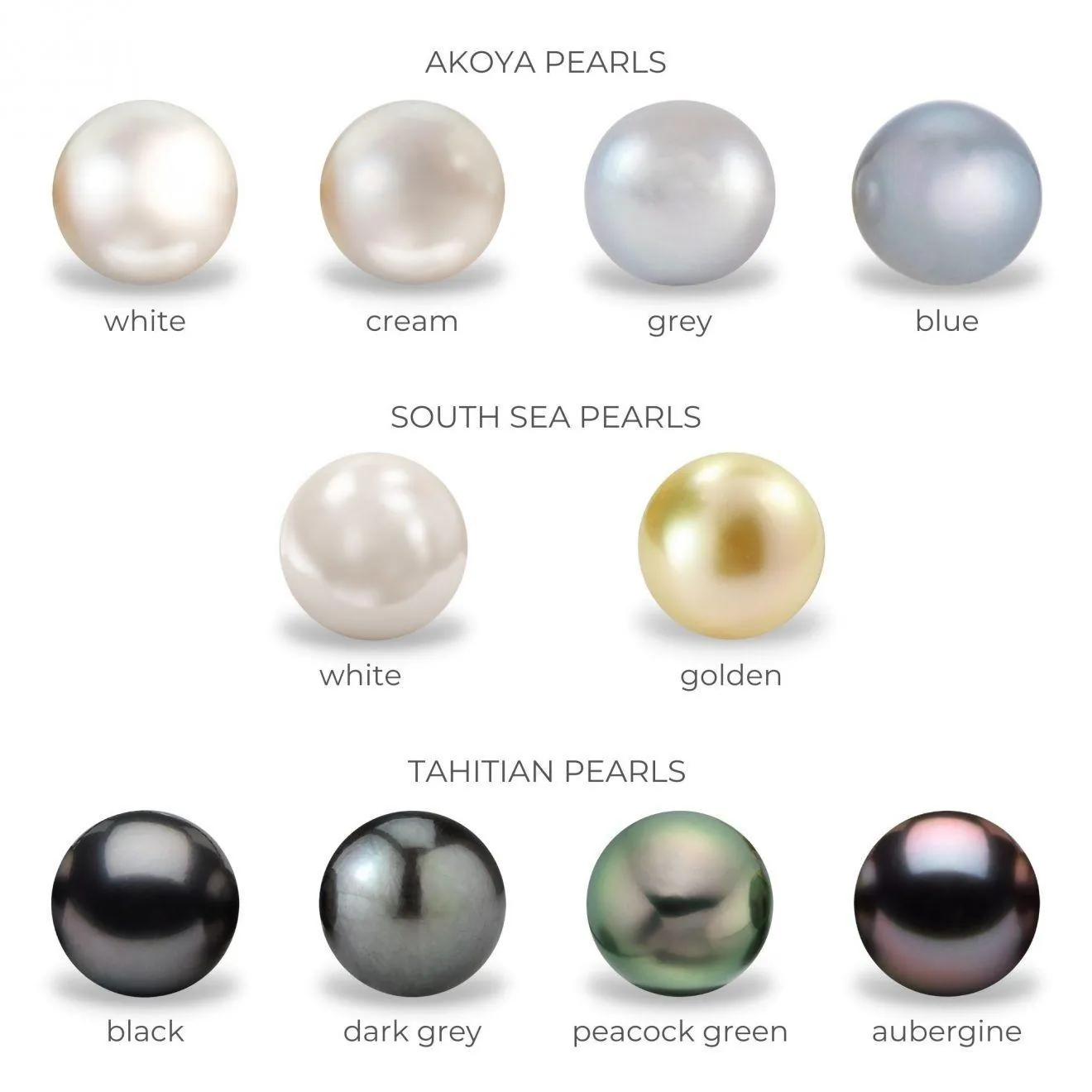
- Round white Akoya pearls: crisp, classic, formal, and easy to associate with traditional bridal styling.
- Freshwater pearls: the broadest range of shapes and sizes, useful for classic, delicate, or more relaxed designs.
- White South Sea pearls: larger visual presence and a more luxurious statement, especially effective in simple earrings or pendants.
- Tahitian pearls: darker and more graphic; useful for evening, nontraditional bridal looks, menswear, or guests wearing darker colors.
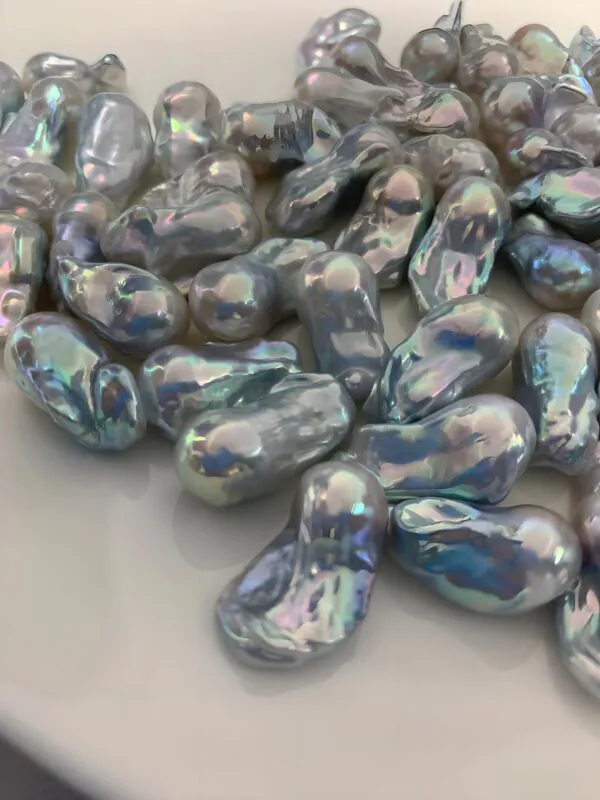
- Baroque pearls: organic and individual, often a good fit for contemporary, artistic, garden, or less traditional weddings.
If you want to compare pearl type, quality, and budget beyond the wedding context, use our pearl buying guide. For this article, the simpler rule is enough: choose the pearl style that matches the formality and personality of the outfit.
How Big Should Wedding Pearls Be?
Size changes the visual weight of pearl jewelry, but it is not a quality grade. A smaller pearl can look more refined than a larger one if its luster, setting, and proportion are better suited to the wearer.
As a practical starting point, smaller-to-medium pearls are easier for bridesmaids and guests, while brides and close family members have more room to wear larger pearls if the outfit supports them. The same millimeter measurement can also look different depending on whether the pearl is a stud, a drop, part of a strand, or paired with a large metal setting.
For a more useful visual comparison, see our pearl size guide. It is better to judge millimeters in the context of the actual jewelry format than to treat one number as the universal “wedding size.”
Prioritize Luster Before Chasing a Bigger Pearl
Wedding jewelry is photographed constantly and often viewed in mixed lighting, from daylight to indoor reception light. That makes luster especially important. GIA lists luster as one of the seven pearl value factors and notes that high-luster pearls show bright, sharp reflections.
In practice, this means a smaller pearl with lively reflections can look fresher and more noticeable than a larger but dull pearl. Once you have chosen the right scale for the outfit, compare brightness, surface appearance, color, and how well multiple pearls match.
Should Your Pearls Match the Dress Exactly?
No. “White” is not one color, either in pearls or in wedding fabrics. Bright white, ivory, cream, champagne, and blush dresses all interact differently with pearl bodycolor and overtone.
The safest method is simple: compare the jewelry with the actual outfit in neutral daylight. You are looking for harmony, not an identical shade. A slightly cream pearl can look richer next to ivory fabric, while a cooler white pearl may sit more cleanly against bright white or silver-toned details.
The metal matters too. Yellow gold can warm a pearl design; white gold, platinum, or silver-toned settings can make the overall effect cooler. If the outfit already contains strong metal details, repeating that metal in the pearl jewelry often creates a more intentional result.
Are Pearls Bad Luck at a Wedding?
Some families and cultures have traditions that associate pearls with tears, while others treat pearls as a classic or auspicious wedding choice. There is no universal wedding rule that says pearls must be avoided.
If a superstition matters to you, your partner, or either family, treat that as a personal or cultural decision rather than something to “disprove” with styling advice. If it does not matter to the people involved, pearls are simply a normal wedding jewelry option.
One Practical Wedding-Day Rule: Put Pearls On Last
Hair spray, perfume, cosmetics, and other chemicals can damage pearl surfaces. GIA recommends applying perfume and cosmetics before putting pearl jewelry on, then wiping pearls with a soft cloth after wear. You can read the full guidance in GIA's pearl care and cleaning guide.
For a wedding day, that translates into a simple routine: finish hair and makeup first, wash or dry your hands if needed, and put the pearl jewelry on near the end. After the reception, wipe the pearls before storing them separately from harder jewelry. Our pearl care guide covers routine wearing, cleaning, and storage in more detail.
A Simple Final Checklist
- Identify your role. Bride, bridal party, close family, guest, or groom.
- Read the dress code. Formal weddings support more visual weight than casual daytime events.
- Look at the neckline and hairstyle. Decide whether the neck or ears should carry the main pearl feature.
- Choose one focal point. Do not assume more pearl pieces automatically look more elegant.
- Check scale in a mirror and in photos. Jewelry can read differently at camera distance than it does close up.
- Compare the pearl color with the actual outfit. Do not rely only on labels such as “white” or “ivory.”
- Put pearls on after hair products, perfume, and makeup.
What Should You Wear?
If you want the safest answer, choose pearls that look appropriate for your role before they look impressive on their own. Brides can use pearls as a major design element. Bridesmaids usually benefit from quiet coordination. Mothers of the couple can wear refined pieces with a little more presence. Guests rarely go wrong with a polished, restrained pearl accent.
The best wedding pearl jewelry should look as though it belongs to the complete outfit—not as though the outfit was built around showing off the pearls.
FAQ
Can a wedding guest wear pearls?
Yes. Pearl studs, small drops, pendants, and restrained strands are all appropriate for most wedding guests. The main consideration is the complete outfit: avoid styling that looks deliberately bridal or competes with the couple.
What pearls should a bride wear?
There is no single best type. Round white Akoya pearls create a classic look, freshwater pearls offer broad style flexibility, South Sea pearls create more scale, while Tahitian and baroque pearls suit more unconventional bridal looks. Choose the jewelry format and proportion around the dress first.
Should bridesmaids wear the same pearl jewelry?
Not necessarily. A bridal party can look coordinated through similar scale, metal color, pearl color, or jewelry type without every person wearing an identical piece.
Can the mother of the bride wear a pearl necklace?
Yes. A single strand or elegant pearl pendant can work especially well with formal or semi-formal attire. The necklace should be chosen around the neckline and the overall formality of the outfit.
Are black or Tahitian pearls appropriate for a wedding?
Yes. Dark Tahitian pearls can work well for evening weddings, nontraditional bridal looks, menswear, and guests wearing darker colors. They are less conventionally bridal than white round pearls but can still look highly formal.
Are pearls bad luck for a bride?
Beliefs differ by family and culture. Some traditions connect pearls with tears, while others view them positively. There is no universal etiquette rule against wearing pearls at a wedding.