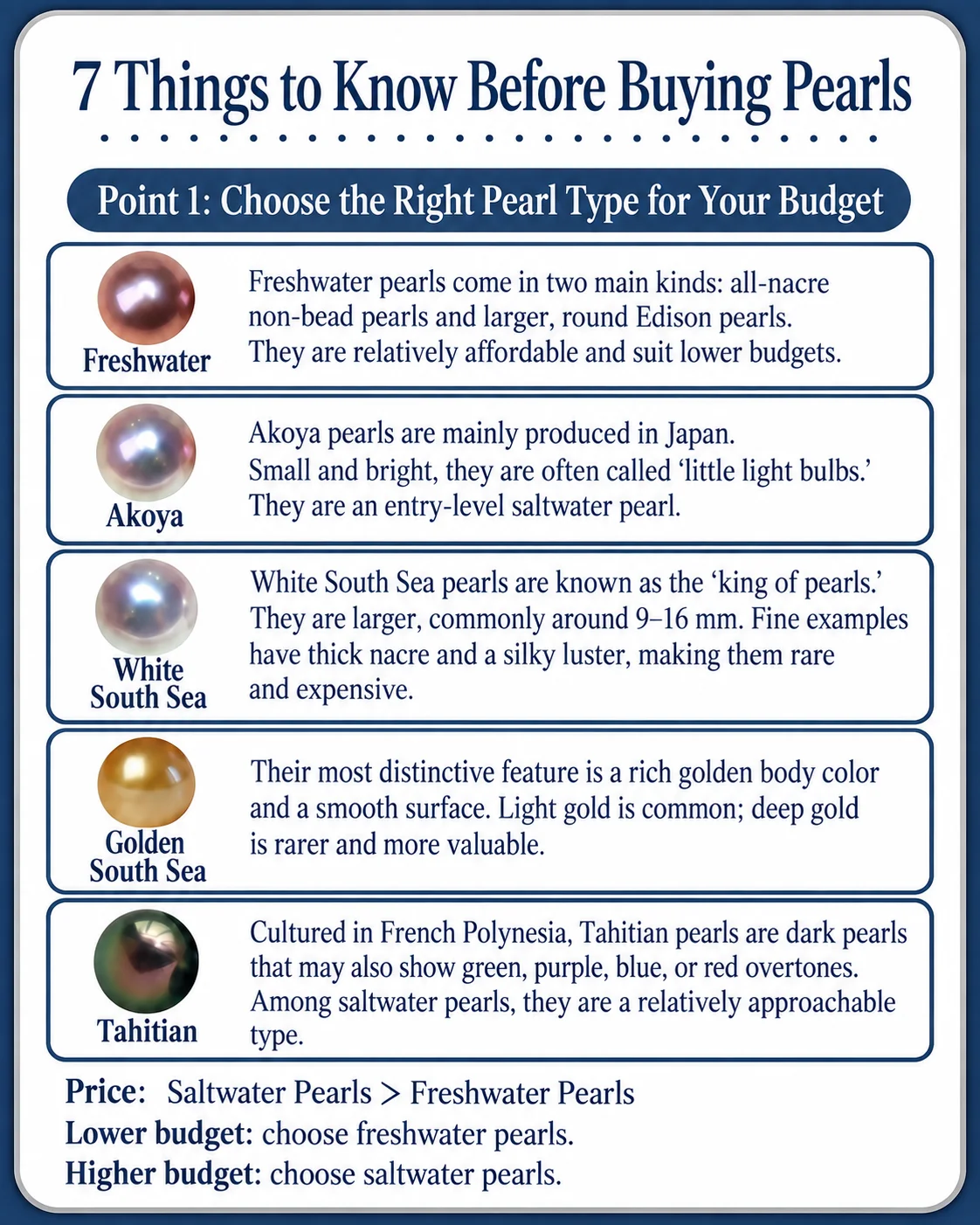
Why Are Akoya Pearls Expensive? What Mainly Determines Their Price?
Akoya pearls are expensive mainly because producing a beautiful one is a low-volume, time-consuming biological process, and the qualities buyers want most—strong mirror-like luster, round shape, clean surface, larger size, and excellent matching—become increasingly scarce when they occur together. For an individual Akoya pearl, size establishes an important price baseline, but luster, surface quality, shape, nacre, color, and matching can move the final value dramatically up or down.
The quick answer: what makes an Akoya pearl expensive?
It helps to separate two questions. First, why does the Akoya category usually cost more than mass-market freshwater pearls? Second, why can two Akoya strands of similar size have very different prices?
The first question is largely about cultivation economics and supply. The second is about the quality and rarity of the actual pearls.
| Price factor | Why it matters | Typical effect on Akoya value |
|---|---|---|
| Size | Larger Akoya pearls become progressively scarcer, especially at high quality | Often a major price driver |
| Luster | Sharp, bright reflections are one of Akoya's defining attractions | Very important within the same size |
| Surface quality | Clean pearls are much harder to produce than visibly blemished ones | Can create a large quality premium |
| Shape | Consistently round pearls are relatively difficult to culture | Round pearls generally receive a premium |
| Nacre quality | Influences appearance, luster, and durability | Important, particularly in better-quality Akoya |
| Matching | A necklace requires many pearls to match in size, color, luster, shape, and surface | Especially important for strands and pairs |
| Color and overtone | Some colors and overtones are more desirable or less common in a particular market | Variable rather than fixed |
| Origin, certification, brand, and jewelry setting | These can add provenance, verification, workmanship, metal value, or brand positioning | May affect retail price beyond pearl quality alone |
A useful way to think about Akoya pricing is therefore: cultivation scarcity creates the base cost; size determines part of the scarcity level; visual quality and matching determine how far above that baseline the pearls can move.
Why Akoya pearls have relatively high production costs
One Akoya oyster typically produces only one pearl at a time
Akoya pearls are bead-nucleated saltwater cultured pearls. According to GIA, an Akoya oyster typically produces one pearl at a time. By comparison, freshwater mussels can produce multiple pearls in one cultivation cycle.
This difference matters economically. A pearl farmer cannot simply multiply high-quality Akoya production inside one oyster. Each potential pearl requires an oyster, careful nucleation, marine growing space, ongoing farm management, and time.
If you want more background on the process itself, see the pearl cultivation guide.
The pearl-growing stage is only part of the farming timeline
GIA describes Akoya culturing after nucleation as generally taking about 10 to 24 months. But that does not mean an Akoya pearl farm starts with a tiny oyster today and receives a finished pearl one year later.
The Japanese Akoya Cultivation and Processing Council describes a broader production cycle in which young oysters are first raised until they are suitable for nucleation. It states that growing the oyster to the mother-oyster stage can take roughly two to three years, followed by another one to two years during which nacre forms around the inserted nucleus.
This distinction is important. The pearl itself may grow for roughly a year or two, while the biological preparation behind that pearl began much earlier.
Saltwater pearl farming carries biological and environmental risk
Pearls are not manufactured objects. They are produced by living mollusks in a marine environment. Farmers have to manage oyster health, water conditions, disease, temperature changes, storms, nucleus rejection, mortality, and the simple fact that the finished pearl may not develop the quality they hoped for.
Even when an oyster survives and produces a pearl, the result may be off-round, blemished, weak in luster, uneven in color, or otherwise unsuitable for a premium strand. The cost of unsuccessful or lower-quality production ultimately forms part of the economics behind the smaller quantity of desirable pearls.
Producing a pearl is easier than producing a top-quality pearl
This is one of the most important ideas to understand about pearl pricing. The expensive part is not simply making a cultured pearl. It is producing a pearl that combines several desirable characteristics at once.
A pearl may be large but heavily blemished. Another may be beautifully lustrous but noticeably off-round. A third may be round and clean but lack the sharp reflection buyers expect from premium Akoya.
The more requirements you add—large, round, clean, mirror-bright, attractive in color, with good nacre—the smaller the suitable group becomes.
What mainly determines the price of an individual Akoya pearl?
GIA evaluates pearl quality using seven value factors: size, shape, color, luster, surface, nacre, and matching. They are a better framework for understanding price than relying on a single seller-assigned grade.
You can read the broader framework in our guide to evaluating pearl value. For Akoya specifically, several factors deserve extra attention.
1. Size: the price increase is not necessarily linear
Size is one of the easiest characteristics to measure, but buyers often underestimate how strongly it can affect price.
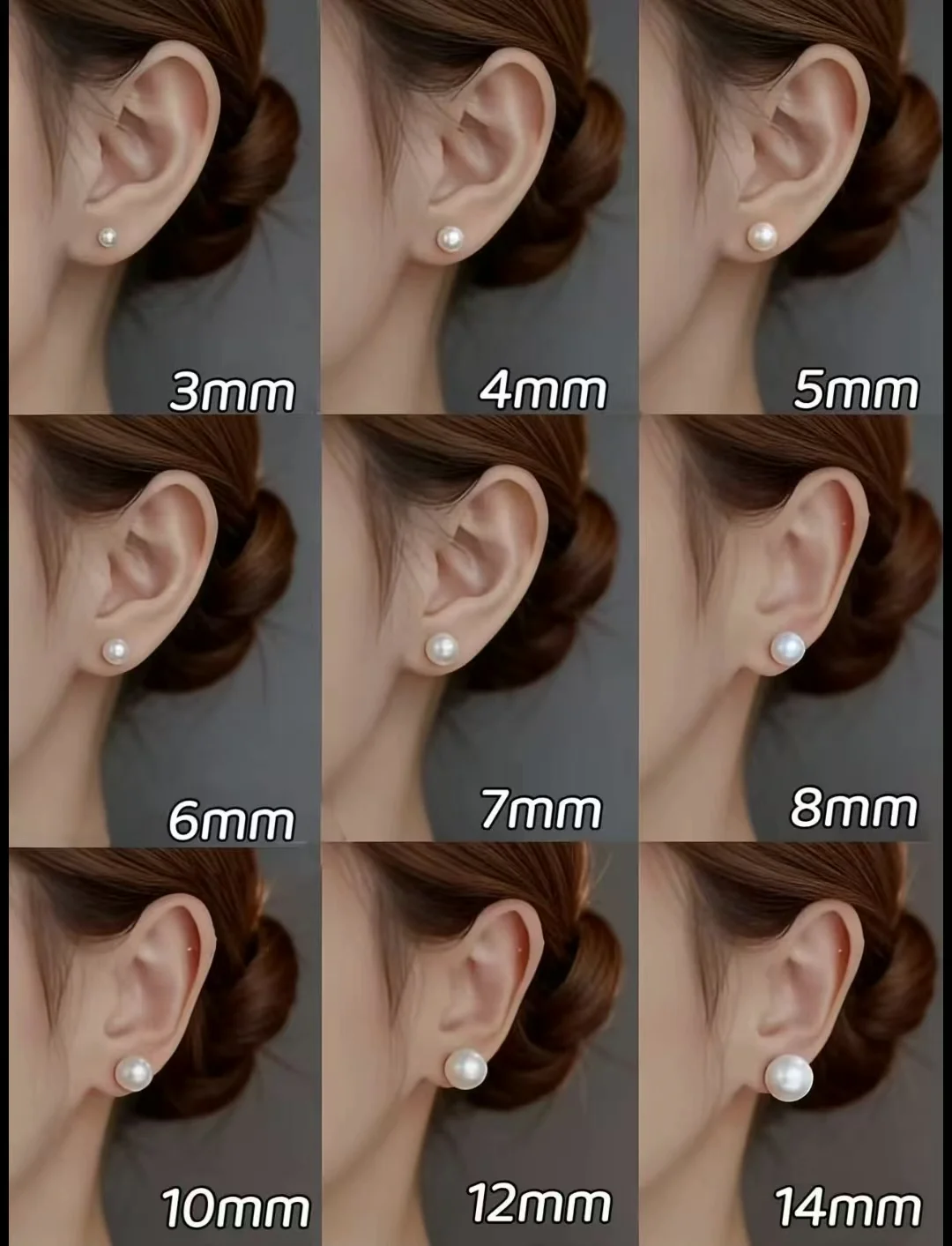
GIA notes that Akoya pearls are most commonly found around 6–9 mm, while pearls above 9 mm become increasingly rare. This means moving from one size bracket to the next is not simply paying for a few tenths of a millimeter more material.
You are moving into a smaller part of the harvest.
The effect becomes even stronger when you ask for a large Akoya pearl that is also round, clean, highly lustrous, and suitable for matching with many others.
This is why Akoya pricing can rise sharply rather than smoothly with size. A buyer looking for value can sometimes save substantially by choosing a slightly smaller diameter while keeping strong luster and good surface quality.
2. Luster: one of the most important visual differences
Akoya pearls are particularly valued for their bright, crisp, almost mirror-like reflections. GIA describes luster as one of the most important pearl value factors and evaluates both the brightness and sharpness of reflected light.
A high-luster Akoya makes reflected edges look sharp and distinct. A lower-luster pearl may look softer, hazier, or more chalky even when its size and shape are similar.
This is why a larger pearl is not automatically the better purchase. A slightly smaller Akoya with excellent luster can be much more visually impressive—and can sometimes be more valuable—than a larger pearl with dull reflections.
For buyers who want the characteristic Akoya look, sacrificing a small amount of size is often easier than sacrificing too much luster.
3. Surface quality: clean pearls become scarce quickly
Minor surface characteristics are normal because pearls grow inside living organisms. Small pits, wrinkles, spots, indentations, or other growth features may occur.
The price question is not simply whether a pearl has any mark. What matters is the number, severity, depth, position, and visibility of those characteristics and how much they interrupt the pearl's appearance.
A tiny feature close to a drill hole may have little visual effect. A deep pit or obvious mark on the most visible face of an earring may matter much more.
Very clean surfaces command premiums because the combination of cleanliness with excellent luster and roundness is harder to find.
4. Roundness: perfect-looking spheres require selection
The bead inserted into an Akoya oyster encourages a spherical result, but it does not guarantee one. Biological growth can still create near-round, slightly distorted, or irregular pearls.
All other factors being equal, round pearls are generally more valuable than less symmetrical shapes. For classic Akoya necklaces and stud earrings, where buyers expect a precise, traditional appearance, roundness is particularly important.
5. Nacre quality affects more than thickness alone
Nacre is the material deposited by the mollusk around the nucleus. Its structure and quality affect how the pearl handles light and can also influence durability.
GIA treats nacre as its own value factor rather than reducing pearl quality to surface appearance alone. Poor nacre can be associated with dullness or other undesirable visual characteristics, while well-formed nacre can support the bright appearance for which high-quality Akoya pearls are known.
For this reason, an Akoya should not be evaluated only by diameter and whether the surface looks clean in a photograph.
6. Matching can make a strand much more expensive than its individual pearls suggest
Matching is often underestimated by first-time pearl buyers.
One beautiful loose pearl is difficult to produce. A necklace requires dozens of pearls that look harmonious together. The sorter may need to match diameter, shape, bodycolor, overtone, luster, and surface appearance across the entire strand.
As the required quality rises, the pool of interchangeable pearls becomes smaller. This is why a well-matched premium strand is not simply the sum of dozens of average loose pearls.
The same principle applies to earrings. Two excellent pearls that do not match each other can be less useful for a pair than two slightly less perfect pearls that match beautifully.
7. Color and overtone matter, but there is no universal "most expensive color"
Classic white Akoya pearls may display rose, silver, cream, or other subtle overtones. Some natural-color blue Akoya pearls also occur.
Color can influence price when a particular appearance is scarce or strongly desired, but its effect is less universal than size or luster. Personal preference, regional tastes, fashion, treatment status, and the ability to match a strand all influence how much of a premium a particular color receives.
For that reason, a seller should not justify a high price simply by calling a pearl "pink," "rose," or another desirable-sounding color without also discussing its overall quality.
Why can two 8 mm Akoya strands have very different prices?
Consider two necklaces that are both described as approximately 8 mm white Akoya pearls.
| Characteristic | Strand A | Strand B |
|---|---|---|
| Size | About 8 mm | About 8 mm |
| Luster | Bright, sharp reflections | Softer, hazier reflections |
| Surface | Mostly clean to the eye | Several visible marks |
| Shape | Consistently round | Round to noticeably near-round |
| Matching | Very even across the strand | Visible variation in color and luster |
| Nacre | Good overall quality | Less attractive overall appearance |
If you compare them only by the words "8 mm Akoya," they look like equivalent products. They are not.
This is the central reason Akoya prices can be confusing online: size and pearl type are easy to put in a product title, while luster, surface, nacre, and matching are much harder to communicate with one number.
Does Japanese origin automatically make an Akoya pearl expensive?
Japan has a long history with modern Akoya pearl cultivation and remains closely associated with the category. Japanese Akoya pearls are especially known in the market for their classic round appearance and sharp luster.
Origin can therefore influence provenance, market perception, supply, and price. But "Japanese" is not itself a quality grade.
A Japanese Akoya pearl can still vary in size, luster, surface, shape, nacre, color, and matching. Those characteristics need to be evaluated on the actual pearl or strand.
When origin materially affects the price, buyers should ideally understand what evidence supports the stated origin rather than assuming that every pearl sold under a Japanese-sounding description is automatically premium quality.
What about Hanadama Akoya pearls?
Hanadama is associated with high-quality Akoya pearls, but it should not be interpreted as meaning that every Hanadama strand is identical.
GIA currently describes qualifying Hanadama Akoya as having characteristics including round to near-round shape, white bodycolor with or without overtones, excellent luster, high nacre quality, strong matching where applicable, and clean to slightly spotted surfaces.
That makes certification useful evidence when comparing premium pearls. However, a certificate does not eliminate every visible difference between two qualifying strands. Size, subtle differences in luster, surface, color, matching, jewelry design, metal, seller selection, and brand positioning can still affect the final selling price.
Do not rely on an AAA label alone
One of the easiest mistakes in pearl shopping is comparing an "AAA Akoya" from one seller directly with an "AAA Akoya" from another as though the letters were a universal unit of measurement.
Pearl sellers use different grading systems and selection standards. A grade is useful only when you understand what that particular seller means by it.
Instead of asking only, "Is this AAA?", ask:
- What is the exact pearl size range?
- How strong and sharp is the luster?
- How visible are the surface characteristics?
- Are the pearls round or near-round?
- How consistent is the matching?
- How is nacre quality evaluated?
- Is the color natural or treated where that distinction matters?
- Is any laboratory report included, and what exactly does it confirm?
These questions tell you considerably more than a letter grade by itself.
How to get better value when buying Akoya pearls
You do not necessarily need to buy the largest, cleanest, highest-certified pearl available. The better goal is to understand which characteristics you can compromise on without losing the appearance you actually want.
Prioritize luster before chasing maximum size
If budget is limited, consider moving slightly down in size while keeping strong luster. The crisp reflection is one of the features that makes Akoya visually distinctive.
Accept minor surface marks when they are not visually distracting
Paying a large premium for an almost perfectly clean surface may not always be necessary for everyday jewelry. Small, discreet characteristics can offer good value if the pearl remains bright and attractive at normal viewing distance.
Compare pearls within the same size bracket
A 7 mm Akoya and a 9 mm Akoya should not be used to judge whether one seller's "AAA" standard is better than another's. First compare similar size, pearl type, and jewelry format, then evaluate the remaining quality factors.
For necklaces, inspect the strand as a whole
Do not zoom into only one hero pearl. Look for consistency from one end of the necklace to the other. A premium strand should look harmonious in color, luster, shape, and size.
Ask for realistic photos or video when the purchase is significant
Strong studio lighting can make pearl differences difficult to judge. When possible, compare actual pieces or lots under similar lighting conditions rather than relying entirely on grading words.
If you are comparing Akoya pearls for finished jewelry or a wholesale purchase, Margaret Jewelry can help compare actual options by size, luster, surface, matching, and budget rather than relying on a grade name alone.
FAQ
Are Akoya pearls more expensive than freshwater pearls?
They often are, especially at comparable jewelry quality. Akoya cultivation generally produces one pearl per oyster at a time, while freshwater mussels can produce multiple pearls. High-quality Akoya are also selected for the sharp luster, roundness, clean surfaces, and matching expected from the category. However, exceptional freshwater pearls can still be expensive, so pearl type alone does not determine final value.
Why do larger Akoya pearls become so much more expensive?
Larger Akoya pearls occupy a smaller part of production. GIA notes that the common Akoya range is roughly 6–9 mm and that pearls over 9 mm become increasingly rare. Finding a large pearl that is also round, highly lustrous, clean, and well matched increases the rarity further.
Is luster more important than surface quality?
Both matter, but luster has an especially strong effect on how an Akoya looks. A bright pearl with a few minor surface characteristics can often be more attractive than a very clean pearl with weak luster. The ideal balance depends on budget and how visible the surface marks are.
Does AAA mean the same quality for every Akoya seller?
No single retail letter grade should be assumed to mean exactly the same thing across different sellers. Always check how the seller defines the grade and compare measurable or visible characteristics such as size, luster, surface, shape, nacre, and matching.
Are Hanadama Akoya pearls always the most expensive?
Hanadama designation is associated with a high Akoya quality range, so qualifying pearls usually command a premium. But two qualifying strands can still differ in size, appearance, matching, surface, jewelry setting, and seller selection. Certification is an important piece of information, not a complete price formula.
Are Akoya pearls the most expensive pearls in the world?
No. Akoya pearls can be expensive, especially in large sizes and premium qualities, but high-quality South Sea pearls commonly reach larger sizes and can command significantly higher prices. Akoya are particularly valued for their classic round form and sharp, mirror-like luster rather than for being the largest pearl type.
The bottom line
Akoya pearls are expensive because the supply of truly desirable pearls is much smaller than the number of oysters placed into cultivation. The process requires years of oyster growth and farm management, each oyster typically produces only one pearl at a time, and only part of the harvest will combine the qualities premium buyers want.
For the individual pearl, there is no single factor that explains every price difference. Size establishes an important scarcity baseline; luster, surface, shape, nacre, and matching determine much of the quality premium. Color, origin, certification, jewelry materials, and brand can then adjust the final market price further.
So when two Akoya necklaces appear similar but carry very different prices, do not compare only the millimeter size or the AAA label. Compare the actual pearls.