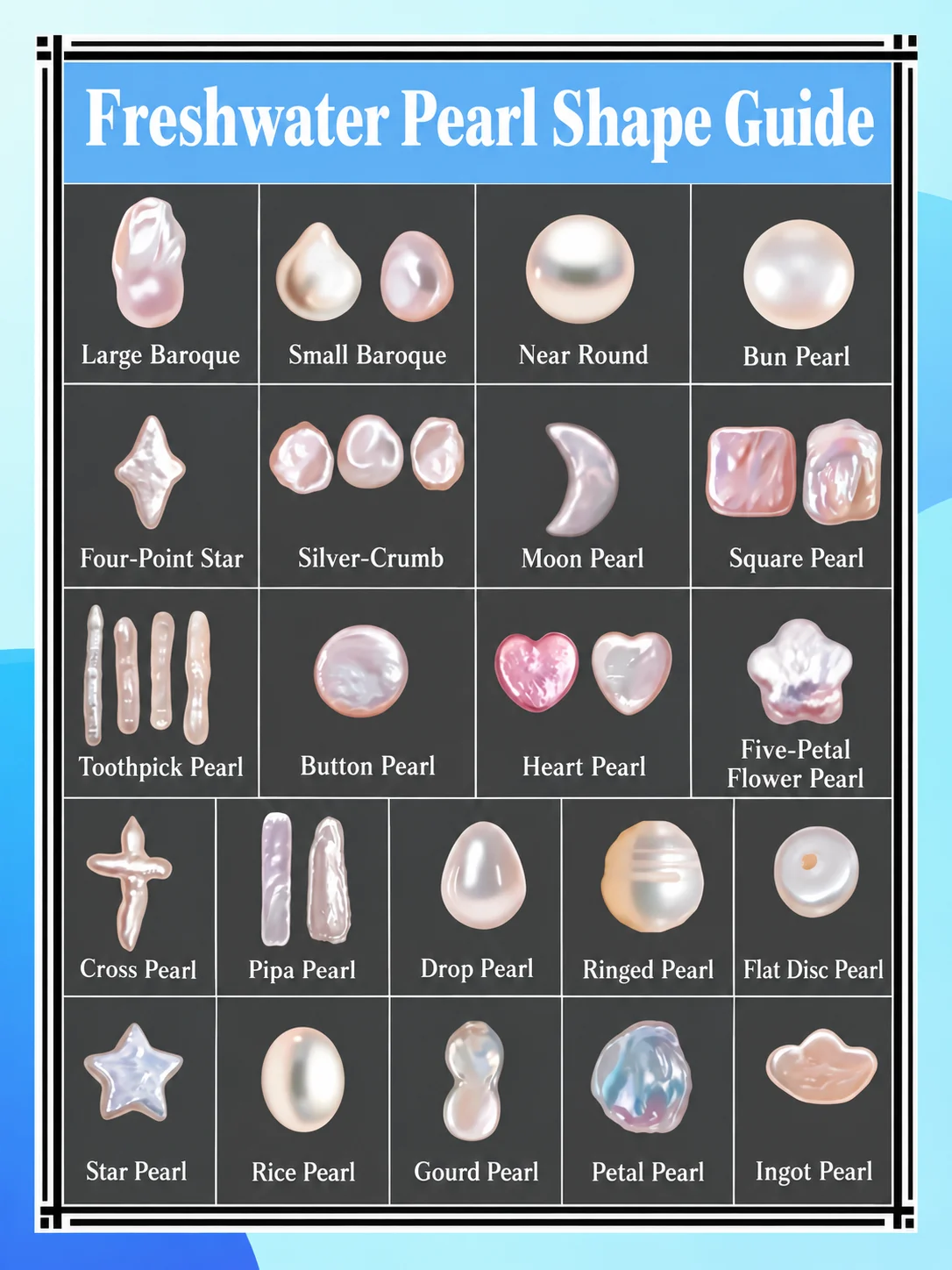
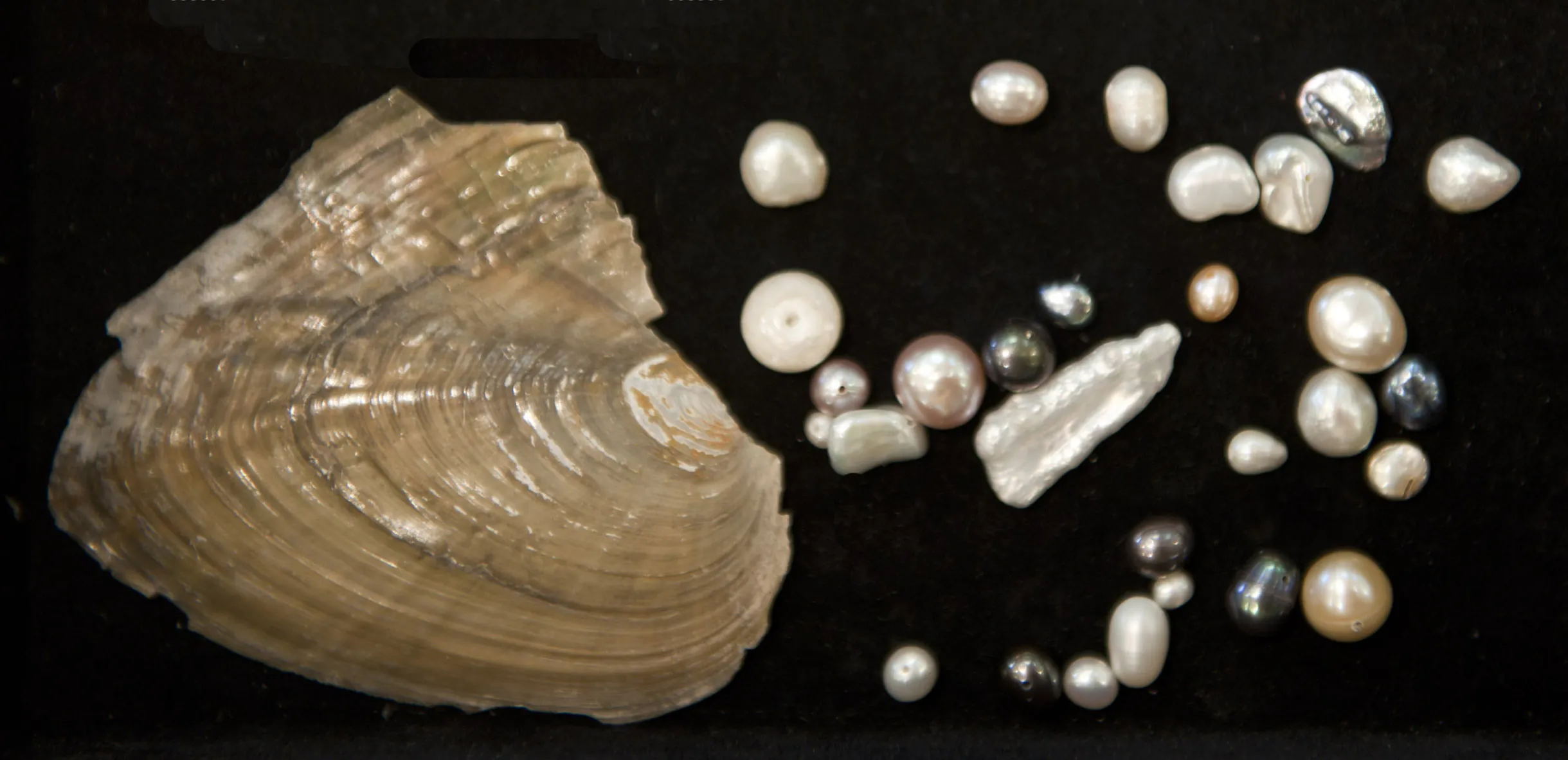
What Are Seed Pearls? Small Pearl Sizes and Uses Explained
Seed pearls are very small pearls used as delicate accents in jewelry, embroidery, antique settings, and fine detail work. In strict traditional usage, the term often points to tiny natural pearls, commonly under about 2 mm. In modern jewelry shopping, however, "seed pearl" is also used more loosely for very small cultured pearls, pearl beads, or micro pearls used for a similar visual effect.
Quick Answer
A seed pearl is not a separate pearl species. It is a size and usage term. The pearl may be natural, cultured, freshwater, saltwater, round, slightly irregular, or drilled for beadwork. What makes it a seed pearl is its tiny scale and the way it is used: as detail rather than as the main focal pearl.
Dictionary definitions describe a seed pearl as a very small, often irregular pearl, and jewelry usage supports that idea. For modern buyers, the important point is to ask what the seller means by the term: natural seed pearl, cultured freshwater seed pearl, imitation seed pearl, or simply a small pearl bead.
How Small Are Seed Pearls?
There is no single universal size boundary that every seller follows. As a practical guide, many people use "seed pearl" for pearls around 1-2 mm, while modern bead and jewelry listings may extend the term to small pearls around 2-3 mm or even 4 mm when the design uses them as tiny accents.
| Approximate Size | Common Description | Typical Use |
|---|---|---|
| Under 1 mm | Extra tiny seed pearls | Rare fine detail, antique restoration, delicate embroidery |
| 1-2 mm | Traditional seed pearls | Antique-style halos, brooch details, lace-like jewelry work |
| 2-3 mm | Micro pearls or small seed pearls | Bead weaving, bridal accessories, fine rings, accent borders |
| 3-4 mm | Small pearls | Dainty strands, spacers, children's jewelry, minimalist earrings |
| 5 mm and above | Small to classic pearls | Stud earrings, bracelets, pendants, more visible jewelry designs |
Because the size term is flexible, do not rely on the name alone when matching pearls for a project. Measurements in millimeters matter more than the label. If you are replacing a pearl in antique jewelry or matching tiny pearls for a border, even a half millimeter can change the rhythm of the design.
Are Seed Pearls Natural or Cultured?
They can be either, depending on age, source, and seller description. Many antique seed pearls were natural pearls, especially in Victorian and Edwardian jewelry, because they came from the natural pearl trade of that period. Modern seed pearls sold for jewelry making are often cultured freshwater pearls, because cultured pearl production makes small pearls more available and affordable.
This distinction matters because "seed pearl" describes size, not origin. A tiny pearl is not automatically natural. A natural pearl forms without human intervention, while a cultured pearl forms after people introduce the growth process inside a mollusk. For a broader foundation, see our guide to pearl classification: natural, cultured, and imitation pearls.
If natural origin affects the value of an antique piece, do not rely only on appearance. Tiny pearls can be difficult to judge by sight, especially after years of wear, restringing, repair, or replacement. A qualified jeweler or gemological laboratory may be needed when authenticity has financial or historical importance.
How Seed Pearls Form
Seed pearls form by the same broad principle as other pearls: a mollusk deposits nacre around an internal trigger. The result may be round, near-round, oval, rice-shaped, or irregular. With very small pearls, tiny differences in shape and drilling can be more noticeable because the design often repeats many pearls close together.
For readers who want the formation process step by step, our pearl formation guide explains how nacre builds and why pearls vary in shape, surface, and luster. Small pearls are a useful reminder that pearl beauty is not only about size. A tiny pearl with good luster can look lively in close detail, while a dull small pearl can disappear into the setting.
Common Uses for Seed Pearls
Seed pearls are chosen when a design needs texture, delicacy, or fine repetition. They are not usually selected for bold visual impact. Their strength is detail.
Antique and Vintage Jewelry
Seed pearls are closely associated with antique rings, brooches, lockets, pendants, mourning jewelry, and bridal pieces. They often appear as borders around gemstones, floral motifs, stars, crescents, bows, and lace-like gold settings. In these pieces, the pearls soften the metalwork and create a refined shimmer rather than a large pearl statement.
Accent Borders and Halo Settings
Small pearls can frame a center stone or larger pearl. The effect is gentler than a diamond halo and can feel more romantic, historic, or handmade. For this use, matching is important. Uneven color, mismatched luster, or inconsistent size can make the border look messy.
Beadwork and Embroidery
Seed pearls are also used in bridal veils, couture embroidery, hair accessories, beaded bags, and decorative trims. In textile work, the pearl must be small enough not to pull the fabric out of shape. Weight, drilling quality, and thread strength matter as much as pearl appearance.
Dainty Modern Jewelry
Modern designers use tiny pearls in minimalist rings, fine bracelets, charm necklaces, layered chokers, and delicate earrings. In this context, the pearls may be cultured freshwater pearls rather than antique natural seed pearls. The design language is similar, but the material description should still be accurate.
Seed Pearls vs. Small Pearls, Keshi Pearls, and Imitation Pearls
Several terms can overlap with seed pearls, which is why product descriptions can be confusing. The clearest way to read a listing is to separate size, origin, and structure.
| Term | What It Usually Means | What to Check |
|---|---|---|
| Seed pearls | Very small pearls, often used as accents | Actual millimeter size and whether they are natural, cultured, or imitation |
| Small pearls | A broader size term that may include 3-6 mm pearls | Whether the pearls are focal beads or detail accents |
| Keshi pearls | Non-bead-nucleated cultured pearls, often irregular and lustrous | Shape, drilling, size range, and whether "keshi" is being used accurately |
| Imitation seed pearls | Man-made pearl-look beads in a tiny size | Material, coating durability, and whether the listing clearly says imitation |
Keshi pearls deserve special attention because they can be small, irregular, and highly lustrous, which sometimes makes them visually overlap with seed pearls. But "keshi" describes a formation category in cultured pearl production, while "seed pearl" mainly describes small size and use. See our keshi pearl guide for the difference.
What Makes Good Seed Pearls?
Large pearls often draw attention through size, but seed pearls are judged by precision. In repeated detail work, small inconsistencies can become visible quickly. The most useful quality factors are size consistency, matching, luster, surface condition, drilling, and color harmony.
- Size consistency: Tiny differences matter when pearls sit in a row, border, or embroidered pattern.
- Luster: Bright reflection gives small pearls life. Dull pearls can look chalky or flat.
- Surface: Minor marks are normal, but chips, peeling, or heavy wear are more concerning in delicate settings.
- Drilling: Clean, centered drill holes help the pearls sit evenly and reduce breakage during stringing.
- Matching: Pearls used together should feel harmonious in color, shape, and shine unless the design intentionally mixes them.
The Gemological Institute of America describes pearl value through factors such as size, shape, color, luster, surface quality, nacre quality, and matching. Those factors apply to tiny pearls too, but the emphasis changes: for seed pearls, matching and condition often matter more than dramatic size.
Buying or Matching Seed Pearls: Practical Tips
If you are buying seed pearls for jewelry making, restoration, or design sampling, start with measurements rather than adjectives. "Tiny," "micro," and "seed" are useful descriptions, but they are not precise enough for matching work.
- Ask for the size range in millimeters, such as 1.5-2 mm or 2-2.5 mm.
- Check whether the pearls are natural, cultured freshwater, cultured saltwater, or imitation.
- For antique repairs, compare color and luster under soft daylight, not only under strong display lighting.
- For embroidery, test weight and flexibility on the actual fabric before committing to a full design.
- For rows or halos, buy extra pearls so the setter or designer can reject mismatched pieces.
If you are learning how different pearl qualities affect value, our pearl value evaluation guide gives a wider framework. For small freshwater pearls specifically, it may also help to understand freshwater non-nucleated pearls, since many tiny modern cultured pearls come from freshwater production.
Care Notes for Seed Pearl Jewelry
Seed pearl jewelry can be delicate because the pearls are small and the settings or threads that hold them may also be fine. Antique pieces deserve extra care. Avoid soaking seed pearl jewelry, ultrasonic cleaning, harsh chemicals, perfume, hairspray, and rough polishing cloths. Wipe gently after wear and store the piece separately so the tiny pearls do not rub against harder gemstones or metal edges.
For stitched or embroidered seed pearls, thread condition matters. If a strand, fringe, or textile embellishment looks loose, do not pull it tight by hand. A repair specialist can usually stabilize the structure more safely than a quick home repair.
What to Remember
Seed pearls are best understood as tiny pearls used for fine detail. They may be natural in antique jewelry, cultured in modern jewelry, or imitation in costume and craft materials. The name alone does not prove origin or value. For the most accurate judgment, look at the millimeter size, material description, luster, matching, condition, and how the pearls are used in the design.
FAQ
Are seed pearls real pearls?
Some seed pearls are real pearls, but not all listings use the term the same way. Antique seed pearls may be natural pearls, while many modern seed pearls are cultured freshwater pearls. Some craft or costume pieces use imitation seed pearls, so the material description matters.
What size are seed pearls?
Traditional seed pearls are often around 1-2 mm or smaller. Modern sellers may also call 2-3 mm pearls seed pearls or micro pearls. Always check the exact millimeter measurement before buying or matching them.
Are seed pearls valuable?
They can be valuable in the right context, especially in fine antique jewelry or well-preserved natural pearl pieces. But size alone does not determine value. Origin, condition, luster, matching, workmanship, and the overall jewelry setting all matter.
What is the difference between seed pearls and freshwater pearls?
Seed pearl is mainly a size and usage term. Freshwater pearl describes the growing environment. A seed pearl can be a freshwater cultured pearl if it was grown in a freshwater mollusk and is small enough to be used as a tiny accent.
Can seed pearls be used in everyday jewelry?
Yes, but the design should protect them. Tiny pearls work well in dainty rings, earrings, bracelets, and necklaces, but very exposed or loosely set seed pearls may be more vulnerable to wear, snagging, or loss.
Source Notes
This article uses terminology and quality guidance consistent with the Merriam-Webster definition of seed pearl, the GIA pearl buyer's guide, and FTC guidance on truthful pearl descriptions for natural, cultured, and imitation pearls.