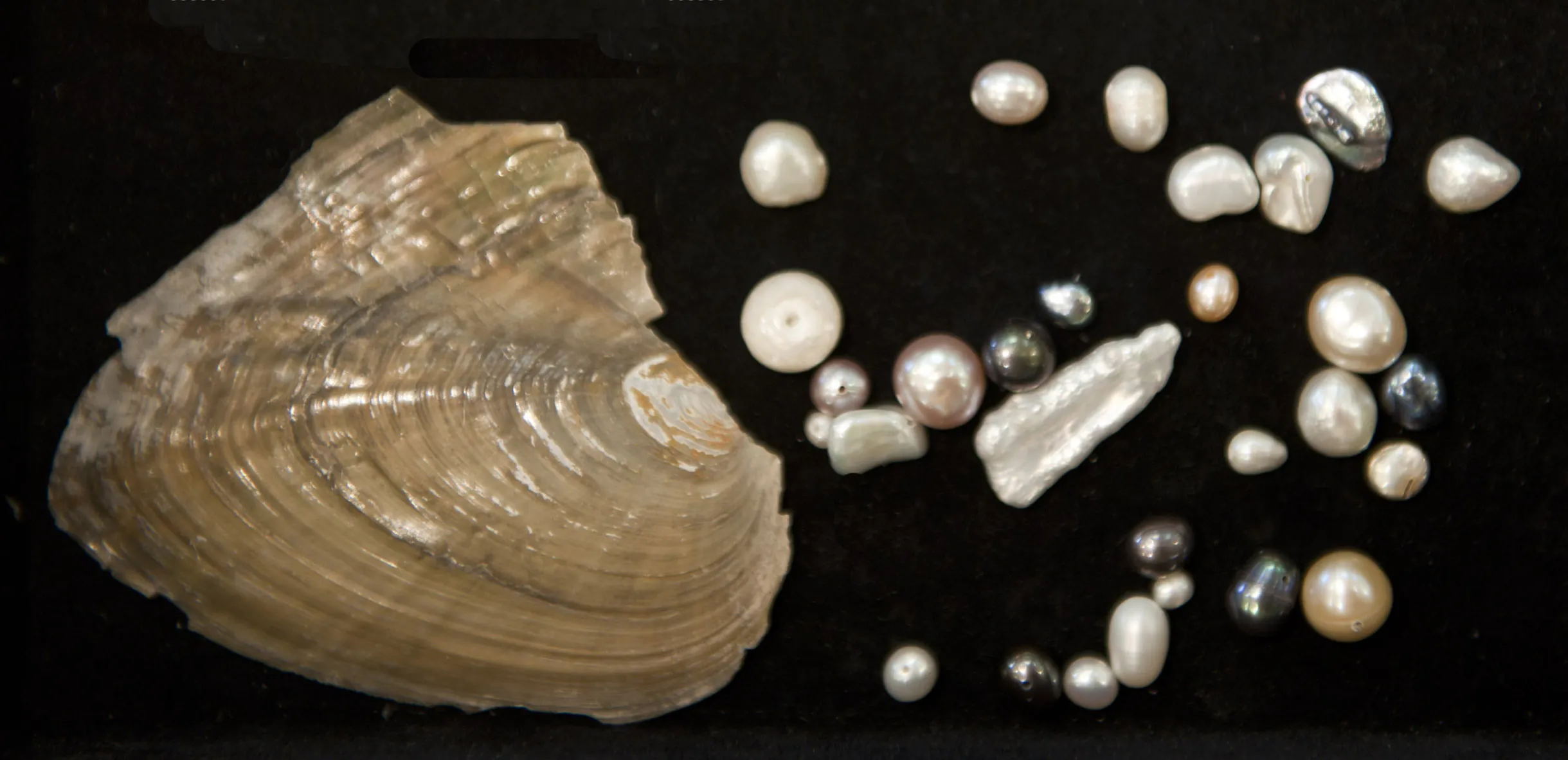
Akoya pearls are cultured saltwater pearls produced by the Akoya pearl oyster, Pinctada fucata. They are best known for a classic combination: relatively small to medium size, high roundness, and bright, crisp luster. White and cream are the most familiar bodycolors, often with rose, silver, or other subtle overtones.
The most important terminology point is simple: “Akoya pearl” describes a pearl type, while “Japanese Akoya pearl” adds a geographic origin. Japan is historically and commercially central to Akoya culture, but genuine Akoya pearls are also cultured in other countries, including China and Vietnam. Therefore, not every Akoya pearl should automatically be described as Japanese.
What Makes a Pearl an Akoya Pearl?
An Akoya pearl is defined by the pearl-producing mollusk and its culture method, not merely by a white color or round shape. The host is the Akoya oyster, commonly identified as Pinctada fucata (with martensii also appearing in gemological and trade literature).
Akoya pearls are usually bead-nucleated. A pearl farmer inserts a round shell bead together with a small piece of mantle tissue into the oyster. The oyster then forms a pearl sac and deposits nacre around the bead. The result is a real cultured pearl: its nacre is produced by a living mollusk, even though people deliberately started the process.
This is why cultured does not mean imitation. An imitation pearl is manufactured to resemble a pearl, while a cultured Akoya pearl is biologically formed inside an oyster.
Akoya vs. Japanese Akoya: Are They the Same?
They overlap, but they are not perfect synonyms.
| Term | What it means |
|---|---|
| Akoya pearl | A cultured saltwater pearl produced by the Akoya oyster. Akoya pearls are cultured in Japan and also in other parts of Asia. |
| Japanese Akoya pearl | An Akoya pearl specifically cultured in Japan. “Japanese” is an origin statement, not a separate pearl species. |
| Hanadama | A quality-related trade or laboratory designation used for qualifying Akoya pearls; it is not another pearl type. |
| “Freshwater AK” | A market term sometimes used for freshwater pearls with an Akoya-like look. They are not true Akoya pearls because they come from freshwater mussels rather than Akoya oysters. |
This distinction matters when comparing listings. A seller can correctly offer a genuine Akoya pearl that is not Japanese. Conversely, “Japanese” should not be treated as an automatic quality grade. Origin can affect market positioning and buyer preference, but individual pearls still need to be judged by their actual luster, surface, shape, nacre, color, size, and matching.
For a deeper treatment of Akoya terminology, nacre, color, origin, and quality, see our complete Akoya pearl guide.
Why Are Akoya Pearls Known for Their Luster?
Fine Akoya pearls are especially valued for sharp, reflective luster. Instead of only giving a soft glow, a high-quality Akoya can show a relatively crisp reflection on its surface. This bright “mirror-like” appearance is one reason Akoya remains strongly associated with classic pearl strands and stud earrings.
Luster should still be judged pearl by pearl. Not every Akoya pearl has exceptional luster, and the name “Akoya” alone does not guarantee high quality. Lower-quality Akoya can look dull, chalky, or weak, while a fine modern freshwater pearl can also display very strong luster.
When choosing Akoya, compare pearls under similar lighting and look at the sharpness and brightness of reflections rather than relying only on a seller’s grade label. Our pearl grading guide explains how to separate luster, surface, shape, nacre, color, and matching instead of compressing everything into a single letter grade.
What Sizes Are Akoya Pearls?
Akoya pearls are generally smaller than Tahitian and South Sea pearls because the Akoya oyster itself is comparatively small. For everyday jewelry, roughly 6–9 mm is the most useful range to keep in mind. Smaller Akoya pearls exist, and pearls around 9–10 mm or above become progressively less common, especially when high luster, roundness, clean surfaces, and close matching are required at the same time.
Size is not a quality grade. A lively 7.5 mm Akoya can be more attractive than a dull 9 mm pearl. If you are choosing between sizes for earrings or necklaces, our pearl size guide shows how millimeter differences change the visual effect.
What Colors Do Akoya Pearls Come In?
The classic Akoya appearance is white to cream, often modified by subtle overtones such as rose or silver. Some Akoya pearls also occur in less familiar colors, including naturally bluish or grayish material.
Color descriptions should be read carefully because bodycolor, overtone, lighting, photography, and treatment are different issues. A pink cast seen in a product image, for example, does not by itself explain whether the color is natural, enhanced, or simply influenced by lighting. For a significant purchase, the seller should be able to describe the pearl type and any relevant treatment disclosure clearly.
Are Akoya Pearls Always Perfectly Round and Flawless?
No. Akoya culture is well suited to producing round pearls, so roundness is strongly associated with the category, but real pearls are biological products. Near-round shapes, small pits, growth marks, spots, or other surface characteristics can occur.
The useful question is not whether a pearl has any mark at all. It is whether the surface characteristics are visually distracting, structurally concerning, or acceptable for the price and intended jewelry design. A small mark near a drill hole can matter much less than weak luster across the entire pearl.
How Do Akoya Pearls Compare with Other Major Pearl Types?
| Pearl type | Typical visual character | Typical size context | What usually distinguishes it |
|---|---|---|---|
| Akoya | Classic white-to-cream look with crisp, reflective luster | Commonly around 6–9 mm | Roundness, sharp luster, close matching |
| Freshwater | Very broad range of shapes, colors, and luster | Broad range, including sizes larger than typical Akoya | Versatility and wide price range; many are tissue-nucleated, while bead-nucleated freshwater pearls are also common |
| Tahitian | Naturally dark bodycolors with complex green, blue, gray, or other overtones | Generally larger than Akoya | Dark natural color range from the black-lipped oyster |
| South Sea | White, silver, or golden colors with a broader, often satin-like glow | Generally the largest of the major cultured pearl groups | Large size, thick nacre, and white/silver or golden color families |
No pearl type is universally “best.” Akoya is especially compelling when the goal is a refined, bright, traditional pearl look rather than maximum size or dramatic color. For a broader decision framework, use our pearl buying guide.
Does “Japanese Akoya” Automatically Mean Higher Quality?
No. Japanese Akoya has strong historical prestige and remains an important reference point in the pearl market, but origin and quality are different questions.
A Japanese Akoya can still vary in luster, surface condition, shape, nacre quality, color, and matching. In the same way, an Akoya pearl cultured outside Japan does not become imitation simply because its origin is different. When origin materially affects price, ask for clear provenance and, for higher-value purchases, appropriate independent documentation.
This distinction is useful because pearl marketing often compresses several ideas into one label. “Japanese,” “Hanadama,” “AAA,” “high luster,” and “round” describe different things. A careful buyer separates them before deciding whether the price makes sense.
How Should You Judge Akoya Pearl Quality?
For most buyers, start with what you can actually see. Strong luster is usually the first feature to protect because it gives Akoya its characteristic lively appearance. Then consider surface quality, shape, nacre quality, color, size, and—when buying a pair or strand—matching.
Do not compare two sellers’ “AAA” or “AAAA” labels as though they were a universal international scale. Seller grading systems can use different thresholds. Ask what the grade describes and compare the actual pearl characteristics.
For an Akoya necklace, matching is especially important because dozens of pearls must work together as one piece. For stud earrings, the relationship between the two pearls matters: size, color, overtone, luster, and surface should look harmonious when worn as a pair.
Who Are Akoya Pearls Best For?
Akoya pearls are a strong choice if you want a bright, refined pearl with a classic scale. They work particularly well for stud earrings, single-strand necklaces, pendants, and other designs where roundness and clean visual consistency are important.
If your main goal is a very large pearl, Tahitian, South Sea, or some modern freshwater pearls may offer more size. If you prefer irregular shapes or unusual natural silhouettes, baroque freshwater pearls may give more variety. Akoya is most distinctive when crisp luster, roundness, and a polished traditional appearance are the priority.
You can browse finished Akoya pearl jewelry, or, if you are sourcing strands and loose material for jewelry making, explore wholesale Akoya pearls.
What to Remember
Akoya pearls are real cultured saltwater pearls produced by the Akoya oyster. Their signature look is relatively small-to-medium size, good roundness, and bright, crisp luster. Japan is the historical center of modern Akoya culture, but “Akoya” and “Japanese Akoya” are not strictly identical terms: the first describes the pearl type, while the second also specifies Japanese origin.
That distinction makes buying easier. First identify what the pearl actually is. Then judge its quality. Origin, size, grade labels, and trade names can add useful information, but none should replace a direct look at luster, surface, shape, nacre, color, and matching.
FAQ
Are Akoya pearls real pearls?
Yes. Akoya pearls are real cultured pearls. A farmer initiates pearl growth, but the oyster itself produces the nacre that forms the pearl.
Are all Akoya pearls from Japan?
No. Japan is the best-known Akoya-producing country, but Akoya pearls are also cultured in other parts of Asia, including China and Vietnam. “Japanese Akoya” specifically indicates Japanese origin.
What is the usual size of an Akoya pearl?
Approximately 6–9 mm covers much of the typical jewelry market. Smaller pearls exist, while fine Akoya pearls around 9–10 mm and above become increasingly scarce.
Are Akoya pearls always white?
No. White and cream are the best-known bodycolors, often with rose or silver overtones, but Akoya pearls can also occur in less common bluish or grayish colors.
Is Japanese Akoya the same as Hanadama?
No. Japanese Akoya describes pearl type plus origin. Hanadama is a quality-related designation used in specific trade and laboratory contexts. A Japanese Akoya pearl is not automatically Hanadama.
Selected References
Gemological Institute of America (GIA): Different Pearl Types Explained
CIBJO: Guide for Classifying Natural Pearls and Cultured Pearls