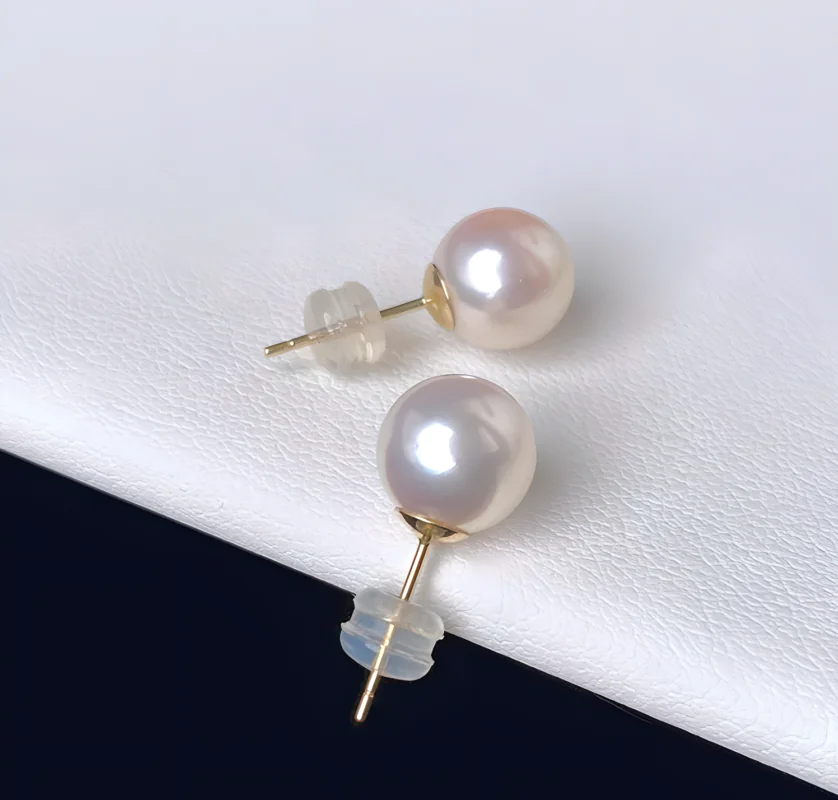
How to Match a Pearl Grading Certificate Number to the Actual Item
To match a pearl grading certificate number to the actual item, do two separate checks: first verify that the report number is genuine with the issuing laboratory, then compare the report's description, measurements, quantity, weight, image, and item form with the pearl or jewelry in front of you. A valid report number proves that a report exists; by itself, it does not prove that the seller has attached that report to the same pearl that the laboratory examined.
The Most Important Distinction: Verify the Report, Then Verify the Item
Buyers often treat certificate verification as a one-step process: enter the number online, see a valid record, and assume the pearl is confirmed. That only completes the first half of the job.
A proper match requires a chain of evidence:
- The document must be authentic. The report number, issuer, report type, and archived data should agree with the laboratory's own records.
- The physical item must fit the document. The pearl or jewelry should agree with the report's measurable and visible description closely enough that the document can reasonably be connected to that specific item.
This distinction matters because a genuine laboratory report can be copied, photographed, or reused in a listing for a different but similar-looking pearl. In that situation, the report itself may be real while the connection between the report and the item is false or unproven.
| Check | What It Confirms | What It Does Not Confirm by Itself |
|---|---|---|
| Report number found in the lab database | The laboratory issued a report under that number | That the pearl in your hand is the same submitted item |
| Paper report looks genuine | The document may have authentic security features | That the document has not been separated from its original pearl |
| Size and color look similar | The item is broadly consistent with the report | A unique identity, especially for common pearl sizes and colors |
| Report data, image, measurements, quantity, weight, and item details all agree | A much stronger report-to-item match | Absolute proof if the descriptors are still too generic or the item has been altered |
Step 1: Identify Who Issued the Certificate
Start with the issuer, not the number. In pearl sales, the word certificate is used loosely. A document may be an independent laboratory report, a seller's quality card, an appraisal, a brand guarantee, or a grading document based on the seller's own system. Those documents do not have the same evidentiary value.
Reputable gemological laboratories usually identify the report type clearly and describe the scope of the examination. For example, GIA offers pearl reports that can record information such as quantity, weight, size, shape, color, whether the pearl is natural or cultured, environment, detectable treatments, and—in applicable classification services—quality factors such as luster, surface, nacre, and matching. GIA also states that its pearl reports include a digital image of the submitted pearl or pearls.
If the document comes from a seller rather than an independent laboratory, treat the number as the seller's internal reference unless the seller can show that the number corresponds to a third-party laboratory record. To understand the wider difference between identity and quality terminology, see our pearl classification guide.
Step 2: Verify the Report Number Through the Laboratory's Official System
When the issuing laboratory provides online report verification, use the laboratory's official website or report-check system. Enter the report number exactly as printed on the document and compare the returned record with the paper or digital report.
Check at least these points:
- report number;
- report type;
- issue date, when shown;
- pearl quantity or jewelry-item description;
- measurements or size range;
- weight, when reported;
- shape and color;
- identification or classification conclusions;
- treatment comments;
- the laboratory image, if available.
GIA's own buyer guidance tells users to verify that the information on the report matches the information archived in its report database. Other laboratories, including GUILD, also provide report-number verification systems that return key details from the original certification.
Do not rely only on a QR code printed on a seller's image. A QR code is a convenient shortcut, but the safer habit is to navigate to the laboratory independently and enter the report number yourself. That reduces the risk of being sent to a copied or look-alike verification page.
Step 3: Compare the Report With the Physical Pearl or Jewelry
Once the report itself checks out, stop looking at the certificate for a moment and inspect the item. The strongest match comes from combining several independent details rather than finding one convenient similarity.
Quantity and Item Form
Confirm whether the report describes one loose pearl, a pair of earrings, a strand, a necklace, a mounted pearl, or a group of loose pearls. A report for a 40-pearl strand should not be treated as interchangeable with a loose pearl of the same size. Likewise, a report describing a mounted pendant may include information about the whole jewelry item that should still make sense when compared with the piece in hand.
GIA allows multiple pearls and, for some services, certain jewelry items to appear on one pearl report. This is important because the report number identifies the report record; it does not necessarily identify one individual pearl.
Measurements
Compare the pearl diameter or measurement range carefully. If the report describes a strand ranging from 7.0 to 7.5 mm and the actual pearls are closer to 8.5 mm, that is a material mismatch. For baroque or drop pearls, two- or three-dimensional measurements may be more informative than a single diameter.
A small measurement difference does not automatically prove substitution. Measuring technique, mounting restrictions, rounding, and the exact place where an irregular pearl is measured can create minor differences. Large or systematic discrepancies deserve an explanation.
Weight
Weight can be a useful cross-check, but read the report carefully to see whether it gives pearl weight, total weight, or gross jewelry weight. If a clasp has been replaced or the pearls have been restrung, gross weight can change even when the pearls themselves have not.
Shape, Color, Overtone, and Visible Arrangement
Shape and color are useful consistency checks, especially when the item has distinctive features. A strongly drop-shaped gray pearl should not be matched to a report describing a round white pearl. A strand may also have a recognizable sequence of sizes, colors, or irregular shapes that can help connect it to the laboratory image.
However, common descriptions such as “round, white, 8 mm” are not unique identifiers. Thousands of pearls can share those characteristics. The more ordinary the pearl looks, the more important it becomes to use several matching fields together.
Photograph or Digital Image
A report image is especially useful for baroque pearls, unusual natural pearls, multicolor strands, or jewelry with a recognizable layout. Look for the outline of irregular pearls, the order of a strand, distinctive surface features, the clasp or setting, and other visible details.
Do not treat the image as a perfect forensic fingerprint. GIA sample pearl reports explicitly note that the report image is approximate, and lighting, scale, camera angle, white balance, and later jewelry work can change how the item appears. Use the image as one part of the match, not the only part.
Does the Certificate Number Need to Be Marked on the Pearl?
Usually, you should not expect a pearl grading report number to be visibly engraved on the pearl itself. Pearl reports are commonly linked to the submitted item through the report record, physical description, measurements, image, and chain of custody rather than through a number that a consumer can simply read from the pearl surface.
This is one reason pearl-document matching is different from the way buyers sometimes think about laser-inscribed diamonds. With pearls—especially strands, pairs, and mounted jewelry—the practical question is whether the complete set of report details remains consistent with the actual article.
Single Pearl, Pair, and Strand: The Matching Standard Is Not the Same
The amount of identifying information available changes with the item.
| Item | Most Useful Matching Clues | Main Limitation |
|---|---|---|
| Single pearl | Exact measurements, shape, color, distinctive surface features, image | Round pearls of common size and color can look extremely similar |
| Pair of earrings | Two-pearl size range, matching, setting, gross weight, image | One pearl or mounting may be replaced later without an obvious document change |
| Strand or necklace | Pearl count, size range, graduation, sequence, clasp, weight, overall image | Restringing, clasp replacement, added or removed pearls can weaken the original match |
| Baroque or unusual pearl | Outline, dimensions, surface landmarks, color pattern, image | Viewing angle and photography can change apparent shape |
For a valuable strand, the sequence of pearls can matter. GIA's follow-up service instructions note, in relevant cases, that pearls must remain in the same order when submitted for certain report updates or conversions. That illustrates an important principle: for a multi-pearl article, arrangement can be part of the identity of what was originally examined.
What If the Necklace Was Restrung or the Clasp Was Replaced?
A legitimate pearl item can change after certification. Necklaces are restrung, clasps wear out, earrings are remounted, and individual pearls may occasionally be replaced after damage. These changes do not automatically make the laboratory findings about the original pearls false, but they can make the report-to-item connection less exact.
Ask what changed and when:
- Was the strand restrung without changing the pearl order?
- Was the clasp replaced?
- Were any pearls added, removed, or substituted?
- Was a loose pearl mounted after the report was issued?
- Was a mounted pearl removed from its original setting?
If the report materially depends on the original quantity, arrangement, mounting, or gross weight, a major alteration may justify a new laboratory examination. For high-value items, GIA offers follow-up services that can re-examine pearls and issue updated reporting. If identity itself is the concern, our pearl identification guide explains why document checking and gemological testing solve different parts of the problem.
Warning Signs That the Report May Not Belong to the Item
One mismatch does not always prove fraud, but several inconsistencies should stop the transaction until they are explained.
- The report number cannot be found in the issuer's official verification system.
- The online record shows a different report type, date, size, quantity, or color.
- The report describes a loose pearl while the seller claims the laboratory graded the finished necklace without explaining the later mounting.
- The photograph shows a clearly different baroque outline, strand arrangement, or clasp.
- The certificate number is visible only in a seller-created product card and not on an independent laboratory record.
- The seller refuses to show the full report number or enough of the report to verify it.
- The report describes a materially different weight or measurement range.
- The seller says a certificate is “for reference only” while also using it to claim that the exact item was laboratory graded.
The correct response is not necessarily to declare the pearl fake. The problem may be a listing error, old paperwork, restringing, remounting, or a document that was supplied only as a quality example. But until the discrepancy is resolved, the report should not be used as proof for that exact item.
A Practical Evidence Scale for Buyers
Instead of asking only “Does it have a certificate?”, judge how strong the connection is between the document and the pearl.
| Evidence Level | What You Have | How to Treat It |
|---|---|---|
| Strong | Official report verification plus matching report type, measurements, quantity, weight, image, and item details | Good documentary connection, subject to normal report limitations and any later alterations |
| Moderate | Valid report number plus broadly matching size, color, and item type, but limited distinctive details | Consistent, but not highly specific; ask for more item-level evidence if value is significant |
| Weak | A certificate photo or number in the listing with no independent verification or no item comparison | Do not treat it as proof that the report belongs to the item |
| Conflicting | Verified report but material differences in size, quantity, image, mounting, or description | Pause the purchase and request an explanation or new laboratory examination |
This framework is more useful than treating certification as a yes-or-no badge. A laboratory report is strongest when the report itself is authentic, the physical item matches the recorded characteristics, and the item's history since examination is reasonably clear.
When Should You Ask for Re-Examination?
For an inexpensive cultured pearl item, exhaustive laboratory re-verification may cost more than the practical risk justifies. For a high-value natural pearl, an important auction purchase, a premium natural-color claim, or a rare certified strand, the threshold should be different.
Consider independent re-examination when:
- the report-to-item match is materially uncertain;
- the report is old and the item has been altered;
- natural versus cultured status has a major effect on value;
- treatment status materially affects the price;
- a seller is asking a significant premium specifically because of the laboratory report;
- the transaction requires insurance, estate, auction, or resale documentation.
A grading or identification report should be treated as evidence within its stated scope, not as a universal guarantee of value. For the broader relationship between quality factors and commercial worth, see our guide to evaluating pearl value.
FAQ
Can I verify a pearl certificate using only the certificate number?
You can often verify whether the issuing laboratory has a report under that number, but the number alone does not prove that the physical pearl being sold is the same item the laboratory examined. You still need to compare the archived report details with the actual pearl or jewelry.
Can several pearls share one certificate number?
Yes. A single pearl report can cover multiple pearls or certain jewelry items, depending on the laboratory and report service. In that case, the certificate number identifies the report as a whole rather than serving as a unique serial number for each individual pearl.
Is a matching certificate photo enough to prove the item is the same?
No. A photograph is useful, especially for distinctive baroque pearls or strands, but it should be combined with measurements, quantity, weight, shape, color, mounting details, and other report information. Laboratory report images may also be approximate.
What should I do if the report number is valid but the measurements do not match?
Ask the seller for an explanation before relying on the report. A small difference may come from measurement technique or mounting, but a large discrepancy can indicate that the item was altered, the wrong document was attached, or the report belongs to another pearl.
Does a QR code prove a pearl certificate is genuine?
Not by itself. Use the QR code only as a convenience and verify the number through the issuing laboratory's official website. Then compare the official record with the physical item.
Should an expensive certified pearl be rechecked before purchase?
It can be sensible when the report-to-item connection is uncertain or when natural origin, treatment status, rarity, or another laboratory conclusion materially affects the price. Independent re-examination is the strongest way to resolve a serious mismatch.
The Key Point to Remember
A certificate number identifies a report, not automatically the pearl in front of you. The safest verification process is a chain: confirm the issuer, verify the report number through the laboratory, compare the archived report with the physical item, account for any restringing or remounting, and request re-examination when the financial stakes justify it.
If every link in that chain is consistent, the report becomes useful evidence for the actual item. If the number is valid but the pearl does not match the recorded article, the certificate should not be used to support claims about that pearl until the discrepancy is resolved.