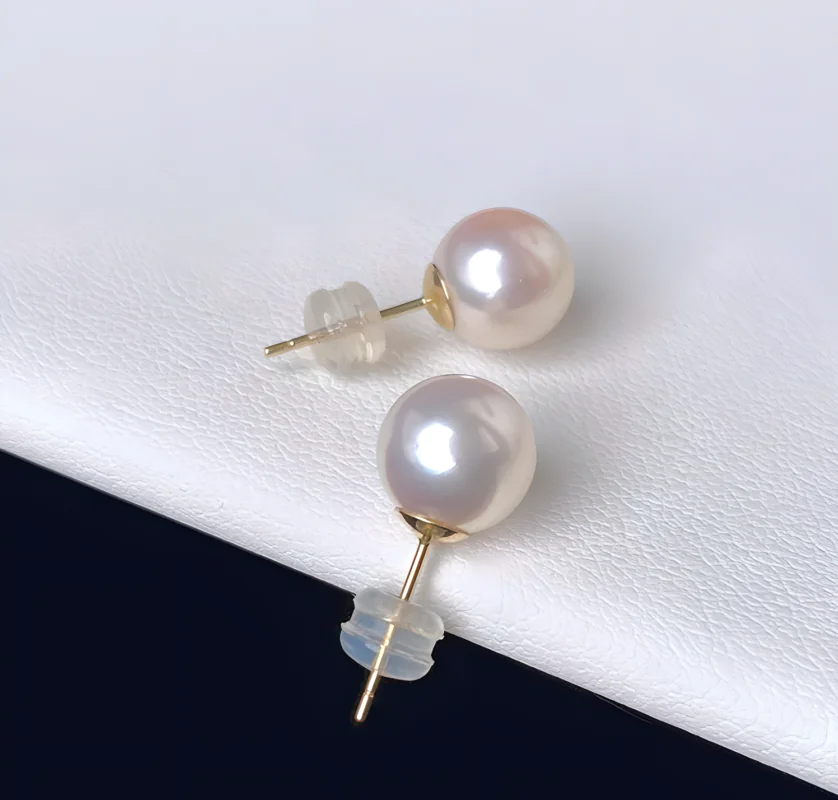
How to Clean Pearls Safely: Which Cleaning Methods Can Damage Nacre?
The safest way to clean pearls is usually the simplest: gently wipe them with a clean, very soft cloth after wearing them, using a slightly damp cloth when necessary, and allow the jewelry to dry completely before storage. Pearls should not be cleaned like diamonds or ordinary metal jewelry. Acids, abrasive powders, harsh chemical cleaners, ultrasonic machines, steam cleaners, and aggressive scrubbing can damage the pearl surface or other parts of the jewelry.
Quick Answer: What Is Safe and What Should You Avoid?
| Cleaning Method | Recommended? | Main Concern |
|---|---|---|
| Soft dry cloth after wearing | Yes | Gentle routine removal of perspiration and cosmetic residue |
| Soft cloth lightly dampened with lukewarm water | Yes | Avoid leaving strung or glued jewelry excessively wet |
| Very mild soapy water | Sometimes | Use only occasionally and cautiously; manufacturer guidance varies |
| Soaking pearl strands | Usually avoid | Can wet and weaken stringing or affect adhesives |
| Vinegar or lemon juice | No | Acid reacts with the calcium carbonate in pearl material |
| Baking soda or toothpaste | No | Abrasive particles can scratch and dull the surface |
| Ultrasonic cleaner | No | Not recommended for pearls and may damage the jewelry |
| Steam cleaner | No | Heat can damage or dehydrate pearl material |
| Ammonia, bleach, strong jewelry dips | No | Harsh chemicals can attack or alter the pearl surface and treatments |
| Metal polishing compounds or abrasive polishing cloths | No on the pearl | Designed for harder materials and may abrade nacre |
Why Pearls Need a Different Cleaning Method
A pearl may look smooth and solid, but its surface is very different from a diamond, sapphire, or piece of polished metal. Nacre is a biological composite made largely from tiny platelets of aragonite, a crystalline form of calcium carbonate, held together by an organic matrix that includes conchiolin. This layered structure is responsible for much of the characteristic optical appearance of nacreous pearls.
That composition creates two important vulnerabilities. First, calcium carbonate reacts with acids. Second, the pearl surface is relatively soft. GIA lists pearl at approximately 2.5 on the Mohs hardness scale, meaning materials that seem harmless around harder gemstones can scratch or abrade a pearl.
This is why understanding the physical and chemical properties of pearls is useful when deciding how to clean them. Pearl care is not simply about keeping jewelry shiny; it is about avoiding gradual loss of surface quality.
The Safest Routine for Cleaning Pearls at Home
For most pearl jewelry, frequent aggressive cleaning is unnecessary. Preventive care is usually more useful than occasional heavy cleaning.
- Inspect the jewelry first. Check whether the pearls are strung, glued to posts or settings, or mounted beside other gemstones. Loose knots, weakened silk, or loose pearl posts should be repaired before wet cleaning.
- Wipe the pearls gently after wearing. Use a clean, soft, lint-free cloth to remove perspiration, skin oils, dust, and cosmetic residue. Do not scrub.
- Use a slightly damp cloth when needed. If a dry cloth does not remove visible residue, lightly dampen the cloth with clean lukewarm water and wipe each pearl gently.
- Remove excess moisture. Wipe again with a clean dry cloth. For a strand, lay the necklace or bracelet flat on a soft towel until the thread is completely dry.
- Store pearls separately. Keep them away from harder gemstones, metal edges, and other objects that could rub against the surface.
This minimal-intervention approach is especially appropriate for routine maintenance. A broader overview of wearing, storage, humidity, cosmetics, and string care is available in our guide to caring for pearls.
Can You Clean Pearls with Mild Soap?
This is one area where reputable care instructions are not identical.
GIA states that warm, soapy water can be used for occasional thorough cleaning, with the important condition that the string of a pearl strand must be allowed to dry completely. Some luxury jewelry houses take a more conservative approach. Cartier, for example, recommends cleaning pearls with a damp cloth without soap or detergent, while MIKIMOTO emphasizes wiping pearls gently with a soft cloth and avoiding contact with cosmetics and chemicals.
These recommendations are not necessarily contradictory. They reflect different levels of caution and different jewelry constructions.
For routine home care, plain water on a slightly damp soft cloth is the lower-risk default. If stubborn residue requires more cleaning, a very small amount of mild soap may be appropriate for some untreated pearl jewelry, but there is usually no reason to immerse the piece. Avoid fragranced, antibacterial, citrus-based, degreasing, or strongly alkaline products.
If the jewelry contains glued pearls, antique stringing, unknown treatments, delicate metalwork, or valuable natural pearls, professional cleaning is the safer choice.
Which Cleaning Methods Can Actually Damage Nacre?
Vinegar, Lemon Juice, and Other Acids
Acidic cleaners are among the clearest examples of what not to use on pearls. Because pearl material contains calcium carbonate, acids can chemically react with the surface. The result may be microscopic etching, loss of smoothness, and reduced luster. With stronger or prolonged exposure, the damage can become much more obvious.
This means common household cleaning ideas such as vinegar, lemon juice, citric-acid cleaners, or other acidic solutions should not be used to brighten pearls.
The important point is that acid damage is not simply “dirt making a pearl look dull.” It can represent actual alteration of the pearl material. Cleaning cannot restore nacre that has already been chemically removed.
Baking Soda, Toothpaste, and Abrasive Powders
Baking soda and toothpaste are often recommended online for cleaning durable household surfaces or some types of metal jewelry. They are poor choices for pearls.
The main problem is mechanical abrasion. Fine particles can create very small scratches in a relatively soft pearl surface. A single cleaning may not produce an obvious gouge, but repeated abrasion can gradually make the surface appear less smooth and less lustrous.
The same principle applies to polishing compounds and jewelry polishing materials intended to remove tarnish from metal. A product that is suitable for silver or gold is not automatically suitable for the pearl mounted beside it.
Ultrasonic Cleaners
Pearls should not be placed in ultrasonic jewelry cleaners. GIA specifically advises against ultrasonic cleaning for pearls, and major pearl and jewelry brands give similar guidance.
Ultrasonic machines are useful for some durable jewelry because high-frequency vibration and cavitation help loosen contamination from small spaces. That does not make the process appropriate for every gem material. With pearls, the combination of a relatively delicate organic gem material, possible treatments, drilled holes, adhesive joints, stringing, and jewelry settings makes ultrasonic cleaning an unnecessary risk.
Steam Cleaners and Excessive Heat
Steam cleaning is also unsuitable for pearls. High heat can cause discoloration, dehydration, splitting, or cracking in pearl material. GIA notes that excessive heat can damage cultured pearls and that heat associated with intense light can contribute to dehydration and cracked nacre.
For the same reason, there is no benefit in using boiling water or unusually hot water to clean pearls. Lukewarm conditions are sufficient when moisture is needed.
Ammonia, Bleach, and Strong Jewelry-Cleaning Solutions
Many commercial jewelry cleaners are formulated for precious metals or harder gemstones rather than pearls. Some contain ammonia, strong alkaline ingredients, solvents, oxidizing agents, or other chemicals that are unnecessarily aggressive for pearl jewelry.
Do not assume that a bottle labeled “jewelry cleaner” is safe for every material in a piece. A cleaner designed to remove grease or tarnish from metal may be unsuitable for nacre, dyed surfaces, coatings, adhesives, or stringing materials.
Alcohol and Strong Solvents
Alcohol-based and solvent-based products are also best avoided as general pearl cleaners. Even when brief contact does not visibly attack a particular pearl, solvents may create problems for adhesives or surface treatments used in some jewelry.
This becomes especially important with treated pearls. Dyed, impregnated, or coated pearls may respond differently to cleaning products than untreated nacre. If you are unsure whether a surface has been modified, use the least aggressive cleaning method rather than experimenting with chemicals. Our guides to pearl color enhancement treatments and pearl coatings explain why treatment history can matter.
Is Soaking Pearls in Water Harmful?
This question needs more nuance than a simple “water destroys pearls.” Brief contact with clean lukewarm water is not the same as exposure to acid or a harsh chemical cleaner. GIA specifically allows warm soapy water for occasional cleaning.
The larger practical problem with soaking pearl jewelry is often the construction of the piece rather than instant chemical damage to nacre.
A traditional pearl necklace may be strung on silk. Prolonged wetting can affect the thread, and wearing or storing the strand before it has fully dried can contribute to deterioration. Pearl earrings, rings, and pendants may use adhesives to secure drilled pearls to posts or cups. Immersion can also complicate the care of those joints.
For that reason, wiping is usually preferable to soaking. It gives you control over where moisture goes while providing enough cleaning action for ordinary residue.
Does the Type of Pearl Jewelry Change How You Should Clean It?
Yes. The nacre is only one part of a finished piece of pearl jewelry.
Pearl necklaces and bracelets: Pay attention to the string as well as the pearls. Avoid unnecessary immersion, support the strand while cleaning, and dry it flat rather than wearing it while the thread is damp.
Pearl stud earrings and pendants: Many are attached to findings with adhesive. Concentrate moisture on the pearl surface instead of saturating the joint between the pearl and the metal fitting.
Pearl rings: Rings accumulate hand cream, soap, and everyday grime relatively easily. Wipe the pearl separately and avoid exposing it to metal polishing compounds used on the surrounding setting.
Antique, natural, dyed, or coated pearls: These deserve extra caution because condition, treatment history, adhesives, stringing, and previous restoration may be unknown. When the piece is particularly valuable or its history is uncertain, professional inspection is preferable to experimental home cleaning.
What If Perfume, Cosmetics, or a Harsh Cleaner Gets on Your Pearls?
If perfume, hairspray, perspiration, makeup, or another cosmetic product gets onto pearl jewelry, remove the jewelry and gently wipe the pearl with a clean soft cloth. If residue remains, use a second cloth lightly dampened with clean lukewarm water, then dry the piece carefully.
If an acidic or harsh chemical cleaner has accidentally contacted the pearls, do not try to “neutralize” it with baking soda or another household chemical. Remove the residue gently with a clean damp cloth and stop further chemical cleaning. If you notice new dullness, roughness, discoloration, peeling, looseness, or changes around a setting, have the jewelry examined by a qualified jeweler or pearl specialist.
Visible surface material lost through chemical etching or abrasion cannot simply be washed back onto a pearl. Early removal of contamination is therefore more useful than aggressive attempts to restore shine later.
The Best Pearl-Cleaning Rule: Use the Least Aggressive Method That Works
Pearls generally do not need to be polished, scrubbed, soaked, or mechanically deep-cleaned to stay attractive. Routine wiping removes much of the perspiration and cosmetic residue responsible for everyday contamination.
A useful decision rule is simple: start with a dry soft cloth; move to a slightly damp soft cloth only when needed; consider extremely mild soap only for occasional cleaning when the construction and treatment of the jewelry make it appropriate. If that is not enough, professional cleaning is safer than moving to stronger chemicals or machinery.
This approach protects not only the nacre but also the thread, adhesive, settings, and any treatments that may be part of the finished jewelry.
FAQ
Can I clean pearls with dish soap?
A very small amount of mild soap may be acceptable for occasional cleaning of some pearl jewelry, and GIA permits warm soapy water for occasional thorough cleaning. However, more conservative care instructions recommend only a damp cloth. For routine cleaning, a soft cloth with plain lukewarm water is the safer default. Avoid strong, fragranced, citrus, antibacterial, or degreasing detergents.
Can I clean pearls with vinegar?
No. Vinegar is acidic, while pearl material contains calcium carbonate. Acid can react with and etch the pearl surface, potentially reducing smoothness and luster.
Can pearls go in an ultrasonic jewelry cleaner?
No. GIA and major pearl and jewelry houses advise against ultrasonic cleaning for pearls. Use gentle manual cleaning instead.
Can I use toothpaste or baking soda to make dull pearls shiny again?
No. Both can act as abrasives and may scratch the relatively soft pearl surface. If a pearl looks dull even after gentle cleaning, further polishing at home may make the problem worse rather than restore its original luster.
Should I wash pearl jewelry after every wear?
Usually there is no need to wash it. Gently wiping pearls with a clean soft cloth after wearing them is normally enough for routine care and helps remove perspiration and cosmetic residue before storage.
Can damaged nacre be restored by cleaning?
Cleaning can remove surface contamination, but it cannot recreate nacre that has been chemically etched or mechanically abraded away. If the surface remains dull, rough, peeling, or visibly altered after gentle cleaning, professional assessment is more appropriate than stronger cleaning.
Final Takeaway
Cleaning pearls safely is less about finding a powerful cleaner and more about knowing what not to do. A soft cloth, minimal moisture, gentle handling, and complete drying are enough for most routine care. Acids can chemically attack calcium carbonate, abrasives can scratch the surface, heat can damage pearl material, and ultrasonic or steam cleaners should be avoided.
When in doubt, choose the gentlest method. With pearls, removing a little dirt slowly is much safer than trying to create instant shine with a cleaning method that may permanently alter the nacre.