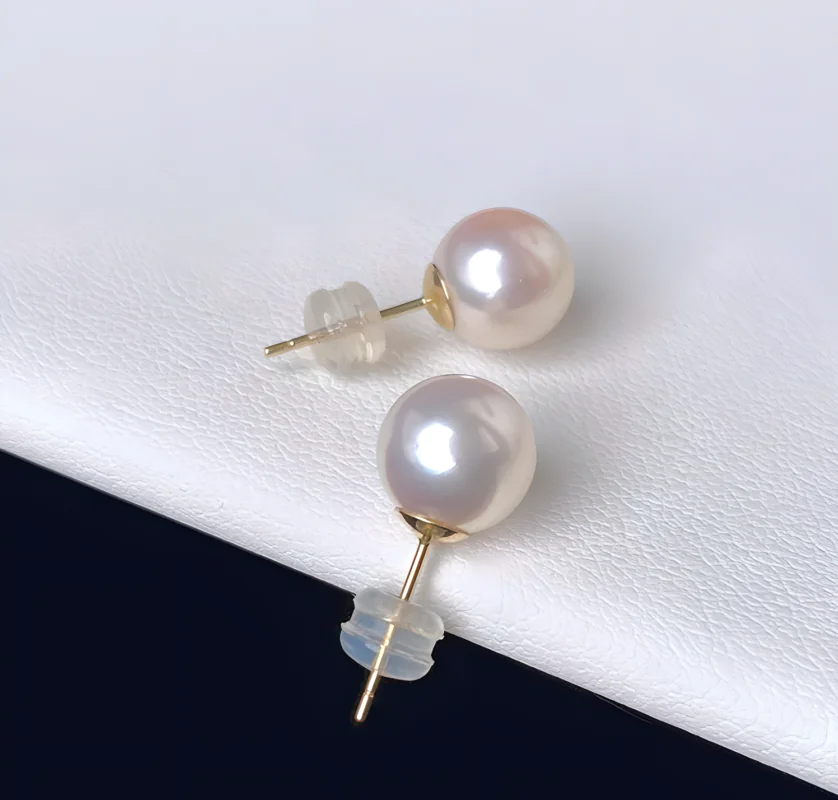
No. Most pearls do not automatically need an independent certificate or laboratory report. Everyday cultured-pearl jewelry can be perfectly genuine and accurately described without one. What matters is whether an important part of the price depends on a claim that needs independent verification.
A laboratory report becomes more useful when questions such as natural versus cultured origin, treatment status, unusual color, or another high-value identity claim materially affect what you are buying. For an ordinary pair of freshwater cultured pearl earrings, however, requiring a lab report for every pearl would often add cost without answering a question the buyer actually needs solved.
The better question is therefore not “Does this pearl have a certificate?” but “What claim do I need the document to verify?”
First: “Pearl Certificate” Can Mean Several Different Things
The word certificate is used loosely in the jewelry trade. Two documents with “certificate” printed at the top may have very different value.
| Document | Main purpose | What it may tell you |
|---|---|---|
| Seller certificate or product card | Records the seller's own description | Pearl type, size, grade, metal, care information, warranty or other seller claims |
| Independent gemological laboratory report | Documents laboratory findings | Depending on the report: identity, natural or cultured formation, environment, detectable treatments, color, size, shape and sometimes classification factors |
| Appraisal | Provides a valuation for a stated purpose | Description plus an appraiser's opinion of monetary value, often for insurance, estate or resale-related use |
This distinction matters because a seller's card is not automatically an independent laboratory finding, and a laboratory report is not automatically an appraisal. GIA, for example, explicitly calls its documents reports, not certificates, and does not assign an appraisal value.
If you want a deeper explanation of what different documents can and cannot establish, see our guide to pearl grading certificates and laboratory reports.
Most Everyday Cultured Pearls Do Not Require a Lab Report
A normal cultured-pearl purchase is not suspicious simply because no independent report is attached.
Freshwater cultured pearls, Akoya cultured pearls, Tahitian cultured pearls and South Sea cultured pearls are sold in enormous numbers and price ranges. In many ordinary transactions, the seller identifies the pearl type, size, color, shape, treatment information where relevant, and its own commercial grade without sending every pair, strand or loose pearl to an outside laboratory.
For a relatively straightforward purchase, the more useful checks are often:
- Is the pearl type stated clearly?
- Does the listing distinguish cultured pearls from imitation pearls?
- Are size, shape, color and surface shown realistically?
- Is the seller's grading system explained rather than presented as a mysterious universal standard?
- Are treatments or color alterations disclosed where they matter?
- Does the seller stand behind the description and provide normal purchase records?
Those questions help you judge the actual product. A piece of paper is useful only when it adds reliable information that was otherwise uncertain.
For the broader buying process, our pearl buying guide explains the quality factors that matter before you compare prices.
When Does a Pearl Report Become More Worthwhile?
The value of independent documentation rises when the claim is difficult to verify and financially important.
| Buying situation | Independent lab report? | Why |
|---|---|---|
| Everyday freshwater cultured pearl jewelry with clear seller disclosure | Usually optional | The cost and identity questions are often straightforward enough that a separate report adds limited practical value. |
| Typical Akoya, Tahitian or South Sea cultured pearl jewelry from a reliable seller | Optional, depending on value and buyer preference | A report can add confidence, but the absence of one does not make the pearls unreal. |
| Pearl sold as a valuable natural pearl | Often very worthwhile | Natural versus cultured formation can depend on internal growth structure that cannot be established reliably by appearance alone. |
| High-value claim involving unusual color or treatment status | Often worthwhile when the claim affects price | Some treatments cannot be confirmed confidently from a normal visual inspection. |
| Antique or estate pearls with uncertain identity | Useful when identity materially affects value or saleability | Age and family history do not by themselves prove that pearls are natural. |
| Insurance or formal valuation | Possibly useful, but not the same as an appraisal | A laboratory report can document gemological characteristics; a separate appraisal may still be needed for monetary value. |
GIA uses X-radiography together with visual observation and other analytical methods to separate natural from cultured pearls. That is exactly the kind of question where independent testing can provide information that an ordinary shopper, photograph, or surface inspection cannot.
This does not mean every expensive pearl automatically needs testing. It means the case for testing becomes stronger when the purchase price depends on a claim that is otherwise hard to verify.
A Certificate Does Not Automatically Mean the Pearl Is Better
Documentation and quality are related, but they are not the same thing.
A laboratory can describe or identify characteristics within the scope of its report. That does not automatically mean the pearl has exceptional luster, an attractive color, a fair retail price, or the right look for you. It also does not mean that two pearls with similar paperwork are equally beautiful.
Likewise, a seller's grade such as AAA, top grade, gem quality or another in-house label is only useful if you understand the criteria behind it. Pearl grading is not globally standardized into one universal commercial letter scale.
For that reason, buyers should still evaluate luster, surface, nacre quality, shape, color, size and matching rather than treating documentation as a substitute for looking at the pearls themselves. Our pearl grading guide explains those quality factors in more detail.
A Certificate Does Not Automatically Prove Every Seller Claim
A report is only as useful as its issuer, scope, conclusions and connection to the actual pearl.
Before relying on a document, check:
- Who issued it? An independent gemological laboratory and a seller's internal certificate are not the same thing.
- What was tested? Did the report address identity, natural versus cultured formation, treatment, classification, or something else?
- Which pearl does it describe? The measurements, image, quantity, report number and other identifying information should correspond to the item being sold.
- What does the report not say? Do not infer geographic origin, value, treatment status or quality if the document did not test or state it.
- Can the report be verified? Where the issuing laboratory offers report verification, use it.
This is especially important online, where a polished PDF can look impressive even when the document's actual scope is narrow.
Clear Disclosure Matters Even When There Is No Independent Report
The absence of a laboratory report does not remove the seller's responsibility to describe pearls accurately.
CIBJO's pearl standards emphasize correct terminology and disclosure for natural pearls, cultured pearls, imitations and relevant treatments. In practical terms, a buyer should be told what the product is and should not have to decode vague language such as “real pearl quality,” “natural-style pearl,” or “South Sea quality” when those phrases blur the pearl's actual identity.
Treatment disclosure also matters. A dyed cultured pearl is still a cultured pearl, but the altered color is a separate fact. If color treatment is important to your purchase, documentation should clarify that point rather than simply repeat that the pearl is “real.”
For more context, see our guide to pearl treatments.
Can You Replace a Certificate with At-Home Pearl Tests?
No—not when the question truly requires laboratory-level identification.
At-home observations can help you notice obvious imitation coatings, unusual drill holes, suspiciously uniform surfaces, or other warning signs. But they cannot reliably determine every natural-versus-cultured distinction or detect every treatment.
If your only question is whether an inexpensive item appears consistent with cultured pearls rather than a simple imitation, practical visual checks may be useful. If your question is whether a valuable pearl is genuinely natural, whether an unusual color is treated, or whether a major identity claim is correct, the limits of home testing become much more important.
Our real vs. imitation pearl guide explains what visual inspection can and cannot tell you.
So, Should You Refuse Pearls Without a Certificate?
No. Refusing every pearl without an independent report would reject many legitimate cultured-pearl products for the wrong reason.
A better buying rule is:
Match the level of documentation to the importance and difficulty of the claim.
If you are buying ordinary cultured-pearl jewelry with clear product information from a seller you trust, an independent laboratory report may add little. If you are paying a premium because a pearl is said to be natural, untreated, unusually rare, or otherwise special in a way that is difficult to verify visually, independent testing becomes much more valuable.
The goal is not to collect paper. The goal is to have enough reliable evidence for the decision you are making.
Frequently Asked Questions
Do real pearls always come with a certificate?
No. Genuine cultured pearls are commonly sold without an independent laboratory report. The absence of a certificate does not by itself mean the pearls are fake.
Does a pearl certificate prove the pearls are real?
Only if the document comes from a credible source and its stated scope actually includes pearl identification. A seller card that says “genuine pearls” is not equivalent to an independent laboratory identification report.
Do freshwater pearls need a certificate?
Usually not for an ordinary purchase. A report may be useful for a special or high-value question, but routine freshwater cultured-pearl jewelry does not require a lab report simply to be genuine.
Should a natural pearl have a laboratory report?
If a meaningful part of the price depends on the pearl being natural rather than cultured, independent laboratory identification is often a sensible safeguard because internal growth structure is central to that distinction.
Does a laboratory report tell me what the pearl is worth?
Not necessarily. A gemological report and an appraisal are different documents. GIA, for example, states that its reports do not provide an appraisal value.
Is a grading certificate the same as a laboratory report?
No. “Certificate” is a broad trade word. A seller's grading certificate may record an internal quality grade, while an independent laboratory report may document tested gemological characteristics. Always check who issued the document and what it actually covers.
References
- Gemological Institute of America (GIA), Pearl Reports & Services — report types and the information they may contain.
- Gemological Institute of America (GIA), How does GIA identify whether pearls are Natural or Cultured? — use of X-radiography and other analytical methods.
- Gemological Institute of America (GIA), Does GIA certify or appraise diamonds and other gemstones? — distinction between a laboratory report and an appraisal.
- CIBJO, The Pearl Book 2024 — terminology and disclosure standards for pearls, cultured pearls, imitations and treatments.