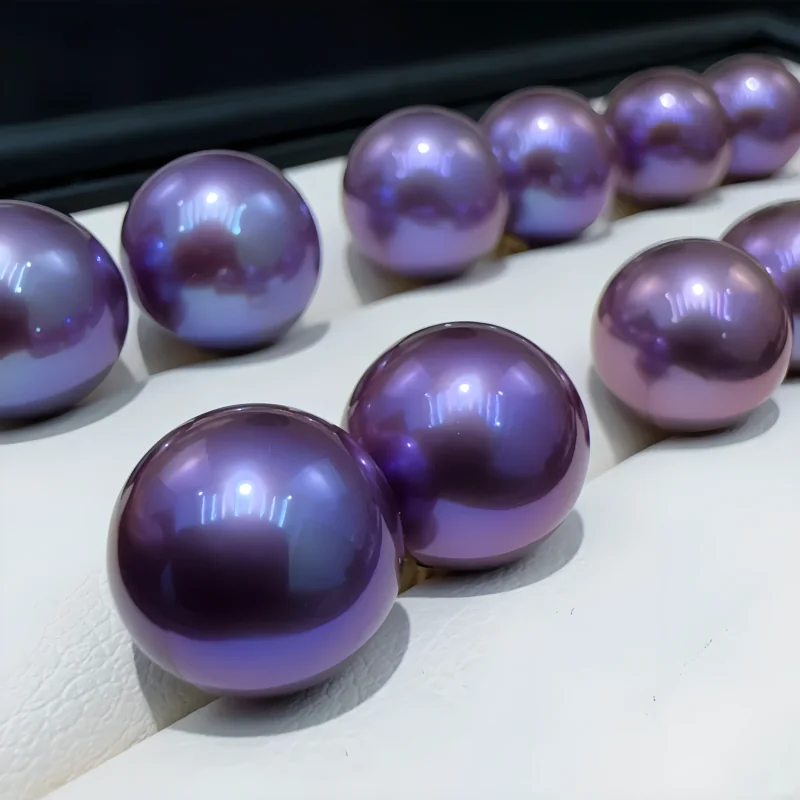
Buying pearls for the first time can feel harder than buying many other types of jewelry. You will see freshwater, Akoya, Tahitian, and South Sea pearls; sizes measured in millimeters; seller grades such as AA, AAA, or AAAA; different colors and shapes; and prices that can vary dramatically even when two pieces look similar in a product photo.
The easiest way to simplify the decision is to use the right order. First decide what kind of pearl jewelry you want and how you will wear it. Then set a realistic budget, choose a pearl type, judge quality, choose size, and only then compare grades, certificates, and seller claims.
For most beginners, one rule prevents many bad purchases: do not sacrifice luster just to get a larger, rounder, or more impressive-sounding pearl. A smaller pearl with lively reflections will usually look more attractive than a larger pearl that appears dull or chalky.
A quick pearl-buying framework for beginners
- Choose the jewelry first. Earrings, a necklace, a pendant, and a ring place different demands on size, matching, durability, and budget.
- Set your budget before chasing grades. Your budget determines which compromises are sensible.
- Choose the pearl type. Freshwater, Akoya, Tahitian, and South Sea pearls have different normal sizes, colors, luster styles, and price structures.
- Judge luster and surface quality. These affect how attractive the pearl looks at normal viewing distance.
- Choose size for visual effect, not status. One or two millimeters can noticeably change the look of a piece.
- Check shape, color, nacre, and matching. Their importance depends on the pearl type and jewelry design.
- Read the seller’s grading system. Do not assume that one company’s AAA equals another company’s AAA.
- Confirm what you are actually buying. Cultured or imitation? Natural color or treated? What metal is used? What are the return terms?
First, understand what “real pearls” means
A common beginner mistake is to treat “cultured” as another word for “fake.” It is not. Cultured pearls grow inside living mollusks with human intervention, while natural pearls form without human intervention. According to GIA, the vast majority of pearls in today’s pearl and jewelry market are cultured pearls.
Imitation pearls are different. They are manufactured products made to look like pearls rather than pearls produced by a mollusk. If your goal is ordinary fine pearl jewelry, you will usually be choosing among cultured freshwater, Akoya, Tahitian, or South Sea pearls, not rare natural pearls.
If authenticity is a concern, read our guide to telling real and imitation pearls apart. Visual inspection can reveal useful clues, but some identification questions require laboratory testing rather than a home test.
Step 1: Decide what you are buying before choosing a pearl type
The “best pearl” does not exist in isolation. A pearl that is excellent for small everyday studs may be a poor choice for a dramatic pendant, and a large pearl that looks elegant as a single focal point may be too expensive or visually heavy when repeated across a full strand.
For everyday earrings
Prioritize luster, a comfortable size, and good pair matching. Minor surface characteristics may be acceptable if they are not obvious from the front. Freshwater and Akoya pearls are both common starting points, with Akoya generally chosen for a more classic round, bright white look and freshwater pearls offering broader style and price flexibility.
For a first pearl necklace
Matching becomes much more important because dozens of pearls are seen together. A necklace also magnifies the cost of size and roundness: increasing every pearl in a full strand by even a small amount can change the total price far more than increasing the size of one pendant pearl.
For a pendant or ring
You can often choose a larger or more distinctive individual pearl because you are paying for one main focal pearl rather than an entire matched strand. Baroque shapes, unusual colors, Tahitian pearls, and larger freshwater or South Sea pearls can work especially well in this format.
Once you know the jewelry format, browse the pearl jewelry collection by piece type to see how pearl size and style translate into finished jewelry.
Step 2: Choose the right pearl type
The four major cultured pearl categories are not simply different price tiers. Each has its own visual character. GIA notes that pearl type affects typical size, color, luster, and value, so beginners should compare pearls within the right type before comparing them by grade or millimeter size alone.
| Pearl type | Typical look | Common size range | Budget position | Often a good choice for |
|---|---|---|---|---|
| Freshwater | White, cream, pink, peach, lavender; round to strongly baroque; luster from soft to very bright | Often about 6–12 mm, with smaller and much larger pearls also available | Usually the most accessible | First purchases, everyday jewelry, gifts, larger size on a controlled budget, creative shapes |
| Akoya | Classic white or cream, often round, known for crisp mirror-like luster | Commonly about 6–9 mm | Usually above comparable freshwater jewelry | Classic studs and strands, formal or timeless white-pearl styling |
| Tahitian | Naturally dark gray, green, silver, brown, and multicolored overtones | Commonly about 8–14 mm | Mid-to-high | Dark statement pearls, modern jewelry, distinctive color |
| South Sea | White, silver, champagne, or golden; usually large with a softer satiny glow | Often about 9–16 mm, with a wider range possible | Usually the highest of the four major types | Large focal pearls, luxury pieces, milestone gifts, high-end strands |
These are practical ranges rather than hard boundaries. Cultured pearls can occur outside the size and color ranges most often associated with their type.
Which pearl type is easiest for a first-time buyer?
Freshwater pearls are often the easiest entry point because they offer a wide choice of sizes, shapes, colors, and price levels. They let you spend more of your budget on visible quality rather than rarity.
If your idea of pearls is a bright, round, traditional white strand, Akoya may be the more satisfying first purchase. If you specifically want naturally dark color, start with Tahitian pearls rather than buying a white pearl simply because it is cheaper. If your priority is large size and a luxurious white or golden appearance, South Sea pearls are the category to compare.
Step 3: Learn the quality factors, but do not treat them as a checklist of equal importance
GIA uses seven pearl value factors: size, shape, color, luster, surface, nacre, and matching. This is a useful framework because it separates the characteristics that beginners often mix together.
In practice, however, you do not need to chase the maximum score in every category. A smart purchase is usually a deliberate balance.
1. Luster: usually protect this first
Luster describes the quality of light reflected from the pearl. On a highly lustrous pearl, reflections appear bright and relatively sharp. On a dull pearl, they look weak, hazy, or chalky.
For a beginner, luster is one of the safest places to spend money because it affects the pearl’s appearance every time you wear it. A lively 7 mm pearl can look more impressive than a dull 9 mm pearl.
Do not expect every pearl type to reflect light in exactly the same way. Fine Akoya pearls are known for crisp, mirror-like reflections, while South Sea pearls can have a broader, softer, satiny glow. Compare luster within the pearl type you are considering.
2. Surface: look at severity and location, not mathematical perfection
Pearls are organic gems, so small surface characteristics are common. A tiny pinpoint near a drill hole is very different from a deep pit, crack, peeling area, or large mark on the visible face of an earring.
Beginners often overspend trying to eliminate every tiny natural mark. If a minor characteristic is difficult to notice at normal viewing distance, accepting it may allow you to keep better luster, a preferred size, or a more attractive color without increasing the budget.
3. Shape: roundness costs money, but non-round does not mean low quality
Perfectly round pearls are relatively difficult to produce and usually command a premium when other factors are comparable. But roundness is not the same thing as beauty. Drop, oval, button, circled, and baroque pearls can be intentionally chosen for design and individuality.
If you want a classic strand, paying for better roundness may make sense. If you want character or a more modern look, you may get more visual interest by choosing an attractive non-round shape instead of paying a large premium for symmetry. Our pearl shape guide compares these categories in more detail.
4. Color: choose what looks good on you before chasing rarity
Color includes the main bodycolor and, in many pearls, secondary overtones. Some colors are naturally associated with particular pearl types, while other appearances may result from treatment.
Do not assume that whiter is always better, darker is always rarer, or one overtone is universally the “best.” Color preference is strongly personal. It should also be judged in the context of the pearl type, your skin tone, the metal color, and the design.
5. Nacre: especially important in bead-cultured pearls
Nacre quality influences appearance and durability. The way nacre is evaluated depends on the pearl type and cultivation structure, so simple rules such as “thicker always means better” can be misleading when comparing unrelated pearl categories.
For ordinary retail shopping, you often cannot measure nacre yourself. Instead, look for good luster, clear product descriptions, and a seller who can explain the pearl type and quality. For higher-value purchases where documentation matters, a laboratory report may provide additional information.
6. Matching: essential for pairs and strands
A single pendant pearl does not need to match anything. Earrings do. A strand requires matching across many pearls in size, shape, color, luster, and overall appearance.
This is one reason a well-matched necklace can cost substantially more than the apparent value of the individual pearls suggests: the sorting work and rarity of a harmonious group matter.
For a deeper explanation of seller grades and how MJ Pearls sorts quality, see our pearl grading guide.
Step 4: Choose pearl size by visual effect, not by the idea that “bigger is better”
Pearls are usually measured in millimeters. That sounds simple, but buyers regularly underestimate the visual difference between sizes. A 1–2 mm increase is noticeable because a pearl grows in three dimensions, and on a strand the larger diameter repeats all the way around the neck.
| Size | General visual effect | Beginner interpretation |
|---|---|---|
| 5–6 mm | Delicate and discreet | Good for minimal jewelry, smaller studs, and light layering |
| 6–7 mm | Subtle but clearly visible | Easy everyday scale |
| 7–8 mm | Classic middle ground | A versatile starting point for many earrings and strands |
| 8–9 mm | More presence | Still wearable daily for many people, but visibly stronger |
| 9–10 mm | Noticeably bold | More of a focal feature than a quiet accent |
| 10 mm+ | Statement scale | Common territory for larger freshwater, Tahitian, and South Sea designs |
These sizes describe visual effect, not quality. A fine 6 mm pearl can be better quality and more expensive than a poor 10 mm pearl. Pearl type matters too: 9 mm is large for a typical Akoya pearl but relatively modest for many South Sea pearls.
If you are unsure how millimeters translate to earrings, strands, pendants, bracelets, and rings, use the complete pearl size guide before ordering.
Step 5: Use your budget to decide what to compromise on
A budget should not answer the question “What grade can I afford?” It should answer a better question: which qualities do I want to protect, and which premiums am I willing to give up?
If your budget is limited, a sensible order is often:
- Protect luster and basic structural condition.
- Choose the pearl type that gives you the look you actually want.
- Accept some minor surface characteristics if they are not distracting.
- Choose a slightly smaller size before accepting very weak luster.
- Consider near-round or attractive non-round pearls instead of paying heavily for perfect roundness.
- Choose a simpler setting or metal only if it still suits how the jewelry will be worn.
This is why a high-quality freshwater pearl can be a smarter purchase than a weak Akoya pearl bought only for the Akoya name, and why a smaller, bright Akoya pearl can be a better buy than a larger dull one.
A practical budget ladder
Entry budget: start with freshwater pearls, simpler jewelry, smaller sizes, or intentionally non-round shapes. The goal is to keep visible quality while avoiding premiums for rarity.
Moderate budget: you can compare higher-grade freshwater pearls with classic Akoya pieces, better matching, more refined settings, and larger focal pearls.
Higher budget: premium Akoya, fine Tahitian pearls, larger high-luster freshwater pearls, gold settings, and more demanding matching become realistic options.
Luxury budget: high-quality South Sea pearls, exceptional Tahitian strands, very large or rare pearls, and top combinations of size, luster, surface cleanliness, shape, and matching begin to dominate the price.
Actual prices vary widely with pearl type, jewelry design, metal, size, and quality. For a more price-focused framework, see what changes at different pearl budgets.
Step 6: Be careful with AAA, AAAA, and other seller grades
Grade labels are useful only when the seller explains what they mean. Pearl sellers may use A, AA, AAA, AAAA, A–D, descriptive grades, or their own internal sorting system. You should not assume that an AAA strand from one seller is automatically equivalent to an AAA strand from another.
Instead of asking only, “Is this AAA?”, ask:
- How is luster described?
- How much surface variation is allowed?
- Does the grade include roundness or shape?
- Is size separate from grade?
- How is matching evaluated for pairs and strands?
- Is the grade a seller classification or a laboratory report?
At MJ Pearls, for example, A/AA/AAA/AAAA are our own commercial sorting ranges rather than laboratory grades. That distinction matters because a seller grade and an independent laboratory report serve different purposes.
Step 7: Know when a certificate matters
You do not need a laboratory certificate for every ordinary pair of cultured pearl earrings. But documentation becomes more useful when the transaction depends on a claim that cannot be confirmed from appearance alone.
A laboratory report may be especially useful when:
- a pearl is sold as natural rather than cultured;
- natural versus treated color materially affects the value;
- the item is unusually valuable;
- rarity, identity, or origin-related claims are important to the purchase;
- you need independent documentation for insurance, resale, or collection purposes.
For a normal cultured pearl purchase, clear seller disclosure, accurate product information, useful photographs, and a sensible return policy may be more relevant than paying for a certificate that adds little to the decision.
Step 8: Ask about treatments and color
Pearls can be processed or treated in different ways, and not every treatment has the same importance. Color treatment is one area beginners should understand because a treated color and a naturally occurring color may have different market meaning.
In the United States, the Federal Trade Commission’s Jewelry Guides address disclosure of cultured versus imitation pearls and certain pearl treatments. As a buyer, the practical rule is simple: if color, treatment status, or “natural color” is part of the value claim, ask for a clear answer before purchasing.
Do not assume that a dark pearl is automatically a Tahitian pearl, or that every unusual color is natural. Pearl type, color, and treatment status are separate questions.
Common pearl-buying pitfalls beginners should avoid
Pitfall 1: Thinking cultured pearls are fake
Cultured pearls are genuine pearls grown in mollusks with human intervention. Imitation pearls are manufactured substitutes. Confusing these categories can make you reject normal fine pearl jewelry or overpay for vague “natural” wording.
Pitfall 2: Buying the biggest pearl your budget allows
Size is only one value factor. If moving up in size forces you to accept dull luster, poor surface condition, or weak matching, the larger pearl may look worse.
Pitfall 3: Treating AAA or AAAA as a universal language
Always read the seller’s criteria. Grade letters without definitions are weak buying information.
Pitfall 4: Assuming every surface mark means poor quality
Small natural characteristics are common. Judge visibility, severity, location, and whether the issue is cosmetic or structural.
Pitfall 5: Paying for perfect roundness when you do not actually prefer it
Roundness can command a premium. If you enjoy oval, drop, circled, or baroque pearls, choosing those shapes deliberately can give you more character and potentially better visible quality for the same budget.
Pitfall 6: Comparing millimeters without comparing pearl type
A 9 mm Akoya and a 9 mm South Sea pearl do not occupy the same rarity or visual context. Size only makes sense inside the pearl category.
Pitfall 7: Choosing from heavily edited photographs alone
Strong lighting, white balance, sharpening, and close-up photography can change how luster and color appear. Look for consistent photography, video when available, and clear descriptions. For expensive purchases, ask for additional images if the exact appearance matters.
Pitfall 8: Ignoring the setting, clasp, and construction
The pearl is only part of the jewelry. Check the metal, earring backs, clasp, chain, knotting, drill quality, and overall construction. A fine pearl in an unsuitable or fragile setting may not be the best practical purchase.
Pitfall 9: Ignoring treatment or color disclosure
If the value depends on natural color, ask directly whether the color is natural or treated. Avoid relying on poetic color names alone.
Pitfall 10: Buying without checking the return policy
Pearls are highly visual. Color, overtone, and size can feel different in person than on a screen. A reasonable return or exchange policy is especially valuable for a first purchase.
A simple decision tree: which pearls should a beginner buy?
You want classic white pearl studs: compare Akoya and high-quality freshwater pearls. Choose Akoya if crisp roundness and mirror-like luster are the priority; choose freshwater if value and flexibility matter more.
You want an everyday first necklace: start with freshwater or Akoya. Put luster and matching ahead of extreme size.
You want larger pearls without jumping directly to South Sea prices: compare larger bead-nucleated freshwater pearls, including Edison-type pearls, with other large pearl categories.
You want naturally dark pearls: start with Tahitian pearls rather than shopping by the word “black” alone. Tahitian colors can include gray, green, silver, brown, and colorful overtones rather than literal solid black.
You want large white or golden luxury pearls: compare South Sea pearls, then decide how much you are willing to pay for roundness, surface cleanliness, and larger sizes.
You want unusual design rather than classic uniformity: consider baroque, drop, oval, circled, keshi, or other intentionally irregular pearls. Do not pay a roundness premium for a look you do not want.
Your final pre-purchase checklist
Before paying, make sure you can answer these questions:
- What pearl type is this?
- Is it cultured, natural, or imitation?
- What size is it in millimeters?
- How would I describe its luster?
- Are the surface marks minor, visible, or structural?
- Is the shape what I actually want?
- Is the color natural or treated when that distinction matters?
- If there is a grade, how does the seller define it?
- For earrings or strands, how well are the pearls matched?
- What metal and construction are used?
- Do I need independent documentation for this purchase?
- What is the return or exchange policy?
If you can answer those questions, you are no longer buying pearls by a single label, size, or photograph. You are comparing the factors that actually shape appearance, usefulness, rarity, and price.
The best first pearl purchase is not necessarily the most expensive one
A good beginner purchase is one where the trade-offs make sense. You know why you chose that pearl type, why the size works for the jewelry, which quality factors you protected, and where you deliberately saved money.
If your budget is limited, protect luster before chasing size or perfect roundness. If you love classic white pearls, compare Akoya and freshwater rather than assuming one category is automatically superior. If you want dark color, look at Tahitian pearls. If you want large white or golden pearls and accept a higher budget, explore South Sea pearls.
Most importantly, compare pearls in context. Type first, visible quality second, size and rarity after that. That approach is far more reliable than buying the largest pearl, the highest grade label, or the most expensive option you can find.
FAQ
Are cultured pearls real pearls?
Yes. Cultured pearls are genuine pearls grown inside mollusks with human intervention. Natural pearls form without human intervention, while imitation pearls are manufactured substitutes.
What is the best pearl type for a beginner?
There is no universal best type. Freshwater pearls are often the easiest entry point because of their variety and price flexibility. Akoya pearls are a strong choice for classic white round jewelry, Tahitian pearls for naturally dark colors, and South Sea pearls for large luxury pieces.
What pearl size is best for a first purchase?
For many everyday earrings and classic jewelry, 7–8 mm is a versatile middle ground. Smaller sizes look more delicate and larger sizes make a stronger statement. The right size also depends on pearl type and jewelry format.
Does AAA mean a pearl is high quality?
It can indicate a high seller grade, but AAA is only meaningful when you know how that seller defines it. Do not assume that AAA from two different companies describes identical quality.
Should I buy the largest pearls I can afford?
Usually not if larger size forces you to sacrifice luster, surface condition, or matching. A smaller, brighter pearl can look more attractive than a larger dull pearl.
Do I need a certificate when buying pearls?
Not for every ordinary cultured pearl purchase. A laboratory report is more useful when natural versus cultured origin, treatment status, rarity, or a high-value claim materially affects the transaction.