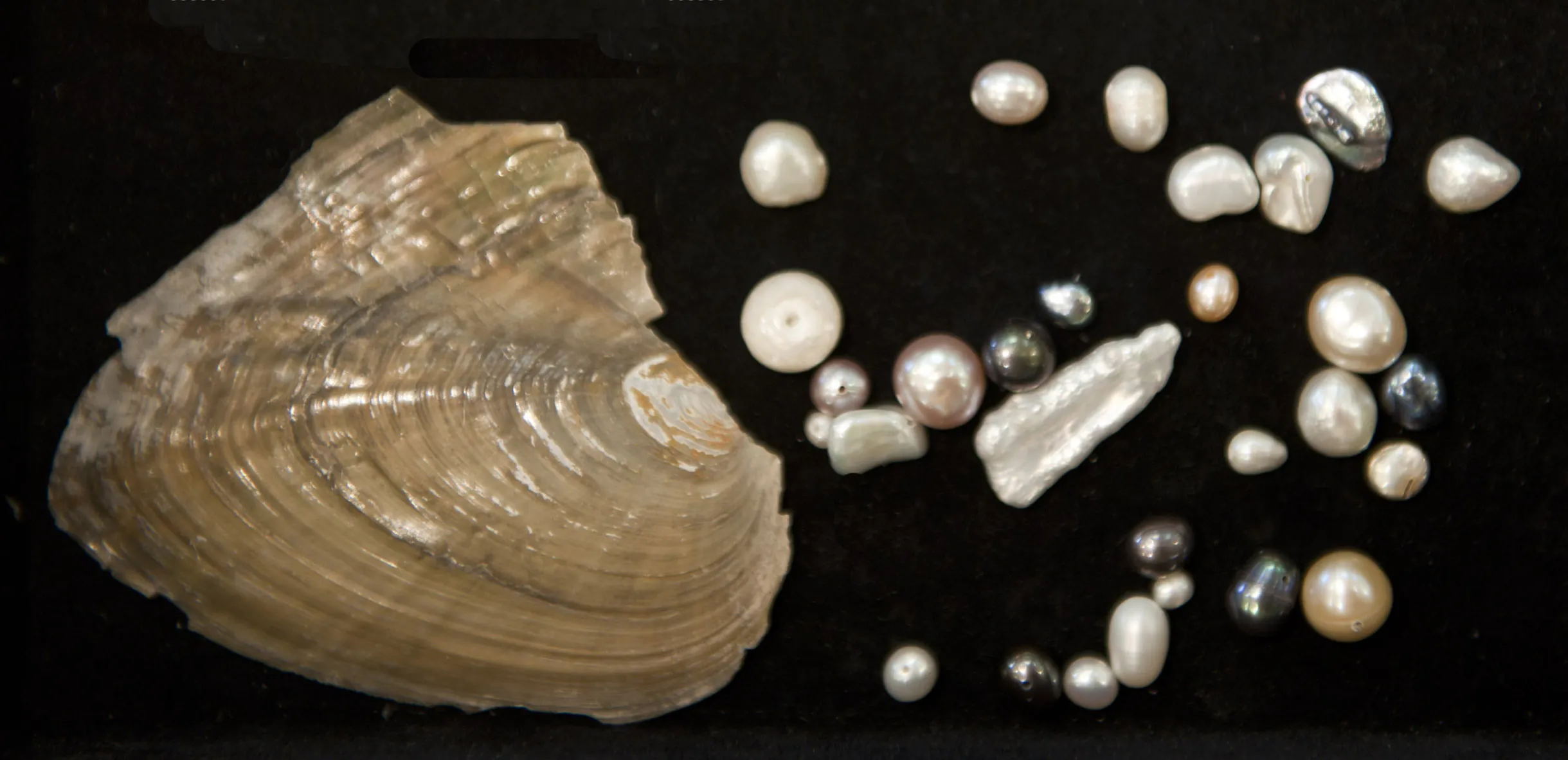
Yes. Abalone pearls can be cultured. In fact, cultured abalone blister pearls have been produced commercially for decades, and more recent work has shown that abalone can also produce whole, loose bead-cultured pearls. Experimental methods have even produced near-round and almost spherical examples.
The qualification is important: abalone pearl culture is technically difficult, biologically risky, and far less standardized than mainstream pearl farming. That is why older sources sometimes say abalone pearls cannot be cultured, or imply that only mabé-style products are possible. Those statements reflected the practical limits of the time, not an absolute biological rule.
The easiest way to understand the subject is to separate three different things that are often grouped together under “cultured abalone pearl”: shell-attached cultured blisters, assembled cultured blister pearls (mabé), and whole or free cultured pearls.
Quick Answer: What Kinds of Abalone Pearls Can Be Cultured?
| Product | How it grows | Commercial status |
|---|---|---|
| Cultured shell blister | A nucleus is fixed to the inner shell and covered with nacre while remaining attached. | Commercially demonstrated for decades. |
| Assembled cultured blister pearl (mabé) | The cultured blister is cut from the shell and assembled with backing/filling to make a jewelry component. | Established niche product. |
| Whole / free bead-cultured abalone pearl | A bead nucleus is placed in living tissue so nacre can form around a loose internal nucleus. | Successfully demonstrated, but still specialized and limited. |
| Near-round or spherical whole cultured pearl | Specialized procedures use controlled pearl-sac formation and repeated nucleus replacement. | Documented experimentally; not yet a mainstream mass-market category. |
So the modern answer is not simply “abalone pearls can be cultured.” It is: some forms are already proven commercial products, while whole spherical production is still a developing specialty.
Why Did People Once Say Abalone Pearls Could Not Be Cultured?
Because whole-pearl culture in abalone is genuinely difficult.
Abalone are marine gastropods in the genus Haliotis, not the bivalve pearl oysters used for familiar Akoya, Tahitian, and South Sea cultured pearls. Their anatomy, movement, wound response, and handling tolerance create a very different operating problem for pearl farmers.
A major obstacle is injury. GIA’s work on abalone culture has long noted that significant cuts can cause serious bleeding and that surgical manipulation can threaten the animal’s survival. Later reporting on Chilean bead-cultured abalone pearls likewise describes poor tolerance for handling, wounds, and infection as major reasons earlier whole-pearl attempts had low success rates.
There is also a mechanical problem. Abalone have a powerful muscular foot and spend their lives clamped to hard surfaces and moving over rocky habitat. A loose internal bead can be rejected, displaced, or subjected to pressure that interferes with even nacre deposition. In early whole-pearl trials, researchers often obtained baroque forms, incomplete coverage, or pearls whose quality was not commercially attractive.
In other words, the old statement “abalone pearls cannot be cultured” usually meant something closer to “we cannot yet culture whole abalone pearls reliably enough to make them a normal commercial product.”
Cultured Abalone Blister Pearls Were the First Practical Success
Blister culture is easier because the nucleus does not have to remain loose inside delicate living tissue. Instead, a shaped nucleus is attached to the inner shell. The abalone deposits nacre over the object, creating a dome that remains integrated with the shell.
This approach has a long history. GIA reported that experimental abalone pearl culture goes back to the late nineteenth century, and documented modern commercial production in New Zealand using Haliotis iris, the pāua abalone famous for vivid blue, green, violet, and other iridescent colors.
The first commercial harvest described in GIA’s 1998 study produced thousands of jewelry-quality cultured blisters. That is important because it proves that abalone pearl culture is not merely a recent laboratory curiosity. A commercially useful form of it has existed for decades.
After harvest, a blister can be cut from the shell and assembled into a finished component. Such assembled cultured blister pearls are commonly called mabé. Because “mabé” refers to an assembled blister-type product rather than a specific mollusk species, abalone can produce its own intensely iridescent version.
Whole Cultured Abalone Pearls Are Harder—but They Are Real
The harder goal is a pearl that is not attached to the shell: a whole pearl that can be removed as a separate object.
That requires a culture method capable of creating or using a pearl-forming sac while keeping the abalone alive and healthy enough to deposit nacre around the nucleus. This is where the historical difficulty becomes much greater.
GIA’s 2023 Gems & Gemology report documented a significant example from Chile. After years of experimentation, researchers at the University of Antofagasta developed a patented method for producing free bead-cultured pearls in red abalone, Haliotis rufescens. The reported pilot crop used conventional freshwater-shell bead nuclei placed into grafting channels in the visceral mass.
The cultivation stage for those pearls took place during the final portion of a much longer abalone farming cycle. That detail matters: abalone pearl production can be integrated with aquaculture, but the time, animal husbandry, survival, and nucleation challenges are very different from a standardized pearl-oyster operation.
The result also changes the vocabulary buyers should use. A loose abalone pearl is not automatically natural simply because natural abalone pearls are famous and rare. Whole cultured abalone pearls now exist and can require gemological testing to separate them confidently from natural pearls.
For a wider overview of the pearl type itself, including natural colors, rarity, origins, and typical forms, see our guide to abalone pearls.
Can Cultured Abalone Pearls Be Round?
Yes. Roundness is possible, although it has historically been one of the hardest goals.
Natural abalone pearls are famous for elongated, horn-like, tooth-like, and strongly baroque shapes. Early whole cultured examples were also often irregular because the nucleus could move, be squeezed, or receive uneven nacre coverage. That history encouraged the idea that abalone simply do not make round pearls.
More recent work shows that this is too absolute. CIBJO’s 2025 Pearl Special Report described a cultivator in Nagasaki who developed a multi-stage technique aimed at producing almost spherical whole cultured abalone pearls. The method first creates a pearl sac using a small bead. After a culture period, the first pearl is removed without killing the animal and a larger bead is inserted into the established sac. Repeating the process can produce larger and more spherical pearls.
CIBJO described the resulting pearls as near-round and reported that the technique was still experimental. That is the right context: round cultured abalone pearls are technically possible, but their existence does not mean that round abalone pearls have become a standardized high-volume product like Akoya.
If you are interested in why natural abalone pearls are usually so sculptural, our article on why abalone pearls have unusual shapes explains the role of anatomy, growth location, shell contact, and nucleation.
Why Is Abalone Pearl Culture Still So Limited?
The challenge is not one single obstacle. It is the combination of biology, economics, and production consistency.
| Challenge | Why it matters |
|---|---|
| Wound sensitivity | Invasive nucleation can cause serious bleeding, stress, infection, or mortality. |
| Powerful musculature | Internal beads can be moved, rejected, or pressed in ways that reduce shape and nacre quality. |
| Handling stress | Successful production depends on carefully controlled procedures and healthy animals. |
| Long farming cycle | The pearl-growth stage sits inside an already substantial abalone aquaculture timeline. |
| Low standardization | Methods are specialized, patented, experimental, or farm-specific rather than universally adopted. |
| Small market | The niche nature of the product makes it harder to justify large-scale investment compared with established pearl categories. |
This helps explain an apparent contradiction: the world can have documented cultured abalone pearls without having a large, standardized global abalone-pearl industry.
For buyers, the distinction is useful. “Cultured” tells you how human intervention began or controlled pearl formation; it does not automatically tell you whether production is easy, common, cheap, or uniform. Our pearl classification guide explains how natural, cultured, composite cultured, and imitation categories differ.
Are Cultured Abalone Pearls the Same as Natural Abalone Pearls?
No. Both are genuine pearl products produced by abalone, but their formation history is different.
A natural abalone pearl forms without intentional human initiation of pearl formation. A cultured abalone pearl forms after deliberate human intervention, such as attaching a nucleus to the shell or inserting a bead into tissue as part of a controlled cultivation method.
This is the same conceptual distinction used elsewhere in pearl gemology: cultured does not mean artificial. The mollusk still deposits the biological pearl material. The difference is whether people intentionally initiated or managed the formation process.
With abalone, however, classification can be visually confusing because both natural and cultured examples may be irregular and highly iridescent. A shell-attached blister, an assembled mabé, a loose bead-cultured pearl, and a natural whole pearl are not interchangeable terms.
For important purchases, especially when natural origin materially affects value, appearance alone should not be treated as proof. X-radiography and other gemological methods can reveal internal structure and help distinguish natural from cultured growth.
Does Culturing Make Abalone Pearls Less Rare?
It makes some abalone pearl products more producible, but it does not turn the category into a mass-market equivalent of conventional cultured pearls.
Cultured blister production can create jewelry-quality material more predictably than waiting for a natural loose pearl to appear. That is precisely why blister culture became commercially useful. Whole cultured pearls, however, remain much more demanding, and recent near-round methods are still described as experimental rather than routine large-scale production.
It is therefore better to think of modern culturing as expanding the forms of abalone pearl available, not eliminating rarity from the category. Natural fine abalone pearls remain uncommon, while cultured whole examples represent a technically specialized product with their own scarcity and production constraints.
What Should a Buyer Ask When a Pearl Is Sold as “Abalone”?
The word abalone identifies the mollusk source, but it does not fully describe the product. Ask what form you are actually buying.
- Is it a natural whole pearl?
- Is it a whole cultured pearl?
- Is it a cultured shell blister still attached to shell?
- Is it an assembled cultured blister pearl (mabé)?
- Is it simply abalone shell or mother-of-pearl fashioned into jewelry?
These are materially different products. A photograph can show color and shape, but it may not prove formation method or internal structure.
If your goal is broader education rather than one purchase, the Pearl Academy directory provides a structured path through pearl types, formation, identification, and classification.
FAQ
Can abalone pearls really be cultured?
Yes. Cultured abalone blister pearls have been produced commercially, and whole bead-cultured abalone pearls have also been successfully documented. Near-round whole pearls have been produced with newer experimental techniques.
Why are cultured abalone pearls uncommon?
Abalone are difficult to nucleate safely. Wounding, bleeding, infection, handling stress, bead rejection, and uneven nacre coverage can all reduce survival or pearl quality. That makes whole-pearl production much harder to standardize.
Are abalone mabé pearls cultured pearls?
Yes. An abalone mabé is normally an assembled cultured blister pearl. A nucleus is first attached to the inner shell and covered with nacre; the blister is later cut out and assembled into a finished jewelry component.
Can abalone produce a whole loose cultured pearl?
Yes. GIA documented bead-cultured whole abalone pearls from Chile in 2023, and other experimental programs have pursued free whole pearls for decades.
Can a cultured abalone pearl be round?
Yes. CIBJO reported in 2025 on a Japanese method that produced near-round to almost spherical cultured abalone pearls by creating a pearl sac and repeatedly replacing smaller beads with larger nuclei. The technique was still described as experimental.
Does “cultured abalone pearl” mean imitation?
No. A cultured abalone pearl is a genuine pearl product formed by an abalone after deliberate human intervention. An imitation is a manufactured look-alike that was not biologically formed as a pearl.
Final Takeaway
Abalone pearls can be cultured, but not with the ease or consistency associated with mainstream pearl farming. Cultured shell blisters and mabé-style products are established realities, while whole bead-cultured abalone pearls have moved from difficult experiments to documented successes. Recent techniques have even shown that near-round whole pearls are possible.
The most accurate modern answer is therefore neither “no” nor an unqualified “yes.” It is: abalone pearl culture works, but the method matters. Shell-attached blisters are comparatively practical; whole pearls are much harder; and highly spherical whole pearls remain an emerging specialty rather than a standardized global product.
References
- GIA Gems & Gemology — Cultured Abalone Blister Pearls from New Zealand
- GIA Gems & Gemology, Spring 2023 — Bead-Cultured Abalone Pearls from Chile
- CIBJO — Pearl Special Report 2025: Whole and Spherical Cultured Pearls from the Abalone
- GIA Gems & Gemology — Three Unique Large Natural Pearls from Haliotis (Abalone) Species
- GIA Gems & Gemology — Possible Natural Abalone Shell Blister