No. Pearls are not inherently too formal. A pearl can be part of a wedding look, but it can just as easily sit with a T-shirt, knit sweater, open shirt, denim jacket, or simple everyday dress. What changes the impression is not the pearl alone. It is the combination of the pearl, the jewelry design, and the clothes around it.
If your pearls feel “special occasion only,” the useful question is not whether pearls are formal jewelry. Ask instead: which part of this combination is creating the formal feeling? A perfectly matched strand, matching earrings, polished tailoring, and dress shoes all point in the same direction. Change one or two of those signals and the same pearls can feel much more relaxed.
The easiest way to think about it is this: pearls do not come with a fixed dress code. Their formality is adjustable.
Why Do Pearls Have a Formal Reputation?
The strongest mental image of pearl jewelry is often a very specific one: round white pearls, evenly matched, arranged in a symmetrical strand and worn with polished clothing. Add matching pearl studs or a bracelet and the effect becomes even more coordinated.
That combination can look formal because nearly every visual signal agrees with the same message: neat, balanced, classic, and intentional. But it is only one way to wear pearls.
From a gemological point of view, “formal” is not a pearl quality category. The Gemological Institute of America evaluates factors such as size, shape, color, luster, surface quality, nacre quality, and matching. Formality is a styling impression created after those pearls are turned into jewelry and placed in an outfit.
This distinction matters because it means you do not need to avoid high-quality, round, lustrous pearls just because you want an everyday look. You can keep the pearls and change the context.
The Three Layers That Decide How Formal Pearls Look
Instead of labeling one pearl type “formal” and another “casual,” judge the complete look in three layers.
1. The pearl itself
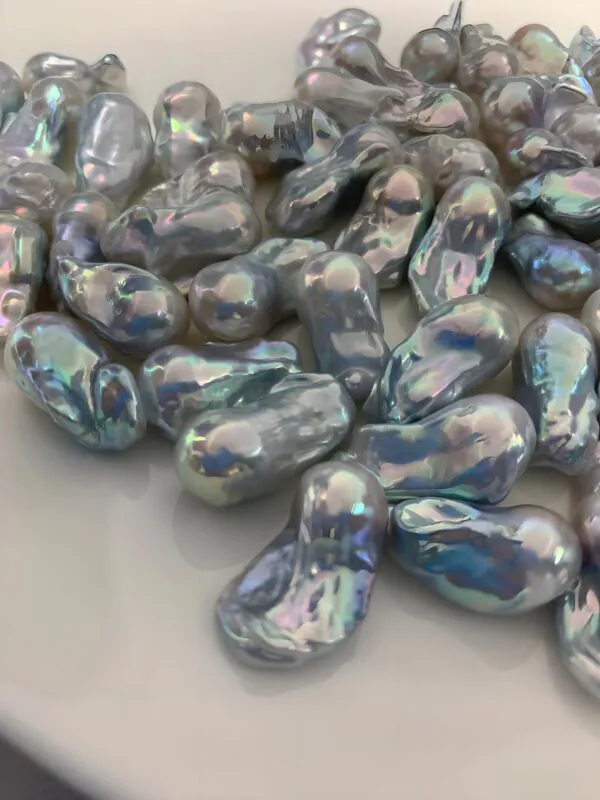
Shape, size, color, and uniformity influence the starting impression. A highly matched strand of round white pearls tends to look more classic. Irregular baroque pearls, mixed colors, or unusual silhouettes often feel less uniform and therefore less ceremonial.
But shape is not a dress code. A small baroque pearl can look delicate and refined; a very large baroque drop can become a dramatic statement. Likewise, a round pearl can look traditional in a strand or very minimal as a single pendant.
If you want to compare how round, button, drop, oval, and baroque shapes change the character of jewelry, see our pearl shape guide.
2. The jewelry design
This layer often matters more than the pearl type. Consider the difference between:
- a single pearl on a fine chain;
- a pair of simple pearl studs;
- a full matched strand;
- multiple strands;
- a pearl-and-metal chain design;
- large drops with diamonds or other embellishment;
- a coordinated necklace, earrings, and bracelet set.
All of these can contain beautiful pearls, but they communicate different levels of polish and occasion.
3. The outfit and occasion
The same necklace changes character when everything around it changes. A white pearl strand with a black evening dress reads differently from the same strand over a gray crew-neck sweater. Pearl studs with a tailored dress may look polished; the same studs with a sweatshirt and jeans may simply look like everyday jewelry.
This is why judging pearls in the jewelry box can be misleading. Try them with the clothes you actually wear.
A Simple Pearl Formality Ladder
You do not need a rigid list of “correct” occasions. It is more useful to think of pearl styling as a sliding scale.
| Desired feel | Pearl approach | Easy outfit context |
|---|---|---|
| Relaxed everyday | Studs, one pendant, small baroque piece, or one simple strand | T-shirt, denim, knitwear, relaxed shirt, sneakers |
| Smart casual | Studs, short drops, pendant, fine strand, pearl-and-metal design | Cardigan, blouse, blazer with jeans, simple dress |
| Polished | Matched strand, more noticeable earrings, larger focal pearl | Tailoring, dinner outfit, refined day dress |
| Formal or ceremonial | Highly matched strand, larger pearls, multiple strands, coordinated pearl pieces | Eveningwear, wedding attire, formal events |
These are not rules. They are a way to predict the direction of the finished look. A confident dresser can deliberately break every line in the table. The important point is that the pearl is only one part of the equation.
How to Make Pearls Feel Less Formal Without Replacing Them
If you already own pearls that feel too dressy, start with the piece you have. You may not need to buy a “more casual” pearl at all.
If you own a classic pearl strand
Change the clothing texture first. Wear the strand with cotton, denim, knitwear, linen, or a simple crew neck rather than building a completely polished outfit around it. You can also wear the necklace without matching pearl earrings or mix it with one plain metal chain.
If you are comparing different necklace proportions, the pearl size guide explains how diameter changes visual presence. A smaller strand is not automatically more casual, but reducing scale can make a necklace easier to integrate into everyday clothing.
If you own pearl studs
You may not need to do anything. Pearl studs are visually compact, and their formality mostly comes from the rest of the outfit. Wear them with your normal clothes rather than treating them as event jewelry.
If you own pearl drops
Let the earrings be the polished element and keep the rest simpler. A plain knit, open shirt, or minimal neckline gives a drop earring room to look intentional without making the whole outfit formal.
If you own baroque pearls
Use their irregularity rather than trying to make them look perfectly coordinated. Baroque shapes naturally introduce variation, but remember that a very large baroque pearl can still be visually dramatic. Less traditional does not always mean less noticeable.
Do You Need to Avoid Matching Pearl Sets?
No. Matching sets are not outdated, wrong, or reserved for formal events. They simply make the pearl theme more obvious.
If you want a highly coordinated look, wear the set. If you want the pearls to blend into everyday clothing, separate the pieces. Wear the necklace today and the earrings tomorrow. This is one of the simplest ways to lower the sense of ceremony without changing the jewelry itself.
The same principle applies when browsing new jewelry. You do not need to build a complete pearl wardrobe at once. Start with the format you are most likely to wear—perhaps pearl earrings, a pendant, or a necklace—and let it work with the jewelry you already own.
Can You Wear Pearls With Very Casual Clothes?
Yes. In fact, contrast is often what makes pearls easiest to wear casually.
A polished pearl next to denim, cotton, knitwear, sneakers, or an oversized shirt creates tension between refined jewelry and relaxed clothing. The outfit does not suddenly become formal just because one element is elegant.
Think of a pearl as you would a polished watch, leather bag, or clean pair of earrings: it can raise the finish of an outfit without changing the occasion entirely.
If a full strand still feels like too much, reduce the amount of pearl rather than abandoning the material. One pendant, one pair of studs, or one pearl detail can provide the luster without making pearls the theme of the whole outfit.
Are Some Pearl Types More Casual Than Others?
Not in an absolute sense. Different pearl types and shapes can suggest different aesthetics, but the finished jewelry design matters more.
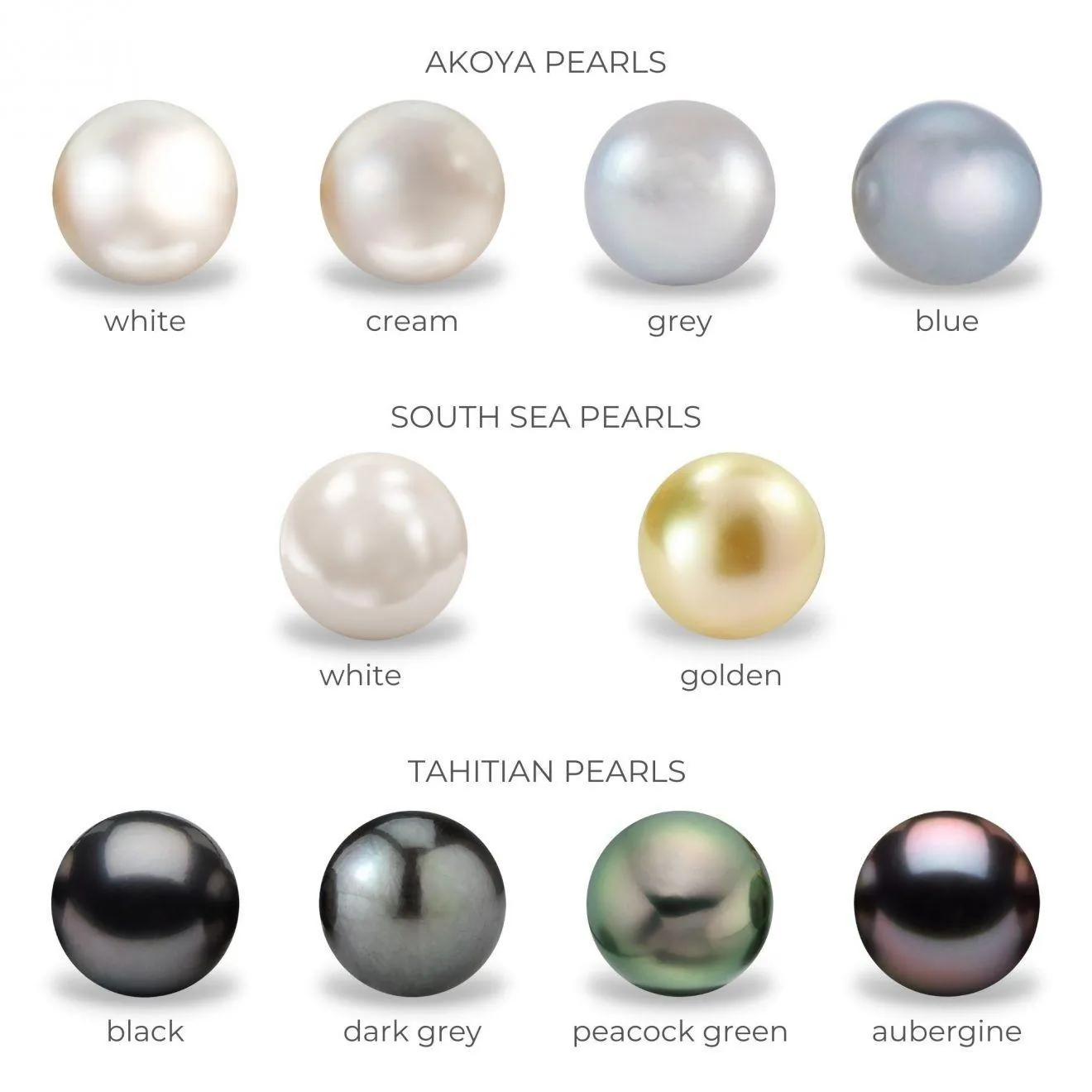
- Akoya pearls are often used in highly matched round strands, which can create a classic impression—but an Akoya pendant or pair of simple studs can be very understated.
- Freshwater pearls appear in a wide range of shapes and designs, from very classic round jewelry to irregular baroque pieces.
- Tahitian pearls can feel less bridal because of their darker colors, but a large, highly lustrous Tahitian pearl can still look luxurious and dressy.
- South Sea pearls often have strong visual presence because larger sizes are common, yet a single pearl in a minimal setting can still be simple.
So do not choose pearl type from a “formal versus casual” label alone. Choose the look you like, then judge the actual jewelry format, size, and setting. If you are still deciding what kind of piece fits your wardrobe, our pearl buying guide gives a broader framework for comparing options.
When Can Pearls Genuinely Feel Too Formal?
A particular pearl combination can be too formal for the message you want to send. That is different from saying pearls themselves are too formal.
For example, a full matched strand, matching earrings, structured dress, polished shoes, and a formal hairstyle may feel overdressed for an ordinary coffee run if your goal is to look completely relaxed. But the same combination may be exactly right for a wedding, formal dinner, ceremony, or another occasion where polished dressing is expected.
There is no need to turn this into a rule about what is “allowed.” Ask whether the level of polish matches your intention. If it does, the pearls are appropriate.
Can Pearls Be Everyday Jewelry?
Yes, with sensible care. Pearls are softer than many common gemstones—GIA places pearl at about 2.5 on the Mohs hardness scale—so frequent wear should come with attention to scratching, abrasion, cosmetics, perfume, and other chemicals.
Put pearls on after perfume, hairspray, and cosmetics when possible. Wipe them gently after wear, and keep them away from harder jewelry that could scratch the surface. For a practical routine, see our pearl care and maintenance guide.
Everyday wear does not mean careless wear. But there is also no reason to keep pearls hidden for years because you are waiting for a formal event.
If You Are Unsure, Use This 30-Second Test
Put on the outfit first. Then add the pearl piece and ask three questions:
- Does the jewelry match the level of dress I want? If yes, stop. There is no need to make it “more casual.”
- If it feels too formal, is the problem the pearl or the coordination? Remove one matching piece, simplify the clothing, or add a contrasting texture before replacing the jewelry.
- Would a smaller amount of pearl solve it? Try studs or a pendant instead of a full strand, or wear the strand without the matching set.
This approach is more reliable than memorizing rules such as “pearls are only for weddings” or “baroque pearls are always casual.” It lets you use the pearls you actually like while controlling the overall effect.
Final Takeaway
Pearls are not too formal; some pearl combinations are formal. That difference gives you much more freedom.
A pearl's shape, size, and color create one part of the impression. The jewelry design creates another. Your clothing and occasion complete it. Change any one of those layers and the same pearl can move from relaxed to polished, or from polished to ceremonial.
If you want everyday pearls, start with one piece and style it with the clothes you already wear. If you want something more dressed up, let the coordination increase. Browse pearl jewelry by format and choose the level of polish that feels useful in your real wardrobe—not the level of formality pearls are supposedly “meant” to have.
Frequently Asked Questions
Are pearls considered formal jewelry?
Pearls can be formal, but they are not exclusively formal jewelry. A highly matched strand or coordinated set can look dressy, while studs, pendants, baroque designs, and simple strands can work naturally with everyday clothing.
Can you wear pearls with jeans and a T-shirt?
Yes. The contrast between polished pearls and casual fabrics is one of the easiest ways to make pearl jewelry feel relaxed. Studs, a pendant, or one simple strand all work well.
Is a pearl necklace too dressy for everyday wear?
Not necessarily. A single pendant, fine strand, or classic necklace worn with casual clothing can be easy everyday jewelry. If a strand feels too formal, try wearing it without matching pearl earrings or pair it with a simpler outfit.
Are baroque pearls less formal than round pearls?
Baroque pearls often feel less traditional because their shapes are irregular, but they are not automatically casual. A large baroque pearl can be very dramatic, while a small round pearl can be minimal and understated.
Can pearls be worn every day?
Yes, but pearls need reasonable care. They are relatively soft and can be scratched or affected by cosmetics, perfume, acids, and abrasion. Put them on after beauty products and wipe them gently after wear.