
What Are Keshi Pearls? How They Form and Why Buyers Love Them

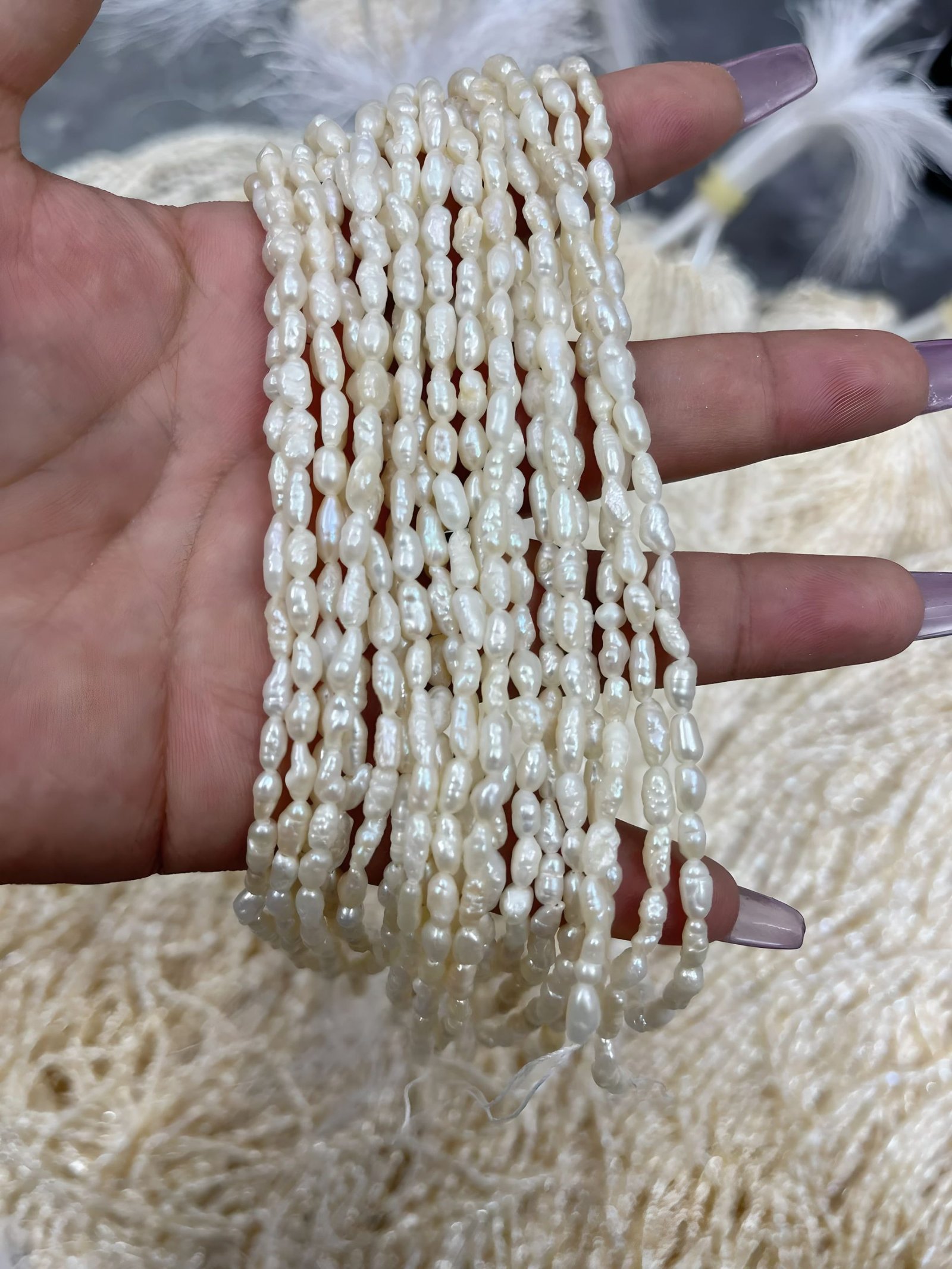
Keshi pearls are real pearls known for their strong luster, organic shapes, and nacre-rich structure. They are often discussed in the context of cultured pearl production, and that is important: the word keshi is not just another way to say “irregular pearl.” It points to how the pearl formed, not merely what it looks like.
If you have ever seen a small, bright, free-form pearl and wondered whether it was a baroque pearl, a defect, or something rare, you are asking exactly the right question. Keshi pearls attract buyers because they often combine vivid surface reflections with more natural, less standardized silhouettes than classic round strands. But to buy them well, you need to understand what the term really means.
To place keshi pearls in context, it helps to understand broader pearl classification and the basics of how pearls form.
What are keshi pearls?
A keshi pearl is generally understood as a pearl formed without a standard solid bead nucleus at its center, typically during cultured pearl production. Because of that, keshi pearls are often described as all-nacre or nacre-rich, and that is one reason they are admired for their lively glow and expressive appearance.
This is where many buyers get confused: not every irregular pearl is a keshi pearl. “Baroque” is a shape term. “Keshi” is a formation and structure term. A pearl can be both keshi and baroque, but the two words are not interchangeable.
For readers who want a broader overview of the category itself, MJ Pearls also has a dedicated page on keshi pearls.
How do keshi pearls form?
The simplest explanation is that a keshi pearl can form when the usual bead nucleus is not retained, but pearl-forming tissue continues producing nacre. In practical terms, the mollusk keeps making pearl material, yet the result is no longer a typical bead-cultured pearl.
That said, this topic is often oversimplified online. It is safer to say that keshi pearls are commonly associated with bead rejection or related non-bead growth during cultured pearl formation, rather than claiming that every keshi pearl forms through only one single mechanism. The key point for buyers is this: keshi pearls are usually discussed within a cultured pearl cultivation context, not as a shortcut way to say “natural pearl.”
Depending on the mollusk and cultivation method, keshi pearls can appear in both saltwater and freshwater discussions. Their typical size, shape, and commercial use can vary a great deal. If you want more background on non-bead freshwater pearls specifically, see freshwater non-nucleated pearls.
Why are keshi pearls usually so lustrous?
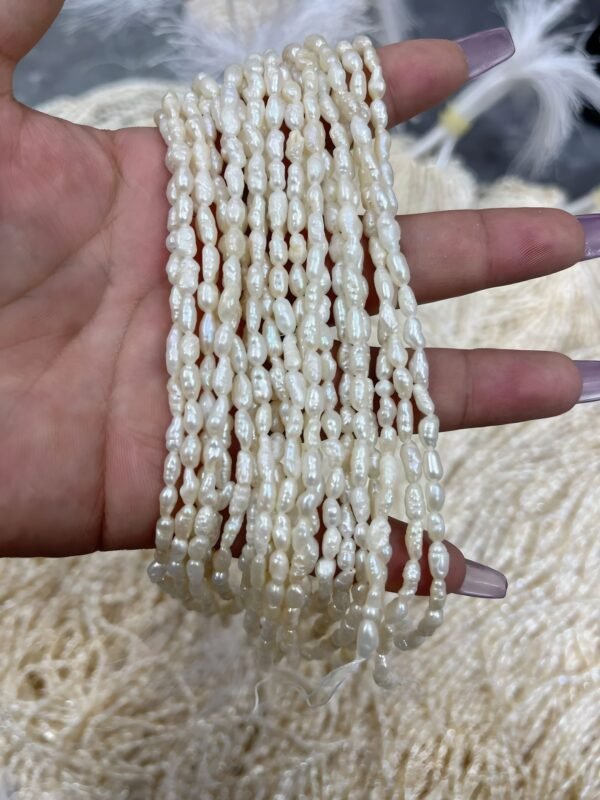
Buyers often love keshi pearls because they can show very vivid luster. Nacre-rich structure is a major reason their surface reflections can look sharp, lively, and layered. In a good keshi pearl, the glow often feels energetic rather than flat.
That does not mean every keshi pearl is automatically finer than every standard cultured pearl. Luster still depends on overall quality. But when a keshi pearl is well formed, its brightness can feel especially dynamic because the eye is responding not only to surface shine, but also to the depth and visual movement created by nacre.
In plain language, a fine keshi pearl often looks alive. That quality is a big part of its appeal in earrings, pendants, and other jewelry designs where individuality matters more than perfect uniformity.
Keshi pearls vs. baroque pearls: what is the difference?
This is the distinction many readers need most. A baroque pearl is a pearl with a non-round shape. A keshi pearl is identified by formation background, usually involving non-bead growth in cultured production. The overlap is real, but the concepts are different.
- If a pearl is irregular in shape, it may be baroque.
- If it formed without the usual solid bead nucleus in cultured production, it may be keshi.
- If both are true, it can be described as a baroque keshi pearl.
That difference matters when you read product descriptions. “Baroque” tells you what the pearl looks like. “Keshi” tells you more about what kind of pearl you are dealing with.
Are keshi pearls natural pearls?
Keshi pearls are real pearls, but they should not be casually described as natural pearls just because they do not have a standard bead nucleus. The safest buyer-facing wording is this: keshi pearls are real pearls typically discussed within the cultured-pearl category. They are not fake pearls, not plastic imitations, and not simply another name for natural pearls.
If you also want to compare them against imitation products, see artificial pearls. That contrast helps clarify why a keshi pearl’s value comes from real nacre and real pearl formation, even when its shape is highly organic.
Why buyers and designers love keshi pearls
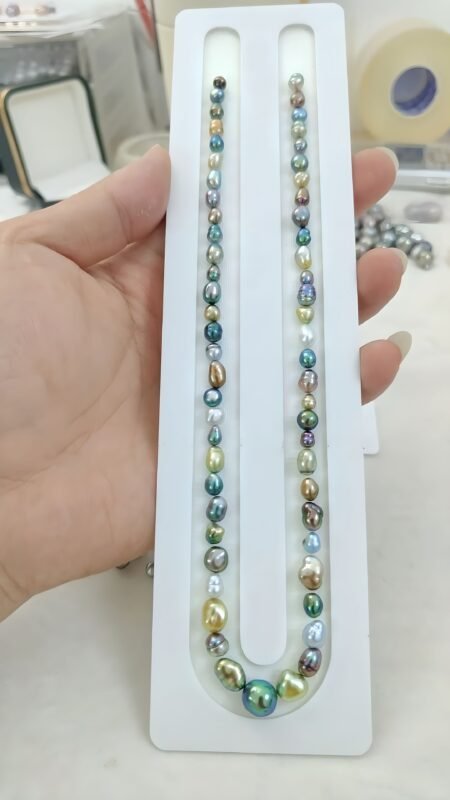
The first reason is visual character. Keshi pearls rarely look mass-produced. Their outlines are often asymmetrical, organic, and expressive, which makes them especially attractive in jewelry that aims to feel distinctive rather than standardized.
The second reason is luster. A good keshi pearl often delivers the kind of brightness that buyers notice immediately, even before they know the technical explanation. That instant visual appeal is one reason keshi pearls work so well in modern designs.
The third reason is design flexibility. Keshi pearls are especially suited to earrings, pendants, and contemporary strands where movement, texture, and individuality matter. Buyers who want real pearls but do not want the more formal look of perfectly matched round strands are often drawn to keshi for exactly this reason.
If your taste leans toward more curated or distinctive pearl styles, you may also enjoy browsing recommended pearl selections.
How to evaluate keshi pearls before you buy
The best way to judge keshi pearls is not to ask only, “Is it keshi?” Ask instead, “Is it a good keshi pearl?” A clear quality framework matters more than romance or marketing language. If you want a fuller overview, see how pearl value is evaluated.
1. Luster
Start with luster first. Does the pearl look bright and lively, or dull and chalky? Strong luster is one of the biggest reasons buyers choose keshi pearls in the first place.
2. Shape and visual character
Because keshi pearls are often irregular, shape should be judged by beauty and intentionality, not by roundness alone. A good keshi shape looks interesting, balanced, and usable in jewelry. A poor one may just look awkward or flat.
3. Surface quality
Look for pits, wrinkles, blemishes, or interruptions in the surface. Some texture may be acceptable, especially in more organic pearls, but the surface should still support the pearl’s overall beauty.
4. Size
Do not assume that all keshi pearls are tiny. Many are small, but size still matters in pricing and design use. A delicate keshi accent pearl and a more substantial keshi suitable for a focal pendant serve very different purposes.
5. Color and overtone
Color matters in both bodycolor and overtone. In keshi pearls, subtle shifts in pink, silver, lavender, cream, or other overtones can be part of the charm. A beautiful color can make even a modestly sized keshi much more desirable.
6. Matching, if you are buying pairs or strands
Matching becomes far more important when more than one pearl is involved. A single keshi pearl can be beautiful on its own. For earrings, you usually want luster, scale, and visual balance to feel harmonious. For strands, overall rhythm matters even more. If you are shopping by format, you may want to compare loose pearls with strand pearls based on your project.
Are keshi pearls expensive?
Sometimes yes, sometimes no. The word “keshi” alone does not determine value. Price depends on broader quality factors such as luster, size, surface quality, color, rarity, and matching difficulty.
Small commercial-grade keshi pearls with average luster are not necessarily expensive. On the other hand, larger keshi pearls with strong luster, cleaner surfaces, attractive color, and difficult matching can command much stronger prices. This is especially true when a pair or strand shows harmony without losing the lively character that makes keshi special.
So the right question is not whether keshi pearls are expensive in theory, but whether the specific pearls in front of you justify their price.
When are keshi pearls a great choice?
Keshi pearls are a strong choice when you want real pearls with more personality than classic round strands usually offer. They are especially appealing if you like organic shapes, strong luster, and jewelry that feels a little less formal.
They are also a good choice for buyers who appreciate one-of-a-kind details. If your goal is controlled individuality rather than perfect sameness, keshi pearls can be an excellent fit.
If your priority is strict uniformity, a classic round layout may suit you better. In that case, you may prefer exploring round pearls or the broader freshwater pearls wholesale collection.
Final takeaway
Keshi pearls are real pearls valued for their nacre-rich structure, bright luster, and organic forms. What makes them distinct is not simply that they are irregular, but that the term usually refers to how they formed in cultured pearl production.
For buyers, the smartest approach is simple: do not buy a pearl just because it is called keshi. Buy it because the luster is beautiful, the surface and shape are appealing, the size and color suit your purpose, and the price matches the quality.
If you are still comparing types, the fastest next step is to review pearl classification, learn more about pearl formation, or browse the MJ Pearls page on keshi pearls.
FAQ
Are keshi pearls real pearls?
Yes. Keshi pearls are real pearls formed through pearl-producing processes, not imitation pearls.
What is the difference between keshi pearls and baroque pearls?
Baroque refers to shape, while keshi refers to formation background. A pearl can be both.
Why are keshi pearls so shiny?
Keshi pearls are often admired for nacre-rich structure, which can create vivid luster and lively reflections.
Are keshi pearls expensive?
Some are, some are not. Value depends on quality factors such as luster, size, surface, color, and matching.
Are keshi pearls good for earrings and pendants?
Yes. Their organic shape and strong luster make them especially popular in earrings, pendants, and other design-led jewelry.
Suggested external references for this page: