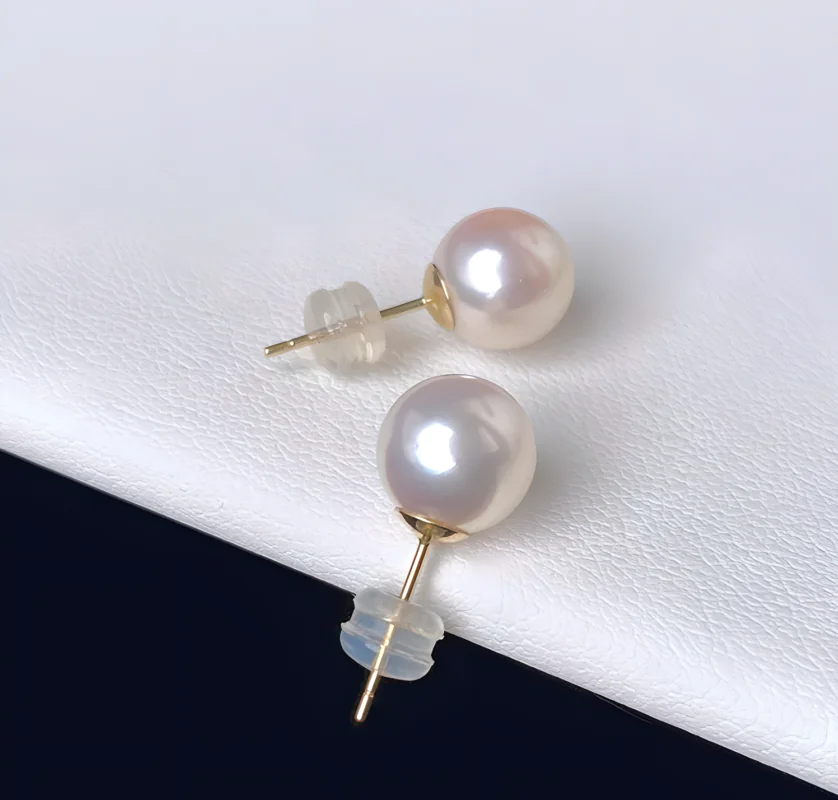
What Does “Cultured Pearl” Mean on a Grading Certificate?
When a pearl grading or identification document uses the term “cultured pearl,” it is describing how the pearl formed: human intervention was involved in starting the pearl-growing process inside a living mollusk. It does not mean the pearl is artificial, plastic, or an imitation. A cultured pearl is a real pearl, but it is different from a natural pearl, which forms without human intervention.
That definition is only the first step in reading a certificate correctly. “Cultured pearl” by itself does not tell you whether the pearl is freshwater or saltwater, whether it is Akoya, South Sea, Tahitian, or another type, whether its color is natural or treated, or whether its quality is high. Those conclusions require other fields on the report—and sometimes a different type of laboratory service altogether.
The Short Answer: “Cultured” Describes Formation, Not Quality
The most useful way to read the word is this:
| Certificate wording | What it tells you | What it does not tell you by itself |
|---|---|---|
| Cultured pearl | The pearl formed in a living mollusk with human intervention | Freshwater or saltwater, species, treatment status, quality grade, or value |
| Natural pearl | The pearl formed without human intervention | Automatic high quality, untreated status, or a specific market value |
| Imitation pearl | The object only imitates the appearance of a pearl | It should not be interpreted as a cultured or natural pearl |
CIBJO separates pearl products into categories that include natural pearls, cultured pearls, composite cultured products, and imitations. In its terminology, cultured pearls form within a cultured pearl sac in a productive freshwater or saltwater mollusk with human intervention. This is why “cultured” should not be read as a softer synonym for “fake.”
If you want to understand how the human-assisted process actually begins, our pearl cultivation guide explains bead nucleation, tissue grafting, and the role of the host mollusk in more detail.
Why the Word “Cultured” Appears on Pearl Reports
For gemological identification, one of the central questions is whether a pearl is natural or cultured. The difference is not reliably established by simply looking at the outside. Laboratories may use X-radiography and other analytical methods to study the pearl's internal growth structure.
A bead-cultured pearl may show a shell bead nucleus surrounded by nacre. A non-bead cultured pearl can show a different internal structure, often involving irregular growth features, organic material, or void-like structures associated with the culturing process. Natural pearls typically show growth structures consistent with formation without an implanted nucleus or grafting procedure, although difficult cases can require expert interpretation.
This is an important distinction because a certificate is not merely naming the pearl's appearance. On an identification report, the natural-versus-cultured conclusion is intended to describe its formation origin based on the laboratory's testing.
But First, Check What Kind of “Certificate” You Actually Have
Buyers often use the word certificate for many different documents: independent laboratory reports, grading reports, identification reports, appraisal documents, retailer certificates, and product cards. They are not interchangeable.
Even within one major laboratory, different pearl report services can answer different questions. GIA, for example, currently distinguishes among a Pearl Identification Report, a Pearl Identification & Classification Report, and a Cultured Pearl Classification Report. The first two include identification functions, while the Cultured Pearl Classification Report is designed primarily to classify eligible cultured pearls using pearl value factors.
This creates a subtle but very important rule: do not assume that the presence of the words “Cultured Pearl” in a report title means the laboratory independently performed a full natural-versus-cultured identification on that item. GIA states that its Cultured Pearl Classification Report does not provide identification or treatment information; the service is intended for known cultured pearls submitted under specific criteria.
So before interpreting any wording, check three things:
- Who issued the document? An independent gemological laboratory, an industry organization, a retailer, or the seller?
- What is the document type? Identification, classification/grading, appraisal, or product description?
- What testing does that service actually include? The report's scope matters as much as the terminology printed on it.
What Does “Bead Cultured Pearl” Mean?
If the report is more specific and says “bead cultured pearl,” it indicates that a bead nucleus was used in the culturing process. The mollusk then deposited pearl material around that nucleus. This structure is common in major saltwater cultured pearl categories such as Akoya, South Sea, and Tahitian pearls.
The bead does not turn the finished pearl into an imitation. The distinction is between a pearl grown by a living mollusk around an intentionally introduced nucleus and a manufactured imitation bead that merely looks pearl-like.
For identification, the wording “bead cultured” is more informative than the broader word “cultured” because it tells you something about the pearl's internal construction. It still does not tell you its quality grade.
What Does “Non-Bead Cultured Pearl” Mean?
A non-bead cultured pearl forms through human-assisted culturing without a round bead nucleus being used as the central core. Many freshwater cultured pearls are produced through tissue-based methods, although non-bead cultured pearls can also occur in saltwater pearl production.
This is another reason the word “cultured” alone is incomplete. Two genuine cultured pearls may have very different internal structures, culturing methods, nacre proportions, shapes, and market characteristics.
Our pearl classification guide provides a broader framework for separating pearl categories and terminology.
Does “Cultured Pearl” Mean Freshwater Pearl?
No. Cultured pearls can be produced in freshwater or saltwater mollusks. A certificate that only says “cultured pearl” has not yet answered the environment question.
On a more detailed laboratory report, look for a field such as Environment. A report may state “Freshwater” or “Saltwater.” It may also identify the mollusk when determinable. Those fields can help distinguish major pearl categories much more precisely than the word “cultured” alone.
For example, the combination of a bead-cultured identification, saltwater environment, and a mollusk identification consistent with Pinctada maxima provides much more information than “cultured pearl” by itself. The report comments may then add an accepted trade description such as South Sea cultured pearl when appropriate.
Does “Cultured Pearl” Mean the Pearl Is Untreated?
No. Culturing and treatment are separate questions. Culturing describes how pearl formation was initiated. Treatment describes what may have been done to the pearl before or after harvest to alter its appearance, composition, or durability.
CIBJO separately recognizes treated cultured pearls and calls for specific disclosure of treatments such as dyeing, coating, irradiation, filling, heating, and certain luster or color modifications. Therefore, a pearl can be both cultured and treated.
If treatment status matters, look for a dedicated treatment section or comment such as “No indications of treatment,” “dyed,” or another laboratory conclusion. More importantly, verify that the report service you are reading actually includes treatment testing. A classification-only document may not.
For a deeper explanation of common post-harvest processes, see our guide to pearl color enhancement treatments.
Does “Cultured Pearl” Tell You Whether the Pearl Is High Quality?
No. “Cultured” is an identity or formation term, not a quality grade.
A cultured pearl can have excellent luster, a clean surface, strong nacre quality, attractive color, desirable shape, and precise matching. Another cultured pearl can be dull, heavily blemished, poorly shaped, thinly nacred, or badly matched. Both are still cultured pearls.
Quality classification requires separate observations. GIA's pearl classification framework considers seven value factors: size, shape, color, luster, surface, nacre, and matching when applicable. Other grading systems may use different scales or terminology, which is why a letter such as “AAA” should always be read together with the grading criteria behind it rather than treated as a universal identity label.
If your goal is to judge how attractive or commercially desirable the pearl is, move beyond the identity line and use a broader pearl value evaluation framework.
What “Cultured Pearl” Does Not Prove by Itself
When reading a certificate, treat each field as answering a separate question. The words “cultured pearl” alone do not establish all of the following:
- Freshwater or saltwater origin: check the environment field.
- Exact pearl type: Akoya, South Sea, Tahitian, freshwater, and other cultured pearls require additional information.
- Mollusk species: this may be stated separately when determinable or, on some report types, may be client-stated rather than independently identified.
- Geographic origin: production locality is a different question from freshwater-versus-saltwater environment.
- Natural color: treatment testing and color-origin analysis may be required.
- No treatment: “cultured” does not mean “untreated.”
- High grade: formation category does not measure luster, surface, nacre, matching, or other quality factors.
- High monetary value: value depends on pearl type, quality, rarity, matching, treatment status, demand, and the item as a whole.
- That the physical item matches the paper: the report number, description, measurements, photograph, quantity, and other identifying details still need to correspond to the pearl or jewelry being presented.
How to Read a Pearl Certificate in the Right Order
A simple reading order prevents one impressive-looking word from carrying more meaning than it should.
- Verify the issuer and report type. Understand whether the document is an identification report, classification report, appraisal, or seller-issued certificate.
- Check the item description. Confirm quantity, measurements, weight when provided, jewelry form, and photograph.
- Read the identification line. Look for natural, cultured, bead cultured, non-bead cultured, or another conclusion.
- Check environment and mollusk information. These fields help narrow the pearl category.
- Read treatment findings separately. Do not infer untreated status from the word “cultured.”
- Review color wording carefully. Bodycolor, overtone, and natural-versus-treated color are different pieces of information.
- Review quality classification. Luster, surface, nacre, shape, size, and matching tell you far more about quality than the identity category alone.
- Read comments and limitations. Important qualifications, optional testing results, or thin-nacre warnings may appear outside the main identification line.
- Match the report to the actual item. A genuine report is useful only if it belongs to the pearl or jewelry being sold.
Why “Cultured” Is Usually Not a Negative Word
Some buyers see “cultured” and assume it means lower authenticity. That is the wrong comparison. The useful comparison is:
- Natural pearl: formed without human intervention.
- Cultured pearl: formed in a living mollusk after human intervention initiated the process.
- Imitation pearl: manufactured to resemble a pearl but not a natural or cultured pearl.
Cultured pearls make up the vast majority of pearls encountered in the modern jewelry market. They range from inexpensive commercial material to exceptional Akoya, Tahitian, South Sea, and freshwater pearls. The word “cultured” establishes a formation category; it does not set the ceiling on beauty, quality, or price.
The Most Important Rule When You See “Cultured Pearl” on a Certificate
Read “cultured pearl” as the answer to one question: Was human intervention involved in initiating pearl formation? Then move on to the other questions the document may—or may not—answer.
A strong pearl report separates identity, environment, mollusk, treatment, color, and quality rather than compressing them into one label. If the transaction is important, do the same in your own evaluation. Determine what the report actually tested, what each field establishes, and what remains outside its scope. Our pearl identification guide explains why these conclusions should be kept separate.
FAQ
Are cultured pearls real pearls?
Yes. Cultured pearls are genuine pearls formed inside living mollusks. Human intervention starts or assists the process, which separates them from natural pearls. Imitation pearls are different materials made to resemble pearls.
Does “cultured pearl” on a certificate mean freshwater pearl?
No. Both freshwater and saltwater pearls can be cultured. Look for an environment field, mollusk information, or a more specific pearl-type description.
Does “cultured pearl” mean the color is natural?
No. A cultured pearl may have natural color or may have undergone a color treatment. Treatment status must be read separately, and the report service must actually include the relevant testing before you rely on that conclusion.
Is a bead-cultured pearl fake because it contains a bead nucleus?
No. A bead-cultured pearl is still a genuine cultured pearl. The bead is intentionally introduced into the mollusk, which then deposits pearl material around it. An imitation pearl is a different product made to simulate a pearl's appearance.
Does a cultured pearl classification report prove the pearl was laboratory-identified as cultured?
Not necessarily. It depends on the laboratory and the report service. For example, GIA states that its Cultured Pearl Classification Report is a classification service for eligible known cultured pearls and does not provide full identification or treatment information. Always check the stated scope of the specific report.
Does “cultured pearl” tell me whether the pearl is valuable?
No. Value depends on the pearl type and on quality factors such as size, shape, color, luster, surface, nacre, and matching, along with treatment status, rarity, demand, and the jewelry item itself.