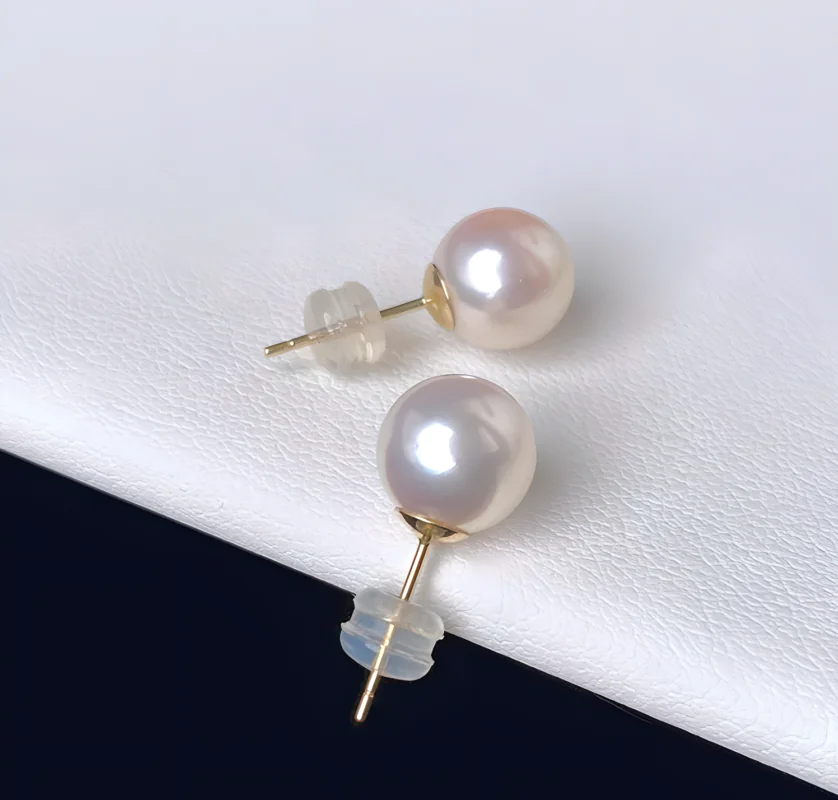
Pearl quality is not determined by a single grade, size, or color. A useful way to evaluate pearls is through seven factors: size, shape, color, luster, surface quality, nacre quality, and matching. These are the same core characteristics used in the GIA 7 Pearl Value Factors framework.
They do not all carry the same weight in every situation. Luster is often the first factor to prioritize because it has such a strong effect on how lively and beautiful a pearl looks. Size, shape, color, surface, nacre, and matching then change the picture depending on the pearl type and how the pearls will be used.
The most important principle is simple: compare pearls as a combination of characteristics, not as seven isolated scores. A large round pearl with weak luster is not automatically better than a smaller pearl with sharper reflections and a cleaner surface.
The seven pearl quality and value factors at a glance
| Factor | What you are judging | How it can affect value |
|---|---|---|
| Size | Diameter or dimensions in millimeters | Larger pearls are generally rarer and more valuable within the same pearl type and comparable quality. |
| Shape | Roundness, symmetry, or intentional irregularity | Round pearls usually command a premium when other factors are equal, but fine drops and attractive baroque shapes can also be highly desirable. |
| Color | Bodycolor, overtone, and sometimes orient | Rarity and market preference matter; there is no universally “best” pearl color. |
| Luster | Brightness and, especially, sharpness of reflections | Often one of the strongest indicators of visual quality and desirability. |
| Surface quality | Number, size, severity, and location of blemishes | Cleaner surfaces are generally rarer, while serious cracks or damage can affect both appearance and durability. |
| Nacre quality | Quality and continuity of the nacre structure | Influences appearance and durability; interpretation depends partly on pearl type and cultivation structure. |
| Matching | Consistency among pearls in a pair, strand, or multi-pearl piece | Better matching requires more sorting and can significantly increase the value of multi-pearl jewelry. |
GIA describes these seven characteristics as a systematic way to communicate pearl appearance and quality. Its guidance also notes that luster may be the most important of the seven value factors. For a broader explanation of commercial letter grades, see the MJ Pearls grading guide.
1. Luster: often the first quality to judge
Luster is the way light returns from the pearl's surface and underlying nacre. Strong luster creates bright, sharp reflections and a sense of depth. Weak luster looks softer, hazier, or more chalky.
This is why two pearls with the same diameter and similar shape can look completely different in person. The one with sharper reflections often appears more refined even if it has a few minor surface marks.
When comparing pearls, do not judge luster from brightness alone. Strong photography can create a bright white highlight on almost any glossy object. Instead, look for the definition of reflected shapes. Under comparable lighting, better luster usually produces clearer edges and stronger contrast.
Different pearl types can also show different luster character. Fine Akoya pearls are often associated with crisp, mirror-like reflections, while fine South Sea pearls may show a broader, more satiny glow. The goal is not to force every pearl type to look identical.
If you want a more detailed visual method, see our pearl luster guide.
2. Surface quality: not every mark matters equally
Pearls form inside living mollusks, so small pits, growth marks, ridges, bumps, or other surface features are common. A perfectly clean surface is relatively rare.
Surface quality should therefore be judged by more than simply asking whether a blemish exists. Consider four things:
- Number: Is there one small mark or are blemishes spread across the pearl?
- Size: Is the feature a tiny pinpoint or a large visible depression?
- Severity: Is it cosmetic, or does it look like a crack, peeling area, or structural problem?
- Position: Is it on the main visible face, or can it be hidden near a drill hole or setting?
A pearl with excellent luster and one small low-visibility blemish can be a better practical choice than a very clean pearl with dull luster. For examples of pits, spots, growth marks, and other surface features, use our pearl surface and blemishes guide.
3. Nacre quality: beauty and durability are connected
Nacre is the material deposited by the mollusk during pearl formation. Its structure is closely connected to a pearl's optical appearance, and poor or disrupted nacre can also create durability concerns.
Nacre should not be reduced to one simple rule such as “thicker is always better.” Thickness matters in bead-cultured pearls, but continuity, structure, and the presence of surface or sub-surface disruptions also matter.
GIA updated its nacre classification in 2025, expanding it to five ranges—Excellent, Very Good, Good, Fair, and Poor—based on visible structural or textural nacre features. The update is useful because it recognizes that nacre quality is more complex than a simple acceptable/unacceptable judgment.
Pearl type also matters. Bead-cultured Akoya, Tahitian, and South Sea pearls have a nucleus covered by nacre, while many traditional tissue-nucleated freshwater pearls are essentially nacre throughout. The same nacre-thickness concern therefore cannot be applied identically to every pearl category.
4. Shape: roundness brings rarity, but non-round does not mean poor quality
Round pearls are difficult to culture consistently, so they generally command the highest price when the other value factors are equal. Symmetrical drop shapes can also be highly valued.
However, shape is one of the easiest factors to misunderstand. A baroque pearl is not automatically a low-quality pearl. It may have exceptional luster, attractive color, a clean surface, and a distinctive form that is intentionally chosen for design.
It is better to ask whether the pearl is good for its shape category. A fine baroque pearl should be judged as a baroque pearl, not as a failed round pearl. Likewise, oval, button, drop, circled, and near-round pearls each have their own desirable proportions and uses.
For a more detailed breakdown of common forms, see the pearl shape guide.
5. Size: larger can mean more valuable, but only within context
When other factors are equal, larger pearls are generally rarer and more valuable. This is one of the clearest rules in pearl valuation, but it is often applied too broadly.
The key phrase is when other factors are equal. A 10 mm pearl with dull luster, heavy blemishing, or weak nacre should not automatically outrank an 8 mm pearl with excellent visual quality.
You should also compare size within the same pearl type. Different mollusks naturally produce different size ranges. South Sea pearls, for example, are known for reaching larger sizes than typical Akoya pearls. Comparing them only by millimeter measurement ignores the rarity structure of each category.
Size also affects wearing style. A few millimeters can change whether earrings look subtle or bold and whether a necklace feels delicate or statement-making. Our pearl size guide explains those practical differences in more detail.
6. Color: value depends on rarity, harmony, and preference
Pearl color is usually more complex than a single label such as white, pink, black, or gold. It can include:
- Bodycolor: the dominant overall color of the pearl
- Overtone: a translucent secondary color visible over the bodycolor
- Orient: an iridescent, rainbow-like effect visible in some pearls
Color affects value, but there is no universal ladder in which one color is always “better.” Demand changes by pearl type, market, fashion, rarity, and personal preference. A desirable natural color in one pearl category may be ordinary or impossible in another.
Treatment status can also matter to market value. A dyed pearl can still be attractive and useful in jewelry, but it should not be valued or represented as though the color developed naturally when it did not.
For buyers, color is often best treated as a combination of rarity and preference: first confirm what the color is and whether it has been treated, then decide whether the appearance suits the wearer.
7. Matching: the hidden cost in pairs and strands
Matching applies when two or more pearls are used together. It describes how consistently the pearls work as a group in size, shape, color, luster, surface appearance, nacre, and other visible characteristics.
This factor is especially important for classic stud pairs and pearl strands. A single pearl may be beautiful on its own, but one noticeably duller, darker, smaller, or more blemished pearl can disrupt the look of the entire piece.
Good matching also requires inventory depth. A necklace of closely matched pearls is not simply made by picking several pearls of the same nominal size. The pearls must be compared repeatedly and sorted until the strand looks balanced as a whole. That additional selection work is one reason matching can materially affect value.
Matching is not automatically required for every design. Deliberately graduated, multicolor, or mixed-shape jewelry may be designed around controlled variation rather than uniformity. In those cases, the question becomes whether the variation looks intentional and harmonious.
Do all seven factors matter equally?
No. There is no universal percentage formula that says, for example, luster is 30% of quality and size is 10%. The importance of each factor changes with the pearl type, the jewelry design, and what the buyer values.
A practical way to think about the seven factors is:
- Start with luster. If the pearl looks flat or lifeless, extra size or roundness rarely compensates for it.
- Check surface and nacre for both appearance and structural concerns.
- Judge shape and size within the correct pearl category.
- Evaluate color as both a gemological characteristic and a preference.
- Judge matching only when multiple pearls need to function together.
This is also why seller grades such as A, AA, AAA, or AAAA should not be treated as universal. Different sellers may combine these factors differently. A letter grade becomes useful only when you understand the seller's criteria and compare the actual pearls.
Quality factors are not the same as the final market price
The seven factors explain much of a pearl's appearance, quality, rarity, and desirability, but they do not explain every price difference in the market.
Final price can also be influenced by the pearl type, whether the pearl is natural or cultured, treatment status, origin, supply and demand, laboratory documentation, brand positioning, jewelry craftsmanship, precious-metal content, and retail channel.
That distinction matters. Two pearls can be similar across several visible quality factors and still sell at different prices because their rarity or market context is different. For the broader pricing logic, see our guide to evaluating pearl value.
How should a buyer use the seven factors?
You do not need to become a professional grader to use this framework. Its greatest value is that it gives you a more disciplined way to compare pearls.
When looking at two similar options, ask:
- Which pearl has sharper, livelier luster?
- Are the surface marks minor, or do they dominate the visible face?
- Does the nacre look healthy and continuous for the pearl type?
- Am I paying extra for roundness that I actually care about?
- Is the larger size worth the trade-off in luster or surface quality?
- Do I prefer the color, and is its treatment status clear?
- If this is a pair or strand, do the pearls look harmonious together?
That approach is usually more useful than asking only, “What grade is this?” It turns pearl buying from a label comparison into an observation-based comparison.
FAQ
Which pearl quality factor is the most important?
Luster is often treated as the most important visual factor because it strongly affects how bright, sharp, and lively a pearl appears. GIA states that luster may be the most important of the seven pearl value factors. However, no single factor determines the total value by itself.
Are larger pearls always more valuable?
No. Larger pearls are generally more valuable when the pearl type and other quality factors are comparable. A smaller pearl with much stronger luster, cleaner surface, or better nacre can be more desirable than a larger lower-quality pearl.
Does a blemish mean a pearl is low quality?
Not necessarily. Minor surface features are common in genuine pearls. Their effect depends on number, size, severity, location, and the strength of the pearl's other qualities. Cracks, peeling, or serious structural damage deserve more concern than a small cosmetic pinpoint.
Are round pearls always better than baroque pearls?
No. Round pearls are usually rarer and command a premium when other factors are equal, but baroque pearls can have excellent luster, color, nacre, and surface quality. Shape should be judged within the intended category and design.
Is an AAA pearl the same quality from every seller?
No. A/AA/AAA/AAAA pearl grading is not a single universally enforced retail standard. The letters are most useful within a seller's own documented grading system. Comparing the underlying quality factors is more reliable than comparing letter grades alone.
Conclusion
The seven most useful factors for understanding pearl quality and value are size, shape, color, luster, surface, nacre, and matching. Among them, luster often has the strongest immediate effect on visual quality, but the best pearl is rarely the one that wins on only one characteristic.
Judge the pearl as a whole. Compare like with like, keep pearl type in context, and pay attention to the trade-offs between beauty, rarity, durability, and the way the pearl will actually be worn. Once you do that, quality labels and prices become much easier to interpret.