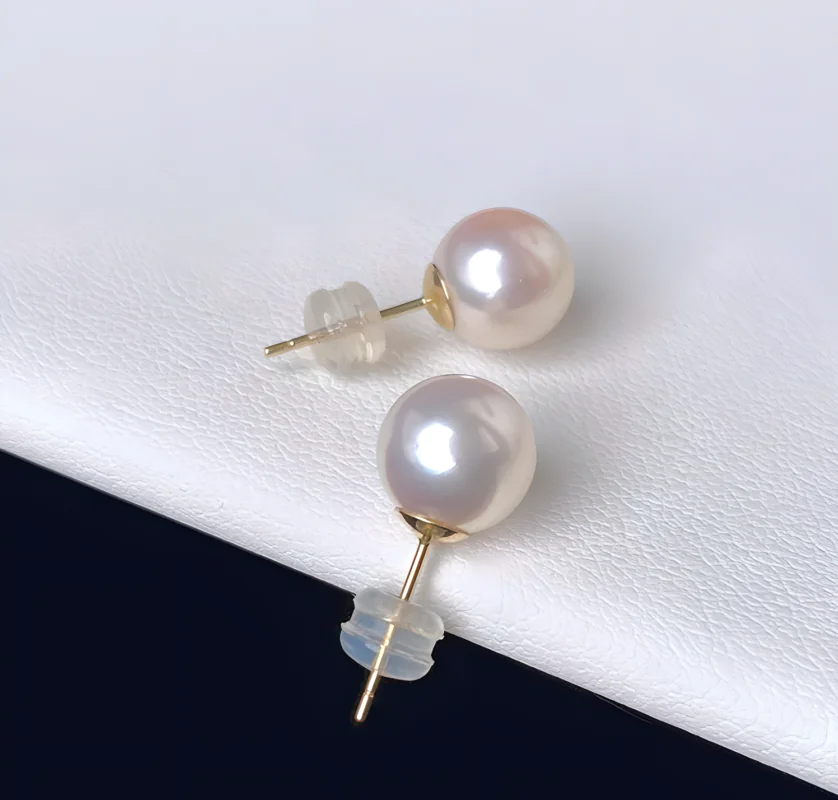
What Is the Difference Between Naturally Colored and Dyed Pearls?
Naturally colored pearls develop their visible color as the pearl grows inside the mollusk, while dyed pearls have had their color altered after formation by applying a coloring treatment. A dyed pearl can still be a genuine cultured pearl—the treatment changes its color, not necessarily whether the underlying pearl is real. The important buying question is therefore not simply “Is this pearl real?” but also “Is this the pearl’s naturally occurring color, or has the color been treated?”
Quick Answer: Natural Color vs. Dyed Pearls
| Point of comparison | Naturally colored pearl | Dyed pearl |
|---|---|---|
| Where the color comes from | Develops during pearl formation | Color is altered after formation with dye |
| Can it be a real cultured pearl? | Yes | Yes |
| Does the term describe pearl origin? | No. “Natural color” does not mean “natural pearl” | No. Dyeing describes a treatment, not whether the pearl is cultured or natural |
| Typical color range | Depends strongly on pearl type and mollusk | Can extend far beyond the pearl type’s usual natural range |
| Visual identification | Often consistent with the known color range of the pearl type | May show suspicious saturation or pigment concentration, but visual clues are not conclusive |
| Buying priority | Confirm pearl type and whether the color is untreated | Confirm that the treatment is disclosed and priced accordingly |
The most useful distinction is this: authenticity, cultivation method, pearl type, and color treatment are separate questions. A freshwater cultured pearl can be genuine, cultured rather than natural, and naturally pink. Another genuine freshwater cultured pearl can be dyed black. Both are real pearls, but their colors do not have the same origin.
“Naturally Colored” Does Not Mean “Natural Pearl”
This terminology causes more confusion than the dye itself. In gemological usage, a natural pearl is a pearl that formed without human intervention, while a cultured pearl forms after deliberate human intervention in the mollusk. Those terms describe how the pearl formed.
By contrast, “natural color” or “naturally colored” describes where the visible color came from. A cultured pearl can therefore have a completely natural, undyed color. Most pearls sold in modern jewelry are cultured, so a seller saying “natural-color freshwater pearl” should not be interpreted as claiming that the pearl itself is a natural pearl.
If you want to understand the broader distinction between pearl formation and treatment, our pearl identification guide separates natural, cultured, treated, and imitation pearls in more detail.
How Do Pearls Develop Natural Color?
Pearl color is created by a combination of biological and optical factors as nacre or other pearl material forms. The mollusk species, shell characteristics, organic pigments, nacre structure, and the way light interacts with the pearl all influence what we see.
Color is also more complex than a single word such as “white,” “pink,” or “black.” A pearl may have a dominant bodycolor, a translucent secondary overtone, and sometimes an iridescent effect known as orient. This is why two pearls that are both described as “white” can look noticeably different when placed side by side.
Most importantly, natural color ranges depend on the pearl type. A color that is entirely plausible in one pearl category may be unusual enough in another category that treatment should be questioned.
Which Pearl Colors Commonly Occur Naturally?
The table below is a practical buying guide, not an absolute exclusion test. GIA notes that pearls can occur in a remarkably broad range of colors, so unusual natural examples do exist. The safer question is whether the color is typical and credible for the stated pearl type, not whether a color is theoretically possible somewhere in the pearl world.
| Pearl type | Common naturally occurring color direction | When to ask more questions |
|---|---|---|
| Freshwater cultured pearls | White, cream, pink, peach, lavender and related warm pastel tones | Very dark gray or black, strong blue or green, intense red, or unusually vivid saturated colors |
| Akoya cultured pearls | White to cream, often with rose, silver or other subtle overtones | Strong fashion colors or dark colors that do not fit the seller’s explanation |
| Tahitian cultured pearls | Naturally dark colors including gray, charcoal, greenish and other complex dark bodycolors and overtones | A perfectly uniform “jet black” description should not be accepted as proof of natural color |
| South Sea cultured pearls | White, silver and golden ranges depending on the producing oyster | Very intense gold or unusual fashion colors should be evaluated together with type, price and treatment disclosure |
One especially useful rule comes from GIA: freshwater cultured pearls can naturally show attractive and sometimes saturated warm colors, but very dark freshwater pearls and colors far outside the typical warm pink-purple-orange-yellow family deserve treatment questions. This is why a black freshwater strand should not automatically be described in the same way as a naturally dark Tahitian pearl strand.
What Does Dyeing Do to a Pearl?
Dyeing is a post-formation treatment used to alter the pearl’s color. It can make an existing hue deeper, change a pale pearl into a dark one, or create fashion colors that would be rare or unavailable in that pearl category.
Dyeing should not be confused with imitation. If a genuine cultured pearl is dyed, the underlying material is still pearl. However, this does not mean every brightly colored bead sold as a “dyed pearl” is genuine; imitation beads can also be colored. Authenticity and treatment still need to be evaluated separately.
Dyeing is also only one possible form of color alteration. Irradiation, coating, tinting and other processes may change appearance in different ways. For a broader overview, see our guide to pearl color enhancement treatments.
How Can You Tell If a Pearl Has Been Dyed?
You usually cannot prove pearl dyeing from one photo or one visual clue. Visual inspection is best used to identify reasons to ask more questions, not to make a laboratory-level conclusion.
1. Ask whether the color makes sense for the stated pearl type
This is the fastest screening step. A dark green Tahitian pearl may be completely plausible. A similarly dark green freshwater pearl deserves more scrutiny. A pale lavender freshwater pearl may be natural, while an intensely saturated electric-purple strand may justify asking whether the color has been enhanced.
Do not use saturation alone as proof. GIA specifically notes that naturally colored pearls can sometimes be strongly saturated. The issue is the combination of pearl type, hue, tone, saturation, price, and seller disclosure.
2. Inspect drill holes, pits and surface depressions
Dye can sometimes accumulate more strongly around drill holes, cracks, pits, growth features, or other recessed areas. Under magnification, these places may appear darker or more concentrated than the surrounding surface.
This is a useful practical clue, especially on lower-cost commercial strands, but it is not universal. A clean drill hole does not prove natural color, and a dark area near a hole can have other causes.
3. Look for color behavior, not just color intensity
Naturally colored pearls often show subtle complexity as they rotate: bodycolor, overtone, orient, light-dark transitions, and small pearl-to-pearl differences. Some dyed pearls may look flatter, unusually uniform, or concentrated in surface features.
But this is only a clue. High-quality dyeing can be difficult to recognize visually, while well-matched natural-color pearls can also look very consistent. “Too even” should trigger a question, not a verdict.
4. Compare the color story with the price and product description
Rare natural colors can carry premiums within certain pearl categories, particularly when strong color is combined with desirable size, luster, surface quality, shape and matching. If a product promises a scarce natural color at a surprisingly low price, treatment is one of several explanations worth checking.
Price alone is not an identification test. A seller may discount inventory, and a dyed pearl can still be expensive if it has excellent size, luster, matching, craftsmanship or precious-metal components.
5. Use laboratory testing when the distinction materially affects value
For an inexpensive fashion strand, written treatment disclosure may be enough. For a high-value pearl, rare-color purchase, collection piece, or wholesale lot where treatment status materially affects the transaction, visual inspection may not be sufficient. A qualified gemological laboratory can use analytical methods that go beyond what a buyer can reliably determine from photographs or household tests.
Are Dyed Pearls Lower Quality?
Not automatically. Dyeing is a treatment status, not a complete quality grade. A dyed pearl may still have strong luster, a clean surface, an attractive shape, substantial nacre, and excellent matching. Conversely, a naturally colored pearl can have weak luster or heavy surface blemishing.
The more useful question is whether the pearl has been accurately described and fairly compared. Naturally occurring color can contribute rarity and value in certain pearl categories, while dyeing can make desirable colors more accessible. The exact price difference depends on pearl type, color rarity, overall quality, treatment stability, market demand, and how the product is represented.
This is also why statements such as “dyed pearls are always worthless” or “natural color is always more valuable” are too simplistic. Treatment is one factor in a larger quality and market picture.
Does Dyed Color Last Forever?
Color stability depends on the treatment and on exposure conditions. CIBJO classifies dyeing as a pearl treatment and notes that dyed color should not be assumed to be permanent. Long exposure to sunlight, chemicals, cosmetics, cleaning agents, heat, or other harsh conditions can also affect pearl appearance.
That does not mean every dyed pearl will fade quickly. It means buyers should avoid treating color stability as guaranteed. Pearls—dyed or naturally colored—benefit from gentle wear and storage, and treated pearls deserve particular attention to any care instructions supplied by the seller.
Why Treatment Disclosure Matters More Than “Natural vs. Dyed” as a Beauty Judgment
A dyed pearl is not automatically a bad purchase. Some buyers specifically want intense blue, green, purple, chocolate, or black pearls at an accessible price. In that situation, dyeing can be a perfectly reasonable way to achieve the look.
The problem begins when a treated color is presented as if it were a rare naturally occurring color. CIBJO’s pearl standards treat dyeing as a treatment and support disclosure through the trade. In practical buying terms, the seller should be able to tell you what pearl you are buying and whether its color has been altered.
For international purchases, remember that legal disclosure requirements can vary by market. From a buyer’s perspective, however, written treatment information is still valuable because it gives you a clearer basis for comparing price, rarity and care.
What Should You Ask a Seller Before Buying Colored Pearls?
Instead of asking only “Is this natural?”, use more precise questions:
- What type of pearl is this? Freshwater, Akoya, Tahitian, South Sea, or another type?
- Is the pearl itself natural or cultured? This answers formation origin, not color treatment.
- Is this the pearl’s naturally occurring color?
- Has the color been altered by dyeing, irradiation, coating, tinting, or another treatment?
- Can the treatment status be stated in writing on the invoice, product description, or laboratory report?
- Are there any special care requirements for preserving the color?
These questions are much more useful than relying on vague labels such as “natural pearl,” “natural color,” “no artificial color,” or “premium black.” Precise wording makes it easier to compare products from different sellers.
One More Important Distinction: “Undyed” Is Not Always the Same as “Untreated”
A seller may accurately say that a pearl is not dyed, but that statement alone does not answer whether another appearance treatment has been used. Depending on the pearl and the market, processes such as bleaching, tinting, irradiation, coating or other enhancements may be relevant.
So when treatment status matters, ask a broader question: “Has this pearl received any treatment that alters its color or appearance?” That avoids turning “undyed” into a claim that means more than it actually says.
FAQ
Are dyed pearls fake?
No. A genuine natural or cultured pearl can be dyed after it forms. Dyeing changes the pearl’s color but does not automatically make the underlying pearl an imitation. However, colored imitation beads also exist, so authenticity and color treatment should be checked separately.
Can freshwater pearls be naturally black?
Very dark gray or black freshwater cultured pearls are commonly color-treated. Freshwater pearls naturally occur in white, cream and a range of warm pink, peach, lavender and related tones, so a black freshwater pearl should prompt a treatment question rather than an assumption of natural color.
Are all Tahitian pearls naturally colored?
Tahitian cultured pearls are famous for naturally dark bodycolors and complex green, gray, charcoal and other overtones, but the pearl type alone does not prove that a particular pearl has never been treated. Treatment disclosure is still the safest approach when it matters.
Can you tell whether pearls are dyed from a photo?
Usually not with confidence. A photo can reveal suspicious color, unusual uniformity, or dark concentrations around surface features, but lighting, editing and high-quality treatments can make visual diagnosis unreliable. Written disclosure or laboratory testing is more dependable when value is at stake.
Are naturally colored pearls always more expensive?
No. Natural color can add rarity and value in some pearl categories, but price also depends on size, luster, surface quality, shape, nacre, matching, pearl type, craftsmanship and demand. A naturally colored pearl is not automatically better than every dyed pearl.
Will dyed pearls fade?
Some color treatments may change or fade over time, especially with unfavorable exposure to sunlight or chemicals. The stability varies by treatment, so follow the seller’s care instructions and avoid assuming that treated color is permanently unchanged.
Final Takeaway
The difference between naturally colored and dyed pearls is the origin of the color, not necessarily the authenticity of the pearl. Naturally colored pearls develop their hue during formation; dyed pearls receive altered color after formation. A dyed cultured pearl can still be a real pearl, while a naturally colored cultured pearl is still cultured—not a “natural pearl” in the gemological sense.
When buying colored pearls, first identify the pearl type, then ask whether the visible color falls within a credible natural range for that type, inspect for treatment clues, and request clear disclosure. If the natural-color claim materially affects price or rarity, professional laboratory testing is more reliable than visual guesswork.