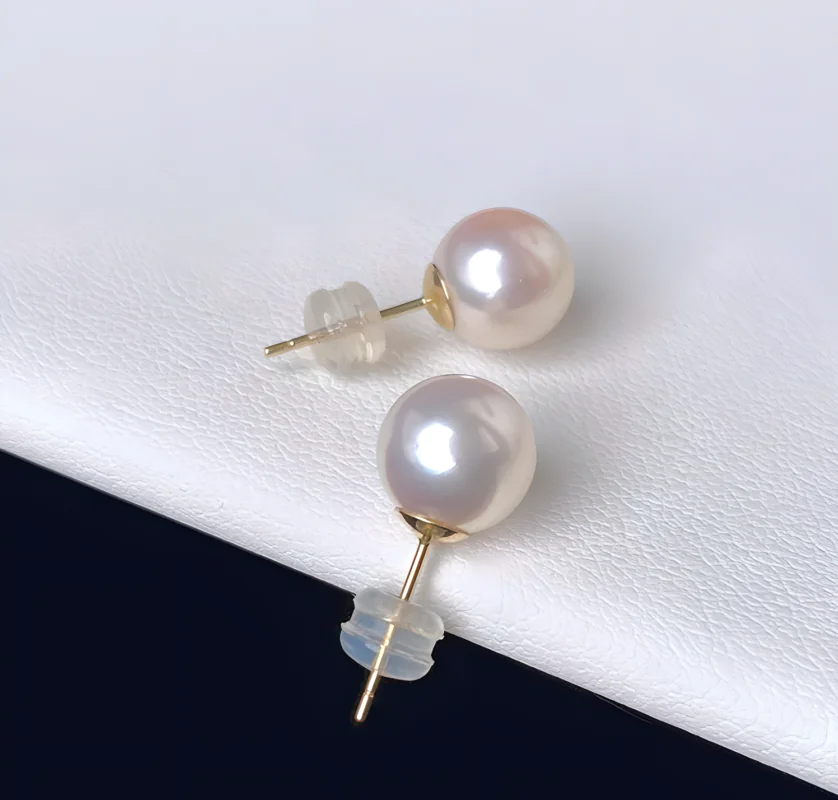
No. One or a few small pits do not automatically make a pearl poor quality. They are surface characteristics, and surface is only one part of pearl quality. What matters is how large, numerous, deep, visible, and well-positioned the pits are—and whether the rest of the pearl still has strong luster, sound nacre, an attractive shape, and good overall appearance.
A useful rule is: judge the effect of the pit, not simply the fact that a pit exists. A tiny mark near a drill hole can have very little practical impact. A cluster of deep pits across the most visible face of a pearl is a different matter.
What are the small pits on a pearl?
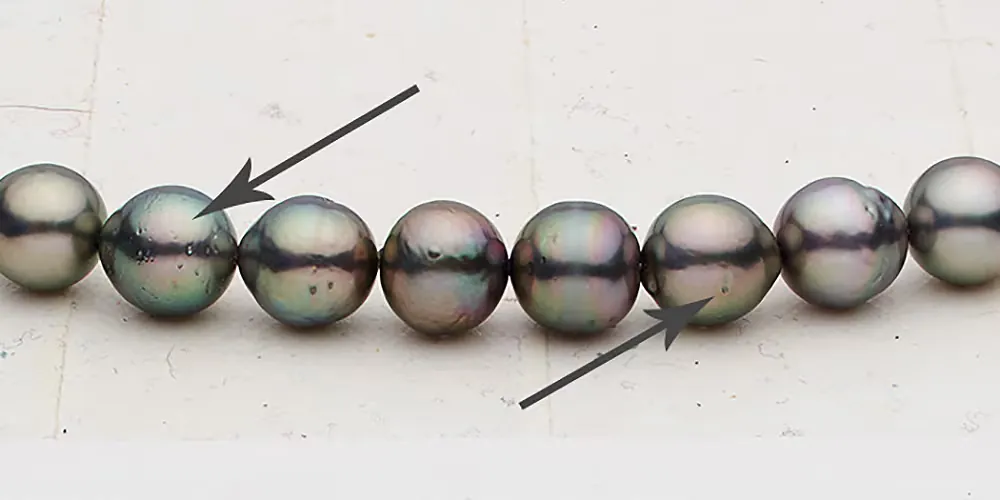
A pit is a small depression or point-like indentation in the pearl's surface. It may look like a pinprick, tiny dimple, or shallow crater depending on its size and shape.
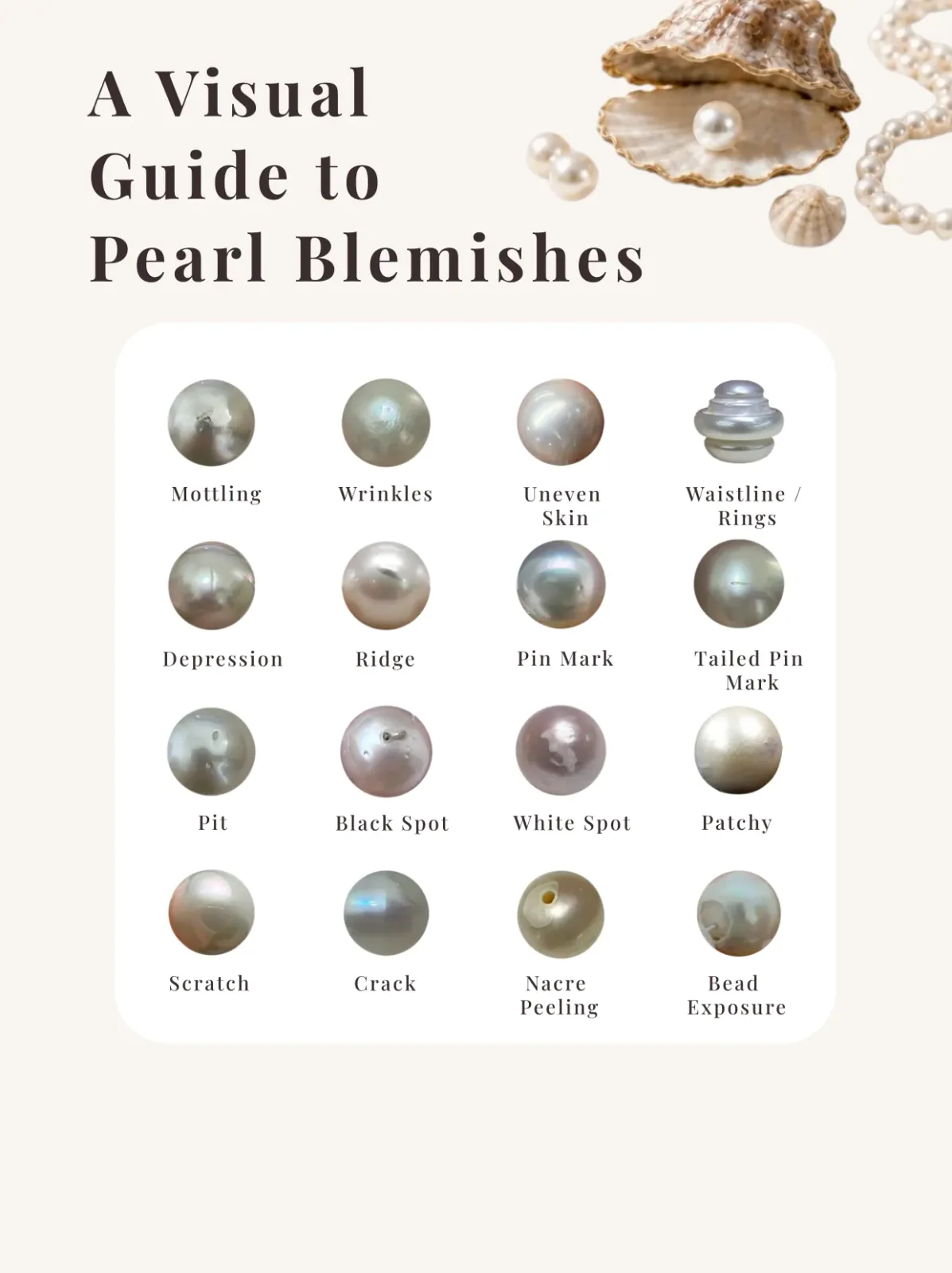
Pearls form layer by layer inside living mollusks, so perfectly uniform surfaces are uncommon. During growth, the nacre can develop small irregularities such as pits, bumps, wrinkles, ridges, or growth lines. Surface marks can also arise later from handling, drilling, processing, or wear, so appearance alone does not always reveal exactly when a mark formed.
The important distinction is that a small pit is not the same thing as a crack, peeling nacre, missing nacre, or an exposed nucleus. Those more serious conditions deserve separate attention because they can affect durability as well as appearance. For a broader visual vocabulary, see our Pearl Surface & Blemishes Guide.
How pearl surface quality is actually judged
Surface quality is not a simple pass-or-fail test based on whether a pearl has any marks. The Gemological Institute of America (GIA) evaluates pearl surface characteristics by factors including their size, number, location, visibility, and type. GIA's surface scale uses the terms Clean, Lightly Spotted, Moderately Spotted, and Heavily Spotted.
GIA also notes that surface characteristics have less effect on beauty and value when they are few in number or minor enough to be hidden by a drill hole or mounting. When surface characteristics become numerous or severe, they can reduce value substantially and may also affect durability. You can review the formal framework in GIA's Pearl Quality Factors.
This is why “it has a pit” is not enough information to grade a pearl. You need to know what kind of pit, how many, where they are, and what the pearl looks like as a whole.
Does a pit mean the pearl has thin nacre?
Not necessarily. A small surface depression by itself does not tell you the pearl's exact nacre thickness. Surface quality and nacre quality are related parts of overall pearl evaluation, but they are not interchangeable.
GIA points to signs such as a visible nucleus beneath the nacre or a dull, chalky appearance as indicators associated with thin nacre. An isolated pit is different. If a cavity is deep enough to expose underlying material, or if it appears together with peeling or missing nacre, then the concern becomes more serious—but that should be evaluated from the actual pearl rather than assumed from the word “pit.”
Use this five-part test to judge whether a pit matters
1. How many pits are there?
An isolated pin-sized pit usually has much less effect than many pits scattered over the surface. As the number of visible marks increases, the pearl tends to look less clean and its surface grade generally falls.
Do not count marks mechanically, though. Three tiny marks clustered near a drill hole may be less distracting than one larger pit in the center of a pendant pearl.
2. How large and deep is the pit?
A shallow pinprick that is difficult to notice without close inspection is mostly a cosmetic issue. A larger or deeper cavity is more noticeable and deserves closer examination, especially if its edges look broken or if the surrounding nacre appears damaged.
Depth can be difficult to judge from a single online photo. Rotate the pearl in video or inspect it under changing light if you are making a higher-value purchase.
3. Where is the pit located?
Location can change the practical importance of the same-sized blemish. A pit near a drill hole, cap, cup, or back-facing side of a setting may become almost invisible in the finished jewelry. A similar pit on the front of a stud earring, ring, or pendant is much harder to ignore.
For strands, location also matters within the layout. A marked pearl near the clasp may attract far less attention than the same pearl placed at the center front of a necklace.
4. Can you see it at a normal viewing distance?
Macro photography magnifies every detail. A pearl that looks heavily marked in a close-up image can look clean when worn, while another pearl may have a single dark pit that remains obvious even from normal distance.
Use close-ups to inspect condition, but also ask for an unedited photo or video showing the whole piece. Surface quality should make sense both under inspection and in real use.
5. Is the surrounding nacre sound?
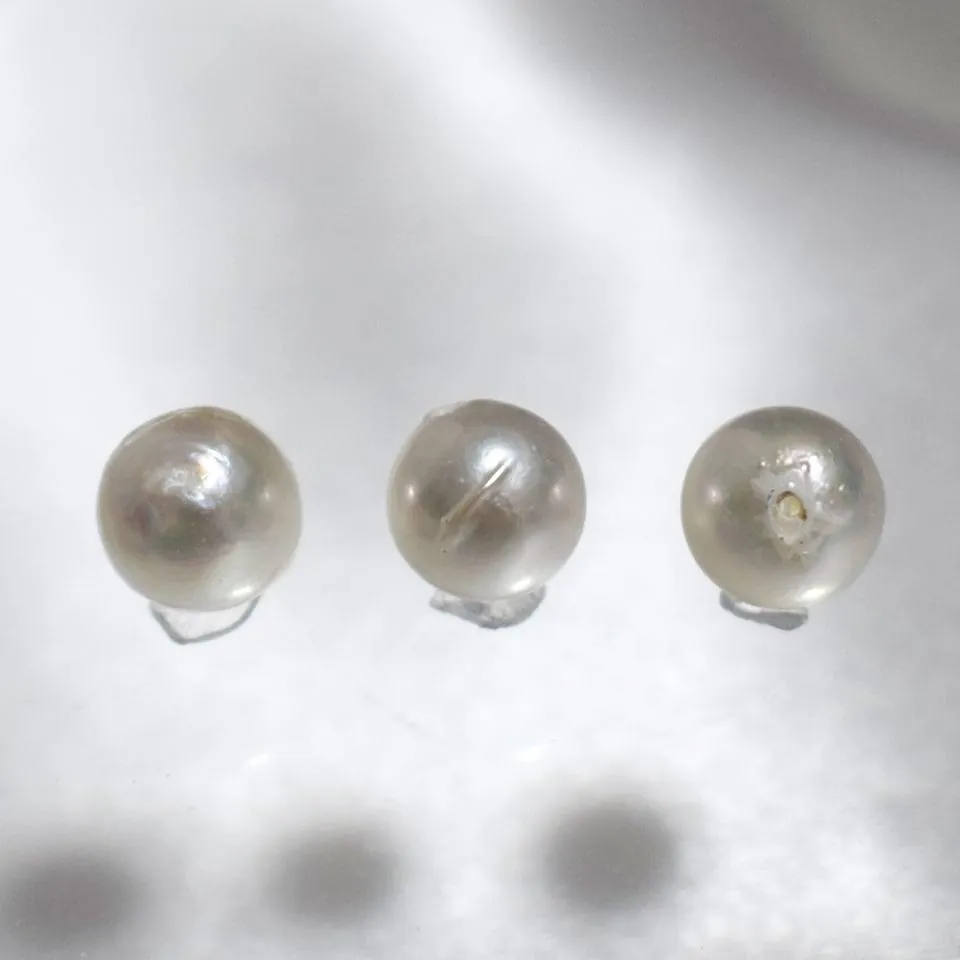
This is the most important distinction between a minor blemish and a potentially more serious problem. If the pit is isolated and the surrounding surface remains continuous and lustrous, it may have little effect beyond appearance. If you see cracking, flaking, peeling, missing nacre, or a visible underlying bead or nucleus, treat the issue more cautiously.
Our guide to pearl surface cracks and nacre peeling explains why those conditions should not be grouped together with ordinary pinpricks and small growth marks.
When are small pits usually acceptable?
Small pits are often an acceptable trade-off when they are:
- few in number;
- shallow and difficult to notice without close inspection;
- located near a drill hole, setting, or less-visible side;
- surrounded by sound nacre with no cracking or peeling;
- not disrupting the pearl's luster across a large area; and
- consistent with the price and quality level being offered.
A pearl with excellent luster and one minor hidden pit can be a very sensible buy. In fact, if your budget is fixed, accepting a small low-visibility blemish may allow you to get better luster, a more attractive color, or a larger size without paying the premium for an exceptionally clean surface.
That does not mean blemishes are irrelevant. When other quality factors are equal, the cleaner pearl will generally be more valuable. The point is simply that surface perfection is not the only route to a beautiful pearl.
When should pits make you more cautious?
Pits deserve more attention when they are large, numerous, clustered over the visible face, unusually deep, or associated with other surface problems. Be especially cautious when you see:
- many pits covering a significant portion of the pearl;
- a deep cavity that strongly interrupts the reflection;
- cracks radiating from or around a depression;
- flaking, peeling, or missing nacre;
- an exposed underlying bead or nucleus;
- widespread rough or chalky-looking surface texture; or
- a highly visible pit on the front-facing area of an otherwise expensive piece.
At that point, the question is no longer just “Does the pearl have a natural mark?” It becomes “How much does this mark reduce beauty, value, or durability?”
If you are comparing seller grades such as AAA or AAAA, remember that those letters are not universally standardized across every company. Compare the actual surface, luster, nacre, shape, and matching rather than relying on the grade label alone. Our Pearl Grading Guide explains how to make that comparison more consistently.
Do pits prove that a pearl is real?
No. Small surface irregularities are common on real natural and cultured pearls, but a pit is not proof of authenticity. Real pearls can have very clean surfaces, and imitation pearls can be manufactured with uneven textures or acquire damage through wear.
Authenticity should be judged from multiple clues and, when the value justifies it, appropriate gemological testing. Avoid the shortcut of assuming “imperfect means real” or “too smooth means fake.” If identification is your main concern, use our guide on how to tell if pearls are real or fake as a broader starting point.
Are pearls with small pits good value?
They can be. Minor pits often create a useful price-quality trade-off because surface cleanliness carries a premium. A pearl that is not technically “clean” may still look excellent when worn if the blemish is tiny, well positioned, and paired with strong luster.
For earrings and pendants, prioritize the face that will actually be seen. For strands, judge the piece as a group: overall luster, matching, center pearls, and how obvious the surface marks are across the necklace. For loose pearls or jewelry-making material, consider whether drilling or setting can place the blemish out of sight.
The best-value pearl is not necessarily the cleanest pearl you can afford. It is the pearl whose compromises are least visible or least important for your intended use.
A quick buying checklist for pitted pearls
- Rotate the pearl. Do not judge from one flattering angle.
- Check both macro and normal-distance views. Close-ups reveal condition; normal views reveal visual impact.
- Count and locate the pits. A few hidden marks are different from widespread visible pitting.
- Look at the edges of the pit. Make sure you are not actually looking at a crack, chip, peeling nacre, or missing surface material.
- Protect luster. A small blemish may be acceptable if the pearl still has bright, attractive reflections.
- Compare like with like. Compare pearls of the same type, similar size, and similar overall quality.
- Judge the price as a package. Surface, luster, shape, color, size, nacre, and matching all contribute to value.
For a broader purchase framework, see our Pearl Buying Guide.
So, do small pits mean poor pearl quality?
Not by themselves. Small pits lower surface cleanliness to some degree, but they do not automatically make the whole pearl poor quality. The practical question is whether the pits are few or widespread, shallow or severe, hidden or highly visible, and isolated or associated with structural damage.
If a pearl has strong luster, sound nacre, an attractive shape, and only one or two minor low-visibility pits, those marks may be a perfectly reasonable compromise. If the surface is heavily pitted, cracked, peeling, or damaged across the visible face, the quality and value should reflect that.
When comparing finished pieces, look at the pearl as a whole rather than searching for absolute flawlessness. You can browse our pearl jewelry collection with the same surface-quality framework in mind.
FAQ
Are tiny pinholes on pearls normal?
Yes. Small pinpricks, pits, wrinkles, and other minor surface characteristics are common on natural and cultured pearls. Their effect on quality depends on how visible, numerous, severe, and well positioned they are.
Do pits reduce pearl value?
Usually, yes, when all other factors are equal. A cleaner surface generally supports higher value. However, one tiny hidden pit may have only a small practical effect, while numerous or severe pits can reduce value much more.
Can a pearl with a pit still be high quality?
Yes. A pearl can have strong luster, attractive color and shape, sound nacre, and only a minor surface mark. Overall quality should be judged from all relevant factors rather than from one small blemish alone.
Do pits mean a pearl has thin nacre?
No. A small pit alone does not provide a reliable measurement of nacre thickness. More concerning signs include visible underlying material, chalkiness, peeling, or missing nacre.
What is worse: a pit or a crack?
A small isolated pit is often mainly a surface-quality issue. A crack can be more concerning because severe surface characteristics may affect durability, especially when cracking is associated with nacre damage or peeling.
Should I avoid pearls with any visible blemishes?
Not necessarily. If the blemish is minor and does not distract from the pearl when worn, accepting it can be a sensible way to get better luster, size, color, or overall value within your budget.