Blue Akoya Pearls: Value Factors and Key Risks
Blue Akoya pearls can be rare and highly desirable, but “blue” by itself is not a quality grade. Two strands with a similar silver-blue appearance can differ substantially in luster, nacre quality, surface, matching, color origin, and ultimately value. The most important buying rule is therefore simple: confirm what created the color before paying a premium for how attractive that color looks.
GIA evaluates pearls through seven value factors—size, shape, color, luster, surface, nacre, and matching—and the same framework is useful for blue Akoya. However, blue pearls add an extra question that should come before ordinary quality comparison: is the color natural, treated, or insufficiently documented?
A Quick Framework for Evaluating Blue Akoya Pearls
| Factor | What Usually Adds Value | Main Risk |
|---|---|---|
| Color origin | Natural color with clear disclosure or appropriate laboratory support | Treated blue sold or implied as natural blue |
| Luster | Bright, sharp reflections with visual depth | Choosing stronger blue color while accepting dull luster |
| Color quality | Attractive silver-blue or blue-gray bodycolor with lively overtones | Paying for saturation alone |
| Nacre | Good nacre quality without obvious bead visibility or chalkiness | Assuming blue color itself proves good nacre |
| Surface | Few distracting blemishes | Color or photography hiding surface defects |
| Shape | Roundness for classic fine jewelry, or intentional attractive baroque form | Comparing different shapes as if color were the only variable |
| Size | Larger pearls when other quality factors remain strong | Trading too much luster or surface quality for size |
| Matching | Consistent color, overtone, luster, size, shape, and surface across a pair or strand | A strand that looks blue overall but contains visibly mismatched pearls |
In practice, it is better to judge these factors in sequence rather than assign equal weight to all of them. Start with color origin and disclosure, then examine luster and nacre, and only then decide how much extra you are willing to pay for a particular shade, size, cleanliness, roundness, or degree of matching.
What Are Blue Akoya Pearls?
Akoya pearls are bead-nucleated saltwater cultured pearls produced by Akoya pearl oysters, commonly associated with the species Pinctada fucata. White and cream are the colors most buyers associate with Akoya, but naturally colored Akoya can also occur in silver, blue, silver-blue, yellow, and other tones. GIA specifically recognizes rare naturally blue Akoya bodycolors, often with silvery-gray and cool-toned appearances.
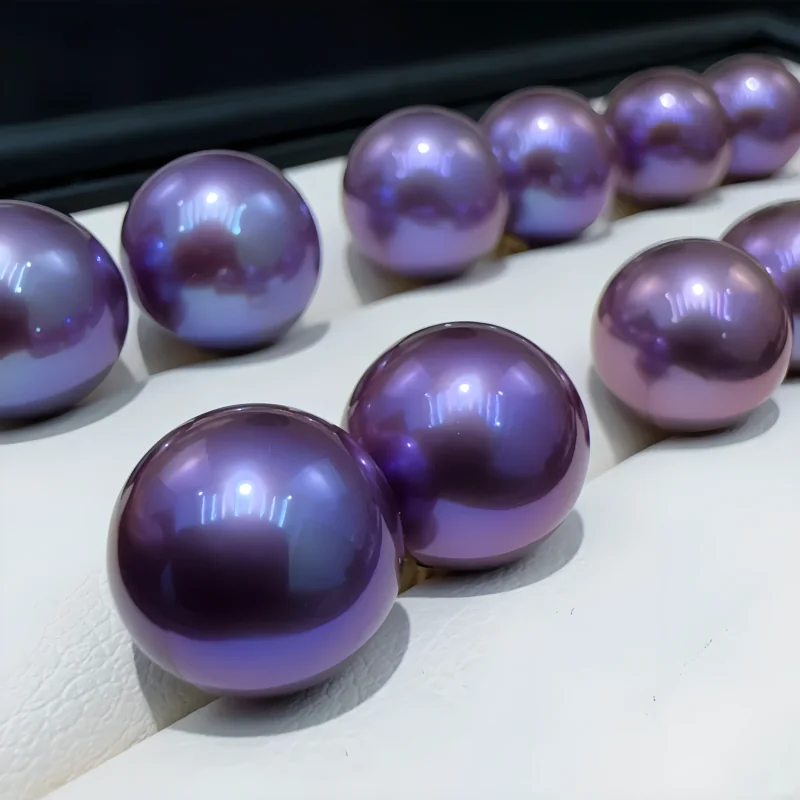
The word “blue” can also be misleading if taken too literally. Many natural blue Akoya pearls are not vivid ocean-blue beads. Their appearance may fall somewhere between silver, gray, steel blue, blue-gray, and silver-blue, sometimes accompanied by pink, green, or other iridescent overtones.
Another important point is that the blue appearance does not necessarily mean the nacre itself contains a blue pigment. In many naturally silver-blue Akoya pearls, darker material beneath the translucent nacre contributes to the color seen from the surface. The resulting appearance depends on how light interacts with the nacre and the underlying material.
This distinction matters because superficially similar blue-gray appearances can also be created through treatment.
The First Value Factor: Is the Blue Color Natural?
For an ordinary pearl-quality comparison, color is one factor among several. For blue Akoya, however, color origin is better treated as a prerequisite. A naturally colored blue Akoya and a color-treated blue Akoya should not be evaluated as though they were equivalent products merely because their photographs look similar.
Color treatment is not hypothetical. Irradiation has long been used to produce gray or blue-gray appearances in cultured Akoya pearls. In this process, irradiation can darken the freshwater-shell bead nucleus inside the pearl; the darker nucleus then affects the color visible through the nacre. GIA's examination of reportedly irradiated Akoya pearls found darkened bead nuclei and, in some specimens, additional indications of dye treatment.
Japanese pearl-industry guidance also lists dyeing and irradiation among treatments capable of changing pearl color and states that such treatment information should be disclosed.
This does not mean treated blue pearls have no commercial use or cannot be attractive. The problem arises when treated color is priced, described, or implied as rare natural color without adequate disclosure.
If you want a deeper explanation of the subject, see our guide to pearl color enhancement treatments.
Luster Should Usually Matter More Than “How Blue” the Pearl Looks
Once natural color or treatment status is understood, luster becomes one of the most important visual factors to compare. High-quality Akoya pearls are famous for sharp, bright reflections. On a strong-luster pearl, reflected shapes appear relatively crisp; weaker luster produces softer, hazier reflections.
This creates a common blue-Akoya buying mistake: choosing the strand with the strongest apparent blue tone even when another strand has substantially better luster.
A darker or more obviously blue pearl is not automatically a finer pearl. An attractive silver-blue pearl with strong, lively reflections may be more desirable than a deeper blue-gray pearl that looks flat. GIA's value-factor system likewise treats color and luster as separate characteristics rather than allowing color intensity to substitute for optical quality.
A useful comparison method is to ignore the color for a moment. Look at reflections of a window, your face, or another defined object on the pearl. If the image is bright and relatively sharp, the luster is strong. Then return to the color and ask which combination of color plus luster you actually prefer.
Color Quality Is About Character, Not Maximum Saturation
After color origin and luster have been considered, the actual blue appearance becomes important. There is no universal rule that one exact blue tone is always the most valuable.
Blue Akoya can show combinations such as:
- pale silver-blue;
- cool blue-gray;
- steel or slate blue;
- silver-blue with pink overtones;
- blue-gray with green or multicolored iridescence.
The better question is whether the color is attractive, lively, appropriate for the intended jewelry, and accurately represented. Natural-color Akoya should also be judged within its own color category rather than automatically penalized because it does not resemble the conventional white-Akoya ideal. Industry pearl education similarly emphasizes that silver-blue Akoya value still depends on the complete combination of color, luster, surface, nacre, shape, size, and matching.
Nacre Quality Still Matters in a Blue Pearl
Blue color can be visually dramatic enough to distract buyers from nacre quality. That is a mistake.
GIA considers nacre one of the seven fundamental pearl value factors. In bead-nucleated pearls, poor nacre quality may reveal itself through an unattractive chalky appearance or evidence of the bead beneath the nacre.
Natural blue color should therefore never be used as proof that a pearl has thick or superior nacre. Nor should the buyer assume that every translucent-looking blue pearl has inadequate nacre. Color and nacre need to be evaluated separately.
This is particularly important when two pearls are offered at very different prices. Before attributing the entire difference to rarity of color, compare their reflections, nacre appearance, surface condition, shape, size, and documentation.
For the wider framework behind these comparisons, see how pearl value is evaluated.
Surface Quality and Shape Can Change the Value Substantially
Pearls are organic gems, so small surface features are normal. Pits, spots, wrinkles, growth marks, or other blemishes become a value issue when they are numerous, deep, prominently positioned, or distracting from the pearl's overall appearance.
Round blue Akoya pearls generally fit the classic fine-jewelry expectation associated with Akoya and can command a premium when the rest of the quality is also high. Near-round, semi-baroque, and baroque blue Akoya can still be highly attractive, especially when their natural form complements the unusual color.
The important point is to avoid comparing a clean, round strand with a heavily blemished or baroque strand and concluding that a price difference must be caused by “better blue.” Several quality variables may be changing at the same time.
Size Adds Value Only When Quality Survives the Size Increase
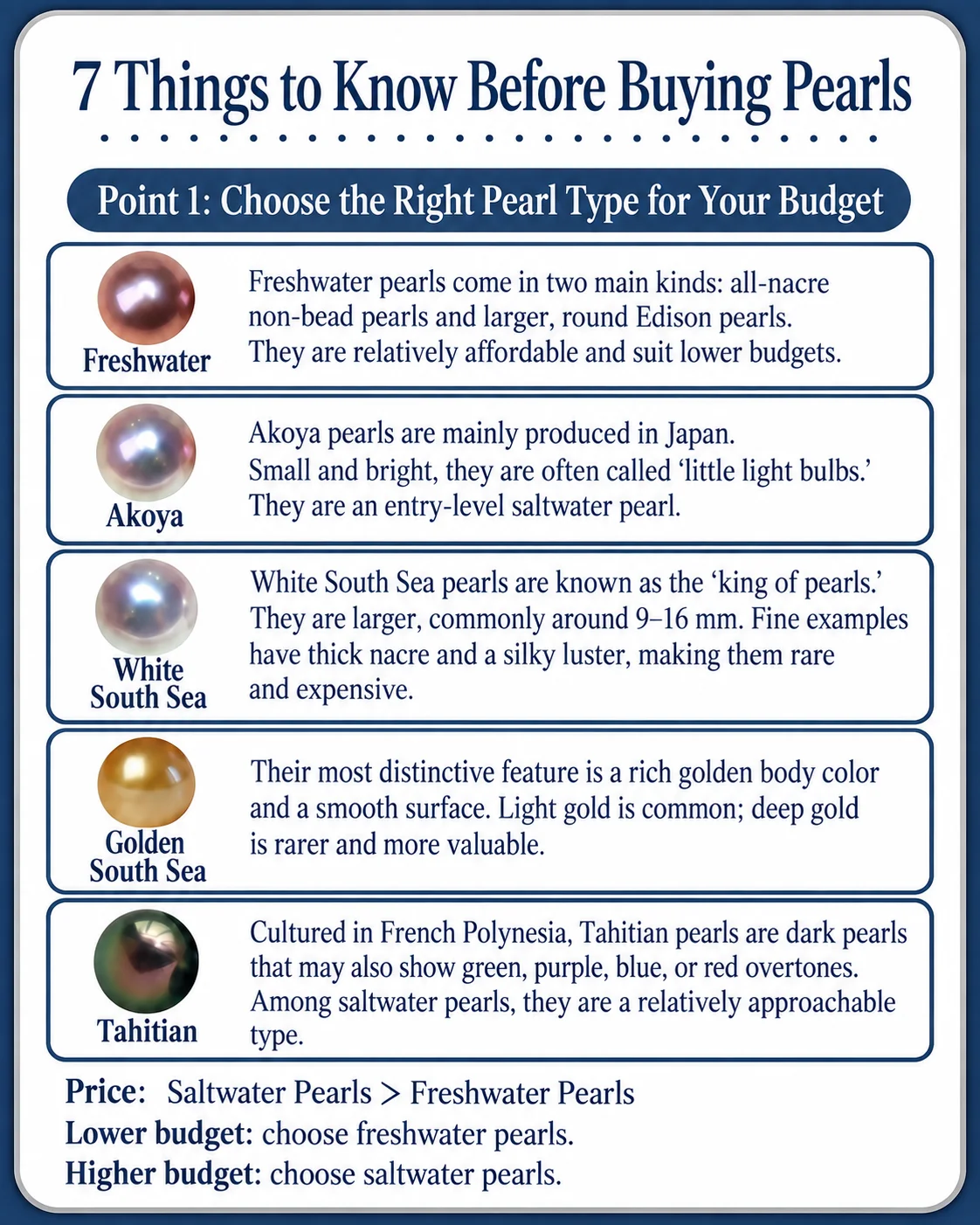
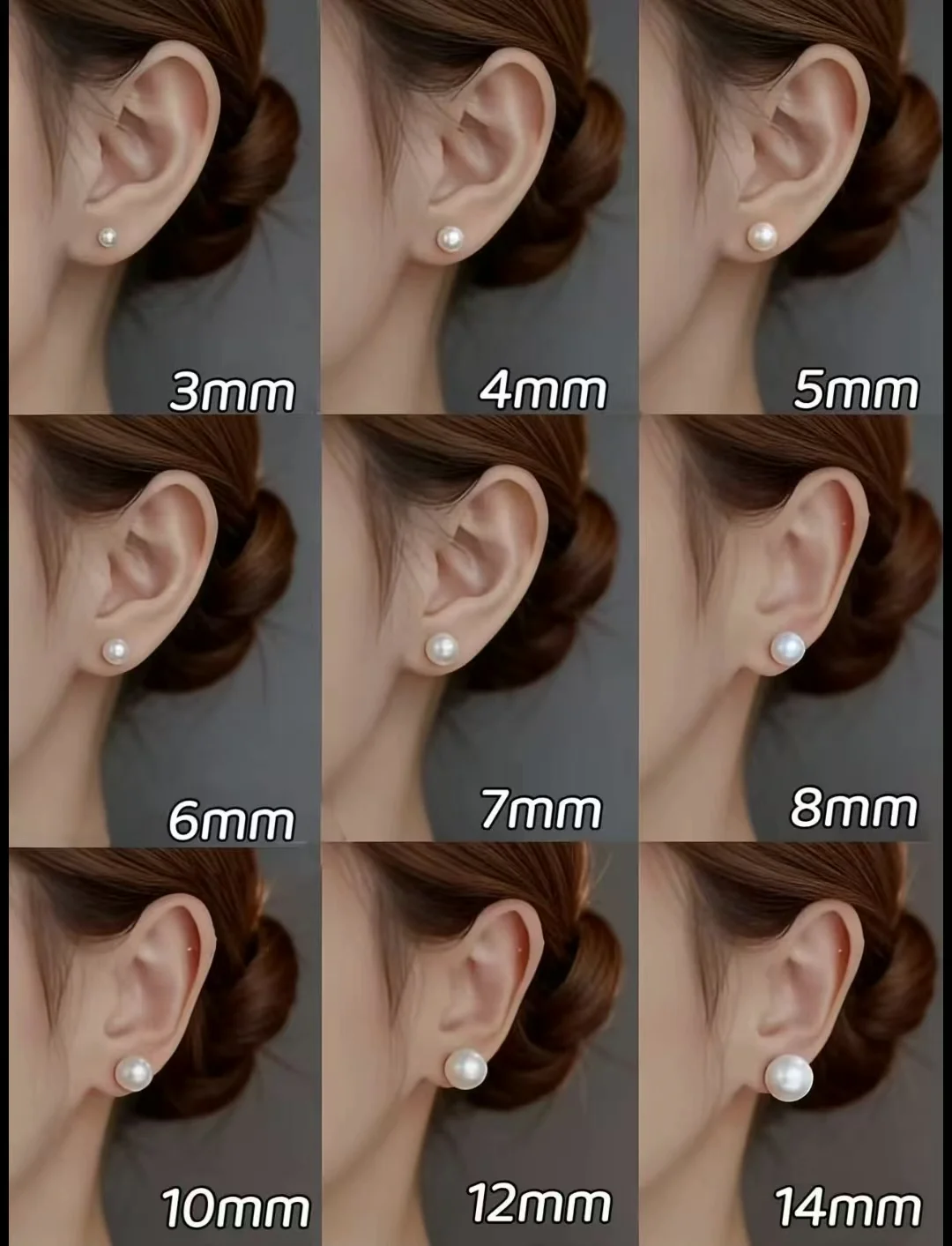
Akoya pearls are relatively small compared with South Sea pearls, with GIA describing a typical Akoya size range around 6–9 mm. Larger Akoya exist, but increasing size should not automatically outrank luster, nacre, or overall beauty.
A larger natural-blue pearl with excellent luster, attractive color, a clean surface, and good shape can be genuinely scarce. But a buyer comparing budgets may get more visual quality from a smaller pearl with stronger luster and better surface than from a larger pearl whose main advantage is diameter.
For pairs and strands, the challenge increases further: finding one large blue Akoya is different from finding many large pearls that also match one another.
Matching Is a Major Value Factor for Blue Akoya Strands
Matching applies whenever two or more pearls are used together. A strand must coordinate not only in diameter but also in shape, luster, surface quality, bodycolor, overtone, and overall visual character. GIA therefore treats matching as a separate value factor for multi-pearl jewelry.
Blue Akoya makes this especially noticeable because subtle differences between gray, blue, green, silver, and pinkish overtones can become obvious when pearls are placed next to each other. A necklace may contain beautiful individual pearls yet still look inconsistent as a finished strand.
This also explains why evaluating a necklace from a photograph of a single “representative pearl” is not enough. For a strand, you need to judge the whole layout.
Key Risk #1: Treated Blue Sold as Natural Blue
This is the most important risk when a seller is charging a premium specifically for natural color.
Irradiated and dyed Akoya pearls exist, and sophisticated treatments cannot always be diagnosed confidently from normal photographs or casual visual inspection. GIA laboratories use combinations of microscopy, X-ray methods, spectroscopy, fluorescence analysis, and other testing depending on the problem being investigated. GIA also cautions that fluorescence behavior by itself can be complex and is not automatically conclusive.
For a relatively inexpensive fashion purchase, clear seller disclosure may be sufficient for your purpose. For a high-value natural-blue strand or pair, stronger documentation becomes more reasonable because the price premium may depend directly on color origin.
Key Risk #2: Assuming You Can Prove Natural Color at Home
Buyers sometimes look for simple rules such as “natural blue always has this overtone” or “irradiated blue always looks that color.” Such shortcuts are unreliable.
Treatments may produce a range of gray, blue, greenish, or mixed appearances, while natural pearls themselves vary considerably. GIA's work on treated colored pearls illustrates why laboratories rely on multiple observations and analytical techniques rather than a single visual sign.
You can use visual inspection to decide whether you like a pearl. You should be much more cautious about using visual inspection alone to make a definitive statement about treatment.
If identification is important to the purchase, our pearl identification guide explains why practical observation and laboratory-level conclusions should not be confused.
Key Risk #3: Reading a Certificate Without Checking What It Actually Certifies
The word “certificate” can create more confidence than the document actually justifies. Different reports may address different questions: pearl identity, cultured status, quality classification, mollusk type, color origin, treatment, or only selected characteristics.
For example, GIA distinguishes its cultured-pearl classification service from broader pearl identification services. A classification report is designed around quality factors and is not simply interchangeable with every form of identification or treatment testing.
Before paying for a premium natural-blue claim, check:
- who issued the report;
- whether the report belongs to the actual pearls being sold;
- whether it evaluates quality, identity, color origin, treatment, or some combination of these;
- whether the seller's marketing wording says more than the report itself says.
A grade such as “AAA” also deserves context because seller grading systems are not universally identical. It is more useful to compare the underlying characteristics—luster, surface, nacre, shape, size, color, and matching—than to compare two letters printed by unrelated sellers.
Key Risk #4: Buying the Photograph Instead of the Pearl
Blue Akoya is unusually sensitive to presentation. Camera white balance, background color, exposure, surrounding reflections, and display settings can make a silver-gray pearl appear noticeably bluer or a cool blue pearl appear flatter than it does in person.
When buying remotely, ask for images or video under neutral lighting and request views of the entire strand rather than only macro close-ups. A white or neutral-gray background is useful for comparison, and a short video that changes the pearl's angle can reveal luster and overtone behavior better than one highly edited still image.
A practical warning sign is inconsistency: if the same pearls appear steel gray in one image, intensely blue in another, and lavender in a third without any explanation of lighting, do not make a precise color judgment from the most attractive photograph alone.
A Better Buying Order for Blue Akoya Pearls
Instead of asking “Which strand is the bluest?”, use this sequence:
- Confirm the product identity. Make sure you are actually comparing Akoya cultured pearls.
- Clarify color origin. Ask whether the color is natural, treated, or not independently determined.
- Judge luster and nacre. Strong reflection and sound nacre should survive your fascination with the color.
- Choose the color you genuinely prefer. Compare silver-blue, gray-blue, overtone, and overall liveliness rather than saturation alone.
- Compare surface, shape, and size. Understand which compromises are responsible for the price difference.
- For pairs or strands, inspect matching. Look at the jewelry as a group, not just the best individual pearl.
- Match documentation to the size of the purchase. The more of the price that depends on rarity and natural color, the more valuable clear disclosure and appropriate laboratory documentation become.
This approach also makes price comparisons more meaningful. You are no longer comparing “blue Akoya versus blue Akoya”; you are comparing two specific combinations of origin, optical quality, color, nacre, size, surface, shape, and matching.
The Main Point to Remember
A fine blue Akoya pearl is valuable because several uncommon qualities come together—not simply because the pearl looks blue. Natural color can contribute rarity, but it needs strong luster, sound nacre, attractive color character, appropriate surface and shape, and, for multi-pearl jewelry, convincing matching to become a truly high-quality piece.
The biggest buying risk is reversing that logic: seeing an attractive blue photograph first and allowing every other quality question to disappear. Verify the color claim, judge the pearl itself, and then decide what the blue is worth to you.
FAQ
Are blue Akoya pearls naturally blue?
Some are. Akoya pearls can naturally occur in silver-blue, blue-gray, and related cool tones. However, blue or gray appearances can also be created or modified through treatments such as irradiation or dyeing, so color origin should be disclosed when it materially affects value.
Does a darker blue Akoya pearl always cost more?
No. Color is only one part of value. A darker pearl with weak luster, poor surface quality, weak matching, or questionable color origin may be less desirable than a lighter silver-blue pearl with excellent overall quality.
Can I tell whether a blue Akoya pearl was irradiated just by looking at it?
Not reliably. Certain visual features may raise suspicion, but treatment determination can require laboratory examination and analytical testing. Appearance alone should not be treated as definitive proof.
Does a pearl certificate prove that the blue color is natural?
Only if the scope and conclusions of that particular report actually address color origin or relevant treatments. A quality-classification document and a treatment-identification report do not necessarily answer the same questions, so read the report rather than relying on the word “certificate.”
Are blue Akoya pearls automatically more valuable than white Akoya pearls?
No. Natural blue can be rare and desirable, but white and blue Akoya are best evaluated within their respective categories. Exceptional luster, nacre, surface, size, shape, and matching can make either type highly valuable. There is no rule that blue automatically outranks white.