Why Does Pearl Origin Matter? The Relationship Between Origin, Pearl Type, Mollusk Species, and Quality
Pearl origin matters because it helps explain what kind of pearl you are looking at, which mollusk produced it, and what range of size, color, luster, and other characteristics is biologically possible. But origin is not a quality grade. A pearl from a famous producing region can still have weak luster or a heavily blemished surface, while an excellent pearl can come from more than one producing region.
The most useful way to understand origin is as a chain: geographic environment → mollusk species → pearl type → typical characteristics. Quality must then be judged on the individual pearl itself.
What Does “Pearl Origin” Actually Mean?
In pearl discussions, the word origin can refer to several different things. Keeping them separate prevents a great deal of confusion.
- Growth environment: whether the pearl formed in freshwater or saltwater.
- Biological origin: the species of mollusk that produced the pearl.
- Geographic origin: the country, region, lagoon, lake, or farm where the mollusk was cultivated.
These three ideas are related, but they are not interchangeable. For example, an Akoya cultured pearl is a saltwater pearl associated with Pinctada fucata. Akoya production is strongly associated with Japan, but Akoya pearls are also cultured in countries including China and Vietnam. The biological identity of the pearl therefore cannot be reduced to a country name alone.
This relationship is reflected in gemological classification. GIA notes that major cultured pearl types are associated with different pearl-producing mollusks, while CIBJO's pearl guidance also describes cultured pearls according to producing species, geographic distribution, and pearl characteristics.
How Pearl Type, Mollusk Species, and Origin Are Connected
The four pearl groups most commonly encountered in fine jewelry illustrate the connection clearly.
| Pearl Type | Major Producing Regions | Principal Mollusk | Typical Characteristics |
|---|---|---|---|
| Akoya | Japan, China, Vietnam | Pinctada fucata | Usually relatively small, commonly white or cream, frequently round, often known for bright and sharp luster |
| Tahitian | Primarily French Polynesia | Pinctada margaritifera | Naturally gray to dark bodycolors with green, blue, purple and other overtones; generally larger than Akoya |
| South Sea | Australia, Indonesia, Philippines, Myanmar and nearby Indo-Pacific regions | Pinctada maxima | Among the largest cultured pearls; white, silver, cream and golden colors; often associated with a softer, satiny luster |
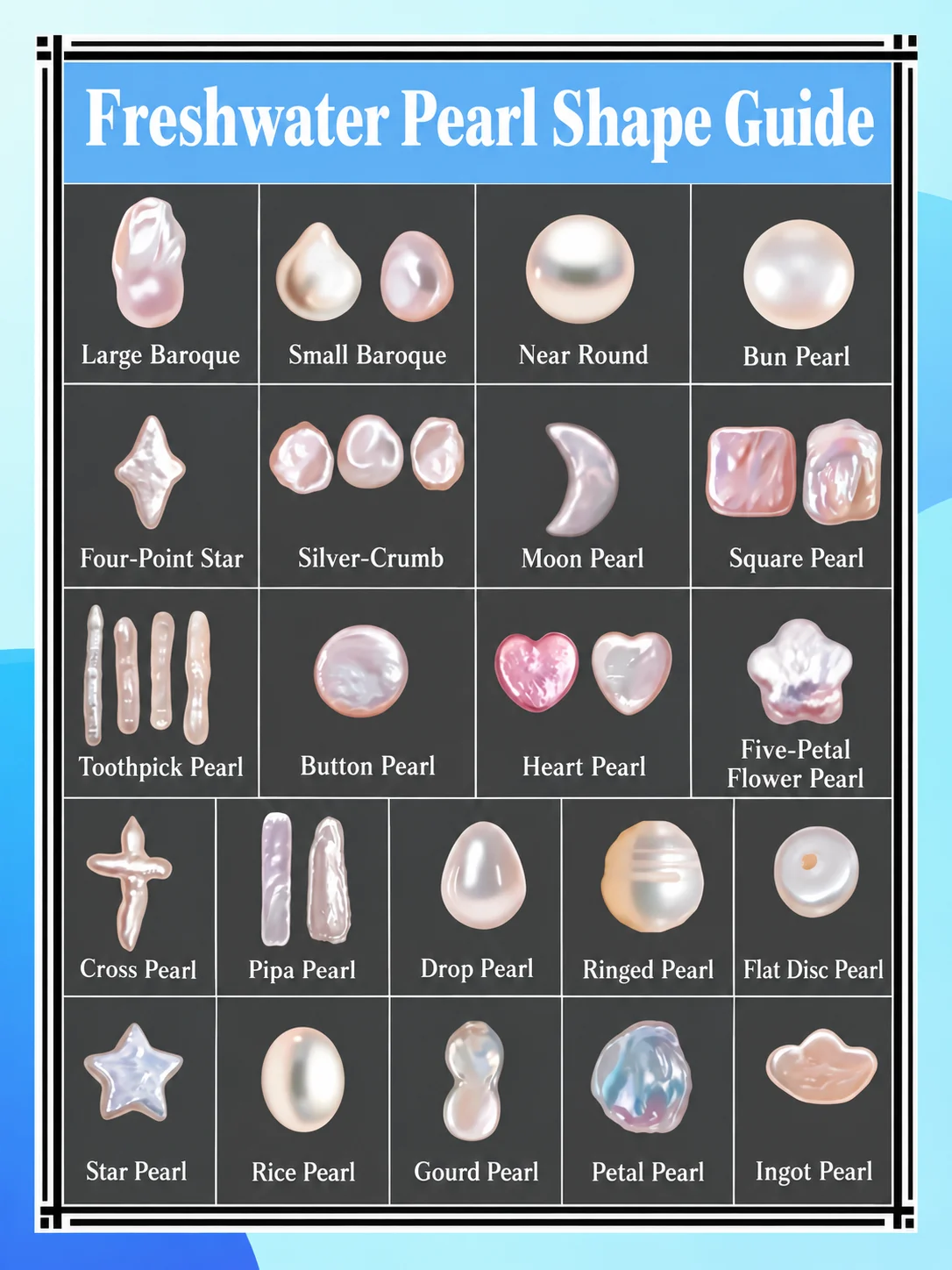
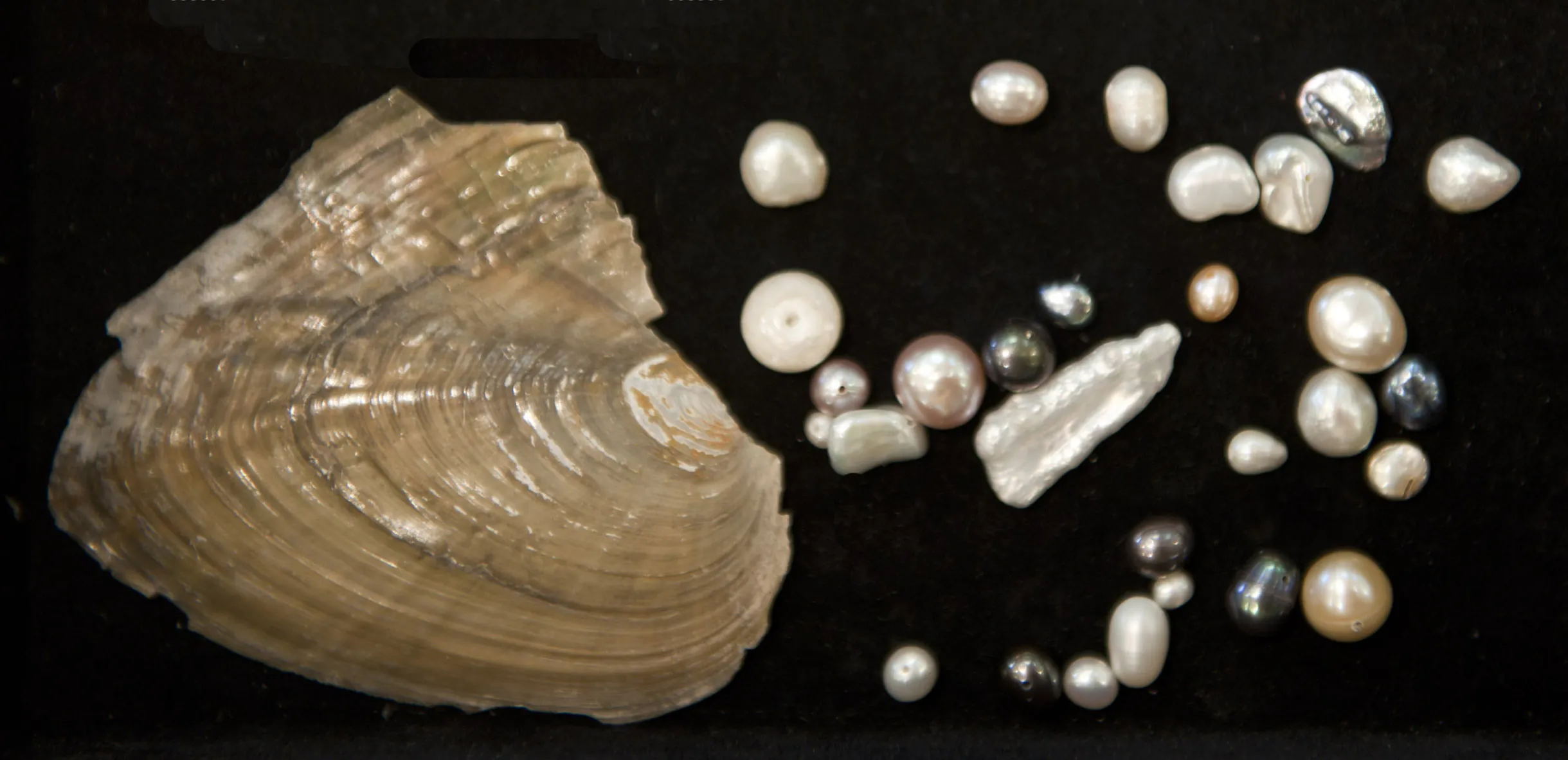
| Freshwater | China is the dominant modern source, with production also possible elsewhere | Commonly Hyriopsis cumingii and related hybrids in Chinese production | Very broad range of shapes and sizes; white, peach, pink, lavender and other natural colors; both tissue- and bead-nucleated products occur |
These are typical patterns rather than rigid limits. GIA specifically cautions that pearl types have characteristic size and color ranges but individual pearls can occur outside those usual ranges.
For a broader geographic overview, see our guide to global pearl-producing regions.
Why Does the Mollusk Species Matter So Much?
The mollusk is not simply a container in which a pearl happens to grow. Its biology places important boundaries around the pearl that can be produced.
1. Mollusk size affects the possible pearl size
Pinctada maxima, the oyster used for South Sea cultured pearls, is substantially larger than the oyster used for Akoya production. A larger host can accommodate larger nuclei and has the biological capacity to produce much larger pearls. This is one reason South Sea pearls occupy a very different size category from most Akoya pearls.
GIA specifically identifies the larger size of the South Sea pearl oyster as a reason for the greater size potential of South Sea cultured pearls.
2. Mantle tissue helps determine natural color possibilities
The pearl sac that deposits nacre originates from mantle tissue. The characteristics of that tissue—and therefore the species and sometimes the selected donor oyster—help influence the color potential of the resulting pearl.
For example, Pinctada margaritifera, commonly called the black-lipped pearl oyster, produces the naturally dark color family associated with Tahitian cultured pearls. Pinctada maxima includes silver-lipped and gold-lipped forms associated with white, silver, cream, champagne, and golden South Sea pearls.
This is why pearl color cannot always be separated from biological origin. A naturally dark Tahitian pearl and a dark-colored freshwater pearl may appear superficially similar, but they do not necessarily share the same species, environment, or color origin.
3. Different species are associated with different cultivation systems
Akoya, Tahitian, and South Sea cultured pearls are generally bead-nucleated saltwater pearls. Freshwater cultivation has historically made extensive use of mantle-tissue nucleation without a spherical bead, although modern Chinese freshwater production now also includes sophisticated bead-nucleated pearls.
These cultivation differences influence the number of pearls a mollusk may produce, the shapes commonly encountered, production economics, and the structure visible inside a pearl during laboratory examination.
Readers who want to understand the broader biological process can continue with our guide to pearl cultivation.
Does Geographic Origin Directly Determine Pearl Quality?
No. Geographic origin influences the conditions under which a pearl can form, but it does not automatically tell you whether an individual pearl is high quality.
A famous origin may indicate a particular pearl tradition, species, cultivation system, climate, or production standard. It may also affect scarcity and market perception. But pearls from the same farm—or even the same harvest—can vary considerably.
Individual pearl quality should still be evaluated using observable characteristics. GIA's pearl value framework considers seven factors: size, shape, color, luster, surface, nacre, and matching for multi-pearl items.
That leads to an important distinction:
Origin explains the pearl's biological and production context. Quality describes how successfully that particular pearl developed within that context.
For example, two Japanese Akoya pearls may come from the same general region but differ dramatically in luster, surface condition, nacre quality, shape, and matching. Calling both of them “Japanese Akoya” does not make them equal.
The same principle applies to South Sea, Tahitian, and freshwater pearls. Learn more about the individual criteria in our guide to evaluating pearl value.
How Does the Growing Environment Affect the Pearl?
Even within one mollusk species, cultivation environment matters. Pearl-producing mollusks are living animals, and their health affects nacre deposition.
Factors such as water temperature, food availability, salinity in marine farms, water quality, disease, seasonal conditions, stocking density, and general farm management can influence mollusk survival and pearl development. The precise effect of each factor is complicated, however, and simple rules such as “colder water always means better pearls” should be treated cautiously.
Farmers also influence the final result through nucleus selection, grafting technique, donor mantle selection, mollusk care, cultivation duration, and harvest timing. As a result, species establishes the biological potential, while environment and cultivation determine how successfully that potential is realized.
Why Two Pearls from Different Origins Can Look Surprisingly Similar
This has become especially important as pearl cultivation technology improves.
Modern bead-nucleated freshwater pearls can be very round, white, and highly lustrous. Some can visually resemble small Akoya cultured pearls closely enough that sellers have used expressions such as “freshwater Akoya,” “baby Akoya,” or similar wording.
However, appearance does not turn a freshwater pearl into an Akoya pearl. In a 2026 discussion of this market terminology, GIA emphasized that true Akoya cultured pearls originate from the saltwater mollusk Pinctada fucata, while visually similar Chinese freshwater pearls are typically produced by Hyriopsis cumingii or related hybrids. GIA describes “freshwater Akoya” as incorrect nomenclature.
This is one of the clearest examples of why origin matters: two pearls may have similar size, shape, color, and luster while still belonging to different biological pearl types.
Our separate guides to Akoya pearls, non-bead-nucleated freshwater pearls, and nucleated freshwater pearls explain these categories in more detail.
Can You Determine a Pearl's Exact Origin Just by Looking at It?
Usually not with certainty.
An experienced pearl buyer may recognize characteristics that strongly suggest a pearl type, but appearance alone is not always sufficient to establish freshwater versus saltwater origin, mollusk species, treatments, or exact geographic provenance.
Gemological laboratories can use X-radiography, chemical analysis, fluorescence behavior, Raman spectroscopy, UV-Vis spectroscopy, and other techniques to investigate pearl identity. GIA notes that trace-element chemistry can help distinguish freshwater from saltwater formation and may contribute to identifying the producing mollusk. Research has also explored the use of trace-element data to distinguish pearls from different geographic sources.
However, determining an exact country, lake, lagoon, or farm can be considerably more difficult than identifying the broad pearl type. For ordinary jewelry purchases, reliable supply-chain documentation may therefore be just as important as visual inspection when a very specific geographic claim is being made.
Origin, Type, and Quality: Which Should a Buyer Look at First?
A practical evaluation can be made in the following order:
- Identify the broad environment. Is it freshwater or saltwater?
- Identify the pearl type. Is it Akoya, Tahitian, South Sea, freshwater, or another pearl category?
- Understand the producing mollusk. This explains much of the pearl's natural size and color potential.
- Clarify geographic provenance if it matters. Country and farm information can add useful context, but should not substitute for actual quality evaluation.
- Judge the pearl itself. Examine luster, surface, nacre, shape, color, size, and matching.
- Ask about treatments. Color enhancement and other treatments are a separate question from geographic origin.
This sequence prevents two common mistakes: paying for a prestigious place name while overlooking mediocre quality, or assuming that two similar-looking pearls must be the same type.
For a broader framework for distinguishing pearl categories, see our pearl classification guide.
Origin Is Context, Not a Quality Certificate
The easiest way to remember the relationship is:
Origin helps explain what a pearl is capable of being; quality tells you how good the individual pearl actually is.
Geography determines which mollusks can be farmed successfully. Mollusk species strongly influences pearl type, natural color range, size potential, and cultivation method. Local environment and farming practices influence how the pearl develops. But after all of that, every harvested pearl must still be judged individually.
That is why “Japanese,” “Tahitian,” “Australian,” “South Sea,” or “Chinese freshwater” should never be treated as complete quality descriptions. A useful pearl description combines identity, origin, and observable quality rather than replacing one with another.
FAQ
Does pearl origin determine pearl quality?
No. Origin can influence species, cultivation environment, rarity, typical size, and color possibilities, but pearls from the same origin can have very different luster, surfaces, shapes, nacre quality, and overall value.
Are Japanese Akoya pearls automatically better than Akoya pearls from other countries?
No. Japan has a highly developed Akoya pearl industry and a strong reputation for fine-quality production, but country of origin alone does not determine the quality of an individual pearl. The pearl still needs to be evaluated on its own characteristics.
Are Tahitian pearls always grown on the island of Tahiti?
No. The term is associated with cultured pearls from French Polynesia, and production takes place across multiple islands and atolls rather than only on Tahiti itself. Pinctada margaritifera is the characteristic producing mollusk.
Why are South Sea pearls generally larger than Akoya pearls?
One important reason is the host mollusk. Pinctada maxima, which produces South Sea cultured pearls, is much larger than the Akoya pearl oyster and can accommodate the production of substantially larger pearls.
Can a freshwater pearl look like an Akoya pearl?
Yes. Modern bead-nucleated freshwater pearls can sometimes be round, white, and highly lustrous enough to resemble Akoya pearls. Similar appearance does not make them the same pearl type, because they come from different environments and mollusk species.