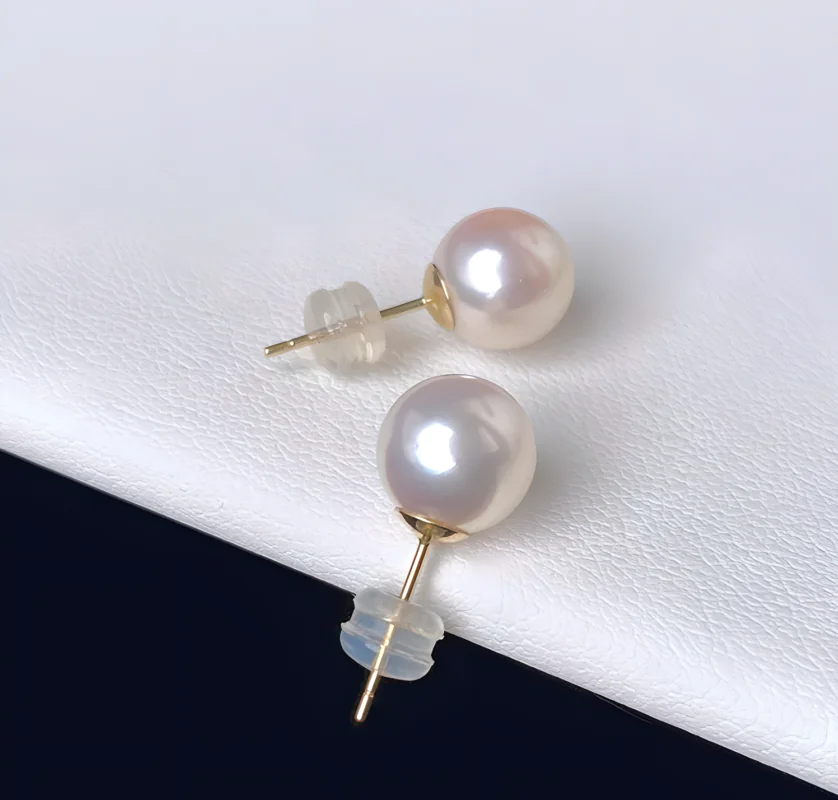
Pearls are sorted and graded because a harvest is not a batch of identical gems. Even pearls grown in the same farm, collected at the same time, and produced by the same type of mollusk can differ in size, shape, color, luster, surface condition, and nacre quality.
Sorting separates those differences into useful groups. Grading evaluates and communicates quality within those groups. Together, the two processes make it possible to match pearls for jewelry, price them more consistently, route them to suitable designs, and describe what a buyer is actually getting.
This distinction matters because pearl grading is often reduced to labels such as AAA, AA, or A. Those letters can be useful inside one seller's system, but they are not a universal language shared by the entire pearl industry.
Sorting and Grading Are Related, but They Are Not the Same Thing
In everyday trade language, sorting and grading are sometimes used loosely. In practice, they perform different jobs.
| Process | Main question | Typical result |
|---|---|---|
| Sorting | Which pearls belong together? | Groups with similar size, shape, color, luster, surface appearance, or other relevant characteristics |
| Grading | How should the quality of these pearls be described or ranked? | A quality description, classification, or seller-specific grade |
| Matching | Which individual pearls work together in one piece of jewelry? | Pairs, strands, sets, or deliberately graduated and mixed layouts |
A useful way to remember the difference is this: sorting changes what is in the group; grading changes how the group's quality is described.
The exact workflow varies by pearl type, producer, processor, and intended product. Sorting is therefore better understood as an iterative selection process than as one single pass through a machine or one final inspection at a table.
Why Does One Pearl Harvest Need So Much Sorting?
Pearls are biological gems. They form inside living mollusks, so natural variation is part of the material. A farm can control many cultivation conditions, but it cannot make every harvested pearl emerge with the same appearance.
The Gemological Institute of America (GIA) describes pearl quality and value using seven factors: size, shape, color, luster, surface, nacre, and matching for pieces containing more than one pearl. These factors help explain why visually similar pearls can still end up in different groups or at different price levels.
For a more detailed explanation of those quality characteristics, see our Pearl Grading Guide.
Size
Pearls must often be separated into narrow millimeter ranges before they can be matched into pairs or strands. A difference that looks small when pearls are loose can become obvious when dozens are placed next to one another.
Shape
Round, near-round, oval, button, drop, circled, and baroque pearls serve different markets and designs. Sorting by shape is not simply a way to separate “good” from “bad.” A well-formed baroque pearl can be highly desirable even though it is not round.
If you want to understand how shape categories are used, our Pearl Shape Guide goes deeper into the differences.
Color
Bodycolor, overtone, and overall color impression can vary across a harvest. For a single loose pearl, that variation may be attractive. In a white pearl necklace, however, one noticeably creamier or greyer pearl can interrupt the visual continuity of the entire strand.
Luster
Luster describes the strength and sharpness of reflections from a pearl. It is one of the most visually important quality factors, but standards should be considered in the context of pearl type. Fine Akoya pearls, for example, are often appreciated for a sharper mirror-like appearance, while other pearl types may show a different characteristic luster.
See the Pearl Luster Guide for a closer look at how luster is judged.
Surface
Most pearls have at least some surface characteristics because they grow in a biological environment. Sorting considers the number, type, location, and visibility of those features. A small mark that can be positioned near a drill hole may matter very differently from a deep crack or other feature that could affect durability.
Nacre Quality
Nacre must be judged in the context of pearl type and structure. In bead-nucleated cultured pearls, nacre condition and coverage can affect both appearance and durability. It should not be treated as a simple visual checkbox that is identical for every kind of pearl.
How Are Pearls Commonly Sorted After Harvest?
There is no single mandatory order used everywhere, but a commercial sorting workflow commonly moves from broad separation toward increasingly precise groups.
- Initial separation: pearls may first be divided by type, general condition, or obvious characteristics that determine whether they continue into jewelry-quality sorting.
- Size sorting: pearls are separated into practical millimeter ranges.
- Shape sorting: round and near-round pearls are separated from oval, button, drop, circled, baroque, and other forms.
- Color sorting: bodycolor and visible tone differences are grouped more closely.
- Luster and surface sorting: pearls are separated according to the strength of their appearance and the nature of visible surface features.
- Final matching: individual pearls are selected for pairs, strands, sets, or a particular jewelry design.
These steps can overlap. A sorter may move pearls back and forth between groups as a target pair or strand develops. The finer the match required, the smaller the pool of acceptable pearls becomes.
Why Is Grading Necessary After Sorting?
If sorting already creates groups, why add a grade? Because grouping alone does not tell a buyer, designer, or production team how the quality compares within an inventory.
1. Grading Creates a Practical Quality Language
A seller needs a consistent way to distinguish stronger-luster pearls from duller ones, cleaner surfaces from more visibly marked surfaces, and exceptionally well-matched strands from more commercial matches.
A grading system can help communicate those differences efficiently—as long as the standards behind the grade are defined.
2. Grading Helps Separate Price Levels
Pearl value is rarely determined by one characteristic alone. Size, shape, color, luster, surface, nacre, rarity, matching, and market demand can interact. Grading helps turn those combinations into usable price tiers for wholesale and retail inventory.
This is also why two pearls from the same harvest can have very different prices. They may have started in the same cultivation batch but finished with very different combinations of desirable characteristics.
For a broader framework, see How Pearl Value Is Evaluated.
3. Grading Helps Route Pearls to the Right Product
Not every pearl needs to become part of a top-matched classic strand. Some are better suited to earrings, pendants, rings, mixed-shape designs, baroque jewelry, or more accessible price points.
Good sorting and grading therefore do more than reject lower-quality material. They help identify the most suitable use for different pearls.
4. Grading Supports Quality Control
Once a company defines its own quality thresholds, grading gives production and sales teams a repeatable internal reference. This is particularly useful when many pearls must be selected over time for similar products.
Why Matching Is a Separate Skill
Matching deserves special attention because it is not simply an inherent feature of one pearl. It is the result of human selection.
GIA includes matching as one of its seven pearl value factors for jewelry containing multiple pearls. A well-matched pair or strand should look coherent in the characteristics relevant to the design—often size, shape, color, luster, and surface quality.
That does not mean every good strand must look perfectly uniform. A graduated necklace intentionally changes size. A multicolor strand intentionally changes color. The question is whether the variation looks controlled and harmonious rather than accidental.
This is one reason finished pearl jewelry can cost substantially more than the apparent price of an equal number of loose pearls. The finished piece contains selection work: many possible pearls may be compared before a small number are accepted together.
For makers and designers buying material, this is also why wholesale pearl strands and loose pearls are typically offered with clearly defined size, shape, color, and quality expectations rather than as one undifferentiated harvest.
Does AAA Mean the Same Thing Everywhere?
No. This is one of the most important points for buyers to understand.
There is no single worldwide letter-grade system that makes every seller's AAA, AA, or A directly interchangeable. CIBJO's 2026 Pearl Commission reporting continues to describe the lack of a universal pearl grading language and notes that different pearl sectors and classification systems have different needs.
GIA takes a descriptive approach based on its seven pearl value factors rather than trying to turn every pearl into one universal commercial letter grade. Its classification reports can describe factors such as size, shape, color, luster, surface, nacre, and matching in a consistent framework.
So when comparing pearls from different sellers, ask what the grade actually means. A useful grade should connect to visible or measurable criteria—not merely add more letters to the product name.
Does a Lower Grade Mean a Pearl Is Bad?
Not necessarily. “Lower grade” can describe many different trade-offs, and some of them may matter very little for the intended design.
A pearl might have excellent luster but a more irregular shape. Another might be beautifully round but show more surface marks. A baroque pearl can be intentionally chosen for its form rather than judged as a failed round pearl.
The more useful distinction is between aesthetic variation and problems that affect durability or disclosure. Shape variation, minor surface features, or unusual colors may be completely acceptable. Serious cracks, unstable surface conditions, or undisclosed treatments raise a different kind of concern.
Good grading should help buyers understand those distinctions instead of hiding everything behind one letter.
What Should Buyers Look at Instead of Grade Letters Alone?
When comparing pearls—especially across different sellers—use the grade as a starting point, not the conclusion. Check the underlying description.
- Pearl type: Akoya, freshwater, Tahitian, South Sea, or another type should be evaluated in the right context.
- Actual size: look for millimeter measurements rather than vague labels such as “large.”
- Shape: decide whether the shape is a quality requirement or a design preference.
- Color: consider bodycolor, overtone, and consistency where matching matters.
- Luster: look for clear descriptions and photos that show reflections rather than only bright exposure.
- Surface: distinguish minor natural characteristics from deeper or durability-related issues.
- Nacre: consider nacre quality in relation to the pearl type and cultivation structure.
- Matching: for pairs and strands, judge the group as a whole, not just one attractive pearl.
- Treatments: ask for disclosure when color or other appearance may have been altered.
If you are sourcing pearls for a specific design and need matching, drilling, processing, or production support, our pearl sourcing and processing services explain the types of work that can happen after selection.
The Main Reason Pearls Are Sorted and Graded
Pearls are sorted and graded because nature produces variation, while jewelry production requires decisions.
Sorting turns a mixed harvest into workable groups. Grading gives those groups a consistent quality description. Matching then selects individual pearls that belong together in a finished design.
For buyers, the most useful lesson is simple: do not ask only, “What grade is this pearl?” Ask what characteristics produced that grade. A transparent description of luster, surface, shape, size, color, nacre, and matching tells you much more than a letter by itself.
Frequently Asked Questions
What is the difference between sorting and grading pearls?
Sorting places pearls into groups with similar characteristics, such as size, shape, color, luster, or surface appearance. Grading evaluates or describes the quality of those pearls according to a defined system. Matching is an additional selection step used for pairs, strands, and other multi-pearl jewelry.
Are pearls sorted only once?
Usually not. Commercial pearl handling often involves several rounds of sorting as the groups become more precise. A pearl may first be separated by size and shape, then by color or luster, and later be selected again for a particular pair or strand. The exact sequence varies by producer and product.
Is there a universal pearl grading system?
No single commercial letter-grade system is universal across the global pearl trade. Systems such as AAA–A can be useful within one seller's inventory, but the definitions may differ between sellers. GIA instead uses seven pearl value factors to classify and describe pearl quality.
Can a baroque pearl be high quality?
Yes. Baroque describes shape, not an automatic quality failure. A baroque pearl can have excellent luster, attractive color, a pleasing surface, and strong overall appeal. Whether roundness matters depends on the design and the market being served.
Why do well-matched pearl strands cost more?
A well-matched strand requires many pearls to be compared across several characteristics at once. As the required size, color, luster, shape, and surface consistency become more specific, fewer pearls qualify for the same strand. The selection work and rarity of compatible pearls can therefore add significant value.