Why Are Golden South Sea Pearls Expensive? Which Factors Affect Their Price?
Golden South Sea pearls are expensive because they combine slow, limited saltwater cultivation with unusually large pearl sizes and a narrow supply of fine-quality results. They are grown in the gold-lipped form of Pinctada maxima, and the most valuable examples must satisfy several difficult conditions at once: attractive natural golden color, strong luster, a clean surface, desirable shape, good nacre, and—when used in earrings or strands—close matching. The word golden alone does not determine price. Two Golden South Sea pearls of the same diameter can still differ greatly in value.
Quick answer: what makes Golden South Sea pearls expensive?
There are two levels to the answer. First, Golden South Sea pearls begin from an expensive production base: South Sea pearl oysters are large, saltwater cultivation takes years rather than months, production is limited, and one oyster normally produces only one main cultured pearl at a time. Second, the price of an individual pearl depends on how rare its particular combination of quality factors is.
For buyers, the most useful framework is not “golden pearls are expensive because gold is rare.” It is:
- Pearl type sets the baseline. Genuine Golden South Sea cultured pearls belong to the South Sea category associated with Pinctada maxima.
- Size can move price sharply. Large pearls are harder to produce while maintaining high quality.
- Natural golden color matters. Rich, even, desirable natural color can carry a premium over paler material.
- Luster and surface quality separate ordinary from fine pearls.
- Roundness is scarce. Round and highly symmetrical shapes generally cost more when other factors are comparable.
- Matching adds another layer of rarity. Finding two, twenty, or forty pearls that look consistent is much harder than finding one attractive pearl.
- Treatment status matters. A naturally colored pearl and a treated golden-looking pearl should not automatically receive the same rarity premium.
The broader South Sea pearl guide explains the pearl type, oyster, colors, sizes, and cultivation background in more detail.
The price factors at a glance
| Factor | What usually raises the price | What buyers often misunderstand |
|---|---|---|
| Size | Larger diameter, especially when high quality is maintained | Price does not rise by a simple fixed amount per millimeter. |
| Color | Attractive, even natural gold; richer saturation may carry a premium | Deep gold is not automatically top quality if luster, surface, or shape are weak. |
| Luster | Bright, lively reflections and strong visual depth | A large pearl can still be less valuable if it looks dull or chalky. |
| Surface | Fewer distracting pits, bumps, wrinkles, or blemishes | Fine pearls do not have to be absolutely flawless. |
| Shape | Round or highly symmetrical forms, all else equal | A beautiful drop or baroque pearl can still be highly desirable. |
| Nacre | Good nacre quality, continuity, and condition | Nacre should not be reduced to one thickness number alone. |
| Matching | Close consistency in size, shape, color, luster, and surface across a pair or strand | A matched strand is not simply the price of one pearl multiplied by the pearl count. |
| Color origin / treatment | Natural color when natural-color rarity is part of the purchase | A genuine cultured pearl can still have treated color. |
| Jewelry construction | Precious metal, diamonds, workmanship, design, and brand positioning | The retail price of a finished jewel is not the same as the value of the loose pearl alone. |
GIA summarizes pearl quality and value through seven core factors: size, shape, color, luster, surface, nacre, and matching. For Golden South Sea pearls, treatment disclosure and the context of the finished jewelry should then be considered on top of those seven factors.
Why the Golden South Sea pearl category starts at a higher price
They come from a large saltwater pearl oyster
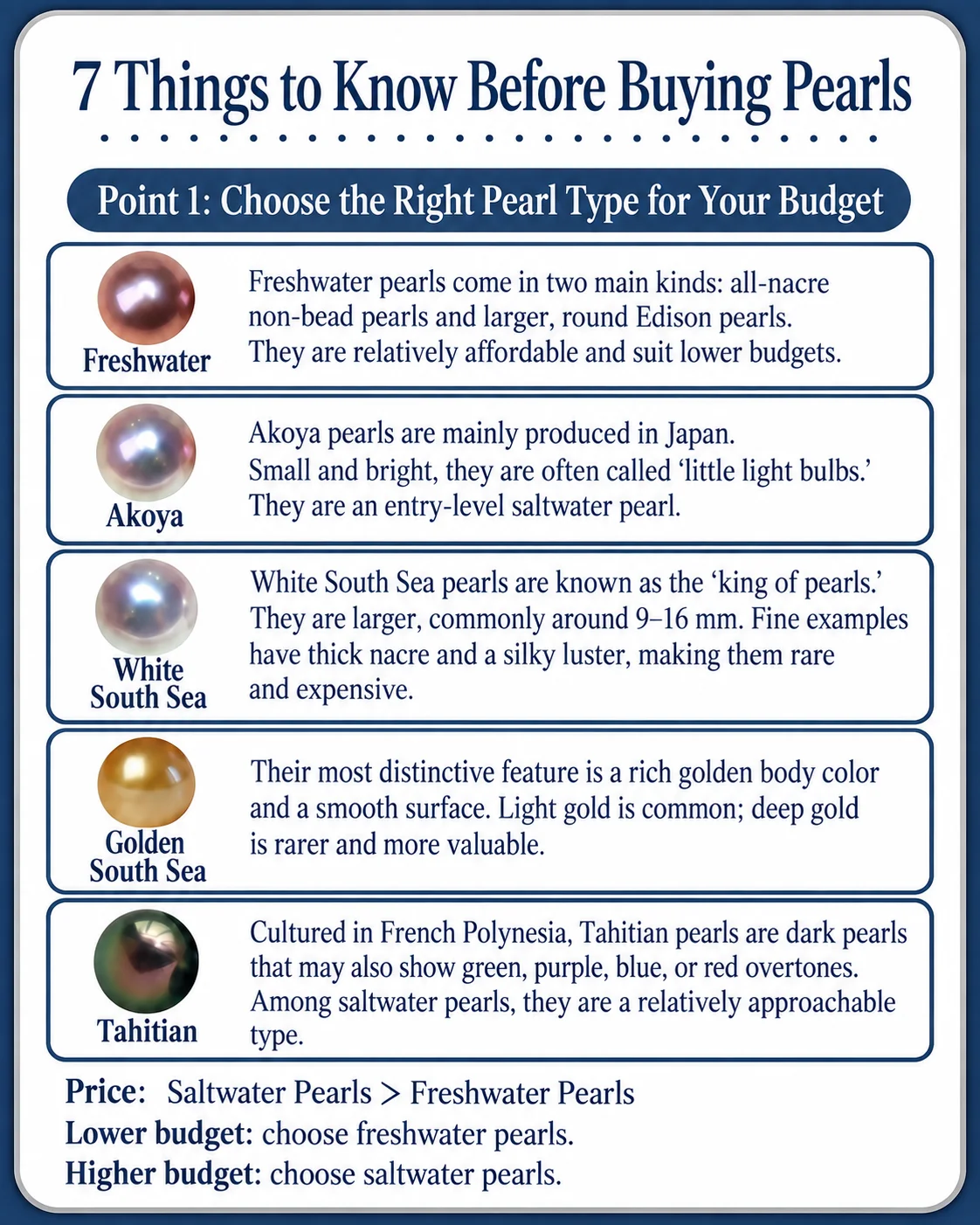
Golden South Sea cultured pearls are associated with the gold-lipped form of Pinctada maxima. This is one of the large pearl-producing oysters used in South Sea cultivation. Its size allows farmers to use larger nuclei and produce pearls in a size range that is difficult for smaller pearl oysters to match.
Large potential size does not mean every oyster produces a large, round, clean, lustrous pearl. It means the biological system is capable of producing large pearls—and the best results become valuable precisely because many quality requirements must survive the same long cultivation process.
The cultivation cycle is long and exposed to risk
South Sea pearl farming is not a rapid manufacturing process. GIA notes that South Sea pearls have a long growth period, often measured in years. During that time, oysters must remain healthy while the pearl develops in open-water conditions. Mortality, nucleus rejection, environmental stress, surface defects, irregular growth, and disappointing color or luster can all reduce the number of pearls that finish at the top of the market.
This is one reason a fine Golden South Sea pearl should be understood as a selection result, not merely as the predictable output of placing a nucleus in an oyster.
Fine quality is the intersection of several rare conditions
The real scarcity appears when requirements stack. A farmer may harvest a pearl that is large but baroque, round but blemished, richly golden but dull, or clean but pale. A pearl that is simultaneously large, round, naturally golden, strongly lustrous, relatively clean, and well formed comes from a much smaller portion of the available material.
The expensive part is not one rare feature. It is the rare combination of several desirable features in the same pearl.
1. Size: why a few millimeters can change the price so much
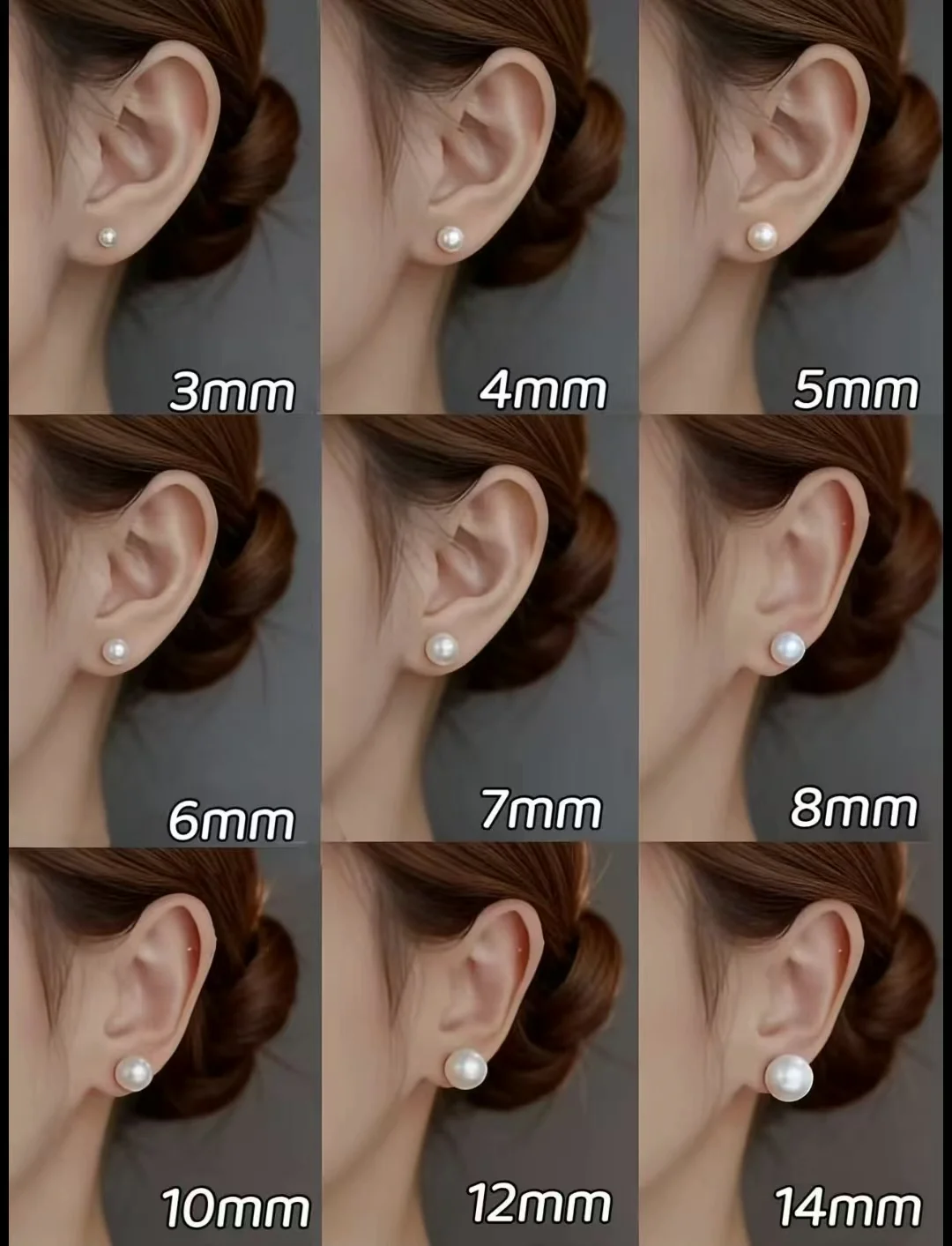
Size is one of the easiest factors to measure and one of the easiest to misuse. In general, larger pearls of the same type become more valuable when the other quality factors remain comparable. Golden South Sea pearls already occupy a relatively large size range, so moving upward in diameter can quickly narrow the number of suitable pearls available.
The important phrase is “when other factors are comparable.” A larger pearl is not automatically better. A smaller pearl with excellent luster, a cleaner surface, a rounder shape, and better color can be more desirable than a larger pearl with weak visual quality.
Price also does not follow a simple formula such as “every extra millimeter adds 10%.” As size rises, the difficulty of finding a pearl that is still round, clean, lustrous, and attractive also rises. This is why price can move in steps rather than in a straight line.
2. Color: why natural deep gold can command a premium
Golden South Sea is not one fixed color. Natural bodycolor can range from pale champagne and yellow-gold through medium gold to deeper saturated golden tones. GIA notes that more saturated golden South Sea colors typically cost more than paler champagne colors, although market preference, overtone, overall beauty, and supply also influence color value.
For pricing, evaluate at least four things:
- Bodycolor: how light, medium, or deep the main gold appears.
- Saturation: whether the color looks washed out or richly developed.
- Evenness: whether the color is visually consistent across the pearl.
- Overtone and orient: secondary color effects that can add depth and individuality.
A common mistake is to turn this into a rigid rule that “the darker the gold, the better the pearl.” That is too simple. A deep-gold pearl with weak luster and obvious blemishes is not automatically superior to a slightly lighter pearl with exceptional life and surface quality. Color is a major value factor, but it still works together with the other factors.
3. Luster: the factor that makes a pearl look alive
Luster is the way light reflects from and interacts with the pearl's nacre. Fine South Sea pearls are known for a broad, rich, often satiny glow rather than the very sharp mirror-like look associated with some fine Akoya pearls.
When comparing Golden South Sea pearls, look beyond whether the surface is simply “shiny.” A strong pearl should show clear, lively reflections and visual depth. Weak luster can make even a large, clean, richly colored pearl look flat.
This is why buying from size and color alone can be misleading. If your budget forces a trade-off, a slightly smaller pearl with noticeably stronger luster may deliver more beauty than a larger but duller pearl.
4. Surface quality: cleaner pearls are harder to find
Pearls are organic gems, and minor surface characteristics are normal. Small pits, bumps, growth lines, wrinkles, or spots do not automatically make a pearl poor quality. The pricing question is how visible, numerous, deep, or distracting those characteristics are.
Cleaner surfaces generally command higher prices, especially when combined with large size and round shape. But buyers should avoid paying only for a “flawless” label. A tiny mark hidden near a drill hole may matter far less in jewelry than a dull surface or weak luster that is visible from across the room.
A practical way to evaluate surface quality is to rotate the pearl under neutral light and ask: Do the marks interrupt the overall beauty, or do you have to search for them?
5. Shape: why round pearls usually cost more
Roundness is difficult to produce naturally during pearl growth. When other factors are equal, a truly round Golden South Sea pearl is generally more valuable than a near-round, oval, circled, or irregular pearl because the round shape is rarer and especially easy to match in classic jewelry.
That does not mean non-round pearls are low quality. Symmetrical drops can be highly desirable for earrings and pendants, and distinctive baroque South Sea pearls can be excellent design material. Shape is partly a rarity factor and partly a design preference.
For buyers who want the visual scale and color of Golden South Sea pearls without paying the strongest roundness premium, high-luster drop, oval, or baroque pearls can offer better value.
6. Nacre: important, but not a simple “thicker is always more expensive” formula
Nacre is the material the oyster deposits around the nucleus to form the visible pearl. South Sea pearls are known for substantial nacre development, which contributes to their characteristic visual depth and durability.
Nacre is one of GIA's seven pearl value factors, but it should not be treated as an isolated marketing number. Nacre quality includes more than thickness alone; continuity, condition, structure, and the way nacre affects luster and surface appearance also matter.
For a buyer, the practical question is not “Which seller claims the thickest nacre?” It is whether the pearl has healthy, attractive nacre consistent with a fine South Sea pearl and whether any laboratory or quality report supports the claims being used to justify a premium.
7. Matching: why a pair or strand can cost disproportionately more
Matching applies whenever jewelry contains more than one pearl. A pair of earrings should usually look intentionally related. A strand may require dozens of pearls that agree closely enough in size, shape, bodycolor, overtone, luster, surface quality, and overall visual character.
This becomes especially difficult with large, round, naturally deep-golden pearls. Each additional requirement shrinks the pool of possible matches. The price of a fine strand therefore reflects not only the individual pearls but also the time and scarcity involved in assembling a coherent set.
This explains an apparent puzzle: a single excellent 12 mm pearl may be expensive, but a closely matched pair of comparable 12 mm pearls can carry an extra premium, and a well-matched strand of similar quality can move into an entirely different price level.
8. Natural color vs treated color: a major value distinction
One of the most important buying distinctions is whether the golden color is natural or was altered after harvest. GIA has documented both natural-color Golden South Sea cultured pearls and treated yellow or “golden” cultured pearls, including examples involving heat treatment and dye.
This does not mean a treated pearl is fake. A genuine cultured South Sea pearl can still have treated color. The value issue is different: if the seller is charging a premium for naturally rare deep-golden color, the color origin should support that claim.
Appearance alone is not always enough. Modern treatments can be difficult to identify visually. If natural color materially changes the price, ask for written treatment disclosure and, for a sufficiently valuable purchase, appropriate laboratory documentation. The pearl color enhancement guide explains the main treatment categories, while the pearl identification guide explains what laboratory testing can and cannot establish.
9. Origin, certificates, grade labels, and seller terminology
These factors can influence confidence and price, but they should not be confused with the pearl's physical quality.
Origin
South Sea pearls are produced in several Indo-Pacific regions. A documented origin can matter to certain buyers or markets, but origin alone does not guarantee superior luster, roundness, surface, or color. Evaluate provenance and quality separately.
Certificates
A laboratory report can add value by reducing uncertainty about identity, treatment status, or quality classification, depending on the service used. But the existence of a certificate does not magically improve the pearl itself. Read what the report actually concludes.
AAA, AA, A, and other seller grades
Pearl grading systems are not perfectly aligned across the entire trade. A seller may use AAA, AA, A, or another internal scale, while another seller defines those labels differently. For that reason, do not compare prices from grade letters alone.
Translate the grade into actual specifications: exact size, shape tolerance, luster, surface condition, color, nacre quality, matching, and treatment disclosure. The pearl value guide provides a broader framework for comparing those factors.
Why two Golden South Sea pearls of the same size can have very different prices
Imagine two pearls that both measure 12 mm.
Pearl A is round, strongly lustrous, relatively clean, naturally medium-to-deep gold, and visually balanced. Pearl B is also 12 mm but slightly off-round, paler, more blemished, and noticeably duller. If you compare only the diameter, the price difference can look unreasonable. If you compare the entire quality profile, the difference becomes easier to understand.
The opposite can also happen. A smaller 11 mm pearl with excellent luster and a beautiful natural gold may be preferable to a 13 mm pearl that is large but flat-looking. This is why size tells you how big the pearl is; it does not tell you how good the pearl is.
Loose pearl price and finished jewelry price are not the same thing
When consumers compare prices online, they sometimes compare a loose pearl with a finished ring or pendant and conclude that one seller has an enormous markup. That comparison may ignore a large part of the product.
A finished Golden South Sea pearl jewel can also include:
- 18K or other precious-metal settings;
- diamonds or colored gemstones;
- design and prototyping costs;
- drilling, setting, stringing, clasp work, and finishing;
- matching costs for earrings, bracelets, or strands;
- laboratory reports;
- brand, retail, warranty, packaging, and after-sales service.
To compare prices fairly, first decide whether you are comparing pearl to pearl or finished jewelry to finished jewelry.
How to compare Golden South Sea pearl prices fairly
Before deciding that one quotation is expensive or suspiciously cheap, normalize the specifications. Ask the seller to state the following clearly:
- Pearl identity: Is it a Golden South Sea cultured pearl associated with Pinctada maxima?
- Exact size: What is the diameter in millimeters?
- Shape: Round, near-round, drop, oval, circled, or baroque?
- Color: Champagne, light gold, medium gold, deep gold, or another description?
- Color origin: Natural color or treated?
- Luster: How bright and lively are the reflections?
- Surface: What kinds of blemishes are visible, and where?
- Nacre: Is the nacre quality appropriate for the stated grade and price?
- Matching: For pairs or strands, how closely do the pearls match?
- Documentation: What exactly does any certificate or report verify?
- Jewelry specification: If finished jewelry is included, what metal, diamonds, findings, and workmanship are part of the price?
This method is more reliable than comparing labels such as “AAA deep gold” against “AAAA premium gold.” If you are comparing actual Golden South Sea pearls or wholesale lots, you can contact Margaret Jewelry and request exact specifications, daylight photos or video, and treatment disclosure so the comparison is based on the pearls rather than on grade names alone.
Which factors matter most?
There is no universal formula that assigns one fixed percentage of price to each factor. GIA's seven-factor framework is descriptive rather than a single mathematical price equation, and the market can value particular colors, sizes, or shapes differently over time.
For Golden South Sea pearls, however, a practical way to think about price is:
- Confirm the category and color origin first. A treated golden-looking pearl should not be compared directly with natural-color rarity without disclosure.
- Use size to understand the rarity bracket.
- Use luster, surface, shape, and color to judge the individual pearl's beauty and quality.
- Add matching when more than one pearl is involved.
- Separate pearl value from jewelry-setting and brand costs.
This prevents the two most common pricing mistakes: assuming that the biggest pearl must be the best, or assuming that the deepest gold color must automatically be the most valuable.
FAQ
Are darker Golden South Sea pearls always more expensive?
No. Richer natural golden saturation can command a premium when other factors are comparable, but deep color does not override luster, surface, shape, nacre, size, or matching. A slightly lighter pearl with much stronger overall quality can be more desirable.
Are Golden South Sea pearls always more expensive than white South Sea pearls?
Not automatically. Both white and Golden South Sea pearls can reach very high price levels. The actual comparison depends on size, quality, color desirability, shape, matching, rarity, and market demand. “Golden” is not a universal guarantee that one pearl will cost more than a comparable white pearl.
Why are round Golden South Sea pearls more expensive?
Round pearls are harder to produce consistently. When size, luster, surface, color, and nacre are similar, a truly round shape is generally rarer and therefore more valuable than many off-round or irregular shapes.
Does a certificate make a Golden South Sea pearl more valuable?
A respected laboratory report can reduce uncertainty about identity, color origin, treatment, or quality classification, depending on the report. That can support buyer confidence, but the certificate does not replace the pearl's actual quality. Read the report conclusion rather than paying for the word “certified.”
Is AAA a universal Golden South Sea pearl grade?
No single trade grading ladder is used identically by every seller. AAA may be useful within one company's own system, but it should not be treated as a perfectly standardized unit across different suppliers. Compare the underlying size, shape, luster, surface, color, nacre, matching, and treatment information.
Can treated golden pearls still be real pearls?
Yes. A cultured pearl can be genuine while its color has been modified after harvest. The important issue is disclosure. If natural golden color is part of the rarity premium, the buyer should know whether that color is natural or treated.
The bottom line
Golden South Sea pearls are expensive because their price reflects both a difficult production system and a demanding selection process. The finest pearls are not merely large or golden. They combine desirable size, natural color, luster, surface quality, shape, nacre, and—when necessary—matching in the same piece.
When comparing prices, do not ask only, “How many millimeters is it?” or “How deep is the gold?” Ask what combination of qualities you are actually receiving. Once the pearl type, color origin, size, luster, surface, shape, nacre, matching, and jewelry construction are separated clearly, Golden South Sea pearl pricing becomes much easier to understand.
References and further reading
- GIA — Different Pearl Types Explained: Akoya, South Sea, Tahitian and Freshwater Pearls
- GIA — Pearl Buyer's Guide and the Seven Pearl Value Factors
- GIA Gems & Gemology — Pearl Classification: The GIA 7 Pearl Value Factors
- GIA — Pearl Research: Color Treatments and Processes
- GIA Gems & Gemology — Natural-Color and Heat-Treated “Golden” South Sea Cultured Pearls
- GIA Gems & Gemology — Identification of Dye Treatment in Yellow or “Golden” Cultured Pearls