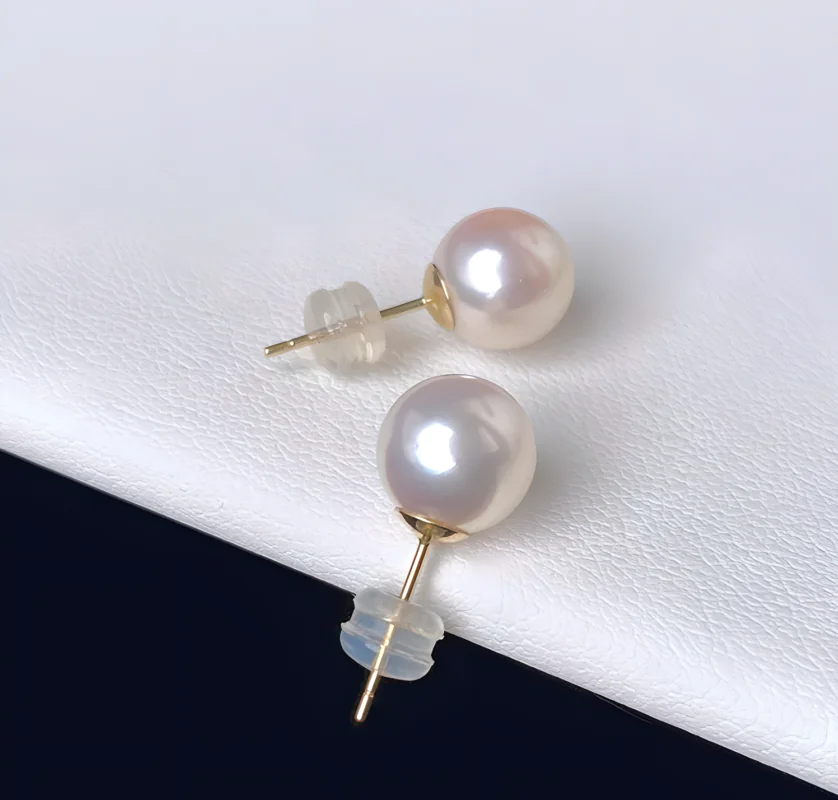
What Is the Difference Between Pearl Toning and Dyeing?
Pearl toning and pearl dyeing both change how a pearl’s color looks, but the terms are not interchangeable. In the pearl trade, toning usually means a very slight color adjustment, especially the rose or pink adjustment applied to Akoya cultured pearls. Dyeing is the broader use of natural or synthetic dyes to alter a pearl’s color, often more noticeably.
The important nuance is that toning can itself involve a small amount of dye. So the real difference is not simply “no pigment” versus “pigment.” It is mainly a difference in purpose, degree, resulting appearance, and trade classification. Japan’s current Pearl Standard describes Choshoku—the Japanese process commonly discussed as toning—as a light color adjustment of Akoya cultured pearls using red dyes after bleaching. GIA likewise describes Akoya tinting or “pinking” as using red dye to produce a pink appearance.
Quick Answer: Pearl Toning vs Dyeing
| Point | Pearl Toning | Pearl Dyeing |
|---|---|---|
| Main purpose | Subtle adjustment or balancing of color tone | Broader alteration of the pearl’s color |
| Typical pearl | Akoya cultured pearls | Freshwater, Akoya, and other cultured pearls |
| Typical result | Light rose, pinkish, or more unified tone | Black, blue, gold, green, purple, orange, or other altered colors |
| Use of dye | May use a very small amount of reddish dye | Uses natural or synthetic dyes to change color |
| Trade terminology | Also called tinting, pinking, rose tinting, or Choshoku | Usually described directly as dyed or color-treated |
| Can you identify it by eye? | Usually not with certainty | Sometimes there are clues, but modern dyeing can also require laboratory testing |
Suggested image: an untoned Akoya strand, a softly rose-toned Akoya strand, and a strongly dyed colored pearl strand shown side by side.
Why the Terminology Is Confusing
One reason this subject causes so much confusion is that different markets do not always use exactly the same word. Sellers may say toning, tinting, pinking, rose tinting, or the Japanese term Choshoku. These terms generally point to a subtle color adjustment rather than dramatic recoloring.
The Japan Pearl Promotion Society’s 2025 guidelines distinguish Choshoku from ordinary dyeing. Choshoku is described as a slight improvement of Akoya color tone using reddish dyes, while dyeing is defined more broadly as color alteration using natural or synthetic dyes. The same document also discusses the history of treating Choshoku differently from stronger color-changing treatments in the Japanese trade.
This leads to the most useful rule:
Toning is better understood as a narrowly controlled, subtle form of color adjustment—not as the complete absence of dye.
What Is Pearl Toning?
Pearl toning is most closely associated with Akoya cultured pearls. After harvest, Akoya pearls may go through several post-harvest steps such as cleaning, maeshori, and bleaching before final sorting and matching. Toning can then be used to make the color tone look more harmonious, often by adding a very light reddish or rosé influence.
The Japanese Pearl Standard describes Choshoku as adjusting the color tone of bleached Akoya cultured pearls with red dye while trying to preserve the pearl’s inherent characteristics. Excessive treatment can make the reddish color too strong or leave dye residue around the drill opening, which illustrates why the process must be carefully controlled.
This is why a softly pink Akoya strand should not automatically be treated as equivalent to a pearl that has been dyed a strong blue, black, or gold.
For readers studying pearl processing in more detail, this subject fits naturally alongside the Pearl Processing Workflow and Pearl Color Enhancement Treatments guides in the Pearl Academy.
Does “untoned” mean completely untreated?
No. This distinction is important.
An Akoya pearl described as untoned, non-toned, or Muchoshoku generally means that the final rose-tint adjustment was not applied. It does not automatically prove that the pearl received no other post-harvest processing.
The Japanese guidelines specifically note that Muchoshoku Akoya pearls may still have undergone processes such as maeshori or bleaching. Therefore, phrases suggesting that untoned pearls are exactly as they were harvested can be misleading.
If treatment history matters to you, asking only “Is this pearl toned?” is not enough. Ask which post-harvest processes were applied.
What Is Pearl Dyeing?
Dyeing uses natural or synthetic dyes to alter a pearl’s color. It can produce colors that are subtle, natural-looking, or deliberately dramatic.
Cultured pearls may be dyed black, blue, gold, green, purple, orange, pink, or other shades depending on the intended jewelry design and market.
GIA defines dyeing as introducing colored dyes into gem materials to change their color and specifically notes that pearls are commonly treated this way. GIA also states that dyeing is the most common pearl color treatment and is encountered more frequently in freshwater pearls than saltwater pearls.
Dyeing does not make a cultured pearl fake.
A dyed freshwater cultured pearl can still be a real pearl composed of real nacre. What has changed is the origin of the visible color: the appearance has been modified after harvest rather than coming entirely from the pearl’s original coloration.
The Key Difference Is Degree and Intent, Not a Simple Chemical Divide
A common oversimplification says that toning “does not add pigment,” while dyeing does.
That is not a reliable universal definition.
Authoritative Japanese pearl terminology specifically describes Choshoku as using reddish dye. GIA educational material also describes Akoya tinting, or pinking, as using red dye.
The more accurate distinction is:
- Toning or tinting aims for a slight adjustment within the expected visual range of Akoya pearls, often to improve harmony across a strand or emphasize a soft rose tone.
- Dyeing is the broader category used when dyes alter the pearl’s color more substantially or create a different color presentation.
In other words, the boundary is partly technical and partly based on trade nomenclature.
That is why two sellers may use different words for processes that both involve coloring agents. When accuracy matters, ask about the actual treatment process, rather than relying only on the marketing term used for it.
How Do Toned and Dyed Pearls Look Different?
There is no single visual rule that works for every pearl.
A toned Akoya strand will often still look like a conventional white Akoya strand, but with a more unified rose or pinkish nuance. Dyed pearls can show a much wider range of colors and may look either obviously artificial or surprisingly natural.
Some dyed pearls show color concentration around:
- drill holes;
- surface pits;
- cracks;
- blemishes;
- other surface-reaching features.
These areas can absorb or retain dye differently from surrounding material.
However, these are clues, not proof.
GIA research on dyed yellow or “golden” cultured pearls found that some samples showed dye residues and uneven color under examination, while other modern dyed samples had surfaces clean enough that even trained gemologists could have difficulty separating them from naturally colored pearls by routine observation alone. Instrumental techniques such as UV-Vis and Raman-related analysis can therefore become important.
Suggested image: a macro view of a dyed pearl showing possible color concentration around the drill hole beside a pearl with an even-looking surface.
This is also why visual inspection should be considered a screening method, not laboratory proof.
Does Toning or Dyeing Affect Pearl Value?
There is no universal price adjustment that applies to every toned or dyed pearl.
Pearl value also depends on:
- luster;
- surface quality;
- size;
- shape;
- matching;
- nacre quality;
- pearl type;
- rarity;
- treatment quality;
- market demand.
For Akoya pearls, subtle toning has a long history as part of commercial finishing and is often discussed differently from strong artificial recoloring.
By contrast, a dyed color intended to resemble a naturally rare color needs to be evaluated differently from a naturally colored pearl that happens to look similar.
That does not mean dyed pearls are inherently poor products. Dyed pearls can be attractive and useful jewelry materials, particularly when the color is deliberately part of the design.
The problem occurs when treated color is represented as naturally occurring color, or when a buyer pays a rarity premium without knowing that the visible color was created after harvest.
Color treatment should therefore be considered alongside the other factors discussed in a full pearl value evaluation rather than being treated as the only measure of quality.
Are Toned Pearls More Color-Stable Than Dyed Pearls?
It is safer not to make a blanket claim.
Treatment stability depends on the exact process, coloring material, exposure, wear, and care. GIA notes that the appearance of dyed pearl colors can alter over time.
Toning is normally much subtler than broad dyeing, but subtle does not automatically mean permanent or immune to environmental effects.
All pearls should be protected from:
- perfume and cosmetics;
- harsh cleaning chemicals;
- acids;
- excessive heat;
- abrasion;
- ultrasonic cleaning;
- steam cleaning.
GIA recommends gentle cleaning and notes that pearl treatments including dyes can change with time.
What Should Buyers Ask a Seller?
If color treatment affects your buying decision, use questions that are more precise than simply asking, “Is this natural?”
The word natural creates its own ambiguity. It can refer to:
- natural-color versus treated-color pearls;
- natural pearls versus cultured pearls;
- or simply a seller’s description of how a pearl looks.
A better checklist is:
- Is the pearl’s visible color natural or post-harvest color-treated?
- If treated, was it toned/tinted, dyed, irradiated, chemically colored, or coated?
- If described as untoned, did it still undergo bleaching or other processing?
- Can the treatment description be provided in writing?
- If treatment status materially affects the pearl’s value, is an independent laboratory report available?
GIA specifically recommends asking whether pearl color is natural or treated and obtaining treatment declarations in writing when purchasing colored pearls.
That approach is more reliable than trying to diagnose every treatment from photographs alone.
What Should You Remember?
Pearl toning and dyeing are different, but the difference is more nuanced than many short explanations suggest.
Toning is usually a subtle Akoya color adjustment and may involve a very small amount of reddish dye. Dyeing is the broader use of dyes to alter pearl color, often to a greater degree or into a much wider range of colors.
The practical lesson is to focus on three questions:
What process was used? How much did it change the pearl’s appearance? Was the treatment clearly disclosed?
Those questions are more reliable than assuming every toned pearl is “untreated” or every dyed pearl is fake.
FAQ
Is pearl toning the same as dyeing?
Not exactly. Toning usually refers to a slight color adjustment, particularly in Akoya pearls, while dyeing is a broader alteration of pearl color. However, toning can use a small amount of reddish dye, so the two processes are not separated simply by whether dye is present.
Are toned Akoya pearls real pearls?
Yes. Toning is a post-harvest color treatment applied to real cultured pearls. It changes their appearance but does not turn them into imitation pearls.
Does “untoned Akoya” mean untreated?
No. Untoned usually means the pearl did not receive the final rose-tint adjustment. It may still have undergone other processing such as cleaning, maeshori, bleaching, drilling, or polishing.
Can you tell whether a pearl is dyed just by looking at it?
Sometimes visual clues such as dye concentration around drill holes can raise suspicion, but they are not definitive. Sophisticated dye treatments may require laboratory testing for reliable identification.
Should pearl color treatments be disclosed?
Disclosure requirements and trade practices can vary between standards and markets. As a practical buying rule, sellers should clearly explain color treatments that affect the buyer’s understanding or value judgment, and buyers can request the treatment description in writing.