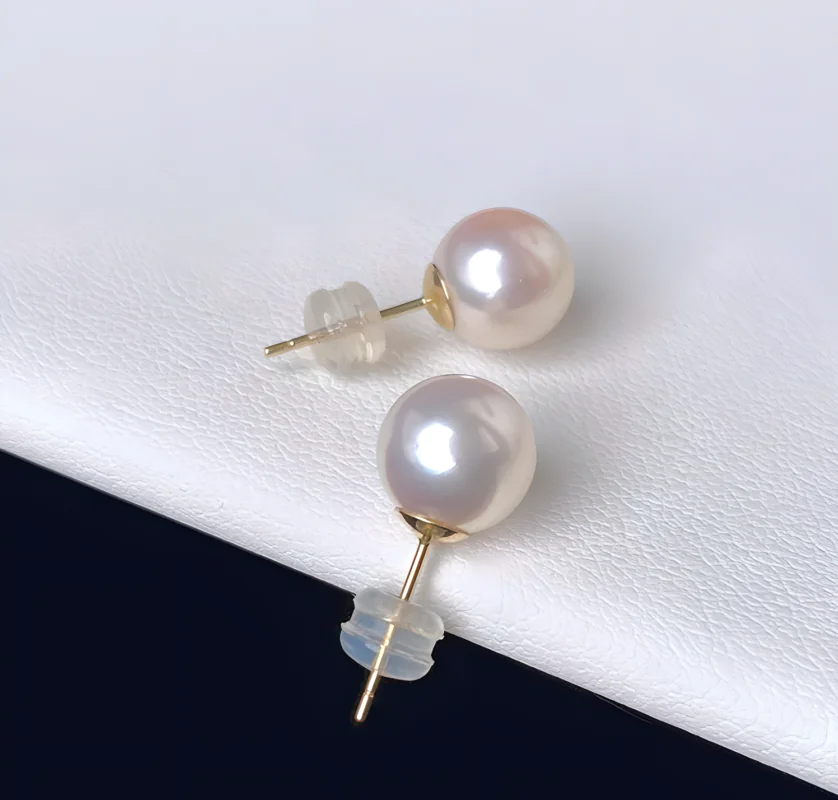
Pearls can show cracks, flaking, or what buyers casually call “peeling,” but those words can describe several different problems. A visible line may be a harmless growth feature, a true fracture, nacre separation, a failing artificial coating, or even evidence of deliberate surface processing.
The first task is therefore to distinguish ordinary surface character from structural damage.
Quick answer: are cracks and peeling serious?
They can be. A shallow growth line may be harmless; an open crack, missing nacre, or active peeling can reduce durability and value. Damage near drill holes or settings deserves particular attention because those areas experience mechanical stress.
Nacre is not the same thing as a pearl coating
Nacre is the biological material deposited by the mollusk. A coating is an applied surface layer added after formation. Genuine cultured pearls can be coated, and imitation pearls can also be coated.
If a surface layer peels, you need to identify what is failing and what lies beneath it. “Peeling” by itself does not tell you whether the underlying object is a genuine pearl or an imitation.
What counts as a true crack?
A true crack is a fracture that interrupts the pearl material rather than a shallow color line or natural groove. Under magnification, a crack may show depth, sharp edges, separation, or continuation below the surface.
Not every line is a crack. Growth lines, ring marks, and natural shape boundaries can look linear without representing structural failure.
What causes pearl cracks and nacre peeling?
Growth disruption before harvest
Some structural irregularities begin during formation. A pearl may contain weak areas or discontinuities before drilling or jewelry making.
Thin or compromised nacre
In bead-cultured pearls, limited or weak nacre coverage can leave less margin for wear and impact. But peeling does not automatically prove that nacre was thin; damage history and treatments also matter.
Drilling, impact, and mounting pressure
Drill holes create stress concentration. Poor drilling, impact, tight settings, or pressure during mounting can initiate or enlarge fractures.
Heat and dehydration
Pearls contain organic components and layered mineral structure. Excessive heat and prolonged drying can make the surface more vulnerable.
Chemicals and harsh cleaning
Acids, strong cleaners, cosmetics, and other chemicals can damage the surface and worsen existing weak areas.
Abrasion and repeated wear
Contact with harder jewelry or rough surfaces can gradually remove or damage nacre, especially at exposed edges.
Why bead-cultured and non-bead-cultured pearls can fail differently
A bead-cultured pearl has nacre deposited around a nucleus. If nacre is lost, the underlying nucleus or a boundary near it may become relevant. Many tissue-nucleated freshwater pearls have a different internal structure, so surface damage may not expose the same kind of bead core.
This does not mean one category is automatically durable and the other fragile. It means the visible consequences of damage can differ.
What does nacre peeling look like?
Possible signs include:
- a flake or layer lifting from the surface,
- a sharp boundary between intact and missing nacre,
- a different-looking material underneath,
- progressive chipping near a drill hole,
- a thin surface film separating from the pearl.
A failing artificial coating may look similar at first, so close inspection matters.
Coated genuine pearls versus coated imitation pearls
A genuine cultured pearl may receive a surface coating to alter color or appearance. An imitation pearl may be a glass, plastic, or shell-based bead covered with a pearlescent film.
If the coating fails, the two objects can both “peel,” but the substrate is different. Authenticity and treatment history should therefore be evaluated separately.
How serious is the damage? A practical risk check
Ask:
- Is the line open or only superficial?
- Is material missing?
- Is the damage spreading from a drill hole or setting?
- Does gentle rotation reveal depth or separation?
- Is the pearl used in a ring or bracelet where impacts are frequent?
- Is the damage stable, or are new flakes appearing?
The more of these answers point toward active structural failure, the less suitable the pearl is for demanding wear.
How to inspect a suspicious pearl without making it worse
Use neutral light and low magnification. Rotate the pearl; inspect the drill holes and setting edges; photograph the area for later comparison. Do not scratch, pick, bend, scrape, or aggressively polish the damaged area.
If the pearl is valuable, stop before destructive testing and ask a jeweler or gemological laboratory for help.
Can cracked or peeling pearls be repaired?
Minor surface residue or a removable external coating issue may sometimes be addressed professionally. Lost nacre or a true structural crack cannot simply be restored to its original biological structure.
A jeweler may be able to reorient a pearl, change the setting, or hide a stable cosmetic defect, but that is different from repairing the nacre itself.
How cracks and peeling affect value
Structural damage normally has a greater effect than small cosmetic blemishes because it can reduce durability as well as appearance. A buyer should distinguish “slightly blemished” from “structurally compromised.”
How to reduce future risk
- Avoid impacts and hard surfaces.
- Keep pearls away from strong acids and harsh cleaners.
- Put cosmetics and perfume on before the pearls.
- Do not expose pearls to high heat.
- Store them separately from harder jewelry.
- Inspect drill holes, stringing, and settings periodically.
FAQ
Does a line on a pearl always mean it is cracked?
No. Growth lines and ring marks can be natural surface or shape features. A true crack interrupts the structure and may show depth or separation.
Do real pearls peel?
Genuine pearls can suffer nacre damage, and coated genuine pearls can also lose an applied surface layer. Peeling therefore does not by itself prove authenticity or imitation.
Does nacre peeling prove the nacre was thin?
No. Thin nacre can increase vulnerability in some bead-cultured pearls, but impact, drilling, heat, chemicals, coatings, and other factors can also contribute.
Can a cracked pearl still be worn?
That depends on depth, location, stability, and jewelry type. A stable shallow feature in a pendant is different from an active crack near a ring setting or drill hole.