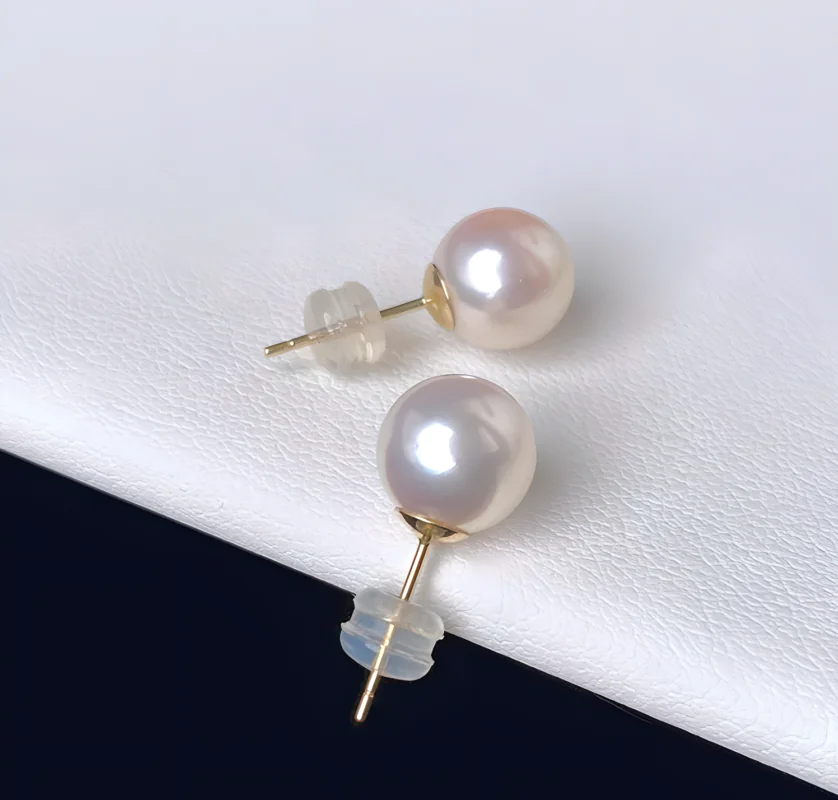
Pearls are organic gems, so their surfaces often show growth features or later wear. The important question is not simply, “Does this pearl have a blemish?” A better evaluation asks what the feature is, how deep it is, where it is located, how visible it is, and whether it is cosmetic or structural.
What counts as a pearl surface blemish?
In trade language, “blemish” is a broad label for visible surface characteristics that can reduce apparent cleanliness. These may include pinpoints, pits, spots, dents, bumps, wrinkles, creases, scratches, abrasions, cracks, chips, missing nacre, and other irregularities.
Some features formed naturally as the pearl grew. Others appeared later through drilling, mounting, wear, impact, heat, chemicals, or abrasion. Cause and quality effect are related questions, but they are not identical.
The five questions to ask about any surface feature
- How severe or deep is it? A shallow pinpoint is different from a crack.
- How many marks are there? One isolated feature is different from widespread disruption.
- Where is it located? Front-facing marks usually affect appearance more than hidden ones.
- How visible is it at normal viewing distance? Magnification can make harmless marks look dramatic.
- Is it cosmetic or structural? Cracks, missing nacre, and peeling deserve more caution.
Pinpoints, pits, and spots
A pinpoint is a tiny point-like mark. A pit is a small indentation or depression. A spot is primarily a contrasting area of color or tone, although some spots also have texture.
The name alone does not determine seriousness. A very small pit near a drill hole may have little visual effect, while a dark front-facing spot may be highly noticeable.
Dents, bumps, wrinkles, and creases
A dent is a depressed area; a bump is raised; wrinkles create uneven folded-looking texture; a crease is a more defined line or fold-like depression.
These features are often cosmetic, particularly when shallow and stable. They become more concerning if they interrupt the nacre deeply, form a sharp fracture line, or sit in a high-stress area.
Natural growth marks
Natural growth marks are surface features created during pearl formation. Fine ridges, uneven texture, pinpoints, small pits, bumps, and some rings can all be related to growth.
“Natural” does not automatically mean “high quality,” and “blemish” does not automatically mean “damage.” A natural growth feature can still reduce the cleanliness grade if it is visible enough.
Growth lines, ring marks, and shape features are easy to confuse
A growth line is usually a localized linear feature in the surface. A ring or circle mark can extend around a significant portion of the pearl and may become part of the pearl's shape identity. A shape feature describes the overall contour rather than a discrete defect.
Not every circular line is a crack, and not every groove should be treated as surface damage.
Scratches and abrasions
Scratches and abrasions are more likely to be post-harvest wear. They can come from contact with harder jewelry, rough handling, drilling, or long-term use. Superficial abrasion mainly affects appearance; deeper wear can damage the nacre.
Cracks, chips, missing nacre, and peeling
These deserve a separate risk category because they may indicate structural damage rather than ordinary cosmetic blemishing. A crack can extend below the visible line, and peeling can expose underlying layers or a bead nucleus/coating structure.
If you see active flaking, an open fracture, missing nacre, or damage growing outward from a drill hole, evaluate durability before price.
Location matters
Front-facing area
A blemish on the most visible face usually has the greatest effect on appearance and value.
Side or back
A mark may matter less in earrings, pendants, or rings if the jewelry has a stable orientation and the feature remains hidden.
Near a drill hole or setting
This can be visually unobtrusive but structurally important because drilling and mounting concentrate stress. A harmless pinpoint beside a hole is different from a crack radiating from it.
On a strand
Each pearl can rotate, so a “back” surface may not stay hidden. Judge the strand as a whole rather than assuming every mark can be oriented away.
What does “slightly blemished” mean?
There is no universal percentage attached to the phrase. It generally means the pearl shows a small number of limited or relatively unobtrusive surface features, but the exact threshold depends on the seller's grading system.
“Slightly blemished” can be a smart buy when luster is strong and the marks are minor, stable, and not dominant in normal wear. Do not reject the phrase automatically, but ask for clear images and a definition.
Which marks mostly affect value rather than wearability?
Often:
- tiny pinpoints,
- shallow pits or dimples,
- small wrinkles or ridges,
- minor bumps,
- isolated low-contrast spots,
- natural growth features that do not interrupt the structure.
Which marks can affect durability?
Be more cautious with:
- deep cracks,
- chipped or missing nacre,
- active peeling,
- damage at drill holes,
- severe abrasion that has removed surface material,
- fractures under a high-stress setting.
Can a blemish prove a pearl is real?
No. Genuine pearls can be very clean, and imitation pearls can be manufactured with irregularities. Surface features are useful for grading and sometimes for screening, but they are not proof of authenticity.
How to inspect pearl surfaces in practice
- Start at normal viewing distance under neutral light.
- Rotate the pearl and identify which marks are actually visible in wear.
- Use magnification to classify suspicious features.
- Inspect drill holes and setting contact points separately.
- Decide whether each feature is cosmetic or structural.
- Compare the price with the actual surface quality instead of only the grade label.
FAQ
Are small pits normal on pearls?
They are common natural surface features. Their effect depends on number, depth, location, and visibility.
Is a pit the same as a crack?
No. A pit is a localized depression; a crack is a fracture line and may have greater structural significance.
Do wrinkles mean a pearl is low quality?
Not automatically. They reduce surface cleanliness but can coexist with strong luster and attractive color. Severity matters.
Are ring marks blemishes?
They can affect grading, but a pronounced ring may also be part of the pearl's natural shape category rather than simple surface damage.
Should I buy a slightly blemished pearl?
It can offer good value if the pearl has strong luster, the marks are minor and well positioned, and there is no structural damage.