How Does Pearl Color Affect Value? Evaluating Bodycolor and Overtone
Pearl color can affect value significantly, but there is no universal rule that one color is always worth more than another. A color earns a premium when it is attractive, relatively scarce within that pearl type, well expressed, properly matched, and supported by strong overall quality. A richly colored pearl with weak luster or heavy surface damage may still be less valuable than a more common-colored pearl with exceptional luster and cleaner surfaces.
The most useful way to evaluate color is to separate what you are seeing into bodycolor, overtone, and, when present, orient. Then judge those features within the correct pearl category. A rose overtone on a white Akoya, a saturated golden South Sea pearl, and a green-and-pink Tahitian pearl are not competing in one universal color ranking. Each belongs to a different biological and market context.
What Does “Pearl Color” Actually Mean?
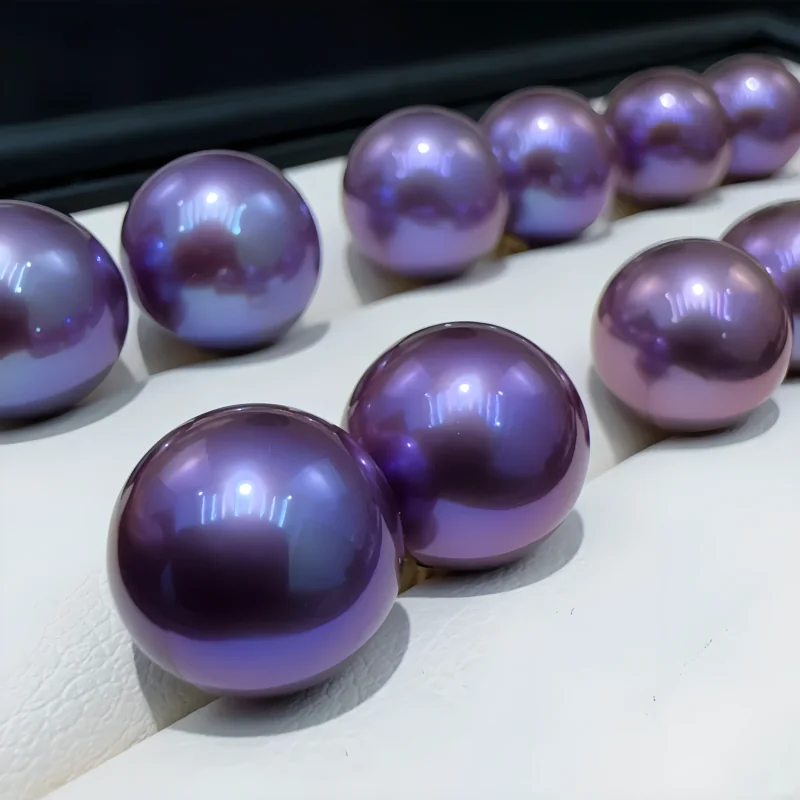
GIA describes pearl color through three components. Bodycolor is the dominant overall color. Overtone is a noticeable translucent color that appears over the bodycolor. Orient is an iridescent display of shifting rainbow-like colors on or just below the surface. Every pearl has a bodycolor, but not every pearl shows overtone or orient. You can review this terminology in GIA's pearl quality factors guide.
| Color component | What it means | How it may affect value |
|---|---|---|
| Bodycolor | The dominant overall color, such as white, cream, gray, black, yellow, pink, or green | Value depends on pearl type, hue, tone, saturation, rarity, demand, and treatment status |
| Overtone | A translucent secondary color seen over the bodycolor, such as rosé, silver, green, blue, or purple | An attractive, harmonious overtone can add visual depth and desirability; an uneven or unwanted overtone can reduce matching quality |
| Orient | Iridescent, shifting colors that appear to move across or beneath the pearl surface | Strong orient can add rarity and visual complexity, especially when combined with good luster and nacre quality |
Why There Is No Single “Most Valuable Pearl Color”
Color is one of the major pearl value factors, but it is not a universal price chart. GIA notes that the value of particular pearl colors is influenced by supply and demand, as well as fashion trends and cultural preferences. This means a color that commands a premium in one pearl type or market may not receive the same premium elsewhere.
The first rule is therefore: compare color within the same pearl type and quality range. A golden South Sea pearl should not be valued against a white Akoya simply by asking which color is rarer. The two pearl types have different mollusks, typical sizes, production volumes, color ranges, luster characteristics, and market positions.
The second rule is: color does not override the other value factors. GIA evaluates pearls by size, shape, color, luster, surface quality, nacre quality, and matching. In fact, luster is often considered one of the most important visual factors because it determines how lively and reflective the pearl appears. For the broader framework, see our guide to evaluating pearl value.
How Bodycolor Affects Pearl Value
Bodycolor is more than a simple label such as “white,” “gold,” or “black.” Professional color description also considers hue, tone, and saturation. Tone describes how light or dark a color appears, while saturation describes how weak, muted, or intense the color is.
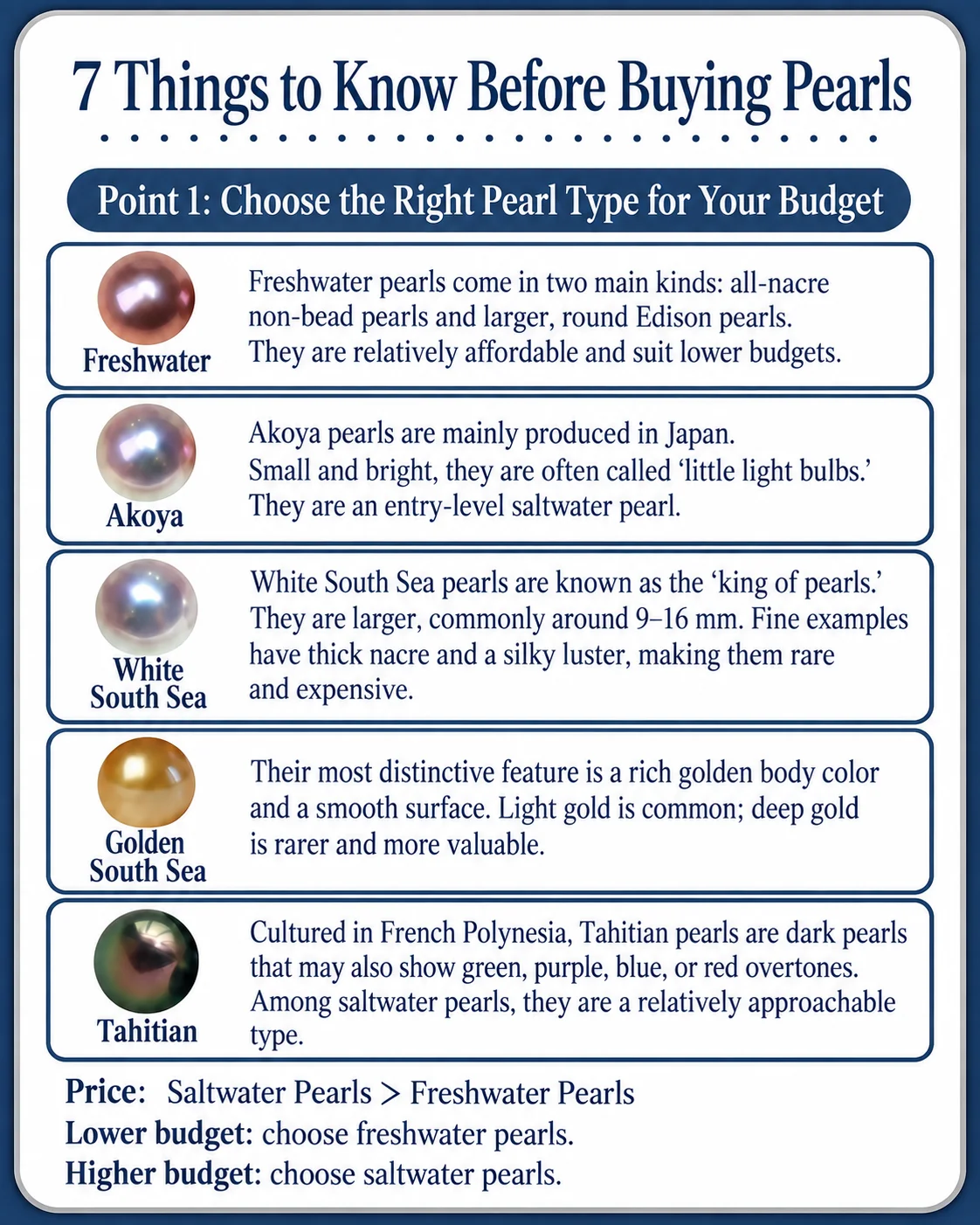
These differences can matter commercially. GIA notes, for example, in its overview of major cultured pearl types that more saturated golden South Sea pearls typically command higher prices than paler champagne-colored examples, all else being comparable. The key phrase is all else being comparable: deep gold alone does not compensate for poor luster, heavy blemishing, weak shape, or poor matching.
Akoya Pearls: White Is a Category, Not a Complete Grade
Classic Akoya pearls are strongly associated with white and cream bodycolors. Within that range, buyers often prefer a clean, bright appearance with attractive rosé or silver overtones. However, “whiter” does not automatically mean “better.” Natural silver-blue or blue Akoya pearls can be scarce and highly desirable when they also have strong luster, good nacre, clean surfaces, attractive shape, and good matching.
Golden South Sea Pearls: Saturation Can Matter
In golden South Sea pearls, stronger yellow to golden saturation is often commercially desirable. A deep, rich gold may therefore carry a premium over a lighter champagne tone when the pearls are otherwise comparable. Yet a deep-gold pearl with dull luster is not automatically superior to a lighter pearl with excellent luster and a cleaner surface.
Tahitian Pearls: Complexity Often Matters More Than Darkness
Tahitian pearls are commonly called black pearls, but many naturally fall into gray, charcoal, greenish gray, silver, and dark green families. Value is not determined by how close the pearl is to jet black. Attractive saturation, unusual bodycolor, strong overtone, orient, luster, and overall harmony can make a lighter or more colorful Tahitian pearl more desirable than a simply dark one.
Freshwater Pearls: Natural Pastels and Treatment Context
Freshwater cultured pearls naturally occur in white and a broad range of warm pastel colors, including pink, peach, orange-pink, and purple-lavender families. Unusually dark gray, black, blue, green, or extremely vivid colors in freshwater pearls should prompt a treatment question. GIA advises buyers in its guidance on strongly colored pearls to ask whether the color is natural or treated rather than assuming from appearance alone.
How Overtone Affects Pearl Value
Overtone changes the visual character of the bodycolor. Two pearls can both be classified as white, yet one may look warm and rosy while another looks cool and silvery. In dark pearls, an overtone may introduce green, pink, purple, blue, bronze, or another modifying color.
An overtone can add value when it creates an attractive and relatively scarce appearance within that pearl type. But the presence of an overtone alone is not enough. Its value depends on several practical questions:
- Is it attractive? A vivid but muddy or visually conflicting overtone is not automatically desirable.
- Is it even? Uneven overtone can make a strand or pair look poorly matched.
- Is it typical or scarce for the pearl type? Rarity only matters within the correct category.
- Does it work with the bodycolor? The combination matters more than the secondary color in isolation.
- Is the color natural or treated? Natural-color rarity and post-harvest color modification should not be priced or represented as though they were the same.
For example, rosé and silver overtones are often sought in classic white Akoya jewelry because they can add warmth, brightness, and depth. In Tahitian pearls, contrasting overtones can create highly distinctive combinations. The famous “peacock” appearance is associated with green-containing bodycolor together with noticeable contrasting overtone or orient, rather than simply any dark green pearl.
It is also important not to turn a trade preference into a universal rule. A strong rosé overtone is not automatically more valuable to every buyer than silver, cream, blue, or another appearance. Skin tone, jewelry metal, regional preference, fashion, and the overall design can all change which color is most desirable.
What About Orient?
Orient is sometimes confused with overtone, but the visual effect is different. Overtone is generally a noticeable translucent secondary color. Orient is a shifting, iridescent play of multiple colors that seems to move across or just beneath the surface as the pearl or light source moves.
When orient is strong and attractive, it can make a pearl appear unusually deep and alive. It may therefore increase desirability, particularly when it accompanies strong luster and good nacre quality. But orient should still be judged as part of the whole pearl rather than treated as an isolated guarantee of high value.
Natural Color vs. Treated Color: Why the Distinction Matters
Color origin can materially affect value. Pearls may be dyed, irradiated, coated, toned, or subjected to other post-harvest processes that alter their appearance. Treated pearls can still be genuine cultured pearls and can be attractive jewelry materials, but a treated color should not be represented as a naturally rare color.
The pricing difference is not a fixed percentage. It depends on the pearl type, the treatment, the quality of the finished appearance, disclosure, demand, and how scarce the comparable natural color actually is. The important buying principle is that a premium based on natural-color rarity should be supported by accurate disclosure.
If color treatment is relevant to your purchase, see our overview of pearl color enhancement treatments. For valuable pearls where natural-color status is a major part of the price, visual inspection alone may not be enough; our pearl identification guide explains why laboratory testing can matter.
How to Evaluate Pearl Color in Practice
A useful buying method is to evaluate color in a fixed order rather than reacting to the first color name in a listing.
- Identify the pearl type first. Akoya, South Sea, Tahitian, and freshwater pearls have different natural color ranges and different market expectations.
- Describe the bodycolor. Ask what the pearl looks like overall before focusing on flashes of secondary color.
- Judge tone and saturation. Is the color light or dark? Soft and muted or strong and saturated?
- Identify overtone separately. Look for a translucent secondary hue such as rosé, silver, green, blue, or purple.
- Look for orient. If multiple iridescent colors shift as the pearl moves, note that separately from a single overtone.
- Judge luster independently. Strong reflection can make color appear more intense and attractive, but luster and color are different value factors.
- Compare similar pearls side by side. Color differences are much easier to see when pearl type, size, and quality are comparable.
- Check color consistency in pairs and strands. A premium multi-pearl piece normally requires deliberate matching unless the design intentionally mixes colors.
- Ask whether the color is natural or treated. If rare natural color is part of the price story, request clear disclosure and consider independent testing for high-value purchases.
How Color Value Differs by Pearl Type
| Pearl type | Typical color context | Color features that may support a premium | Common mistake |
|---|---|---|---|
| Akoya | White, cream, silver, and some natural blue or silver-blue colors | Bright, harmonious bodycolor with attractive rosé or silver overtone; rare natural blue can be desirable when overall quality is strong | Assuming the whitest pearl is automatically the best |
| Golden South Sea | Champagne through stronger yellow and golden colors | Rich natural saturation, attractive tone, strong luster, clean surface, and good matching | Judging depth of gold without considering luster or treatment |
| White South Sea | White, silver-white, cream, and related tones | Clean, luminous bodycolor with attractive overtone and strong satiny luster | Reducing the decision to “white versus silver” |
| Tahitian | Gray, charcoal, silver, greenish gray, dark green, and other naturally dark families | Attractive saturation, unusual bodycolor, strong contrasting overtone or orient, luster, and good matching | Assuming the darkest pearl is the most valuable |
| Freshwater | White plus natural pink, peach, lavender, and related warm pastel colors | Attractive natural color, even saturation, strong luster, orient, and difficult matching in fine-quality strands | Assuming every vivid or dark color is naturally produced |
Why Lighting and Photography Can Distort Pearl Color
Pearl color is unusually sensitive to its surroundings. Warm indoor lighting can make white pearls look creamier. Cool light can emphasize blue or silver. Dark backgrounds may make luster and color seem more intense, while skin tone, nearby clothing, camera white balance, and screen settings can all shift what you think you are seeing.
When color materially affects a purchase, compare pearls under neutral white light and, if possible, natural daylight. For online purchases, ask for images or video against a neutral background and avoid judging a price premium from a single highly edited product photo.
Color Matching Can Add Value to Pairs and Strands
For earrings, necklaces, bracelets, and other multi-pearl jewelry, color is also part of the matching factor. Finding many pearls with similar bodycolor, overtone, luster, size, shape, and surface quality can require substantial sorting. This is why a well-matched strand may command an additional premium over visually similar loose pearls: the matching itself requires selective sorting across several quality factors.
Matching does not mean every pearl must be identical. Multicolor strands can be intentionally designed and still be well matched if the transitions and overall palette are harmonious. The key question is whether the variation looks deliberate rather than accidental.
Five Common Mistakes When Judging Pearl Color
- Looking for one “best” color. Color value is type-specific and market-specific.
- Confusing strong color with high quality. Saturation cannot compensate for dull luster, heavy blemishes, weak nacre, or poor shape.
- Confusing overtone with bodycolor. A green flash over a gray pearl does not necessarily make the bodycolor green.
- Assuming attractive color is natural. Treatments can produce convincing colors, so disclosure matters when rarity affects price.
- Comparing photos instead of pearls. Different lighting, backgrounds, cameras, and editing can create color differences that are not present in person.
The Most Useful Rule for Pearl Color and Value
Do not ask, “Which pearl color is the most expensive?” Ask, “How desirable and scarce is this color within this pearl type, and how well is it supported by the other quality factors?”
That question leads to a much more accurate evaluation. Bodycolor establishes the main color identity. Tone and saturation describe its strength. Overtone and orient can add complexity and rarity. Natural-versus-treated status affects how the color should be represented. Luster, surface, nacre, shape, size, and matching determine whether the color belongs to a truly fine pearl or simply an eye-catching one.
FAQ
Does pearl color affect price?
Yes. Color can affect price when a particular bodycolor, saturation, overtone, or orient is attractive and scarce within that pearl type. However, color is only one value factor and should be judged together with luster, surface quality, nacre, shape, size, and matching.
What is the most valuable pearl color?
There is no single most valuable color across all pearls. Deep natural gold can be highly desirable in golden South Sea pearls, certain complex colors can command premiums in Tahitian pearls, and bright white Akoya pearls with attractive overtones remain highly sought after. Value depends on pearl type, rarity, quality, treatment status, and demand.
What is the difference between bodycolor and overtone?
Bodycolor is the pearl's dominant overall color. Overtone is a translucent secondary color that appears over the bodycolor. For example, a pearl may have a white bodycolor with a rosé overtone.
Does a pink or rosé overtone make pearls more valuable?
It can, especially in classic white Akoya pearls when the overtone is attractive and the pearls are well matched. But rosé is not universally superior to silver, cream, blue, or other appearances. Overall quality and buyer preference still matter.
Are naturally colored pearls worth more than dyed pearls?
A rare natural color can command a higher premium than a treated imitation of that color, but there is no fixed percentage difference. Treated pearls can still be genuine cultured pearls and attractive jewelry materials; the important issue is accurate disclosure and appropriate pricing.
Can I judge pearl color accurately from a photo?
Not always. Lighting, background, camera white balance, editing, and screen settings can change apparent pearl color. If color is important to the purchase, compare neutral-light images or video and request clear information about bodycolor, overtone, and treatment status.