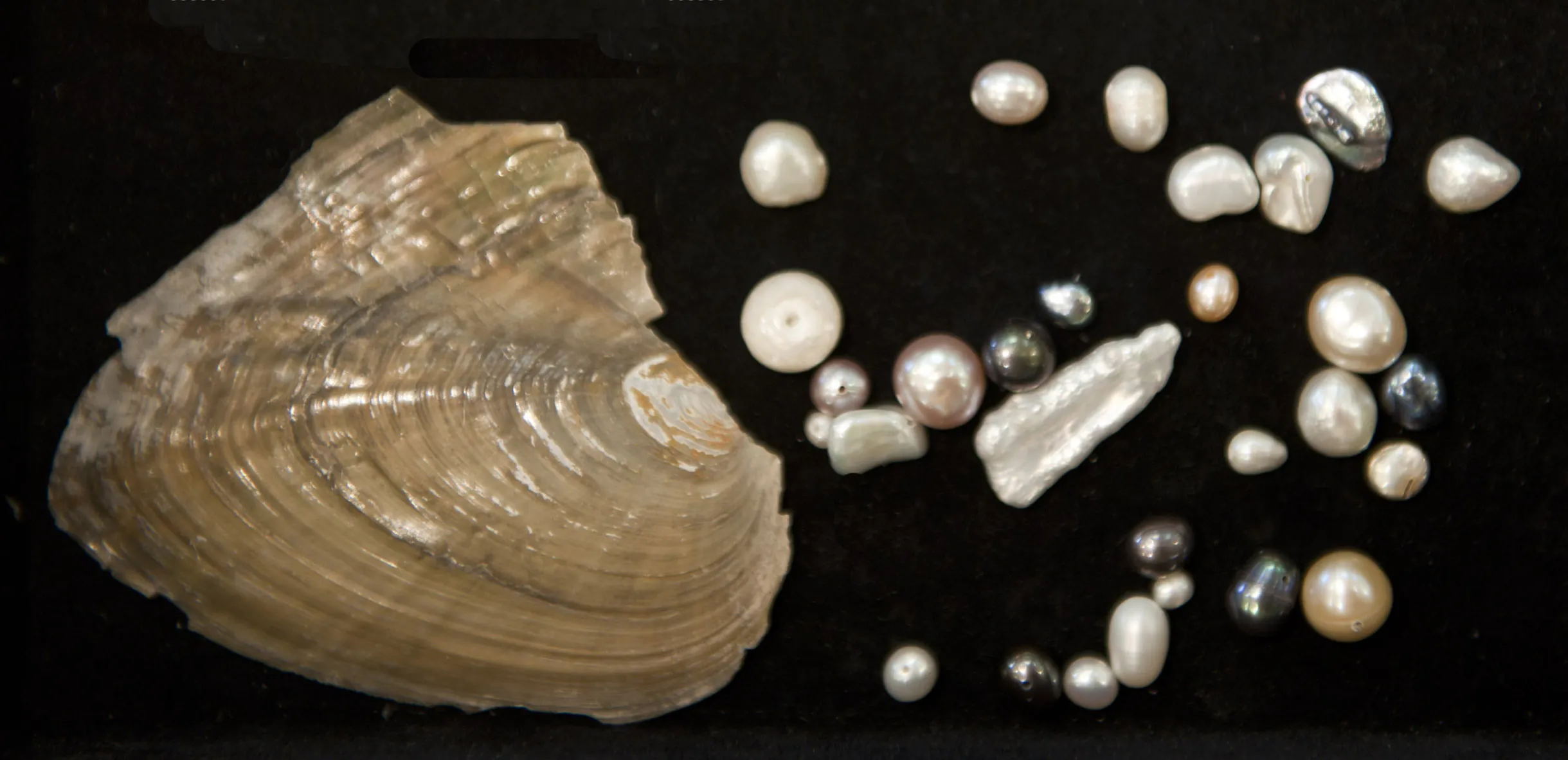
No. The terms overlap, but they are not identical. A Tahitian cultured pearl is a specific pearl category tied to naturally colored cultured pearls grown in French Polynesia using the black-lipped pearl oyster, Pinctada margaritifera cumingii. “Black pearl,” by contrast, is a broader term that describes a dark-colored pearl and is used much more loosely in the jewelry market.
That leads to a useful rule: many Tahitian pearls are sold as black pearls, but not every black pearl is Tahitian—and many Tahitian pearls are not literally black.
The distinction matters when you are comparing jewelry, checking whether a color is natural or treated, or deciding whether the price reflects a true Tahitian pearl rather than another dark pearl with a similar appearance.
Tahitian Describes Pearl Identity; “Black” Mostly Describes Appearance
The easiest way to separate the two terms is to ask what information each one actually gives you.
| Term | What it tells you | What it does not tell you |
|---|---|---|
| Tahitian pearl | A defined cultured-pearl category associated with French Polynesia, Pinctada margaritifera cumingii, and naturally produced color | The exact shade, luster, surface quality, shape, size, or overall grade |
| Black pearl | Usually that the pearl has a dark appearance; in stricter trade terminology it can also refer to naturally dark pearls from several pearl-oyster species | That the pearl is Tahitian, that the color is untreated, or that the pearl has a particular origin or quality |
This is more than a wording preference. The CIBJO Pearl Book defines a Tahitian cultured pearl specifically as a naturally colored cultured pearl produced in French Polynesia from Pinctada margaritifera cumingii. In a separate definition, CIBJO uses “black cultured pearl” more broadly for naturally colored black cultured pearls produced by several pearl oysters. In other words, even strict industry nomenclature does not treat “Tahitian pearl” and “black pearl” as perfect synonyms.
Why Are Tahitian Pearls Commonly Called Black Pearls?
Tahitian pearls became famous for something unusual in the pearl market: the black-lipped oyster can naturally produce dark nacre. This allowed cultured pearls to develop gray, charcoal, greenish, brownish, silver, and near-black bodycolors without needing black dye to create the classic Tahitian appearance.
Historically and commercially, calling them “black pearls” was a simple way to distinguish them from the white and cream pearls that many buyers already knew. The name stayed, even though it compresses a much wider color family into one word.
GIA likewise notes that Tahitian pearls are often referred to as black pearls even though they are not necessarily truly black. If you want to see how wide the natural range can be, our guide to the natural dark color range of Tahitian pearls explains bodycolor, overtone, and familiar trade colors such as peacock, aubergine, and pistachio.
Are All Tahitian Pearls Black?
No. Some Tahitian pearls can appear very dark or nearly black, but many are visibly gray, silver, green, blue-green, brownish, or multicolored. Their overtones may add pink, purple, blue, bronze, or green flashes that become stronger or weaker as the pearl moves under light.
This is why a high-quality Tahitian pearl should not be judged by how close it comes to a flat jet black. A vivid green or silver Tahitian pearl can be just as characteristic of the pearl type, and in some cases more visually distinctive.
The phrase “Tahitian black pearl” is therefore useful as a familiar market name, but it should not be interpreted as a promise that every pearl will have the same dark-black color. For a broader overview of origin, cultivation, shapes, sizes, and nacre, see our Tahitian pearl guide.
Are All Black Pearls Tahitian?
Also no. There are several reasons a pearl may be described as black or dark without being Tahitian.
1. Naturally Dark Pearls Can Come From Other Mollusks
Tahitian pearls are not the only pearls capable of natural dark color. CIBJO's definition of a naturally colored black cultured pearl also includes material produced by other pearl oysters, including Pinctada mazatlanica and Pteria sterna. Sea of Cortez cultured pearls are a familiar example of a different naturally colored saltwater pearl category.
So natural dark color alone does not establish Tahitian origin.
2. Freshwater Cultured Pearls Can Be Dyed Black
Dark freshwater cultured pearls are common in the jewelry market, and their color is often created or modified after harvest. The underlying pearl can still be a genuine cultured pearl. Dyeing changes the color; it does not automatically turn a real cultured pearl into an imitation pearl.
That distinction is important because “real versus fake” is the wrong comparison. A dyed freshwater cultured pearl and a naturally colored Tahitian cultured pearl can both be real pearls, but they are different products with different origins, treatments, scarcity, and market positioning.
3. Other Pearl Types Can Also Be Darkened or Color-Treated
Akoya and other cultured pearls may also appear in dark colors after treatment. A listing that says only “black pearl” therefore leaves an important question unanswered: what kind of pearl is it, and is the color natural or treated?
Our guide to pearl color enhancement treatments explains why pearl identity and color origin should be considered separately.
Tahitian Pearls vs. Black Freshwater Pearls: What Is the Practical Difference?
These two categories are frequently confused because both can look dark in product photos. The most useful comparison is not simply color—it is pearl identity plus color origin.
| Feature | Tahitian cultured pearl | Black freshwater cultured pearl |
|---|---|---|
| Pearl environment | Saltwater | Freshwater |
| Producing mollusk | Black-lipped pearl oyster, Pinctada margaritifera cumingii | Freshwater mussel |
| Classic dark color | Naturally produced during pearl growth | Commonly achieved or intensified through post-harvest treatment |
| Typical color character | Gray, silver, charcoal, green and other naturally dark bodycolors with varied overtones | Depends strongly on the original pearl and the treatment used |
| Can appearance alone prove identity? | No | No |
Photography can make this distinction even harder. Lighting, white balance, background color, screen settings, and editing can all change how a dark pearl looks. A sophisticated treatment can also create convincing color. For that reason, visual inspection is useful for comparison but should not be treated as proof of origin or treatment status.
How to Read a “Black Pearl” Product Listing
If a seller uses the phrase “black pearl,” do not stop at the color name. Ask for a more complete description.
- What is the pearl type? Tahitian, freshwater, Akoya, Sea of Cortez, or something else?
- What is the origin? If the pearl is being sold specifically as Tahitian, French Polynesian provenance should be part of the description.
- Is the color natural or treated? The answer matters especially when dark color is being used to justify a premium.
- What are the actual quality factors? Luster, surface, shape, size, nacre, matching, and color quality still matter after the pearl type is identified.
- Is documentation appropriate? For an expensive pearl sold at a substantial premium for unusual natural color or provenance, independent laboratory documentation can provide stronger support than photographs alone.
This same logic applies well beyond dark pearls. Pearl origin helps establish identity and context, but it is not a substitute for judging the pearl itself. Our guide to why pearl origin matters explains how origin, mollusk, pearl type, treatment, and quality fit together.
Does “Black” Mean a Pearl Is More Valuable?
No. Dark color by itself is not a quality grade.
A pearl's value depends on a combination of factors such as luster, surface condition, shape, size, nacre quality, matching, color appeal, rarity, treatment status, and provenance. A naturally dark Tahitian pearl may command a higher price than a visually similar dyed freshwater pearl because the products are fundamentally different, but that does not mean every Tahitian pearl is automatically fine quality or every treated pearl is low quality.
The better question is: what exactly is the pearl, how was its color produced, and how good is the individual pearl?
The Simplest Way to Remember the Difference
Use this as a buying shortcut:
“Tahitian” tells you what the pearl is. “Black” tells you what the pearl may look like.
That sentence is intentionally simplified, because strict trade standards can use “black cultured pearl” as a defined natural-color category. But for ordinary jewelry shopping, it prevents the most common mistake: assuming that every dark pearl is Tahitian.
If you specifically want naturally colored Tahitian pearls, look for clear identification rather than a color-only label. You can also browse Tahitian pearl jewelry by pearl type instead of relying on the word “black.”
FAQ
Are Tahitian black pearls real pearls?
Yes. Tahitian cultured pearls are real cultured pearls. They are produced with human assistance in the black-lipped pearl oyster, but the nacre is secreted by the living mollusk.
Are Tahitian pearls naturally black?
Tahitian pearls can naturally develop dark colors without black dye, but many are not literally black. Gray, silver, charcoal, green, brownish, blue-green, and other colors are common within the broader Tahitian range.
Can freshwater pearls be black?
Freshwater cultured pearls are widely sold in black or very dark colors, but these colors are commonly created or modified after harvest. Ask whether the color is natural or treated rather than assuming from appearance alone.
Are dyed black pearls fake?
Not necessarily. A dyed freshwater cultured pearl can still be a genuine cultured pearl. The important disclosure is that its dark color was treated. Imitation pearls are a separate category made to simulate the appearance of pearls.
How can I tell whether a black pearl is Tahitian?
Do not rely on color alone. Check the seller's pearl-type identification, origin, treatment disclosure, size and other characteristics. For valuable pearls where identity or natural color materially affects price, an independent gemological report can provide stronger evidence.
References
- CIBJO Pearl Book 2024 — terminology for Tahitian cultured pearls and black cultured pearls.
- GIA: What’s the Difference Between Akoya, South Sea, Tahitian & Freshwater Pearls? — overview of Tahitian pearl color and characteristics.
- GIA: Non-Bead-Cultured Pearls from Pinctada margaritifera — technical discussion of the color range and terminology surrounding black-lipped oyster pearls.