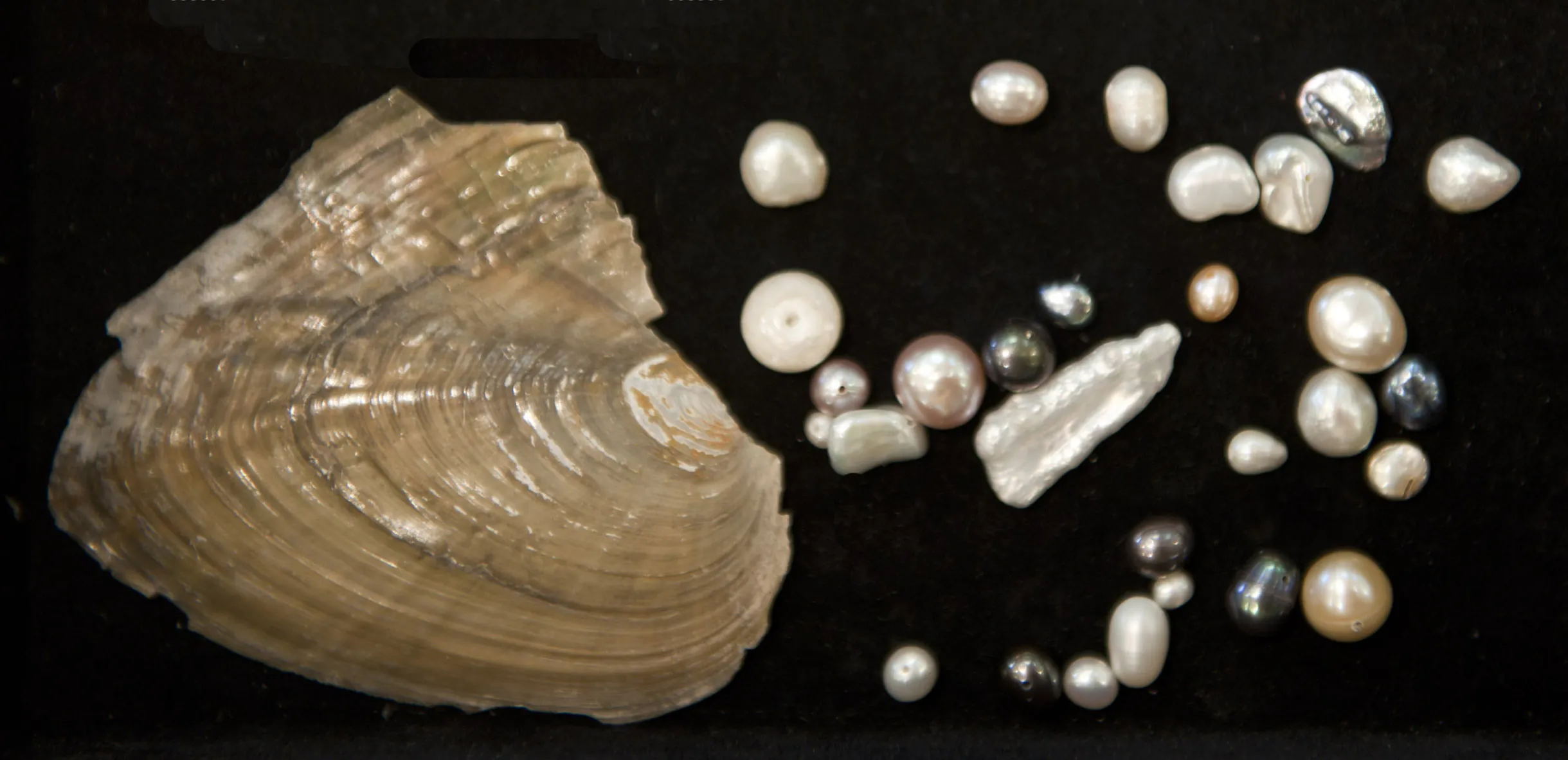
Every Aurora Madama pearl belongs to the blue-series Akoya family, but not every blue Akoya pearl is Madama. The boundary is not simply how blue the pearl looks, how rare the color seems, or how high the seller considers its grade. “Blue Akoya” is a broad description of pearl type and appearance. “Aurora Madama” is a specific high-quality designation issued under the Pearl Science Laboratory (PSL) grading system.
That distinction matters because a beautiful natural blue Akoya can be genuine, untreated, highly lustrous, and expensive without being Madama. Conversely, a seller should not turn an ordinary blue Akoya into “Madama” merely by using the word in a product title.
The boundary in one sentence
The practical rule is:
Blue Akoya describes a category; Madama describes a certified subset within that category.
If you want a broader introduction to the designation itself, see our guide to Akoya Madama pearls. This article focuses more narrowly on where the name should stop being used.
| Term | What it tells you | What it does not automatically prove |
|---|---|---|
| Blue Akoya | The pearl is being described as an Akoya with blue, silver-blue, gray-blue, or related cool coloration. | Natural color, untreated status, top quality, or Madama certification. |
| Natural blue Akoya | The seller is claiming that the blue appearance is naturally associated with the pearl rather than artificially created. | Madama status, highest-quality grading, or PSL certification. |
| Aurora Madama | A PSL special designation for highest-quality blue-series Akoya pearls that meet the applicable certification requirements. | That the pearl must be the darkest or most vividly blue example. |
Why “blue Akoya” is a much wider category
Akoya pearls are best known for white bodycolor and sharp luster, but naturally blue examples also occur. GIA notes that some Akoya pearls naturally show a rare blue bodycolor, often appearing silvery gray with cool overtones. In actual trade, the visual range can include silver-blue, gray-blue, steel blue, blue-green, and pearls whose color shifts noticeably with lighting.
The phrase “blue Akoya” therefore answers an appearance question before it answers a quality question. A pearl may be blue but weak in luster. It may be blue but noticeably blemished. It may be blue but baroque. It may be blue because of treatment. It may also be an excellent natural-color pearl with no special laboratory designation at all.
This is why color should be separated from overall value. Our blue Akoya value guide looks at luster, nacre, surface, matching, treatment risk, and other factors that still matter after the color has been identified.
What changes when the word “Madama” is added?
PSL places Aurora Madama in its highest-quality series for blue-series Akoya pearls. This is fundamentally different from a seller simply observing that a pearl looks blue.
PSL explains its highest-quality certificates as applying to pearls that reach the highest evaluation category across the relevant quality components. Its broader grading system also screens for issues such as inadequate nacre, cracks, peeling, broken nuclei, exposed non-nacreous layers, and serious processing-related defects.
Most importantly for the name itself, PSL describes Aurora Madama as a special designation for blue-series Akoya pearls and explains the term in connection with pearls left without artificial treatment after harvest. In other words, Madama is not a synonym for “blue-looking Akoya.” It combines a color family, a treatment-related boundary, a quality boundary, and a laboratory designation.
The relationship is best understood as nested categories
A useful way to picture the relationship is:
Akoya pearls → blue-series Akoya → natural untreated blue-series Akoya → qualifying high-quality pearls → Aurora Madama when the PSL designation is actually issued.
That final step is important. A pearl can sit very close to the Madama boundary in appearance and quality without crossing it in naming. If the exact strand, pair, or loose pearls do not carry the relevant report, the safer description is still “natural blue Akoya” rather than “Madama.”
This is similar to many other certificate terms in the pearl market: a visual resemblance does not create the laboratory designation. For a broader explanation of why seller grades and laboratory conclusions should not be mixed together, see the MJ Pearls grading guide.
There is also a size boundary: below 6 mm, the name changes
One of the clearest technical boundaries is size. Under PSL's current naming system, Aurora Madama is used for blue-series Akoya pearls of 6.0 mm and above. For highest-quality blue-series Akoya pearls below 6.0 mm, PSL uses the designation Aurora Saiundama.
This creates an important edge case. Imagine a 5.5 mm natural blue Akoya strand with excellent roundness, strong luster, a very clean surface, and all the visual characteristics people associate with fine Madama. Under the PSL size convention, “Madama” would still not be the correct highest-quality designation for that size category.
So the boundary is not merely qualitative. It is also categorical.
Blue Rose is another reason not to treat “Madama” as a general top-blue label
PSL separates its highest-quality series from its best TERI series. Aurora Madama belongs to the highest-quality blue-series category, while Aurora Blue Rose belongs to the blue-series best-TERI category.
That means Blue Rose should not be described mechanically as “one grade below Madama.” The two designations emphasize different grading logic. Madama is an overall highest-quality conclusion; Blue Rose emphasizes exceptional luster or TERI. A Blue Rose pearl can therefore be remarkable for its optical performance without being classified as Madama.
The report, not the seller's attempt to arrange every term into a simple vertical ladder, should determine which designation applies.
Five boundary cases that make the difference clearer
1. A beautiful natural blue Akoya with no Madama report
This can still be a valuable pearl. It may have strong luster, clean surfaces, attractive overtones, and excellent matching. But without the applicable PSL designation, “natural blue Akoya” is the more defensible description.
2. A blue Akoya with a general identification certificate
A document that confirms the pearl is cultured Akoya does not automatically establish Madama quality. Identification and grading answer different questions. Check whether the report actually states the special designation.
3. A top-quality blue Akoya below 6 mm
The size may move it into the Saiundama category rather than Madama. This is why copying a product name from a visually similar larger strand can produce inaccurate terminology.
4. A strongly lustrous blue Akoya with more surface or shape variation
This is exactly where the distinction between overall highest quality and TERI-focused designations becomes useful. Exceptional luster alone does not make a pearl Madama.
5. A dyed, irradiated, or otherwise artificially color-altered blue Akoya
It may legitimately be described as a treated blue Akoya if the treatment is disclosed, but it falls outside the untreated natural-blue concept PSL associates with Madama. Color resemblance is not enough.
Can you identify Madama by eye?
You can recognize features that make a pearl a plausible candidate: blue-to-gray-blue bodycolor, strong Akoya luster, attractive interference colors, good roundness, clean surfaces, and harmonious matching. But you cannot reliably turn those visual observations into a Madama designation on your own.
This is especially important because blue is not a single fixed shade. A certified Madama strand does not need to look intensely cobalt blue. Some examples are more silver, gray, or muted blue, while their overtones and reflections become more evident as the pearls move.
The opposite mistake is also common: a very dark or saturated blue pearl may look impressive in photographs, but darker color does not automatically mean better quality. Luster, nacre, surface, shape, and matching remain part of the judgment. For the broader characteristics of the pearl type, see our Akoya pearl guide.
How to verify the claim when buying
If a seller uses the word “Madama,” the most useful question is not “Does it look blue enough?” It is “What exactly supports the designation?”
- Check the laboratory. Confirm who issued the report.
- Check the exact designation. Look for Aurora Madama rather than a generic statement such as “Madama quality” or “Madama color.”
- Match the report to the item. Compare size, quantity, photographs, report number, and other identifying details.
- Check the size. If the pearls are below 6.0 mm, ask why Madama rather than Saiundama terminology is being used.
- Check color and treatment wording. “Blue,” “natural blue,” “untreated,” and “Madama” do not all mean the same thing.
- Still judge the pearls themselves. Certification does not eliminate personal preference in shade, overtone, matching, or overall appearance.
Why accurate wording matters even when the pearl is excellent
The purpose of drawing this boundary is not to downgrade non-Madama blue Akoya. Some natural blue Akoya pearls outside the designation can be exceptionally attractive. They may offer unusual color, strong orient, organic shapes, or a visual character that a buyer prefers over a formally certified strand.
The issue is simply that quality and terminology should remain separate. “Madama” carries a more specific meaning than “beautiful blue Akoya,” so using it loosely removes the very information the term is supposed to provide.
For buyers, that precision prevents overpaying for a label. For sellers, it prevents a descriptive color term from drifting into an unsupported certification claim.
The simplest way to remember the difference
If you remember only one framework, use this:
- Blue Akoya = broad pearl/color category.
- Natural blue Akoya = a narrower color-origin claim that still does not equal Madama.
- Aurora Madama = a specific PSL highest-quality designation for qualifying blue-series Akoya, within the applicable size and treatment rules.
- Aurora Saiundama = PSL's highest-quality blue-series designation for pearls below 6.0 mm.
- Aurora Blue Rose = a separate PSL blue-series designation focused on strongest TERI rather than the same overall grading category as Madama.
So when the wording becomes confusing, do not judge the boundary by color intensity. Read the certificate language.
FAQ
Are all natural blue Akoya pearls Madama?
No. Natural blue color is only part of the picture. Aurora Madama is a specific PSL highest-quality designation, so a natural blue Akoya without that qualification should not automatically be called Madama.
Can a blue Akoya pearl be genuine but not Madama?
Yes. Most blue Akoya pearls are not Madama. They can still be genuine cultured Akoya pearls and can still be attractive or high quality.
Does a darker blue color make an Akoya pearl more likely to be Madama?
Not by itself. Madama is not defined by maximum color saturation. Overall quality and the laboratory designation matter more than simply choosing the darkest-looking strand.
Can Akoya pearls below 6 mm be Madama?
Under PSL's current naming convention, the highest-quality blue-series designation below 6.0 mm is Aurora Saiundama, while Aurora Madama is used for the 6.0 mm-and-above category.
Is Blue Rose the grade below Madama?
That is an oversimplification. PSL places Madama in its highest-quality series and Blue Rose in its best-TERI series. They emphasize different grading concepts, so the report should be read directly rather than treating them as consecutive steps on one universal ladder.
Source Notes
The classification boundary in this article is based primarily on Pearl Science Laboratory's published grading system and terminology. PSL lists Aurora Madama as the highest-quality designation for blue-series Akoya pearls, identifies Aurora Saiundama as the corresponding highest-quality designation for blue-series Akoya below 6 mm, and places Aurora Blue Rose in a separate best-TERI series. PSL's own explanation of Madama also associates the name with blue-series pearls that have not undergone artificial treatment after harvest.
Primary references: Pearl Science Laboratory — Pearl Identification and Quality Analysis; Pearl Science Laboratory — Pearl Terminology; Pearl Science Laboratory — Madama; Pearl Science Laboratory — Saiundama; and GIA — Different Pearl Types Explained.