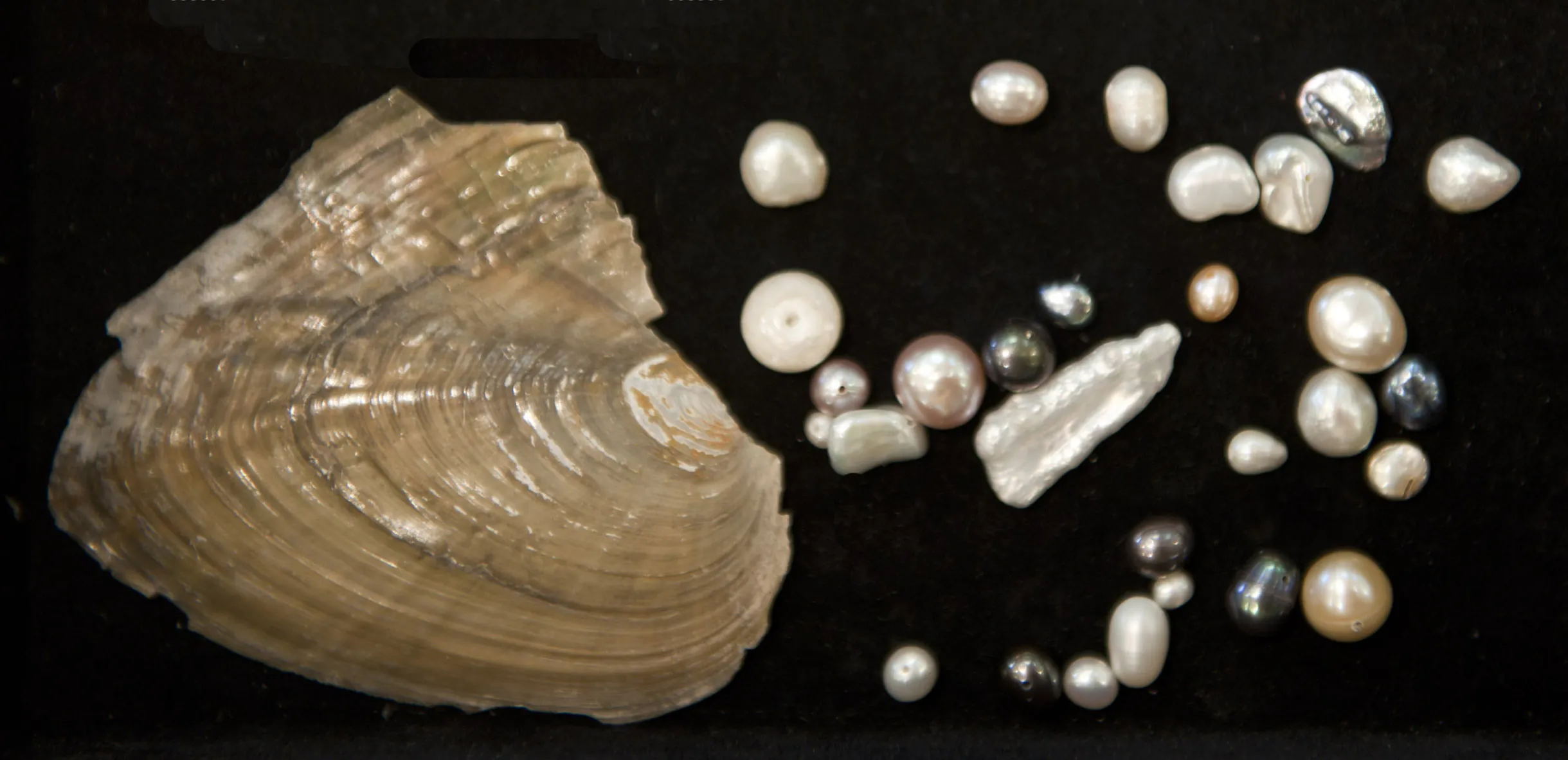
No. A longer cultivation period can give a pearl more time to build nacre, but “longer” is not the same as “better.” Extra months in the mollusk may improve nacre thickness or increase size, yet they can also increase the chance of shape distortion, surface defects, oyster mortality, disease, nucleus rejection, or simply more time with little useful additional growth.
The better rule is: a pearl should be cultured long enough to reach the desired development under suitable conditions—not kept in the water for the maximum possible time. Pearl farming is an optimization problem, not a stopwatch contest.
If you want the broader relationship between growth time and harvest readiness, see our guide to pearl cultivation time and maturity. This article focuses on the narrower question buyers often ask: when does extra time help, and when can it stop helping?
Quick Answer: What Can More Cultivation Time Change?
| Possible effect of more time | Can it help? | Why it is not guaranteed |
|---|---|---|
| Nacre thickness | Often | Nacre deposition rate varies with species, temperature, nutrition, oyster health, and season. |
| Size | Sometimes | In bead-cultured pearls, much of the starting diameter comes from the implanted nucleus. |
| Luster | Sometimes | Luster depends strongly on nacre structure and surface condition, not simply total elapsed time. |
| Roundness | Not necessarily | Extended growth can allow deviations from a perfectly round shape to become more visible. |
| Surface quality | Not necessarily | More time also means more opportunity for growth disturbances and surface features to develop. |
| Overall value | Only if the result is better | Pearls are judged by multiple quality factors, not by cultivation duration alone. |
Why “Longer = Better” Sounds Reasonable
The idea begins with something real: cultured pearls grow by depositing pearl material over time. In a bead-cultured pearl, nacre forms around the implanted bead. In many non-bead-cultured freshwater pearls, the pearl body is built largely from deposited pearl material rather than around a large spherical bead.
So, all else being equal, giving a healthy mollusk additional time can allow more material to accumulate. This is why cultivation period is often discussed together with nacre thickness, especially for bead-cultured Akoya, Tahitian, and South Sea pearls.
There is also a genuine problem at the opposite extreme. Harvesting too early can leave a bead-cultured pearl with insufficient nacre. The FAO's pearl-culture guidance notes that thin nacre is associated with poorer luster and lower market quality, and that culture duration is one of the factors farmers use when deciding when to harvest.
But this only establishes that too little time can be a problem. It does not prove that every additional month continues to improve the pearl.
More Nacre Is Only One Part of Pearl Quality
A pearl is not graded by age. GIA evaluates pearls through multiple value factors: size, shape, color, luster, surface, nacre, and matching when more than one pearl is involved. A longer cultivation period directly affects only part of that picture, and even then the effect is filtered through the biology of the mollusk and its environment.
This is why a pearl with thicker nacre is not automatically the better-looking pearl. It may still have weaker luster, a more irregular shape, distracting surface characteristics, undesirable color, or poor matching within a pair or strand. Conversely, a pearl does not need the longest possible growth history to show excellent visible quality.
For buyers, the practical lesson is simple: evaluate the pearl that actually exists. Use visible and structural quality factors rather than treating cultivation duration as a substitute for grading. Our Pearl Grading Guide explains those factors in more detail.
Luster Depends on How Nacre Forms, Not Just How Long It Forms
One reason cultivation time is easy to misunderstand is that nacre is not deposited at a perfectly constant rate or in an identical structure throughout the year.
In a documented Australian Akoya farming system studied by GIA, much of the pearl growth occurred during warmer months, while colder winter conditions slowed biomineralization and produced a finer outer layer associated with stronger luster. The same farm used an approximately 18-month cultivation period to obtain relatively thick nacre, but the quality benefit came from the combination of time, seasonal conditions, and farming practice—not from the number 18 by itself.
This distinction matters because luster comes from the way light interacts with the pearl's surface and underlying nacre. A long growth period that produces poorly structured or disturbed nacre is not automatically superior to a shorter period that produces a smoother, more regular surface structure.
If you are comparing finished pearls, our Pearl Luster Guide is more useful than trying to estimate quality from an unverified growth-time claim.
Extra Time Can Trade Roundness for Nacre
Roundness is another reason farmers cannot simply leave every pearl growing indefinitely.
GIA's 2025 report on unusually thick-nacred hybrid Akoya cultured pearls notes that Akoya growth commonly falls around 10–14 months and that a longer growth period can affect roundness. This is an important example of a basic pearl-farming trade-off: the same extra time that may add nacre can also allow shape deviations to become more pronounced.
That does not mean longer-grown pearls become baroque by default. It means the probability distribution changes. A farmer trying to produce highly round Akoya pearls may make a different harvest decision from a farmer whose priority is maximum nacre thickness, larger size, or an intentionally organic shape.
The “best” cultivation period therefore depends partly on the quality profile being targeted.
A Useful Counterexample: Four Years Was Not Better Than Two
One of the clearest reasons to reject a universal “longer is better” rule comes from cultured Pinctada radiata pearls produced in Abu Dhabi.
A report published in The Journal of Gemmology described experiments comparing pearls cultured for two years with pearls kept for four years. The longer period was tested in an attempt to maintain high quality while using larger bead nuclei. The result was not a simple improvement: nacre thickness was reported to be almost identical between the two- and four-year groups, while the four-year pearls showed lower luster and overall quality.
This does not mean two years is universally ideal. It means something more important: after a certain point, additional time can produce diminishing returns—or even a worse result—within a particular production system.
That is exactly why pearl farmers sample, monitor, and choose harvest timing instead of assuming that the latest possible harvest is always the best one.
More Time Also Means More Biological Risk
A pearl is not sitting safely inside a machine while a coating gets thicker. It is developing inside a living mollusk in an open biological environment.
Extending cultivation keeps the mollusk exposed for longer to variables such as:
- disease and declining health;
- temperature or salinity stress;
- storms and farm damage;
- predators and fouling organisms;
- nucleus rejection or displacement;
- surface-growth disturbances; and
- mortality before the pearl can be harvested.
That risk has an economic side as well. Every extra month requires the farm to keep cleaning, monitoring, protecting, and maintaining living stock. A longer cycle is worthwhile only when the expected quality gain justifies the additional biological and production risk.
But Harvesting Too Early Is Not the Answer Either
The opposite simplification is just as misleading. If “longer is not always better” becomes “shorter is fine,” the logic has gone too far.
Very thin or poorly developed nacre can affect appearance and durability, particularly in bead-cultured pearls. GIA has specifically noted that very thin nacre can affect both durability and luster. This is why farmers still need a sufficient development period even when they are trying to protect roundness, survival rate, and surface quality.
The correct target is therefore not the shortest possible culture period or the longest possible culture period. It is the appropriate harvest window for that mollusk, pearl type, season, nucleus size, environment, and quality goal.
Why There Is No Universal “Best” Number of Months
A single ideal duration would only make sense if all pearls were produced by the same mollusk, with the same nucleation method, in the same water, at the same temperature, with the same nucleus size and the same target quality. They are not.
Akoya, Tahitian, South Sea, and freshwater cultured pearls use different mollusks and production systems. Even within one category, farms may work with different strains, grafting methods, seasons, stocking densities, water conditions, and commercial goals.
For example, an Australian Akoya farm documented by GIA deliberately used a longer cycle than the shorter schedules commonly associated with Japanese Akoya production and obtained substantially thicker nacre in the studied pearls. That is evidence that a longer period can be useful in the right system. The Abu Dhabi P. radiata experiment shows the opposite: doubling the cultivation period did not double useful nacre growth and was associated with lower quality.
Both findings can be true at the same time because the biological system matters more than a universal calendar rule.
For species-specific background, see our guides to Akoya pearls and South Sea pearls.
What Should a Buyer Do with a “Long-Cultured” Claim?
“Long-cultured” can describe a real production choice, but it should not be treated as a quality grade by itself. If a seller emphasizes cultivation time, ask what the extra time actually produced.
A useful four-question check is:
- What pearl type is this? Eighteen months means something different for Akoya than for a different mollusk and farming system.
- What period is being counted? Is the claim measuring time after nucleation, the mollusk's total age, or the complete farm cycle?
- What measurable or visible benefit resulted? Better nacre, stronger luster, greater size, or something else?
- How does the finished pearl actually grade? Look at luster, surface, shape, nacre quality, color, size, and matching rather than relying on a duration claim.
If the seller cannot connect the claimed cultivation period to the pearl's actual quality, the number of months is mostly a story rather than useful buying evidence.
The Better Rule: Optimize the Result, Not the Calendar
A longer cultivation period is valuable when the mollusk remains healthy and the additional time produces useful pearl development. It can allow thicker nacre, additional growth, or a better final outer nacre structure under favorable seasonal conditions.
But more time can also create trade-offs. Roundness may decline, surface features may accumulate, biological risk increases, and nacre growth may slow enough that extra months add little benefit. In at least one documented commercial experiment, a much longer cycle produced lower-quality pearls without a meaningful nacre-thickness advantage.
So the best pearl is not the one that stayed in the mollusk the longest. It is the one that reached the strongest combination of nacre, luster, surface, shape, size, color, and overall condition at the right harvest point.
FAQ
Does a longer cultivation period always mean thicker nacre?
No. More time usually creates more opportunity for nacre deposition, but the rate can change with species, temperature, nutrition, season, and mollusk health. A documented two-year versus four-year comparison in Pinctada radiata found almost identical nacre thickness despite the much longer cultivation period.
Can a pearl be cultured for too long?
In practical farming terms, yes. There can be a point where extra time adds little useful growth while increasing risks such as mortality, shape distortion, or surface deterioration. The ideal harvest point is therefore an optimum rather than a maximum.
Does thicker nacre automatically mean better luster?
No. Nacre thickness matters, but luster also depends on the structure, smoothness, and continuity of the nacre and surface. Thick nacre that formed poorly is not automatically more lustrous than thinner nacre with a finer, more regular structure.
Why are some Akoya pearls cultured longer?
Some farms extend Akoya cultivation to build thicker nacre or achieve a particular quality target. However, longer growth can also affect roundness, so farmers balance nacre development against shape, surface, survival, and seasonal conditions.
Should I pay more just because a seller says a pearl was cultured longer?
Not on that claim alone. Ask what pearl type it is, what cultivation period is being counted, and what quality improvement resulted. The finished pearl's luster, surface, shape, nacre, size, color, and matching are more useful buying evidence than duration by itself.
Sources and Further Reading
- GIA, “Exceptional Nacre Thickness of Hybrid Akoya Bead Cultured Pearls” — cultivation period, nacre thickness, roundness trade-off, and Akoya growth conditions.
- GIA, “Akoya Cultured Pearl Farming in Eastern Australia” — 18-month Australian Akoya cultivation, seasonal nacre deposition, and measured nacre thickness.
- The Journal of Gemmology, “P. radiata Cultured Pearls from Abu Dhabi” — comparison of two- and four-year cultivation and the finding that longer growth did not improve nacre thickness or overall quality in that experiment.
- FAO, “Pearl Oyster Farming and Pearl Culture: Post-Operation Culture” — environmental controls, culture duration, nacre development, and harvest decisions.
- GIA, “Pearl Quality Factors” — size, shape, color, luster, surface, nacre, and matching as the main pearl value factors.