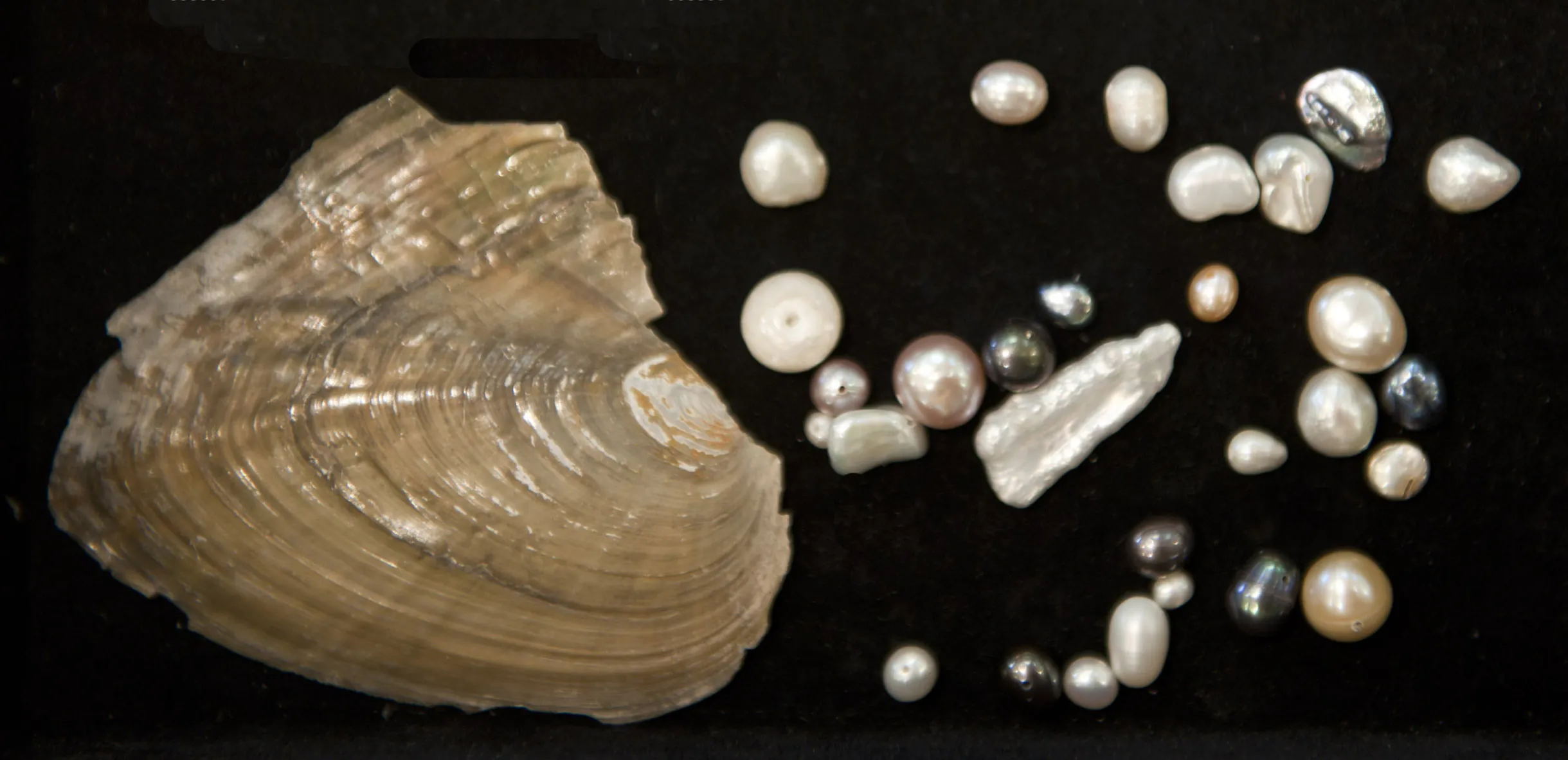
Yes. Conch pearls are real pearls—but they are non-nacreous pearls. They form inside pearl-producing mollusks and are recognized as pearls in modern gemological and jewelry-trade terminology. What makes them unusual is that they do not have the layered nacre that gives Akoya, Tahitian, South Sea, and many freshwater pearls their familiar iridescent glow.
A fine Queen conch pearl instead has a more porcelaneous appearance and may show a silky, flame-like pattern across its surface. That difference in structure is the reason you may encounter conflicting explanations online: some older references treated nacre as essential to a “true pearl,” while current classification systems explicitly include both nacreous and non-nacreous pearls.
So the clearest modern answer is: a genuine conch pearl is not a fake pearl, and “non-nacreous” does not mean “not real.”
Quick Answer: Real, Natural, Cultured, and Fake Are Different Questions
| Term | What it means | Can it apply to conch pearls? |
|---|---|---|
| Real pearl | A genuine pearl formation produced by a mollusk rather than a manufactured imitation | Yes |
| Natural pearl | A pearl formed without human intervention | Yes; this describes the great majority of fine conch pearls encountered in the jewelry trade |
| Cultured pearl | A pearl formed in a mollusk after human intervention initiates or assists pearl growth | Yes; cultured conch pearls have been documented, although they are not a routine mass-market pearl category |
| Non-nacreous pearl | A pearl without a nacreous surface layer | Yes; this is the key structural category for conch pearls |
| Imitation pearl | An object made to resemble a pearl but not formed as a pearl in a mollusk | No; a carved conch-shell bead may imitate a conch pearl, but it is not one |
One terminology note: “real pearl” is useful consumer language, but it is not the most precise laboratory category. For an important specimen, the more useful questions are whether it is natural or cultured, nacreous or non-nacreous, treated or untreated, and genuinely pearl material rather than an imitation.
Why Are Conch Pearls Called Non-Nacreous?
Most people first learn about pearls through nacreous varieties. Akoya, Tahitian, South Sea, and many freshwater cultured pearls build their familiar optical appearance from layers of nacre. Under good light, those layers can produce the depth, luster, and orient associated with classic pearl jewelry.
Conch pearls are built differently. Current CIBJO terminology describes a conch pearl as a non-nacreous natural pearl with calcium carbonate arranged in a crossed-lamellar microarchitecture. This structure can create the distinctive flame-like surface pattern and porcelaneous sheen associated with fine specimens.
GIA also separates pearls into nacreous and non-nacreous varieties in its current educational and laboratory material, specifically naming conch and Melo pearls as examples of the non-nacreous group.
That means “nacreous” is not a synonym for “real.” It describes how the pearl is structured. A conch pearl can be completely genuine while looking and behaving optically very differently from an Akoya pearl.
Why Do Some Older Sources Say Conch Pearls Are Not “True Pearls”?
This is where much of the confusion comes from.
Older gemological literature sometimes placed the word pearl in quotation marks when discussing Queen conch material. One influential GIA article published in 1987 described conch “pearls” as non-nacreous calcareous concretions and, using the terminology of that period, said they could not be considered “true pearls” because they lacked nacre.
Modern nomenclature is broader. CIBJO's current Pearl Book has a specific definition for Conch Pearl, and its classification explicitly includes non-nacreous natural pearls. GIA's current pearl-classification material likewise discusses conch pearls as non-nacreous pearls.
So when two apparently reputable sources disagree, they may actually be using different generations of terminology. For a buyer today, the useful distinction is not “true pearl versus not a pearl.” It is:
- nacreous versus non-nacreous,
- natural versus cultured, and
- genuine pearl versus imitation.
If you want the wider classification framework, our guide to how pearls are classified explains how these labels fit together.
What Actually Produces a Conch Pearl?
The best-known conch pearls come from the Queen conch, a large marine gastropod now commonly referred to as Aliger gigas. Older gemological sources may call the same animal Strombus gigas or Lobatus gigas, so all three names can appear in pearl literature.
One useful terminology detail is often missed: in everyday jewelry discussion, “conch pearl” usually means a Queen conch pearl. CIBJO's formal definition is somewhat broader and also recognizes conch pearls from other gastropods, including the Horse conch and Emperor helmet.
For a fuller look at the Queen conch variety—its Caribbean origin, colors, shapes, flame structure, and rarity—see our complete guide to conch pearls. This page stays focused on the narrower question of what makes them genuine pearls.
Are Conch Pearls Always Natural?
No—not if the phrase is being used loosely. Natural conch pearls are the category buyers are most likely to encounter, but cultured conch pearls have been successfully produced and documented. In CIBJO terminology, the unqualified term conch pearl is defined as a natural non-nacreous pearl; a human-assisted counterpart is described specifically as a cultured conch pearl.
GIA reported non-bead cultured pearls from Strombus gigas in 2015, discussing specimens from a farm in Honduras and noting earlier cultivation work dating to 2009. CIBJO's current Pearl Book also defines non-nacreous cultured conch pearls.
This matters because the statement “conch pearls cannot be cultured” is now too absolute. A safer modern description is: fine conch pearls in ordinary jewelry trade remain overwhelmingly associated with natural production, while cultured conch pearls are technically possible and have been documented.
For a significant specimen, natural-versus-cultured origin should therefore be treated as an identification question rather than assumed from the words “conch pearl” alone.
Can Something Be Made from Conch Shell and Still Be a Fake Conch Pearl?
Yes. A bead can be cut and polished from Queen conch shell and made to resemble a pearl. It may even share some color or surface characteristics with material from the same shell-producing animal. But a fashioned shell bead is not a pearl, because it was cut from shell rather than formed as a pearl inside the mollusk.
GIA laboratories have documented Queen conch shell beads submitted as suspected pearls. This is an important reminder that material identity and formation history are separate questions. “Made of conch shell” is not the same as “formed as a conch pearl.”
Perfect roundness can also deserve extra scrutiny because natural conch pearls are commonly oval, semi-baroque, or baroque. But shape alone is not proof. A high-value specimen should be evaluated using laboratory methods rather than a single visual clue.
Does the Flame Pattern Prove a Conch Pearl Is Real?
No single surface feature should be treated as absolute proof.
A strong flame structure is one of the most characteristic and desirable appearances associated with conch pearls. Under magnification, the effect comes from the interaction of light with their distinctive crossed-lamellar crystal structure. But not every genuine conch pearl shows an equally strong visible flame, and appearance alone cannot answer every question about origin or treatment.
This is the same principle that applies to pearl identification more broadly: visual inspection can provide useful evidence, but it has limits. Our real-vs-fake pearl guide explains which observations are useful and when laboratory testing becomes the more reliable route.
Conch Pearl vs. Ordinary Nacreous Pearl: What Is the Practical Difference?
| Feature | Conch pearl | Typical nacreous pearl |
|---|---|---|
| Structure | Non-nacreous, crossed-lamellar calcium-carbonate structure | Nacreous layers of calcium carbonate and organic material |
| Typical visual effect | Porcelaneous sheen; sometimes a strong flame pattern | Reflective luster, depth, and sometimes orient |
| Best-known producer | Queen conch, a marine gastropod | Pearl oysters or freshwater mussels, depending on pearl type |
| Common market origin | Predominantly natural | Predominantly cultured for major commercial pearl families |
| Is it a real pearl? | Yes | Yes, if genuine rather than imitation |
What Should You Ask Before Buying a Conch Pearl?
If the stone is inexpensive and decorative, a seller's description may be enough for your purpose. If the pearl is rare, expensive, unusually round, strongly colored, or represented as an important natural specimen, ask more specific questions:
- Is it represented as a natural pearl or a cultured pearl?
- Has a recognized gemological laboratory confirmed that identification?
- Is the color represented as natural, and has any treatment been disclosed?
- Is the object definitely a pearl rather than a fashioned shell bead?
- Are the weight, dimensions, shape, color, and visible flame structure documented clearly?
For an important purchase, a laboratory report is more useful than relying on phrases such as “100% real,” “natural-looking,” or “genuine conch material.” Those phrases do not necessarily answer the technical questions that determine what the object actually is.
The Bottom Line
Conch pearls are real pearls in modern gemological classification. Their unusual status comes from structure, not authenticity: they are non-nacreous, so they do not look or grow exactly like the nacreous pearls most people know.
The most useful way to remember the distinction is:
Non-nacreous does not mean fake. Natural does not mean the only possible origin. And conch shell does not automatically mean conch pearl.
Once those three ideas are separated, the terminology becomes much easier to understand.
Frequently Asked Questions
Are conch pearls real pearls?
Yes. Modern gemological references classify conch pearls as non-nacreous pearls. They are structurally different from nacreous pearls, but a genuine conch pearl is still a real pearl.
Why do conch pearls not have nacre?
The mollusks that produce conch pearls build the pearl with a different calcium-carbonate microstructure. Instead of the layered nacre typical of Akoya or South Sea pearls, conch pearls have a crossed-lamellar structure that can create a porcelaneous sheen and flame-like pattern.
Are all conch pearls natural?
No. The conch pearls most commonly encountered in fine jewelry are natural, but cultured conch pearls have been produced and documented. Natural-versus-cultured origin should not be assumed solely from appearance.
Can a conch-shell bead be sold as a conch pearl?
A bead cut from conch shell may imitate a conch pearl, but it is not a pearl. A genuine pearl forms within the mollusk; a shell bead is fashioned from the shell after removal.
Does a flame pattern prove a conch pearl is genuine?
No. Flame structure is an important characteristic of many fine conch pearls, but visual appearance alone is not definitive proof of natural origin or authenticity. Valuable specimens are better evaluated by a qualified gemological laboratory.
References and Further Reading
- CIBJO Pearl Book 2024 — definitions of conch pearls, non-nacreous natural pearls, and non-nacreous cultured pearls.
- CIBJO Guide for Describing and Classifying Natural and Cultured Pearls — current classification framework for nacreous and non-nacreous pearls.
- GIA: How GIA Analyzes Pearls from Start to Finish — current laboratory distinction between nacreous and non-nacreous pearls.
- GIA Gems & Gemology: Nonbead-Cultured Pearls from Strombus gigas — documented cultured conch pearls.
- GIA Gems & Gemology: Fashioned Queen Conch Shell Bead — an example of shell material resembling a conch pearl.