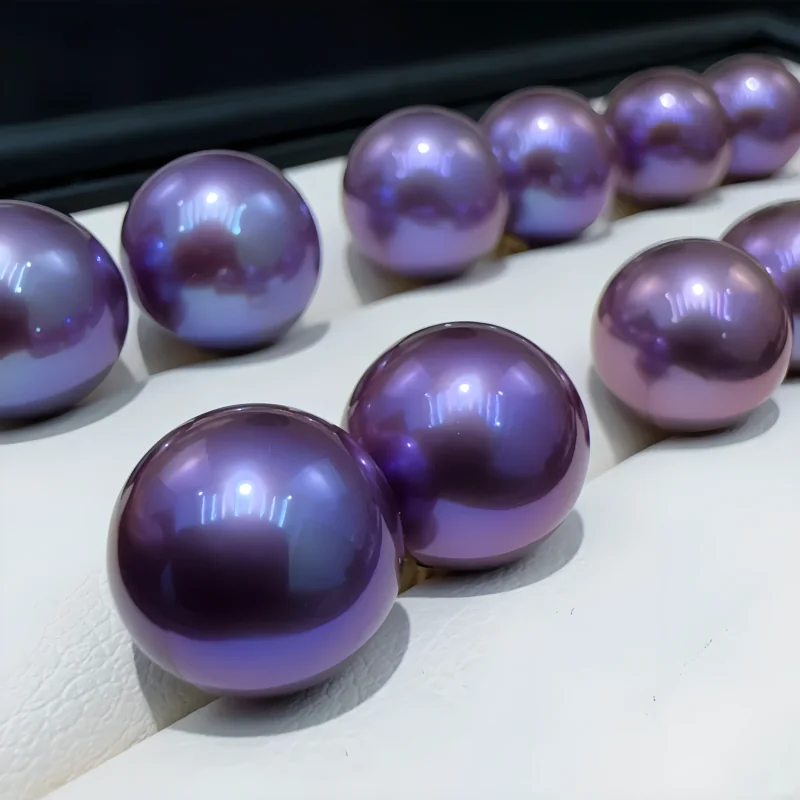
You cannot estimate the value of a single pearl accurately from size alone, a seller grade, or the fact that it is “real.” A useful estimate starts by identifying what kind of pearl you have, then judging its quality, condition, and any relevant treatment, and finally comparing it with genuinely similar loose pearls in the same market.
For one pearl, the process is actually a little simpler than evaluating a strand. GIA describes seven pearl value factors—size, shape, color, luster, surface, nacre, and matching—but matching applies only when two or more pearls are being evaluated together. For a single pearl, the six intrinsic factors matter, plus identity, condition, treatment status, documentation, and the market in which you are trying to value it.
The key is to aim for a reasonable value range, not a falsely precise number. Pearls do not have a universal price-per-millimeter table that works across freshwater, Akoya, Tahitian, South Sea, natural, cultured, treated, and untreated pearls.
Quick Answer: Use This Order
| Step | Question to answer | Why it matters |
|---|---|---|
| 1. Identify the pearl | Natural, cultured, or imitation? Freshwater, Akoya, Tahitian, South Sea, or another type? | The pearl category sets the correct comparison market. |
| 2. Define the value you mean | Current retail comparison, resale expectation, insurance replacement, or another appraisal purpose? | Different markets can produce different legitimate numbers. |
| 3. Record measurable characteristics | What is the pearl's size, shape, color, and drilling status? | This narrows the comparable group. |
| 4. Judge quality | How strong are the luster, surface quality, nacre, symmetry, and color? | Quality determines where the pearl sits within its category. |
| 5. Check condition and treatment | Is there wear, cracking, peeling, drill damage, or a treatment claim that matters? | Condition and undisclosed assumptions can move the estimate sharply. |
| 6. Compare like with like | What are similar loose pearls actually being offered or sold for? | Market evidence converts quality into a monetary range. |
1. Identify What the Pearl Actually Is Before Estimating a Price
This is the most important first step. A pearl cannot be valued sensibly if its identity is still uncertain.
“Real pearl” is too broad. Both natural pearls and cultured pearls are genuine pearls, but they belong to very different supply and rarity structures. An imitation pearl belongs to a different category entirely. Among cultured pearls, freshwater, Akoya, Tahitian, and South Sea pearls also have different normal size ranges, colors, production structures, and market positions.
For example, knowing only that a loose pearl is “10 mm, round, and dark” is not enough. It could be a naturally dark Tahitian cultured pearl, a treated-color freshwater cultured pearl, another pearl type, or even an imitation. Those possibilities should not share one baseline price.
If the identity is uncertain, start with our guide on how to tell if pearls are real or fake. For higher-value cases, appearance alone may still be insufficient, and laboratory testing can become worthwhile.
2. Decide What Kind of “Value” You Are Trying to Estimate
One pearl can legitimately have more than one monetary value because valuation depends on the purpose and market.
| Value question | What you are really asking | Best comparison evidence |
|---|---|---|
| Retail buying value | What would a comparable loose pearl cost from a current seller? | Current specialist retail listings for similar loose pearls |
| Resale value | What might someone actually pay you for this pearl? | Recent sold results or realistic dealer / secondary-market offers |
| Insurance replacement value | What would it cost to replace the pearl with a comparable one in the relevant retail market? | Current replacement market used by the appraiser |
| Formal appraisal value | What value is appropriate for a stated legal, estate, insurance, donation, or other purpose? | A qualified appraiser using a defined valuation purpose and market |
GIA makes this distinction clearly: its laboratory reports provide independent information about a gem's identity and quality, but GIA itself does not provide monetary appraisals. Its appraisal guidance also notes that appraisals may be prepared for different purposes, including fair-market and insurance replacement contexts.
For an everyday estimate, choose one market first. Do not compare a high retail asking price with a secondhand cash offer and assume one of them must be “wrong.” They are answering different questions.
3. Measure the Pearl Correctly
Use millimeters, not visual guesswork. For a round or near-round pearl, diameter is usually the most useful size measurement. For oval, drop, button, baroque, or other non-round pearls, record at least length × width; depth can also matter when the profile is unusual.
Size affects value only within context. GIA notes that, when the other value factors are equal, larger pearls of the same type are generally rarer and more valuable. The qualification matters: a larger pearl with weak luster, heavy surface damage, or poor nacre can be worth less than a smaller but much finer pearl.
If size terminology is unfamiliar, our Pearl Size Guide explains how millimeter differences translate into visible scale.
4. Judge the Six GIA Value Factors That Apply to a Single Pearl
GIA's pearl framework uses seven value factors: size, shape, color, luster, surface, nacre, and matching. Because you are valuing one pearl, matching is not an inherent characteristic of the object. That leaves six factors to inspect directly.
| Factor | What to look at on one pearl | How to use it in valuation |
|---|---|---|
| Size | Accurate millimeter measurement appropriate to the shape | Compare only with similar sizes within the same pearl type. |
| Shape | Roundness, symmetry, balance, or intentionally attractive baroque form | Round and highly symmetrical shapes often command premiums when other factors are comparable, but attractive non-round pearls can also be valuable. |
| Color | Bodycolor, overtone, orient where present, saturation, tone, and whether treatment is relevant | Compare color within the correct pearl type; demand and rarity vary by category. |
| Luster | Brightness and especially the sharpness of reflected edges | Strong, crisp reflections are a major quality advantage and often separate fine pearls from ordinary ones. |
| Surface | Pits, spots, wrinkles, scratches, abrasions, flat areas, cracks, or other visible characteristics | Judge severity, number, position, and whether the features affect beauty or durability. |
| Nacre | Visible quality and continuity of nacre; warning signs such as chalkiness or obvious structural weakness | Good nacre supports appearance and durability; poor nacre can lower value even when size and shape are attractive. |
Do not convert each factor into an invented percentage adjustment. Pearl quality factors interact. A 10% “luster multiplier” or a fixed dollar amount per millimeter may look scientific while hiding the real problem: the baseline changes by pearl type, size range, color, market, and quality combination.
If you want a broader explanation of how the factors work together, use our guide to evaluating pearl value. For the factor that buyers often find hardest to judge from photographs, our Pearl Luster Guide gives a practical comparison method.
5. Separate Quality from Condition
A pearl can have been high quality when harvested and still lose value later through wear or damage. This is especially important when estimating an older loose pearl removed from jewelry.
Look for cracks, peeling, chipped nacre, abrasion, chemical damage, deep scratches, excessive polishing, worn areas around a mounting, or drill-hole damage. A clean, correctly placed drill hole is normal preparation for many cultured pearls and does not automatically reduce value. Poor drilling, however, can matter if it chips the nacre, weakens the pearl, or forces an unattractive orientation.
This distinction helps avoid a common appraisal mistake: judging only what the pearl was rather than what the buyer would receive today.
6. Check Whether Treatment or Documentation Changes the Comparison
Treatments can matter when they change what market the pearl belongs in or when a seller is charging a premium for an untreated or naturally colored example. The effect is not identical for every pearl type or treatment, so avoid blanket rules such as “treated means worthless” or “natural color always doubles the price.”
Documentation matters most when it confirms a claim that would otherwise be difficult to verify and financially important. GIA pearl reports can provide information such as whether a pearl is natural or cultured, its saltwater or freshwater environment, detectable treatments, and—in applicable report types—quality classification information.
A laboratory report does not tell you the dollar value by itself. Think of it as improving the evidence behind the valuation. Once identity and quality are more certain, the market comparison becomes more meaningful.
7. Build a Like-for-Like Comparison Set
This is the step that turns gemological description into a practical price estimate.
Start with loose pearls that match the pearl you are valuing as closely as possible. The strongest comparisons share the same identity category, similar pearl type, a narrow size range, similar shape, comparable luster and surface quality, similar color characteristics, similar treatment status where relevant, and the same sales format.
Then separate asking prices from actual transaction evidence. Retail listings tell you what sellers hope to receive. Recent sold results, dealer offers, or completed secondary-market sales are better evidence for resale. A single unusually high listing is not a market.
A useful estimate is usually a range created from several credible comparables rather than one exact match. If most comparable pearls cluster around one band but one listing is dramatically higher, investigate why before treating the outlier as evidence.
A Practical Single-Pearl Estimation Worksheet
| Field | Your pearl | What to compare against |
|---|---|---|
| Identity | Natural / cultured / imitation / uncertain | Same identity category only |
| Pearl type | Freshwater / Akoya / Tahitian / South Sea / other / uncertain | Same pearl type where possible |
| Size | ___ mm or ___ × ___ mm | Narrow size band |
| Shape | Round / near-round / oval / drop / button / baroque / other | Similar symmetry and shape desirability |
| Color | Bodycolor + overtone / orient if visible | Same color family and treatment status |
| Luster | Excellent / very good / good / fair / poor, if you are using a defined system | Similar reflection sharpness under comparable lighting |
| Surface | Clean / lightly / moderately / heavily marked, with locations noted | Similar severity and visibility of features |
| Nacre | Healthy / questionable / requires expert evaluation | Comparable nacre quality |
| Condition | Undamaged / worn / chipped / cracked / drill damage / other | Same present condition |
| Documentation | None / seller documentation / independent lab report | Similar level of certainty when identity claims drive price |
| Valuation market | Retail / resale / insurance / formal appraisal | Evidence from the same market and purpose |
If several important fields remain “uncertain,” your price range should stay wide. That is not a failure. It is a more honest reflection of the evidence.
Example: Why a 10 mm Dark Pearl Cannot Be Valued from a Photo Alone
Suppose you have one dark, approximately round pearl measuring about 10 mm. It looks attractive and has a bright highlight in a photograph.
You still do not know enough to price it. First establish whether it is a genuine pearl. If it is cultured, determine whether the evidence supports Tahitian, treated-color freshwater, or another category. Then measure it accurately, judge the luster under controlled light, inspect the whole surface while rotating it, describe the color more precisely, check drilling and condition, and note whether treatment has been documented.
Only after that should you compare it with other similar loose pearls. A 10 mm Tahitian cultured pearl with strong luster and an attractive natural color belongs in a different comparison group from a 10 mm dyed freshwater pearl, even if both appear “black” in one photo.
This is why good valuation is mostly an exercise in correct classification and disciplined comparison. The price comes last.
Why Dividing a Necklace Price by the Number of Pearls Usually Fails
A common shortcut is to find a necklace with 40 pearls, divide the price by 40, and treat the result as the value of one pearl. That is rarely reliable.
A strand price includes matching, stringing, clasp or precious metal, labor, brand positioning, inventory costs, retail margin, and the difficulty of assembling many compatible pearls. The center pearl may also be larger than the end pearls. A loose single pearl has a different sales format and therefore a different pricing structure.
Use loose-pearl comparables whenever possible. If only jewelry comparables exist, treat them as broad context rather than direct per-pearl arithmetic.
Why Generic Pearl Grades Are Not Enough
Labels such as “AAA,” “AAAA,” “gem grade,” or “top grade” can be useful inside one seller's own system, but they are not automatically equivalent across every seller. One company's AAA may not represent the same quality threshold as another company's AAA.
For valuation, translate the label back into observable characteristics: size, shape, color, luster, surface, nacre, treatment disclosure, and condition. A descriptive record travels better between markets than an undefined grade name.
Our Pearl Grading Guide explains how to interpret pearl grades without assuming that every grading scale is interchangeable.
When Should You Stop Estimating and Use a Laboratory or Professional Appraiser?
Home or seller-level estimation is usually enough for ordinary cultured pearls when identity is clear and the financial stakes are modest. Professional help becomes more useful when uncertainty itself could materially change the value.
| Situation | Best next step |
|---|---|
| Possible natural pearl | Independent gemological laboratory identification before relying on a natural-origin premium |
| Important treatment or origin claim | Laboratory testing if the claim materially affects price |
| Unusually valuable or historically important pearl | Laboratory documentation plus an appraiser experienced with pearls and the relevant market |
| Insurance, estate, legal, tax, or donation purpose | Formal appraisal prepared for the stated purpose |
| Ordinary cultured pearl with clear seller documentation | Like-for-like market comparison may be sufficient for an informal estimate |
What Is the Best Way to Estimate One Pearl's Value?
Use a sequence, not a shortcut:
Identity → pearl type → valuation purpose → measurement → six intrinsic quality factors → condition and treatment → like-for-like market comparisons.
For a single pearl, the most important practical improvement is to stop asking for a universal “price of one pearl.” Instead ask:
“What is this pearl, how good is it within its own category, and what are genuinely comparable loose pearls worth in the market I care about?”
That question produces a much more defensible estimate—and makes it easier to see when more testing or professional appraisal is actually worth paying for.
Frequently Asked Questions
How much is one real pearl worth?
There is no universal price for one genuine pearl. Natural or cultured identity, pearl type, size, shape, color, luster, surface, nacre, condition, treatment, documentation, and the sales market can all change the value. “Real” confirms only that it is a genuine pearl rather than an imitation.
Can I estimate a pearl's value from its size?
Size is useful only after the pearl type and general quality are known. A larger pearl is generally more valuable when other factors are equal within the same type, but a large low-luster or damaged pearl can be worth less than a smaller high-quality one.
Does weight determine pearl value?
Weight can be recorded and may be useful in laboratory documentation, but ordinary pearl pricing is not based on a universal price per gram or per carat. Millimeter size, pearl type, quality, condition, rarity, and market evidence are usually more useful for commercial comparison.
Is an undrilled pearl always worth more?
No. Many cultured pearls are intentionally drilled for jewelry, and clean drilling is normal preparation. Undrilled status may matter in particular collector, natural-pearl, or design contexts, but poor drilling and nacre damage are more important negative signs than drilling itself.
Can a pearl certificate tell me how much the pearl is worth?
A laboratory report can document identity, treatments, and quality characteristics depending on the service, but it does not automatically provide a monetary appraisal. Market value still has to be determined from comparable evidence or by a qualified appraiser for the relevant purpose.