Where Are China’s Main Freshwater Pearl-Producing Regions? Why Zhuji’s Shanxiahu Matters
China’s freshwater pearl industry is concentrated broadly around the Yangtze River basin and other suitable freshwater areas, with important farming histories in Zhejiang, Jiangsu, Anhui, Jiangxi, Hunan, Hubei and surrounding regions. But there is an important distinction: freshwater pearls may be farmed in several provinces while much of the sorting, processing and trading is concentrated in Zhuji, especially Shanxiahu in Zhejiang Province.
This is why describing Shanxiahu simply as a “pearl-producing town” can be misleading. Its importance is larger than its local ponds. Shanxiahu functions as the organizational center of a much wider freshwater pearl supply chain.
The Short Answer: China Has Distributed Farming but a Highly Concentrated Pearl Industry
A useful way to understand Chinese freshwater pearl geography is to separate three different questions:
- Where are pearl mussels actually raised? Across freshwater farming areas in several Chinese provinces.
- Where are harvested pearls sorted and processed? A substantial part of this expertise and commercial activity is concentrated around Zhuji.
- Where do buyers encounter and trade large quantities of pearls? Shanxiahu is one of the most important answers.
These places do not always have to be the same. A mussel can spend its cultivation period in a farming base hundreds of kilometers from Zhuji, while the harvested pearls later enter Zhuji’s sorting, processing and wholesale network.
What Are China’s Main Freshwater Pearl-Producing Regions?

China’s freshwater pearl farming geography has changed over time, so it is better to think in terms of an evolving production belt rather than a permanent ranking of provinces. Water availability, environmental policy, farming costs, aquaculture conditions and the expansion of individual pearl companies can all shift cultivation from one region to another.
| Region | Role in the freshwater pearl industry | How to understand it |
|---|---|---|
| Zhejiang | Historic farming, processing, trading and industry organization | Zhuji and Shanxiahu form the best-known Chinese freshwater pearl industry cluster. |
| Jiangsu | Long-established freshwater pearl cultivation | One of the important regions in the early development of modern Chinese freshwater pearl farming. |
| Anhui | Important modern cultivation and grow-out area | Provides suitable inland freshwater farming areas and has attracted pearl farming operations from established industry centers. |
| Jiangxi | Established freshwater cultivation area | Lake and river systems, including areas around the Poyang Lake basin, have supported freshwater pearl farming. |
| Hunan and Hubei | Part of the broader central-China freshwater aquaculture belt | These regions have also participated in freshwater pearl cultivation, although their relative importance changes over time. |
| Other expansion areas | Newer or company-specific farming bases | Pearl businesses may establish farms in additional provinces when water, environmental and production conditions are suitable. |
Older descriptions of China’s pearl industry therefore do not always match newer ones exactly. That does not necessarily mean one source is wrong. The cultivation network itself moves and expands.
Zhejiang: Why Zhuji Became the Center of China’s Freshwater Pearl Industry
Zhejiang has played a central role in the development of Chinese freshwater cultured pearls, but Zhuji’s significance goes far beyond farming alone.
Shanxiahu, a town within Zhuji, developed a dense concentration of pearl farmers, merchants, processors, sorting specialists, jewelry businesses and supporting services. Over decades, that concentration created something much harder to reproduce than a pearl pond: an entire industry ecosystem.
Today, the local network connects several stages of the pearl business:
- pearl mussel cultivation and farming expertise;
- harvesting and raw-pearl collection;
- sorting by size, shape, color, luster and surface condition;
- matching pearls into strands, pairs and production lots;
- drilling and other processing;
- wholesale trading;
- jewelry manufacturing and design;
- domestic e-commerce and livestream selling;
- international sourcing and export.
This concentration explains why Shanxiahu can remain extremely important even when some cultivation takes place outside Zhuji itself.
Jiangsu: One of the Historical Foundations of Chinese Freshwater Pearl Farming

Jiangsu was one of the important early centers of China’s cultured freshwater pearl industry. Areas around Suzhou and other parts of the province developed freshwater mussel cultivation knowledge that contributed to the industry's expansion.
Its historical importance matters because modern Chinese freshwater pearl cultivation did not emerge from one town in isolation. Farming methods, mussel handling techniques and cultivation experience circulated between different regions.
Even today, pearl entrepreneurs based in Zhuji may operate farming areas in Jiangsu. This illustrates an important feature of the industry: the location of the business, the cultivation pond and the trading market can all be different.
Anhui: An Important Area for Modern Pearl Cultivation
Anhui has become an important freshwater pearl farming area, particularly as cultivation networks have expanded beyond older production centers.
Large inland water resources and suitable aquaculture areas can make such regions attractive for the grow-out stage of pearl mussels. Established pearl businesses may therefore manage or cooperate with farms outside their home province while maintaining sorting, sales and management operations in Zhuji.
This is one reason a pearl dealer based in Shanxiahu may handle pearls connected to farming operations in Anhui without there being any contradiction.
Jiangxi: Freshwater Farming Around Major Lake and River Systems

Jiangxi has a long association with freshwater pearl cultivation, particularly in areas influenced by the province’s extensive lake and river systems. Places such as Duchang and Wannian have historically been associated with pearl farming.
As with other regions, however, provincial origin alone tells a buyer relatively little about the final quality of an individual pearl. Farm management, mussel health, cultivation duration, nucleation method, water conditions and harvest timing can all affect the result.
For readers who want a broader international perspective, see our guide to global pearl-producing regions.
What About Hunan, Hubei and Other Provinces?
Hunan, Hubei and other parts of central and southern China have also participated in freshwater pearl cultivation. The middle and lower Yangtze region contains extensive freshwater aquaculture resources, making it natural for pearl farming to develop across provincial boundaries.
In more recent industry development, cultivation networks have become even less confined to the traditional list of pearl-producing provinces. Some Zhuji-based farmers and businesses have established or explored farming bases farther away where suitable water resources and operating conditions are available.
For that reason, a list of “China’s main pearl-producing provinces” should be treated as a map of the industry's major cultivation zones, not as a fixed league table.
Why Is Shanxiahu So Important If Pearls Are Farmed Elsewhere?
The answer is industrial concentration.
Growing pearl mussels is only the first part of turning freshwater pearls into a commercial product. Once harvested, pearls still need to move through a surprisingly complex sequence of evaluation and processing.
A typical flow may look like this:
- Pearl mussels are cultivated at a farming base.
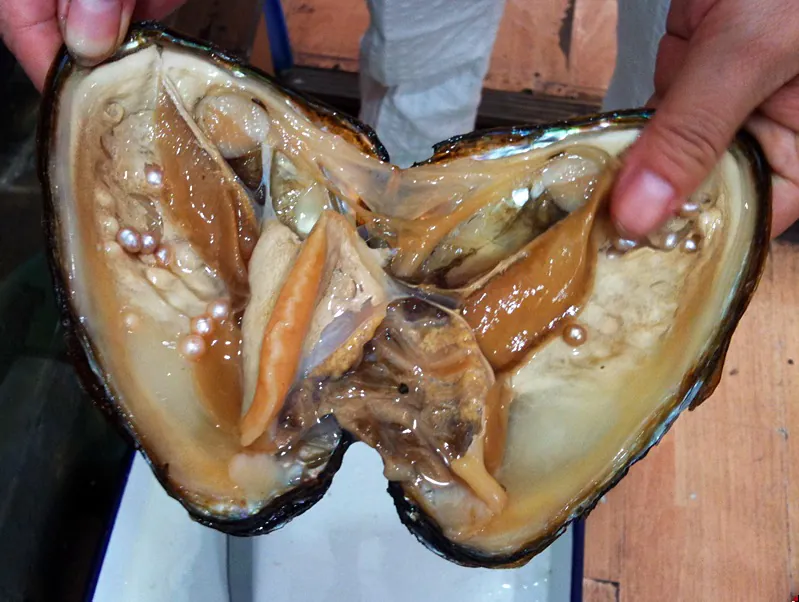
- The mussels are harvested and opened.
- Raw pearls are collected and cleaned.
- Pearls are separated by broad size and shape groups.
- More detailed sorting evaluates luster, color, surface and roundness.
- Pearls are matched into strands, pairs or commercial lots.
- They may be drilled or prepared for jewelry production.
- Wholesalers, manufacturers, designers and retailers purchase them for different uses.
Shanxiahu has businesses specializing in many of these individual stages. That specialization creates efficiency: a large mixed harvest can enter one industry cluster and be divided into many different commercial products.
You can see this downstream process in more detail in our guide to the pearl processing workflow after cultivation and harvest.
Farm Location and Market Origin Are Not Always the Same Thing
This distinction is one of the most useful things to understand about Chinese freshwater pearls.
Suppose a pearl business is based in Zhuji, manages cultivation in another province, brings harvested material back to Shanxiahu, sorts it there, drills it there and sells it through the Zhuji market. Where is the pearl “from”?
There are several possible answers:
- Biological cultivation origin: the water body where the mussel actually grew.
- Producer origin: the farming company or pearl farmer responsible for cultivation.
- Processing origin: the place where pearls were cleaned, sorted, matched or drilled.
- Commercial origin: the market or supply-chain center through which the pearls were sold.
These categories may overlap, but they do not have to.
This is also why buyers should be cautious about treating a regional name as if it were automatically a quality grade. Unlike a tightly defined geographical indication for some agricultural products, freshwater pearl quality cannot usually be predicted simply from a province name.
Do Pearls from Different Chinese Regions Have Different Quality?
They can, but geography alone is not enough to explain the difference.
Water temperature, nutrient conditions and the local growing environment influence mussel growth. However, pearl quality also depends heavily on variables such as:
- mussel species and breeding stock;
- the health and age of the mussel;
- tissue implantation or nucleation technique;
- stocking density;
- water quality and farm management;
- cultivation time;
- harvest timing;
- the pearl type being cultivated.
In addition, pearl mussels themselves can be moved between farming locations during the cultivation cycle. This makes simplistic statements such as “pearls from Province A always have better luster than pearls from Province B” unreliable.
For the cultivation process itself, see how cultured pearls are farmed. China also produces both non-nucleated freshwater pearls and nucleated freshwater pearls, and these cultivation systems create much more meaningful differences than a province name alone.
Why Zhuji Matters to International Pearl Buyers
For someone sourcing pearls, the importance of Zhuji is therefore not simply that “many pearls grow there.” Its greater advantage is aggregation.
Production from different farms and different cultivation areas can enter the same commercial ecosystem. Large quantities of pearls can then be separated into different sizes, shapes, colors and quality levels before moving to jewelry manufacturers or international buyers.
This gives Shanxiahu an unusual role in the global freshwater pearl trade: it connects a geographically dispersed farming network with a highly concentrated processing and trading network.
That also explains why a visit to a major Zhuji pearl market can reveal far more variety than one local farming area could realistically produce by itself. The inventory represents a supply chain, not merely the output of the ponds visible nearby.
How Should You Interpret “Zhuji Pearl” or “Shanxiahu Pearl”?
When these terms are used in general industry conversation, the safest interpretation is usually that they refer to the Zhuji-Shanxiahu pearl industry cluster.
They may describe pearls connected to local cultivation, but they can also describe pearls handled by Zhuji farmers, processors, wholesalers or traders whose farming network reaches beyond Zhejiang.
If exact farm origin matters for a particular purchase, ask a more specific question: Where were these mussels actually cultivated? That is more precise than asking only whether the seller is from Zhuji.
The Best Way to Understand China’s Freshwater Pearl Map
China does not have one single freshwater pearl farm region. It has a network.
Historically important cultivation areas developed across Zhejiang, Jiangsu and other provinces of the Yangtze basin, while Anhui, Jiangxi, Hunan, Hubei and additional regions have also supported pearl farming. Modern pearl businesses can operate cultivation bases across provincial boundaries as water resources, environmental requirements and production strategies change.
Zhuji’s Shanxiahu is important because it sits at the center of that network. Its real strength is the combination of cultivation knowledge, raw-pearl aggregation, sorting, processing, matching, jewelry production and wholesale trading.
So the simplest mental model is:
Chinese freshwater pearl farming is geographically distributed, but much of the industry's expertise, processing and trade is concentrated in Zhuji’s Shanxiahu.
FAQ
Are all Chinese freshwater pearls farmed in Zhuji?
No. Zhuji is the best-known center of China’s freshwater pearl industry, but mussels are cultivated in multiple provinces. Zhuji-based farmers and pearl companies may also operate or cooperate with farming bases elsewhere in China.
What are the main freshwater pearl-producing areas in China?
The industry has historically been concentrated around Zhejiang, Jiangsu and other parts of the Yangtze River basin, with important cultivation in provinces such as Anhui, Jiangxi, Hunan and Hubei. The exact production geography changes over time as farms expand or relocate.
Why are pearls farmed outside Zhejiang brought to Shanxiahu?
Shanxiahu has a highly developed pearl-processing and trading ecosystem. Harvested pearls can be sorted, graded, matched, drilled, sold and prepared for jewelry production there, so material from farms in other provinces naturally flows into the Zhuji market.
Does the province where a pearl was farmed determine its quality?
No. Growing environment can influence pearl development, but quality also depends on mussel health, cultivation method, water management, culture duration, harvest timing and many other factors. Individual pearl characteristics remain more useful than province name alone when judging quality.
What does “Shanxiahu pearl” usually mean?
In broad industry usage, it often refers to pearls connected to the Shanxiahu-Zhuji production, processing and trading ecosystem. It should not automatically be interpreted as proof that the pearl mussel spent its entire cultivation period inside Shanxiahu itself.