
Lesson11: Abalone Pearls — Origins, Colors, Shapes, and Rarity

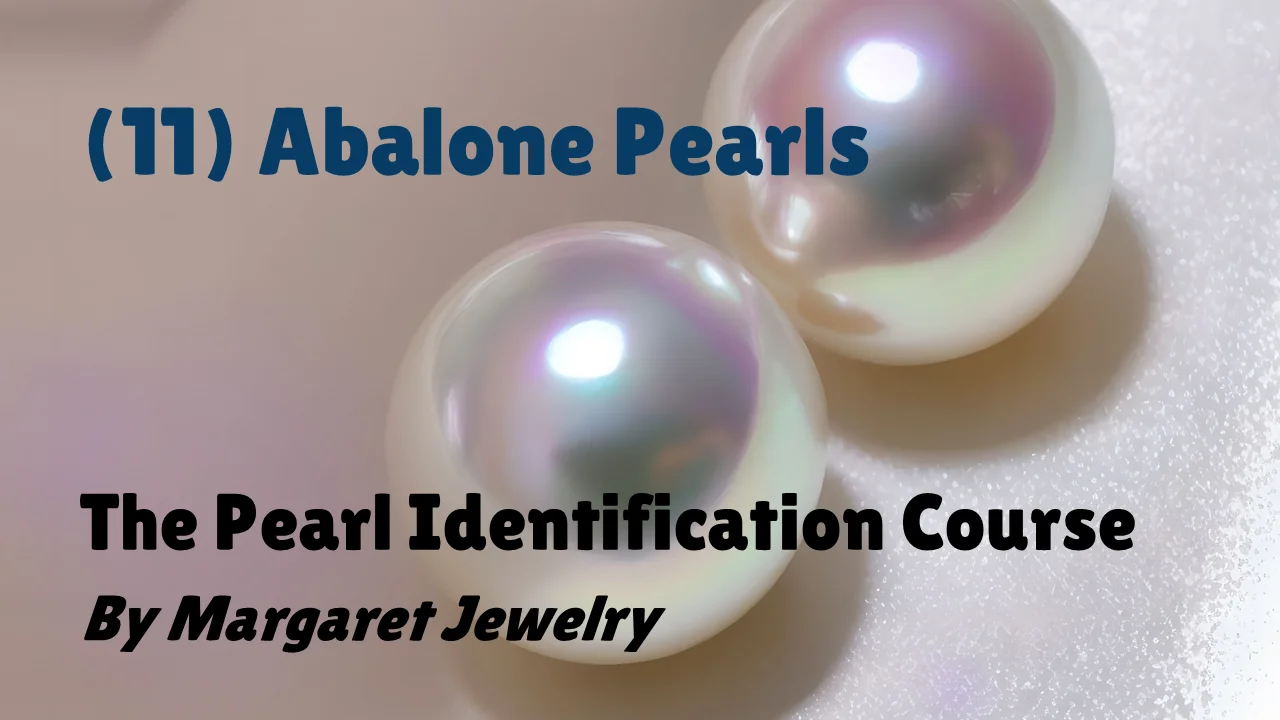
Abalone pearls are among the most unusual pearls in the pearl world. Unlike the more familiar pearls produced by pearl oysters, abalone pearls come from marine gastropods in the Haliotis group. They are prized for their shifting blue, green, and violet overtones, their strong luster, and their highly irregular shapes. In this lesson, we will look at where abalone pearls come from, why they look so distinctive, why they are so rare, and how they fit into the broader world of rare pearls.
What Are Abalone Pearls?
Abalone pearls are pearls formed by certain species of abalone, a group of saltwater mollusks in the family Haliotidae. They do not usually resemble the classic round pearl most readers imagine. Instead, abalone pearls are better known for vivid iridescence, unusual outlines, and dramatic surface patterns.
This is one of the reasons they are so memorable in gemology and jewelry. Their appearance often reflects the colorful nacre of the abalone shell itself, which can show strong flashes of blue, green, purple, and smoky metallic tones. Some are natural, while modern pearl research has also documented limited cultured abalone pearl production in specific settings.
Where Do Abalone Pearls Come From?
Abalone pearls are produced only in limited marine regions where pearl-forming abalone species occur. The best-known sources include New Zealand, California, Mexico, Japan, and South Korea.
Among these origins, New Zealand is especially important in public awareness because of pāua, the local abalone species famous for its vivid blue-green-violet nacre. California and Mexico are also strongly associated with natural abalone pearls in gemological literature, while Japan and other Pacific regions remain part of the broader geographic context.
Because abalone pearl production is naturally limited, origin matters not only from a geographic standpoint but also from a visual one. Different species and environments can influence the bodycolor, overtone, and overall character of the pearl.
The Abalone Shell and Nacre Structure
To understand abalone pearls, it helps to look at the shell first. The interior of an abalone shell is already known for its rich iridescence, and the pearl often reflects that same visual character.
The mother shell is primarily certain commercially valuable species within the Haliotidae family, including Haliotis. Their nacre is responsible for the shifting color effects that make abalone pearls stand out from more conventional pearl types. This is why abalone pearls can appear especially lively under light, with moving color rather than a flat, single-tone appearance.

What Do Abalone Pearls Look Like?
Color
Abalone pearls may show a wide range of colors, from white and cream to brown, gray, green, blue, violet, and near-black. What makes them especially recognizable is not simply the bodycolor, but the way color shifts across the surface. Fine examples often show vivid combinations of blue, green, and violet with strong orient.
Shape
Round abalone pearls are uncommon. Most are irregular, baroque, elongated, horn-like, or tooth-like. This non-classic shape is not a flaw in the context of abalone pearls. On the contrary, unusual shape is part of what makes them identifiable and desirable to collectors who appreciate rare pearl types.
Luster and Pattern
Abalone pearls often display a striking luster along with flame-like, cloud-like, or layered visual effects. These patterns are closely related to the structure of abalone nacre. In good pearls, the surface may appear almost alive under changing light, which is one of the reasons abalone pearls are so visually distinctive compared with standard round pearls.

Why Are Abalone Pearls So Rare?
Abalone pearls are extremely rare, and that rarity is not just a marketing phrase. First, the natural chance of an abalone forming a pearl is low. Second, abalones have historically been harvested far more often as seafood than as pearl-producing mollusks. In real production terms, this means the opportunity to encounter abalone pearls has always been limited.
This practical point is important. In contrast to pearl oysters, which became central to large-scale pearl culture, abalone were not traditionally developed into a mainstream pearl industry in the same way. That difference in production history is one of the clearest reasons abalone pearls remain uncommon.
Modern gemological literature does show that cultured abalone pearls exist, including blister-type production in New Zealand and bead-cultured examples reported from Chile. However, these do not change the larger reality: abalone pearls remain a limited and highly specialized category rather than a mass-market pearl product.
Are Abalone Pearls Natural or Cultured?
This question is worth addressing directly, because older summaries sometimes state that abalone pearls cannot be cultured at all. That is too absolute today.
Natural abalone pearls do exist and remain especially important in discussions of rarity and collectibility. At the same time, gemological sources have documented cultured abalone pearl production, including cultured blister pearls and bead-cultured examples. In other words, abalone pearls are not exclusively natural, but cultured production is still limited and far less standardized than pearl culture in oysters.
For readers who are researching the topic in more depth, two useful references are GIA’s report on natural Haliotis pearls and GIA’s 2023 report on bead-cultured abalone pearls from Chile.
What Determines the Value of Abalone Pearls?
Like other rare pearls, abalone pearl value depends on multiple factors rather than one simple price rule. The most important considerations usually include:
- rarity
- color quality and vibrancy
- luster and orient
- size
- shape appeal
- surface condition
- whether the pearl is natural or cultured
Because abalone pearls are often highly individual in appearance, value can vary widely from one pearl to another. Fine examples can attract strong collector interest, especially when they combine vivid color, attractive shape, and excellent surface life.
Abalone Pearls in the Context of Rare Pearls
Within Pearl Academy, abalone pearls belong to the group of rare and visually unusual pearls that do not fit the classic round-pearl image. They are worth studying not only because they are scarce, but because they expand how we think about pearl beauty. In abalone pearls, irregularity, shifting color, and shell-related pattern are often the very qualities that matter most.
If conch pearls introduce readers to one kind of rare non-standard pearl, abalone pearls deepen that understanding through iridescent nacre, dramatic shape, and strong visual individuality.
Are abalone pearls natural?
Some are natural, but not all. Natural abalone pearls are real and rare, while cultured abalone pearls have also been documented in limited forms, including blister pearls and bead-cultured examples.
Why are abalone pearls rarely round?
Abalone pearls usually form in irregular ways, so elongated, baroque, horn-like, or tooth-like shapes are much more common than fully round ones.
Are pāua pearls the same as abalone pearls?
Pāua is a New Zealand abalone species. So pāua pearls are best understood as a New Zealand abalone pearl category rather than a completely separate pearl family.
Final Thoughts
Abalone pearls are among the most visually distinctive pearls in the jewelry world. Their rarity, color play, and unconventional shapes make them very different from standard commercial pearls, and that is exactly why they deserve a place in a serious pearl course.
In the next lesson, we will move from abalone pearls to another rare pearl type with a very different structure and appearance: Melo pearls.