
Lesson9: Pearl Classification — Natural, Cultured, and Imitation Pearls

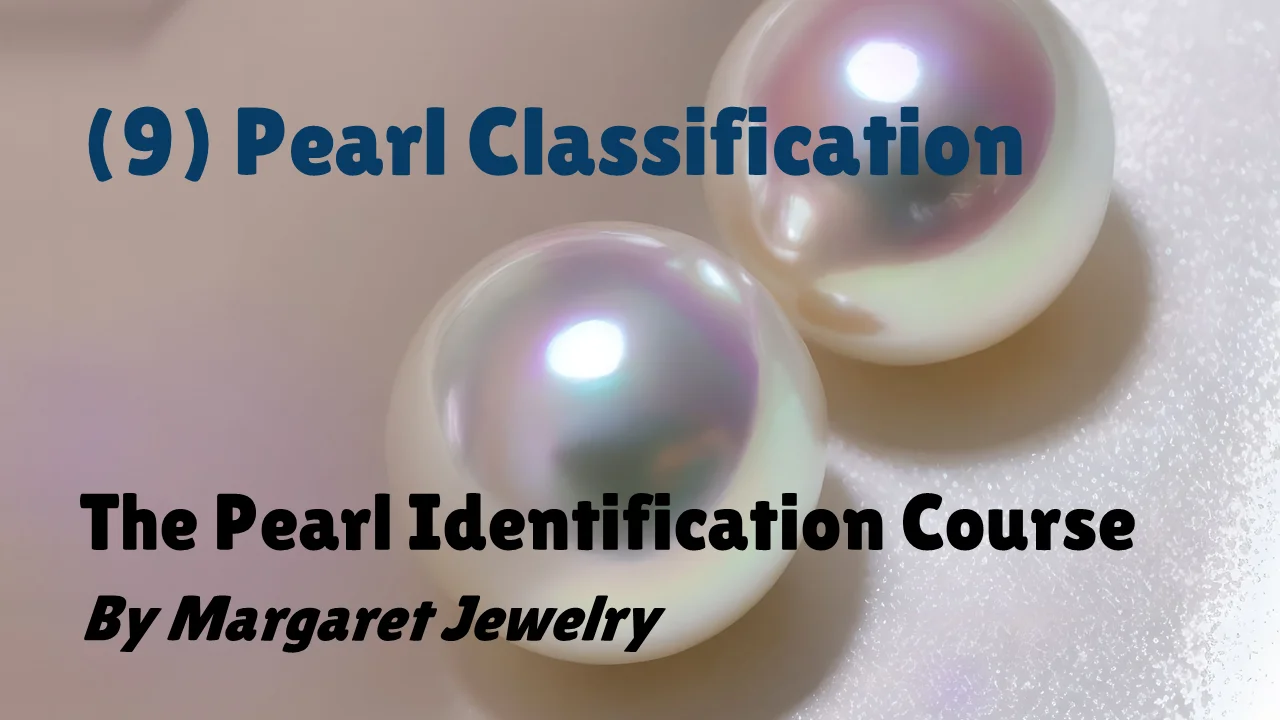
Pearls can be classified in more than one way. In trade, people may group them by where they grow, by the mollusk that produces them, by whether they are bead-nucleated or non-bead cultured, or by their commercial family names such as Akoya, South Sea, Tahitian, and freshwater pearls. In this lesson, however, we begin with the most practical top-level framework for readers: natural pearls, cultured pearls, and imitation pearls. That gives you a clear map before we move into the more specific pearl families in later lessons.
One reason pearl classification feels confusing is that many market-facing articles mix different layers together. A page may list Akoya, Tahitian, South Sea, and freshwater pearls as if they were the only “types of pearls,” while another page starts with natural versus cultured pearls. Both approaches describe something real, but they are answering different questions. The easiest way to avoid confusion is to separate the first-level classification from the commercial sub-groups that sit under it.
In older trade writing, you may also see the term wild pearls. In this lesson, that top-level idea is best understood as natural pearls—pearls that form without human intervention. I am using the clearer term here so the lesson aligns better with modern gemological wording while preserving the original teaching structure.

How This Lesson Classifies Pearls
For practical learning, this lesson uses a three-part framework:
- Natural pearls
- Cultured pearls
- Imitation pearls
That structure is useful because it answers the first question a reader usually has: Is this pearl natural, farmed, or only made to look like a pearl? Once that is clear, it becomes much easier to place Akoya, South Sea, Tahitian, freshwater, Keshi, or Mabe pearls in the right context.
The Three Main Categories of Pearls
Natural Pearls
Natural pearls form without human help. As GIA explains, they grow in the wild without human intervention and are very rare in today’s market. Most natural pearls encountered commercially are antique or come through specialist channels rather than ordinary mass-market jewelry supply.
In this Academy, some special natural pearl categories are introduced separately rather than forced into a simplified mainstream chart. That is why Conch Pearls, Abalone Pearls, and Melo Pearls are treated as their own lessons. This is not because they are unimportant. It is because they do not fit neatly into the better-known commercial cultured families that most buyers recognize first.
Cultured Pearls
Cultured pearls are real pearls. They are not fake pearls. The difference is that their formation involves human intervention, usually through pearl farming techniques that guide or initiate pearl growth in a living mollusk. GIA states this directly in its FAQ on whether cultured pearls are real pearls.
In formal trade terminology, CIBJO defines cultured pearls as pearls formed within a cultured pearl sac in productive freshwater or saltwater mollusks with human intervention. CIBJO also notes that cultured pearls may be divided into saltwater or freshwater, and into beaded or non-beaded cultured pearls. That is helpful here because it supports the structure used in this lesson: first classify pearls broadly, then break cultured pearls into their practical sub-groups.
Imitation Pearls
Imitation pearls are not pearls in the gemological sense. They are materials made to imitate the appearance of pearls, often using plastic, shell, glass, or composite-based products. In the original lesson these were called artificial pearls. That meaning is preserved here, but imitation pearls is the clearer modern term for readers because it directly distinguishes them from natural and cultured pearls.
Quick Comparison: Natural vs. Cultured vs. Imitation
If you want the shortest possible version, remember it this way:
- Natural pearls form without human intervention.
- Cultured pearls form in a living mollusk with human intervention.
- Imitation pearls only copy the look of pearls and are made from other materials.
That distinction may sound simple, but it removes one of the biggest sources of confusion in pearl education: many people incorrectly assume that cultured pearls are not “real.” They are real pearls. They are simply not natural pearls.
How Cultured Pearls Are Further Grouped
Once we step into the cultured category, the next useful division is between saltwater cultured pearls, freshwater cultured pearls, and a smaller group of other cultured pearl forms that deserve their own place in pearl study.
Saltwater Cultured Pearls
The best-known saltwater cultured families in the jewelry market are:
- Akoya Pearls
- South Sea Pearls
- South Sea Gold Pearls
- South Sea White Pearls
- Tahitian Pearls
These are the cultured pearl families most commonly recognized by consumers, jewelers, and commercial pearl sellers.
[Lesson 13 — Akoya Pearls]
[Lesson 14 — Tahitian Black Pearls]
[Lesson 15 — South Sea Pearls]
Freshwater Cultured Pearls
Freshwater cultured pearls are another major category and an essential part of the modern pearl market.
In this Academy, freshwater cultured pearls are further divided into:
- Freshwater Non-Nucleated Pearls
- Freshwater Nucleated Pearls
- Edison Pearls
- Freshwater AK Pearls
That division is worth preserving because it reflects real differences in production structure and is more useful for serious pearl learning than simply treating all freshwater pearls as one single bucket.
[Lesson 16 — Freshwater Non-Nucleated Pearls]
[Lesson 17 — Freshwater Nucleated Pearls]
Other Cultured Pearls and Related Forms
Some cultured pearl forms are better introduced separately rather than buried under the larger commercial families. In this lesson, those include:
- Keshi Pearls
- Mabe Pearls
- Blister Pearls
These names appear often in pearl trade and design discussions, but they are not always taught clearly in general consumer articles. Keeping them visible in the classification lesson helps readers understand that not every cultured pearl they encounter will fall neatly into the standard “round saltwater versus round freshwater” mental picture.
[Lesson 18 — Mabe Pearls]
[Lesson 19 — Keshi Pearls]
Why Conch, Abalone, and Melo Are Introduced Separately
In simplified pearl charts, Conch, Abalone, and Melo pearls are often better taught as special categories. The reason is not that they sit outside pearl study, but that they do not fit as neatly into the mainstream cultured pearl families used in entry-level jewelry education. Keeping them separate improves clarity for readers and leaves room for each one to be explained on its own terms in the lessons that follow.
[Lesson 10 — Conch Pearls]
[Lesson 11 — Abalone Pearls]
[Lesson 12 — Melo Pearls]
Directory for Pearl Classification
- Wild Pearls
- Conch Pearls (Currently No Large-Scale Cultivation)
- Abalone Pearls (Currently No Large-Scale Cultivation)
- Melo Pearls (Impossible to Cultivate)
- Cultured Pearls
- Saltwater Cultured
- Saltwater Nucleated
- Akoya Pearls
- South Sea Pearls
- South Sea Gold Pearls
- South Sea White Pearls
- Tahitian Pearls
- Saltwater Nucleated
- Freshwater Cultured
- Freshwater Non-Nucleated
- Freshwater Nucleated
- Edison Pearls
- Freshwater AK Pearls
- Other Cultured Pearls
- Keshi Pearls
- Mabe Pearls
- Blister Pearls
- Saltwater Cultured
- Artificial Pearls
- Swarovski Crystal Pearls
- Shell Pearls
- Plastic Pearls
Are cultured pearls real pearls?
Yes. Cultured pearls are real pearls formed in a living mollusk through human intervention. They are different from imitation pearls, which only imitate the appearance of pearls.
Are cultured pearls the same as natural pearls?
No. Natural pearls form without human intervention, while cultured pearls are the result of pearl farming and human-guided growth.
Are Akoya, Tahitian, South Sea, and freshwater pearls all cultured pearls?
In modern commercial classification, these are the main families of cultured whole pearls commonly introduced to readers and buyers.
Conclusion
Pearl classification becomes much easier once you stop treating every pearl name as if it belongs to the same level. Start with the broad distinction between natural, cultured, and imitation pearls. Then, within the cultured category, learn the main market families such as Akoya, South Sea, Tahitian, and freshwater pearls, along with related forms such as Keshi and Mabe. That simple sequence gives you a clearer mental map for everything that follows in the Academy.
In the next lesson, we move to Conch Pearls, one of the most distinctive pearl categories in the jewelry world.